
Nadine Hubbs
Author of Rednecks, Queers, and Country Music
About the Author
Nadine Hubbs is Professor of Women's Studies and Music at the University of Michigan and author of The Queer Composition of America's Sound. Gay Modernists, American Music, and National Identity (UC Press).
Works by Nadine Hubbs
The Queer Composition of America's Sound: Gay Modernists, American Music, and National Identity (2004) 51 copies, 1 review
Associated Works
Country Boys and Redneck Women: New Essays in Gender and Country Music (2016) — Contributor — 6 copies
Tagged
Common Knowledge
- Canonical name
- Hubbs, Nadine
- Gender
- female
Members
Reviews
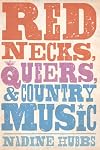
The up in your face with no apologies title sets the tone within the book. Nadine Hubbs attacks the socially and politically dominating (when she wrote it) middle class in its attitudes and treatment of the working class and not forgetting the powerful 1%. You might guess where country music comes in but the queer part---well you will just have to read it. Hubbs makes me think of Germaine Greer's The Obstacle Race as you have two brawling women of academe striking with telling blows and show more prepared to take the counter punch. For me the big drawback is this is also a professional sociologist's tract which makes parts hard to comprehend for a lay reader. If you are prepared for an attitude adjustment Rednecks, Queers, & Country Music will do the trick.
Quotes: (page 23) “Why is 'Anything but country' such a common refrain? Who invokes it? What does it mean? And is it really about music? My approach to these questions begins with an investigation of the meanings of country music---meanings not from the insides of the songs but from the outside. That is, I begin by examining the meanings that attach to country music as a cultural category and brand.”
(page 84) “A walk-the-walk, actions-over deeds model of working class friendship is illustrated in Tracy Lawrence's No. 1 single 'Find Out Who Your Friends Are' (2007). Built, like various other modern country songs, around a popular saying, the easy-riffing, mid-tempo song extols the true friends who are revealed when the chips are down, those who 'show on up' with big hearts and lend material support---a ride, a couch, a loan---when you are 'in a ditch' or 'in a bind.' By contrast to this model, middle-class friendships in Walker's study show no such patterns of material exchange and reciprocity. Instead, these relationships focus on shared interests and leisure and serve to enhance the individuality of those involved---through travel, for example, or as a connoisseurs of music, food, or film.”
(page 138) “In the dominant culture, however, country's anti-bourgeois expression is seldom recognized as political. Some of the reasons for this have surfaced in previous chapters. One is the middle classes' squeamishness and aversion towards country music and working class worlds. This limits investigation of country and its messages particularly in a bourgeois-centric media environment. Another factor is the antagonism between the middle and working classes. Their structural opposition creates a disincentive for the middle class to hear working class protest or to take it seriously---all the more when such protest indicts the middle class itself. Yet another reason that the political significance of antibourgeois expresson in country goes unrecognized in the dominant culture is the middle classes lack of fluency in the working class codes of meaning and value that circulate in country music.”
(page 150) “America has seen a shifting in ideological poles in the realm of sexuality and class. Homosexual acceptance has gone from being working class and bad to middle class and good, while homosexual aversion---what we now call homophobia---has gone from being middle class and good to working class and bad.
Even across these 180-degree reversals of meaning, a signal feature is conserved: the values attaching to the classes...This scenario underscores how cultural beliefs about sexuality help to uphold and remake the established hierarchy of class status and power. It also speaks to the essential role of class in the making of cultural meanings--- including those of sexual identities---and in determining social, moral, and political value.” show less
Quotes: (page 23) “Why is 'Anything but country' such a common refrain? Who invokes it? What does it mean? And is it really about music? My approach to these questions begins with an investigation of the meanings of country music---meanings not from the insides of the songs but from the outside. That is, I begin by examining the meanings that attach to country music as a cultural category and brand.”
(page 84) “A walk-the-walk, actions-over deeds model of working class friendship is illustrated in Tracy Lawrence's No. 1 single 'Find Out Who Your Friends Are' (2007). Built, like various other modern country songs, around a popular saying, the easy-riffing, mid-tempo song extols the true friends who are revealed when the chips are down, those who 'show on up' with big hearts and lend material support---a ride, a couch, a loan---when you are 'in a ditch' or 'in a bind.' By contrast to this model, middle-class friendships in Walker's study show no such patterns of material exchange and reciprocity. Instead, these relationships focus on shared interests and leisure and serve to enhance the individuality of those involved---through travel, for example, or as a connoisseurs of music, food, or film.”
(page 138) “In the dominant culture, however, country's anti-bourgeois expression is seldom recognized as political. Some of the reasons for this have surfaced in previous chapters. One is the middle classes' squeamishness and aversion towards country music and working class worlds. This limits investigation of country and its messages particularly in a bourgeois-centric media environment. Another factor is the antagonism between the middle and working classes. Their structural opposition creates a disincentive for the middle class to hear working class protest or to take it seriously---all the more when such protest indicts the middle class itself. Yet another reason that the political significance of antibourgeois expresson in country goes unrecognized in the dominant culture is the middle classes lack of fluency in the working class codes of meaning and value that circulate in country music.”
(page 150) “America has seen a shifting in ideological poles in the realm of sexuality and class. Homosexual acceptance has gone from being working class and bad to middle class and good, while homosexual aversion---what we now call homophobia---has gone from being middle class and good to working class and bad.
Even across these 180-degree reversals of meaning, a signal feature is conserved: the values attaching to the classes...This scenario underscores how cultural beliefs about sexuality help to uphold and remake the established hierarchy of class status and power. It also speaks to the essential role of class in the making of cultural meanings--- including those of sexual identities---and in determining social, moral, and political value.” show less
The Queer Composition of America’s Sound: Gay Modernists, American Music, and National Identity by Nadine Hubbs

The subject matter of this book is something that I personally believe is understudied. Nadine Hubbs does a fantastic job of putting American [Gay] Modernists in a lens for Feminist Historical scholarship. While I found the book to be occasionally less-than satisfactory for use as a secondary source in my own research on Leonard Bernstein, this is not because of the organization of the book (which is indeed satisfactory), but rather the nebulousness of the field of study, which is nascent at show more best. Even so, I found "Queer Composition" to be a good secondary source, as well as a good academic read. show less
Awards


You May Also Like
Associated Authors
Statistics
- Works
- 2
- Also by
- 3
- Members
- 104
- Popularity
- #184,480
- Rating
- 4.1
- Reviews
- 2
- ISBNs
- 9