

Karen Dudley (2)
Author of Food for the Gods
For other authors named Karen Dudley, see the disambiguation page.
Series
Works by Karen Dudley
Tagged
Common Knowledge
Members
Reviews

Dudley absolutely captivated me with the first in this series: Food for the Gods, and the sequel Kraken Bake follows the wit, humour, whimsy and galloping good narrative of the first.
Our hero, Pelops, celebrity chef to Athens' elite populace and pantheon of gods and demigods, finds himself in deep disfavour with Poseidon, to the point he cannot take advantage of the surfeit of kraken (thanks to the California-stylin' hero, Perseus) in which Athens finds itself awash. And it is imperative, show more Pelops is sure, that he overcome Poseidon's jinx in order to win the culinary competition of the century to be held in Dionysus' amphitheatre.
Filled by turns with deeds dastardly and benevolent, this is simply an intelligent, rocketing good read. Highly recommended, especially for lovers of all things culinary and mythological.
Well done, Karen Dudley! Well done!
And you will please forgive the reviewer the many puns and allusions. show less
Our hero, Pelops, celebrity chef to Athens' elite populace and pantheon of gods and demigods, finds himself in deep disfavour with Poseidon, to the point he cannot take advantage of the surfeit of kraken (thanks to the California-stylin' hero, Perseus) in which Athens finds itself awash. And it is imperative, show more Pelops is sure, that he overcome Poseidon's jinx in order to win the culinary competition of the century to be held in Dionysus' amphitheatre.
Filled by turns with deeds dastardly and benevolent, this is simply an intelligent, rocketing good read. Highly recommended, especially for lovers of all things culinary and mythological.
Well done, Karen Dudley! Well done!
And you will please forgive the reviewer the many puns and allusions. show less
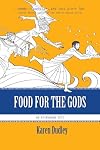
Karen Dudley is a local author but I sort of lost track of her after she stopped writing her Robyn Devara books which I loved. Then I came across this one in Whodunit, the small but mighty independent bookstore just off Corydon Avenue in Winnipeg. I bought it but it never found its way up to the top of the TBR pile. Until this month. Now that I've read it I want to get my hands on the sequel. Is there a trip to Whodunit in my future?
Pelops is a celebrity chef in ancient Athens. He has show more bookings for every night of the Great Panathenaea and he'll need all the money they will bring in because he owes a debt for some borrowed crockery that got broken. However, the gods (or someone) has other plans for him. Pelops has some close ties to the gods because his father, low on food for a feast for the gods, chopped him up and made a stew out of him. When the gods discovered this, they resurrected Pelops except for his left shoulder which had been eaten by Demeter who was preoccupied at the time. (Note: the drawing on the cover shows Pelops with his right shoulder having a patch. I believe this was an error on the part of the illustrator.) They do keep an eye on him but they have limits on how much they can help. So when one of his customers cancels on him, and then the container with his expensive olive oil gets smashed, and then he finds a hetaera dead in a storeroom in the olive oil he replaced it with, he is on his own. He cleanses himself and his assistant but his bad luck continues. He figures the best thing to do is to figure out who killed the hetaera. Of course, there are lots of possibilities to sort through. Pelops has some time on his hands because more of his customers have cancelled on him. I sure didn't see the solution.
The day after I finished this book I was in our local Middle Eastern store buying the fixings for Greek Salad. So don't say I didn't warn you about cravings for olives and olive oil and baklava and other delicacies. show less
Pelops is a celebrity chef in ancient Athens. He has show more bookings for every night of the Great Panathenaea and he'll need all the money they will bring in because he owes a debt for some borrowed crockery that got broken. However, the gods (or someone) has other plans for him. Pelops has some close ties to the gods because his father, low on food for a feast for the gods, chopped him up and made a stew out of him. When the gods discovered this, they resurrected Pelops except for his left shoulder which had been eaten by Demeter who was preoccupied at the time. (Note: the drawing on the cover shows Pelops with his right shoulder having a patch. I believe this was an error on the part of the illustrator.) They do keep an eye on him but they have limits on how much they can help. So when one of his customers cancels on him, and then the container with his expensive olive oil gets smashed, and then he finds a hetaera dead in a storeroom in the olive oil he replaced it with, he is on his own. He cleanses himself and his assistant but his bad luck continues. He figures the best thing to do is to figure out who killed the hetaera. Of course, there are lots of possibilities to sort through. Pelops has some time on his hands because more of his customers have cancelled on him. I sure didn't see the solution.
The day after I finished this book I was in our local Middle Eastern store buying the fixings for Greek Salad. So don't say I didn't warn you about cravings for olives and olive oil and baklava and other delicacies. show less

Disclosure: I received this book as a review copy. Some people think this may bias a reviewer so I am making sure to put this information up front. I don't think it biases my reviews, but I'll let others be the judge of that.
When one thinks of mythic Greece, the first thing that comes to mind is not the travails of a once-cooked, previously dead, celebrity chef who must solve a murder mystery to save his business. One also doesn't think of melding tales involving the Greek gods and heroes show more with the somewhat crass commercial reality of Athenian history, ranging from the social climbing infighting between politicians and business men right down to dildos made from bread. But in Food for the Gods Karen Dudley manages to take this somewhat off-kilter set of premises and turn out not only a very entertaining story, but one that is also both hilariously funny and tragically sad at the same time.
The foundation of the story is the myth of Tantalus and Pelops. In the mythic story, Tantalus invited the gods to dinner and discovered that he didn't have enough food on hand to serve everyone, so he chopped up Pelops and placed him in the stew pot before serving him up to his guests. This didn't go over very well with the Olympians, and they banished Tantalus to Tartarus for eternal punishment and arranged to have Pelops resurrected, although he needed a replacement shoulder made from ivory as Demeter had absent-mindedly eaten some of the Pelops-stew. The mythic version of Pelops goes on to have other, somewhat unfortunate adventures, but in Dudley's hands, he takes what appears to be a side trek through Athens, where he becomes a celebrity chef, cooking for the dinner parties of the wealthy and powerful.
Although the myth of Tantalus and Pelops took place in a mythic period of Greece that can more or less best be described as "a long time before recorded Greek history", Dudley takes the story, and apparently all of the rest of Greek mythology, and inserts it into our real world history, contrasting the myths of the Greek gods and heroes with the reality of Athenian commercial culture. An off-hand remark about Pericles and the ongoing war with Sparta places the events of the book some time between 429 and 404 B.C., although I kind of suspect that the book (and any possible sequels) is set in "Xena-time", a meld of myth and history that grabs elements from wherever source needed to make a good story. But it is exactly this mixture of mythology, with its capricious and often childish gods, and pieces drawn from Athenian history, with its mixture of public piety, crass commercialism, and social and political status seeking, that makes Food for the Gods such an interesting novel.
The story starts with Pelops dealing with the consequences of having enthusiastic gods provide well-meaning but somewhat less than helpful assistance, driving the guests at a dinner party he is catering somewhat mad so that during their revelry they throw everything in the host's house out of the second floor window. Including Pelop's rented dishes. This is the high point of the book for Pelops, as the gods continue to meddle in his life and even though most of the time their meddling is either intended to be beneficent, or they are merely indifferent to Pelops' situation. And when the gods meddle in one's life, however well-intentioned they are, that always spells trouble. And Pelops winds up with plenty of trouble, most of which resolves in humorous ways.
The events of the novel take place during the Panathenaea, which is the high point of the Athenian social calendar, and the event during which Pelops hopes to cement his reputation as the top celebrity chef in the city. But he is beset by an angry crockery dealer, an arrogant and underhanded rival chef, a god who seems determined to get rid of all of his precious olive oil, and, most ominously, a mysterious client with rather specific and difficult demands and who seems to have the influence to get prominent Athenians to cancel their bookings with Pelops. As if that were not enough, Pelops lands right in the middle of a murder mystery that taints him by association and causes his embryonic catering business to crash to the ground, albeit with a little help from an insufferable rival spreading malicious rumors. More out of desperation than anything else, Pelops becomes an amateur sleuth, attempting to ferret out the guilty party in an effort to clear his own reputation and stop the nightly attacks of the Kindly Ones upon the populace of the city.
But Pelops' slightly humorous misfortunes, and the unfolding murder mystery are only part of what makes this book so good. The city of Athens of the 5th century B.C. serves not only as a backdrop for the story, but is almost a character itself. By highlighting the rapacious commercialism coupled with the inherently unjust nature of the city's laws and customs, Dudley gives her story an alien atmosphere that even overshadows the oddness of having gods, satyrs, and winged furies throughout the narrative. This element also allows Dudley to flex her classical knowledge and give the reader a view into the very different world of classical Athenian civilization, which, even though it was technically a democracy, it was one that not only tolerated but celebrated the practice of hiring prostitutes as entertainers at high-class dinner parties, the institutionalized discrimination against foreigners, and widespread slavery. By combining the tawdry reality of Athens, where purging the taint of a murder within one's house would be done by first feeding and then beating a homeless bystander until they fled the city limits, with the mythical version of Greek religion, in which a collection of winged demons would show up and randomly wreck havoc upon the populace of the city in retaliation for a murder while the gods stood by and neither knew nor cared to know who the actual guilty party was, Dudley manages to paint a picture of how very different the world was much more vividly than she could have if she had drawn upon only one or the other.
These multiple layers are what make Food for the Gods work so well as a novel. The character of the novel is best illustrated by the humorous advertisements that appear in between each chapter, promoting serious issues as how to correctly perform ritual purification and where to purchase devotional statues to glorify the gods, as well as more mundane concerns such as ribbonfish recipes and the availability of bread dildoes. But even when these poster or handbill style advertisements deal with the most serious of concerns, they are made humorous to our eyes by the juxtaposition of even the most sacred subjects with an aggressive form of marketing that seems alien to modern sensibilities. But this combination serves two purposes, allowing Dudley to keep her book feeling light and humorous even though it is about the business misfortunes of the protagonist and the murder of a young woman, while also bringing the historical reality of the era to the forefront of the story.
Food for the Gods is, quite simply, an excellent book in every possible way. Combining an interesting setting with an affable lead character who manages to be both favored by the gods and downtrodden at the same time while struggling to keep his catering business above water (literally having to defy Poseidon to do so) all centered on an intriguing murder mystery drawn partially from Greek mythology. If this seems like an eclectic stew of ingredients, rest assured that it is. But it is a stew that tastes delicious, just like Pelops' fig and cheese appetizers. Or, without using awkward metaphors, it is a delightful book that I predict would be enjoyed by almost anyone who picked it up.
This review has also been posted to my blog Dreaming About Other Worlds. show less
When one thinks of mythic Greece, the first thing that comes to mind is not the travails of a once-cooked, previously dead, celebrity chef who must solve a murder mystery to save his business. One also doesn't think of melding tales involving the Greek gods and heroes show more with the somewhat crass commercial reality of Athenian history, ranging from the social climbing infighting between politicians and business men right down to dildos made from bread. But in Food for the Gods Karen Dudley manages to take this somewhat off-kilter set of premises and turn out not only a very entertaining story, but one that is also both hilariously funny and tragically sad at the same time.
The foundation of the story is the myth of Tantalus and Pelops. In the mythic story, Tantalus invited the gods to dinner and discovered that he didn't have enough food on hand to serve everyone, so he chopped up Pelops and placed him in the stew pot before serving him up to his guests. This didn't go over very well with the Olympians, and they banished Tantalus to Tartarus for eternal punishment and arranged to have Pelops resurrected, although he needed a replacement shoulder made from ivory as Demeter had absent-mindedly eaten some of the Pelops-stew. The mythic version of Pelops goes on to have other, somewhat unfortunate adventures, but in Dudley's hands, he takes what appears to be a side trek through Athens, where he becomes a celebrity chef, cooking for the dinner parties of the wealthy and powerful.
Although the myth of Tantalus and Pelops took place in a mythic period of Greece that can more or less best be described as "a long time before recorded Greek history", Dudley takes the story, and apparently all of the rest of Greek mythology, and inserts it into our real world history, contrasting the myths of the Greek gods and heroes with the reality of Athenian commercial culture. An off-hand remark about Pericles and the ongoing war with Sparta places the events of the book some time between 429 and 404 B.C., although I kind of suspect that the book (and any possible sequels) is set in "Xena-time", a meld of myth and history that grabs elements from wherever source needed to make a good story. But it is exactly this mixture of mythology, with its capricious and often childish gods, and pieces drawn from Athenian history, with its mixture of public piety, crass commercialism, and social and political status seeking, that makes Food for the Gods such an interesting novel.
The story starts with Pelops dealing with the consequences of having enthusiastic gods provide well-meaning but somewhat less than helpful assistance, driving the guests at a dinner party he is catering somewhat mad so that during their revelry they throw everything in the host's house out of the second floor window. Including Pelop's rented dishes. This is the high point of the book for Pelops, as the gods continue to meddle in his life and even though most of the time their meddling is either intended to be beneficent, or they are merely indifferent to Pelops' situation. And when the gods meddle in one's life, however well-intentioned they are, that always spells trouble. And Pelops winds up with plenty of trouble, most of which resolves in humorous ways.
The events of the novel take place during the Panathenaea, which is the high point of the Athenian social calendar, and the event during which Pelops hopes to cement his reputation as the top celebrity chef in the city. But he is beset by an angry crockery dealer, an arrogant and underhanded rival chef, a god who seems determined to get rid of all of his precious olive oil, and, most ominously, a mysterious client with rather specific and difficult demands and who seems to have the influence to get prominent Athenians to cancel their bookings with Pelops. As if that were not enough, Pelops lands right in the middle of a murder mystery that taints him by association and causes his embryonic catering business to crash to the ground, albeit with a little help from an insufferable rival spreading malicious rumors. More out of desperation than anything else, Pelops becomes an amateur sleuth, attempting to ferret out the guilty party in an effort to clear his own reputation and stop the nightly attacks of the Kindly Ones upon the populace of the city.
But Pelops' slightly humorous misfortunes, and the unfolding murder mystery are only part of what makes this book so good. The city of Athens of the 5th century B.C. serves not only as a backdrop for the story, but is almost a character itself. By highlighting the rapacious commercialism coupled with the inherently unjust nature of the city's laws and customs, Dudley gives her story an alien atmosphere that even overshadows the oddness of having gods, satyrs, and winged furies throughout the narrative. This element also allows Dudley to flex her classical knowledge and give the reader a view into the very different world of classical Athenian civilization, which, even though it was technically a democracy, it was one that not only tolerated but celebrated the practice of hiring prostitutes as entertainers at high-class dinner parties, the institutionalized discrimination against foreigners, and widespread slavery. By combining the tawdry reality of Athens, where purging the taint of a murder within one's house would be done by first feeding and then beating a homeless bystander until they fled the city limits, with the mythical version of Greek religion, in which a collection of winged demons would show up and randomly wreck havoc upon the populace of the city in retaliation for a murder while the gods stood by and neither knew nor cared to know who the actual guilty party was, Dudley manages to paint a picture of how very different the world was much more vividly than she could have if she had drawn upon only one or the other.
These multiple layers are what make Food for the Gods work so well as a novel. The character of the novel is best illustrated by the humorous advertisements that appear in between each chapter, promoting serious issues as how to correctly perform ritual purification and where to purchase devotional statues to glorify the gods, as well as more mundane concerns such as ribbonfish recipes and the availability of bread dildoes. But even when these poster or handbill style advertisements deal with the most serious of concerns, they are made humorous to our eyes by the juxtaposition of even the most sacred subjects with an aggressive form of marketing that seems alien to modern sensibilities. But this combination serves two purposes, allowing Dudley to keep her book feeling light and humorous even though it is about the business misfortunes of the protagonist and the murder of a young woman, while also bringing the historical reality of the era to the forefront of the story.
Food for the Gods is, quite simply, an excellent book in every possible way. Combining an interesting setting with an affable lead character who manages to be both favored by the gods and downtrodden at the same time while struggling to keep his catering business above water (literally having to defy Poseidon to do so) all centered on an intriguing murder mystery drawn partially from Greek mythology. If this seems like an eclectic stew of ingredients, rest assured that it is. But it is a stew that tastes delicious, just like Pelops' fig and cheese appetizers. Or, without using awkward metaphors, it is a delightful book that I predict would be enjoyed by almost anyone who picked it up.
This review has also been posted to my blog Dreaming About Other Worlds. show less
Short-listed for the 2013 Prix Aurora, Food for the Gods ticks all the boxes: It's impeccably researched, craftily written, with wit, humour, screamingly funny but believable characters and a rocketing good pace.
Dudley unfolds the story of Peplos, a put-upon murdered-but-resurrected son of the King of Lydia (a king, it should be noted, who fancied serving up an economical stew-of-son to his guests), who now attempts to make his way in Athens as, what else, a celebrity chef. What follows is show more a mad-cap and yet endearing escapade of villainous acts, interfering but well-meaning gods, who-dunnits and a love-story to boot. And Dudley carries this all off with a ridiculously deft hand, never missing a beat. Truly, I didn't want the story to end, and never once had a moment of flagging interest.
Published by Canadian indie press, Ravenstone, Food for the Gods is a shining example of the kind of genius and excellence that can result from small, independent press. If you're looking for an intelligent bit of escapism, Food for the Gods is your ticket. show less
Dudley unfolds the story of Peplos, a put-upon murdered-but-resurrected son of the King of Lydia (a king, it should be noted, who fancied serving up an economical stew-of-son to his guests), who now attempts to make his way in Athens as, what else, a celebrity chef. What follows is show more a mad-cap and yet endearing escapade of villainous acts, interfering but well-meaning gods, who-dunnits and a love-story to boot. And Dudley carries this all off with a ridiculously deft hand, never missing a beat. Truly, I didn't want the story to end, and never once had a moment of flagging interest.
Published by Canadian indie press, Ravenstone, Food for the Gods is a shining example of the kind of genius and excellence that can result from small, independent press. If you're looking for an intelligent bit of escapism, Food for the Gods is your ticket. show less
Lists
Awards


Statistics
- Works
- 6
- Members
- 130
- Popularity
- #155,341
- Rating
- 3.9
- Reviews
- 8
- ISBNs
- 64
- Languages
- 1