

Andy West (1)
Author of The Outcast and the Little One
For other authors named Andy West, see the disambiguation page.
About the Author
Image credit: Andy West (Brighton in background)
Series
Works by Andy West
Truth 2 copies
Associated Works
Dislocations: Nine Stories of Speculation and Imagination (2007) — Contributor — 38 copies, 2 reviews
Tagged
Common Knowledge
There is no Common Knowledge data for this author yet. You can help.
Members
Reviews
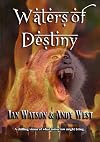
Reading this at the time the Corona virus outbreak was just getting noticed in China, it really makes one wonder. This is a story of plague, ancient and modern. What became known as Black Death wasn't Bubonic Plague as we know it today and presumed was the case earlier in history, but a hemorrhagic fever with a similar, but more viral pathology refined more than 1000 years ago by an Islamic scientist working for what was known to be a cult of assassins. Not only did the scientist create a show more stable medium to distribute the virus, but also a solution (both derived from monkeys known to a particular African tribe) that served as an immunization. This was millennia before the anyone knew of viruses or vaccines.
The story bounces back from the story of dedicated scientist to modern times, where Homeland Security catches wind of something going on. An agent imposes himself on a Islamic studies researcher at an east coast university; she and a newspaper reported get dragged into an international adventure by none other than the lead terrorist himself. And the Homeland Security guy...at one point a knight in shining armor reveals himself to be a doomsday cultist expecting this impending calamity to bring forth the rapture.
This was a very good historical/action novel marred, unfortunately, by long passages of painful, clumsy romance. The novel would be much tighter without, or at least with the sexual tension being far less invasive. Still, this was a very interesting read, especially considering what was happening in the news. show less
The story bounces back from the story of dedicated scientist to modern times, where Homeland Security catches wind of something going on. An agent imposes himself on a Islamic studies researcher at an east coast university; she and a newspaper reported get dragged into an international adventure by none other than the lead terrorist himself. And the Homeland Security guy...at one point a knight in shining armor reveals himself to be a doomsday cultist expecting this impending calamity to bring forth the rapture.
This was a very good historical/action novel marred, unfortunately, by long passages of painful, clumsy romance. The novel would be much tighter without, or at least with the sexual tension being far less invasive. Still, this was a very interesting read, especially considering what was happening in the news. show less
 This review was written for LibraryThing Early Reviewers.
An esoteric medical thriller set in 2008 and 1160, the book is about the resurrection of the Black Death by an Ismaili sect who are heirs to the Assassins and reject the Aga Khan as their spiritual leader. The 1160 AD is about an Ismaili adherent researching disease in Ethiopia; he isolates and prepares a filovirus which is eventually released as the Black Death. In 2008, a medieval historian researching the Andalusian poetisas discovers a previously unknown poem which turns out to be a show more coded message about the Black Death.
This type of book isn't really my cup of tea and I was a bit uncomfortable with the demonisation of Muslims given events in recent years, but I suppose they are the enemy du jour.
Competently written, the story seemed to hang together. Recommended if you like this type of thing. show less
This type of book isn't really my cup of tea and I was a bit uncomfortable with the demonisation of Muslims given events in recent years, but I suppose they are the enemy du jour.
Competently written, the story seemed to hang together. Recommended if you like this type of thing. show less
This review was written for LibraryThing Early Reviewers.
Minireview: I was pleasantly surprised by the quality of this first science fiction novel by Andy West, set on Venus in the far future. Taking place after Venus has been terraformed (at least to an extent) by the Aumons (intelligent machines with a hive mind), the Clonir (basically humans fixated on genetic engineering and cloning) are attempting to colonize the planet and exterminate their new neighbors. Both the setting and the unusual collective consciousness of the Aumons are effectively show more presented, and I came to care about the characters enough to make the ending powerful. I also enjoyed the hints that West drops about other aspects of his worldbuilding, based on a future history leading to a wide variety of societies scattered throughout the solar system. show less
This review was written for LibraryThing Early Reviewers.
The milieu of this novel is a far future Solar System, in which planets like Venus have been settled by adapted humans and artificial life-forms – like the Aumons, the heroes of this story. The Aumons are “electropic” beings with nuclear hearts; they started out as automatons working on the terraforming of Venus, and somehow evolved into sentience. They live in hive-like communities on Venus, where their territories are gradually being taken over by the Clonir, an aggressive and show more powerful flesh and blood race whose settlement on Venus was made possible by the Aumons, but who they now regard as barely sentient.
Arkhend, an Aumon who has been living with the Clonir as a servant and who has had his electroptic facilities enhanced to make him think more like a Clonir , makes his way to an Aumon community where, after overcoming their initial suspicion, he is accepted into the “Brotherhood”. He is immediately overwhelmed by the hive-mind-like sharing, which he finds very supportive and transforming, and resolves to use his unique perspective and direct knowledge of the enemy Clonir to the betterment of the Aumon community.
He rescues a female Clonir child from a space-ship wreck and introduces her to the Aumon community. Over time Oenkleine – as she is named by Arkhend - is fitted with electroptic adaptations so she can share with everyone else; she identifies fiercely with the Aumons and becomes virulently “anti Clonir”. Oenkleine, Arkhend and his Aumon sidekick Eafgir become a partnership – the “dree namen” – and work together to introduce innovation into Aumon society, often opposed by its more conservative elements.
The author works hard to get the reader inside the heads ( if they have them) of the Aumons; everybody “rsends” and “rlistens” and “rspeaks”. We get to understand that Aumons usually self-terminate after about 16 (Venus ?) years, but their personalities continue to exist in a Memory House from which their opinions are occasionally solicited when the still active bretheren can’t make up their minds about something. It is unclear why everyone and everything in this milieu has some kind of Dutch name (those, that is, who are not known just by an alpha-numeric designation – come back R2D2, you were so real). Unfortunately, it is all a little too self-conscious, and ultimately unconvincing. Authors like Theodore Sturgeon could put you inside the mind of an alien so economically and effortlessly, without the need for all the earnest detail that this author requires. Maybe if I were to read his other two novels set in the same milieu as the present one, I would “get it”; but I am afraid that I will not be finding out. show less
Arkhend, an Aumon who has been living with the Clonir as a servant and who has had his electroptic facilities enhanced to make him think more like a Clonir , makes his way to an Aumon community where, after overcoming their initial suspicion, he is accepted into the “Brotherhood”. He is immediately overwhelmed by the hive-mind-like sharing, which he finds very supportive and transforming, and resolves to use his unique perspective and direct knowledge of the enemy Clonir to the betterment of the Aumon community.
He rescues a female Clonir child from a space-ship wreck and introduces her to the Aumon community. Over time Oenkleine – as she is named by Arkhend - is fitted with electroptic adaptations so she can share with everyone else; she identifies fiercely with the Aumons and becomes virulently “anti Clonir”. Oenkleine, Arkhend and his Aumon sidekick Eafgir become a partnership – the “dree namen” – and work together to introduce innovation into Aumon society, often opposed by its more conservative elements.
The author works hard to get the reader inside the heads ( if they have them) of the Aumons; everybody “rsends” and “rlistens” and “rspeaks”. We get to understand that Aumons usually self-terminate after about 16 (Venus ?) years, but their personalities continue to exist in a Memory House from which their opinions are occasionally solicited when the still active bretheren can’t make up their minds about something. It is unclear why everyone and everything in this milieu has some kind of Dutch name (those, that is, who are not known just by an alpha-numeric designation – come back R2D2, you were so real). Unfortunately, it is all a little too self-conscious, and ultimately unconvincing. Authors like Theodore Sturgeon could put you inside the mind of an alien so economically and effortlessly, without the need for all the earnest detail that this author requires. Maybe if I were to read his other two novels set in the same milieu as the present one, I would “get it”; but I am afraid that I will not be finding out. show less
This review was written for LibraryThing Early Reviewers.Awards
You May Also Like
Associated Authors
Statistics
- Works
- 10
- Also by
- 3
- Members
- 65
- Popularity
- #261,993
- Rating
- 3.6
- Reviews
- 25
- ISBNs
- 23
- Languages
- 1

