

Nagisa Tatsumi
Author of The Art of Discarding: How to Get Rid of Clutter and Find Joy
About the Author
Works by Nagisa Tatsumi
Tagged
Common Knowledge
Members
Reviews
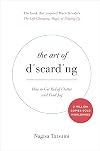
I borrowed this book from my local library because it was mentioned as one of the inspirations for Marie Kondo's book/philosophy and I was curious to see if it would be the same, and if I would find it more or less annoying than Kondo.
Occasionally the author's condescension caused some eye rolling, but less so than the Kondo book.
A bit dated (references floppy disks, among other things) but the overall concepts are timeless.
The author is Japanese, and while it's mostly universal there show more were a few things which confused me as a Western reader (for example, what are "twenty-four hour baths" and why did people get them from gas companies?).
Everyone will recognize something useful for themselves in at least one of the Ten Attitudes. Even if you disagree with the author's conclusion about it, having it laid out will help you understand why.
The second half of the book, the Ten Strategies, seemed less useful and largely redundant.
Favorite quote:
"Letting stuff pile up will only cause trouble in the end. Be brave and get rid of it." show less
Occasionally the author's condescension caused some eye rolling, but less so than the Kondo book.
A bit dated (references floppy disks, among other things) but the overall concepts are timeless.
The author is Japanese, and while it's mostly universal there show more were a few things which confused me as a Western reader (for example, what are "twenty-four hour baths" and why did people get them from gas companies?).
Everyone will recognize something useful for themselves in at least one of the Ten Attitudes. Even if you disagree with the author's conclusion about it, having it laid out will help you understand why.
The second half of the book, the Ten Strategies, seemed less useful and largely redundant.
Favorite quote:
"Letting stuff pile up will only cause trouble in the end. Be brave and get rid of it." show less
This was a really interesting read. I can see how Marie Kondo got inspiration from it. I can also see why it didn't take off like the KonMarie method did. This book is pretty cold when it comes to the emotional value we put on things, whereas the KonMarie method acknowledges the emotions we put in things and makes the discarding process a little easier on the heart.
That being said, I think this book has three big advantages over the KonMarie method.
1) It talks at length about wastefulness show more and its associated guilt, how we came to feeling guilty about waste, and how we came to be so wasteful. It is a really cool section that pulls in history, marketing, production, and recession era methods on making things last.
2) It also talks about how lack of space and organizational tools are often used as excuses to why we feel cluttered, but in actuality, our inability to discard is the issue. This point in particular was really eye opening for me because I have a friend who always complained about never having enough space, and she would be able to do x, y, and z once she moved into a bigger space. But every time she moved into a bigger space, it was still never enough. Reading that section about lack of space being an excuse really opened my eyes to her true situation - she never discarded, even when she moved. She just kept accumulating until every corner was bursting with stuff she would often forget about.
3) It talks, at LENGTH, about how Tatsumi defines "discarding," and the different ways one can discard an object: Recycling, donation, passing it on, selling it, etc., with throwing things in the trash bin being a last resort. She also talks about HOW you can do these things, which is really valuable information if you don't know who to contact or how to get started with alternative discarding methods.
Overall, I think this is a good read, but I would not have gotten as much out of it if I had not already read the KonMarie method books. I think that this book is an excellent supplement to the KonMarie books and they should be read together because they complement each other so well, and one fills in where the other might be lacking. show less
That being said, I think this book has three big advantages over the KonMarie method.
1) It talks at length about wastefulness show more and its associated guilt, how we came to feeling guilty about waste, and how we came to be so wasteful. It is a really cool section that pulls in history, marketing, production, and recession era methods on making things last.
2) It also talks about how lack of space and organizational tools are often used as excuses to why we feel cluttered, but in actuality, our inability to discard is the issue. This point in particular was really eye opening for me because I have a friend who always complained about never having enough space, and she would be able to do x, y, and z once she moved into a bigger space. But every time she moved into a bigger space, it was still never enough. Reading that section about lack of space being an excuse really opened my eyes to her true situation - she never discarded, even when she moved. She just kept accumulating until every corner was bursting with stuff she would often forget about.
3) It talks, at LENGTH, about how Tatsumi defines "discarding," and the different ways one can discard an object: Recycling, donation, passing it on, selling it, etc., with throwing things in the trash bin being a last resort. She also talks about HOW you can do these things, which is really valuable information if you don't know who to contact or how to get started with alternative discarding methods.
Overall, I think this is a good read, but I would not have gotten as much out of it if I had not already read the KonMarie method books. I think that this book is an excellent supplement to the KonMarie books and they should be read together because they complement each other so well, and one fills in where the other might be lacking. show less
Quite an interesting read, focussing on the fact that hoarding unwanted stuff is not a good thing. It ties into many thought processes - the 'sin' of waste, the idea it 'might come in one day', guilt over dumping gifts ...and sheer laziness (easier to stuff that object back in a cupboard and shut door on it!) Left me with a general sense of determination to cut back on clutter...
Мари Кондо казва, че тази книга е била едно от вдъхновенията, които тя е използвала, за да напише своята. Това е очевидно - Изкуството на изхвърлянето наистина обяснява в подробности и може би за пръв път описва отношението към примерно вещи, които много от нас смятат за show more някак сакрални - примерно книги, снимки и т.н. като към нещо, което не е ценно и трябва да се отървем от него, вместо само да събира прах и да се чудим де да го складираме.
Обаче в свят, в който The Life-Changing Magic of Tidying Up вече съществува, не виждам защо някому е нужно да се занимава с книга, която е по-сложна и по-непрактична от елегантните, лесни за изпълнение и резултатни идеи на Мари Кондо. show less
Обаче в свят, в който The Life-Changing Magic of Tidying Up вече съществува, не виждам защо някому е нужно да се занимава с книга, която е по-сложна и по-непрактична от елегантните, лесни за изпълнение и резултатни идеи на Мари Кондо. show less
You May Also Like
Associated Authors
Statistics
- Works
- 4
- Members
- 151
- Popularity
- #137,934
- Rating
- 3.4
- Reviews
- 7
- ISBNs
- 19
- Languages
- 6