
Ian Penman
Author of Fassbinder: Thousands of Mirrors
About the Author
Image credit: Winje Agency
Works by Ian Penman
Associated Works
Tagged
Common Knowledge
- Canonical name
- Penman, Ian
- Birthdate
- 1959
- Gender
- male
- Occupations
- writer
music journalist
critic - Organizations
- New Musical Express
- Awards and honors
- James Tait Black Memorial Prize for Biography (2024)
- Nationality
- UK
- Birthplace
- Wiltshire, England, UK
- Associated Place (for map)
- England, UK
Members
Reviews
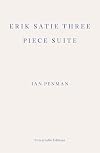
I fell in love with Satie in my late-teens, or perhaps it was my early-twenties; somewhere around there and certainly at the point when I felt the need for something other than the pop and rock I had previously listened to almost exclusively. From pop to Satie is perhaps a sideways step. He is in many ways a pop culture figure rather than a classical one. As Ian Penman observes he wrote music of ‘pop single length, not grand classical excursion’. He combined ‘high’ and ‘low’ art. show more He made his living playing popular songs in nightclubs. Like any good pop star he had an artfully crafted image through which he both presented himself to and protected himself from the world: ‘beard, bowler hat, pince-nez, three-piece suit, umbrella’. He is as enigmatic as Syd Barrett, Nick Drake, David Bowie.
For Penman Satie is a postmodernist at work while modernism was at its height. A surrealist before Surrealism really got going and one who, like so many others, wound up on André Breton’s blacklist. Satie breathed eccentric new life into traditional forms. He gave his pieces titles lik Flabby Preludes (For a Dog), The Three Distinguished Waltzes of a Jaded Dandy and Sketches and Exasperations of a Big Wooden Dummy. His written instructions about how his music should be played were equally unorthodox: ‘Be an hour late’; ‘Look like a fraud’; ‘Behave yourself, please: a monkey is watching you’.
Satie invented ambient music more than half a century before Brian Eno, calling it Furniture Music (‘OFF THE PEG OR MADE TO MEASURE!’). Unfortunately, at a time when music was still heard mainly in the concert hall, he just couldn’t get people not to listen to his music, however much he implored them. In March 1920 he played some of this music during the interval of a play at the Galerie Barbazanges. He invited the audience to ‘walk about, eat, drink’ and talk. To his consternation, they all sat and listened in reverential silence. Furniture Music, like so much of Satie, is better suited to our own time, when music is simultaneously everywhere and nowhere: the soundtrack to your life.
‘In fact’, states Penman, ‘there’s scarcely a turn in post-war music, both classical and popular, that Erik Satie doesn’t anticipate or invent or suggest’. It sounds like hyperbole, but might well be true. Reading this book it struck me how much of my favourite music, or at least a certain strand of my favourite music, is infused with Satie’s spirit: Terry Riley, Meredith Monk, Steve Reich, Philip Glass, John Cage, Morton Feldman, Ryuichi Sakamoto, the Necks, Gavin Bryars, Arvo Pärt, Harold Budd, Howard Skempton, Ólafur Arnalds, Max Richter, John Luther Adams, Eno (Brian and Roger). Some of this music sounds a bit like Satie and some not at all. All of it, like Satie’s music, occupies the space between the conservatoire and the street; art and life. A great deal of it, again like Satie, exists on the boundaries of wakefulness and sleep: wistful yet enchanting, as light as consciousness, music that slows down time, and, to use a word that drifts through these pages, induces ’reverie’.
As its title suggests this book is in three parts. The first, a conventionally structured biographical essay on Satie, is followed by an encyclopaedia of Satie (Satie A-Z) and finally a diary Penman kept while writing the book. These two sections are encyclopaedic and intimate, dryly factual and touchingly subjective. Things become determinedly unconventional and fragmented as Satie’s antic spirit is reflected through Penman’s prose. There are lots of odd facts and strange connections: Satie and Burt Bacharach; Satie and the poker-faced Northern English variety comedian Les Dawson. A critic in a British periodical took exception to the autobiographical aspects, accusing Penman of ridiculous self-importance. Personally, I think his accounts of his buying and listening habits (like myself Penman loves charity shops: he found all of his Satie vinyl in charity shops), and his dreams about Satie, take you closer to the actual experience of collecting, listening to and living with music than most music writing ever does.
In its fragmentary and mild-mannered way this is a coherent and heartfelt polemic for a certain kind of art. Art that is modest in scale rather than epic. Art that is seriously playful and playfully serious. Art that is an antidote to all that Sturm und Drang. Art as a beautiful object in an ugly world rather than a reflection of its ugliness. Art that lets in the light. Art that is slyly subversive. Art that is technically simple rather than flashily complex. Art that is easy rather than difficult. As Penman says apropos ‘easy listening’:
‘Why ‘easy’? As opposed to…? What is supposed to be over there, crouching in the shadows, that is darker and edgier and therefore more real. How, when and why did ‘easy’ come to sound so pejorative? Music to swoon or daydream to - is that such a bad thing? One of the few spaces left under capitalism where the logic of reverie might still hold sway….Let the mind drift where it may’.
Three cheers for that, I say. And five stars for this delightfully unusual, richly imaginative, and strangely moving book. show less
For Penman Satie is a postmodernist at work while modernism was at its height. A surrealist before Surrealism really got going and one who, like so many others, wound up on André Breton’s blacklist. Satie breathed eccentric new life into traditional forms. He gave his pieces titles lik Flabby Preludes (For a Dog), The Three Distinguished Waltzes of a Jaded Dandy and Sketches and Exasperations of a Big Wooden Dummy. His written instructions about how his music should be played were equally unorthodox: ‘Be an hour late’; ‘Look like a fraud’; ‘Behave yourself, please: a monkey is watching you’.
Satie invented ambient music more than half a century before Brian Eno, calling it Furniture Music (‘OFF THE PEG OR MADE TO MEASURE!’). Unfortunately, at a time when music was still heard mainly in the concert hall, he just couldn’t get people not to listen to his music, however much he implored them. In March 1920 he played some of this music during the interval of a play at the Galerie Barbazanges. He invited the audience to ‘walk about, eat, drink’ and talk. To his consternation, they all sat and listened in reverential silence. Furniture Music, like so much of Satie, is better suited to our own time, when music is simultaneously everywhere and nowhere: the soundtrack to your life.
‘In fact’, states Penman, ‘there’s scarcely a turn in post-war music, both classical and popular, that Erik Satie doesn’t anticipate or invent or suggest’. It sounds like hyperbole, but might well be true. Reading this book it struck me how much of my favourite music, or at least a certain strand of my favourite music, is infused with Satie’s spirit: Terry Riley, Meredith Monk, Steve Reich, Philip Glass, John Cage, Morton Feldman, Ryuichi Sakamoto, the Necks, Gavin Bryars, Arvo Pärt, Harold Budd, Howard Skempton, Ólafur Arnalds, Max Richter, John Luther Adams, Eno (Brian and Roger). Some of this music sounds a bit like Satie and some not at all. All of it, like Satie’s music, occupies the space between the conservatoire and the street; art and life. A great deal of it, again like Satie, exists on the boundaries of wakefulness and sleep: wistful yet enchanting, as light as consciousness, music that slows down time, and, to use a word that drifts through these pages, induces ’reverie’.
As its title suggests this book is in three parts. The first, a conventionally structured biographical essay on Satie, is followed by an encyclopaedia of Satie (Satie A-Z) and finally a diary Penman kept while writing the book. These two sections are encyclopaedic and intimate, dryly factual and touchingly subjective. Things become determinedly unconventional and fragmented as Satie’s antic spirit is reflected through Penman’s prose. There are lots of odd facts and strange connections: Satie and Burt Bacharach; Satie and the poker-faced Northern English variety comedian Les Dawson. A critic in a British periodical took exception to the autobiographical aspects, accusing Penman of ridiculous self-importance. Personally, I think his accounts of his buying and listening habits (like myself Penman loves charity shops: he found all of his Satie vinyl in charity shops), and his dreams about Satie, take you closer to the actual experience of collecting, listening to and living with music than most music writing ever does.
In its fragmentary and mild-mannered way this is a coherent and heartfelt polemic for a certain kind of art. Art that is modest in scale rather than epic. Art that is seriously playful and playfully serious. Art that is an antidote to all that Sturm und Drang. Art as a beautiful object in an ugly world rather than a reflection of its ugliness. Art that lets in the light. Art that is slyly subversive. Art that is technically simple rather than flashily complex. Art that is easy rather than difficult. As Penman says apropos ‘easy listening’:
‘Why ‘easy’? As opposed to…? What is supposed to be over there, crouching in the shadows, that is darker and edgier and therefore more real. How, when and why did ‘easy’ come to sound so pejorative? Music to swoon or daydream to - is that such a bad thing? One of the few spaces left under capitalism where the logic of reverie might still hold sway….Let the mind drift where it may’.
Three cheers for that, I say. And five stars for this delightfully unusual, richly imaginative, and strangely moving book. show less
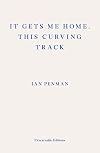
This volume also includes insightful studies on Steely Dan, James Brown, Prince, Elvis, Charlie Parker and the guitarist John Fahey. Penman has a unique depth writing about contemporary music while also citing literary figures. On Parker he calls forth the Cortazar story The Pursuer, the musician’s relationship with a Rothschild heiress and his bout with drug addiction. For James Brown he mines the singer's conflicts and mistreatment with his band members and his hard work drive for the show more beat, and Sinatra’s embodiment of “Mafia cool”.
I was particularly drawn to the piece on Steely Dan. Born in the same year as Donald Fagen reading this piece (originally published in a 2014 City Journal, a NY publication book review of Fagen’s book Eminent Hipsters) is like a stroll back in time when reading Burrough’s Naked Lunch was an act of rebellion, in Greenwich Village for a Ginsberg inspired reading was like going to church, and listening to music at the Fillmore East or The Bottom Line was a communal experience. We were all searching for an alternative lifestyle like Fagen’s song about JFK’s New Frontier we were hoping for a new way, a liberated means of expression and existence.
Steely Dan were New York artists and, like Billy Joel, they went west to LA only to then return to the East Coast vibes they grew up in. Joel’s New York State of Mind sums it up quite nicely. Fagen and Becker were “two cerebral New Yorkers adrift in scented candle lotusland…soon enough, they did both crash and burn…packed up and left Los Angeles. Becker negotiated a divorce from his five-fathom drug habit in sunny Hawaii. Fagen returned to New York and, by his own account, embraced a long-postponed full bore breakdown.”
Ian Penman is a British wordsmith comparable to Lester Bangs - writing about Frank Sinatra’s unique style and ability to “redeem something stultifyingly over-familiar: this is the acme of interpretive singing. Sinatra takes soiled $5 words and makes them glisten like mystic opals, his voice like spring light clarifying a dusty catacomb.”
The depth of Penman’s critiques is evidenced by the three disparate epigraphs he offers introducing the final piece on the artist Prince, here he cites three early 20th century giants of early modernism with descriptions that sound contemporaneous in discussing Prince’s signature creativity:
“Assiduously and without constraint, he conditioned his personality, making it impenetrable and resourceful, as submissive and difficult, as it had to be for the sake of his mission.” – Walter Benjamin, “The Image of Proust”
“To create in myself a nation with its own politics, parties and revolutions, and to be all of it, everything, to be God in the real pantheism of the people-I.” – Fernando Pessoa, The Book of Disquiet.
“It is the first or Christian name that counts, that is what makes one be as they are.” – Gertrude Stein, writing about Ulysses S. Grant.
A fun quick read for fans of contemporary pop, jazz, blues and rock music. An Ian Penman sample from the extensive writings of an extremely gifted critic. show less
I was particularly drawn to the piece on Steely Dan. Born in the same year as Donald Fagen reading this piece (originally published in a 2014 City Journal, a NY publication book review of Fagen’s book Eminent Hipsters) is like a stroll back in time when reading Burrough’s Naked Lunch was an act of rebellion, in Greenwich Village for a Ginsberg inspired reading was like going to church, and listening to music at the Fillmore East or The Bottom Line was a communal experience. We were all searching for an alternative lifestyle like Fagen’s song about JFK’s New Frontier we were hoping for a new way, a liberated means of expression and existence.
Steely Dan were New York artists and, like Billy Joel, they went west to LA only to then return to the East Coast vibes they grew up in. Joel’s New York State of Mind sums it up quite nicely. Fagen and Becker were “two cerebral New Yorkers adrift in scented candle lotusland…soon enough, they did both crash and burn…packed up and left Los Angeles. Becker negotiated a divorce from his five-fathom drug habit in sunny Hawaii. Fagen returned to New York and, by his own account, embraced a long-postponed full bore breakdown.”
Ian Penman is a British wordsmith comparable to Lester Bangs - writing about Frank Sinatra’s unique style and ability to “redeem something stultifyingly over-familiar: this is the acme of interpretive singing. Sinatra takes soiled $5 words and makes them glisten like mystic opals, his voice like spring light clarifying a dusty catacomb.”
The depth of Penman’s critiques is evidenced by the three disparate epigraphs he offers introducing the final piece on the artist Prince, here he cites three early 20th century giants of early modernism with descriptions that sound contemporaneous in discussing Prince’s signature creativity:
“Assiduously and without constraint, he conditioned his personality, making it impenetrable and resourceful, as submissive and difficult, as it had to be for the sake of his mission.” – Walter Benjamin, “The Image of Proust”
“To create in myself a nation with its own politics, parties and revolutions, and to be all of it, everything, to be God in the real pantheism of the people-I.” – Fernando Pessoa, The Book of Disquiet.
“It is the first or Christian name that counts, that is what makes one be as they are.” – Gertrude Stein, writing about Ulysses S. Grant.
A fun quick read for fans of contemporary pop, jazz, blues and rock music. An Ian Penman sample from the extensive writings of an extremely gifted critic. show less
“145.
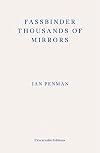
Today, all his petty tyranny and sexual serfdom and emotional blackmail and out-front substance abuse wouldn’t be tolerated, right? Of course not. (Or, at least, not in the same way.) Even back then, everyone involved doubtless knew it wasn’t ‘OK.’ But – I mean, look at the results! Rainer is so productive, he has such discipline! Which is true enough. He writes, shoots, casts and completes all his films with scarcely credible economy. In Hollywood, all that cocaine mania show more and ego indulgence and extensive use of close personal friends would result in films that took years to complete, with studio-destroying budget overruns. And they would still be deeply disappointing, if they were ever finished at all.
146.
He's not performative, not a subtle gaslighter, not a carefully conniving narcissist and control freak. If he has monstrous flaws then, well, at least they’re all upfront. There was no duplicity about what was on offer, positive or negative. If you didn’t like the setup why then just leave and go find another director to give you all these roles. He was the one holding purse strings and casting reins. Private life and working life became one and the same. Decisions made in camera. I suppose in 2022 we really should condemn such behaviour – but what would that achieve? I suppose it might make us all feel better about ourselves for a minute or two.” show less
Today, all his petty tyranny and sexual serfdom and emotional blackmail and out-front substance abuse wouldn’t be tolerated, right? Of course not. (Or, at least, not in the same way.) Even back then, everyone involved doubtless knew it wasn’t ‘OK.’ But – I mean, look at the results! Rainer is so productive, he has such discipline! Which is true enough. He writes, shoots, casts and completes all his films with scarcely credible economy. In Hollywood, all that cocaine mania show more and ego indulgence and extensive use of close personal friends would result in films that took years to complete, with studio-destroying budget overruns. And they would still be deeply disappointing, if they were ever finished at all.
146.
He's not performative, not a subtle gaslighter, not a carefully conniving narcissist and control freak. If he has monstrous flaws then, well, at least they’re all upfront. There was no duplicity about what was on offer, positive or negative. If you didn’t like the setup why then just leave and go find another director to give you all these roles. He was the one holding purse strings and casting reins. Private life and working life became one and the same. Decisions made in camera. I suppose in 2022 we really should condemn such behaviour – but what would that achieve? I suppose it might make us all feel better about ourselves for a minute or two.” show less
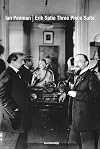
An essay, a kind of dictionary or encyclopedia, and a diary or commonplace book: these form the pieces in Ian Penman’s impressionistic engagement with Erik Satie. Other than a few well-trod biographical tidbits gleaned from actual Satie biographies, what we mostly find here are facts about Penman. Which composers does Penman list with Satie? Which pianists does he think are like Satie? Who can he think of who was also born by the sea in Normandy? Lists and proto-lists. Whimsical show more serendipities. Reports of dreams (Penman’s). A certain enthusiasm for anarchic frivolity shared by Satie, a short list of others, and Penman. Animosity toward more rigorously researched or academic approaches. But why animosity? Why not just get on with your enthusiasm? And in the end a bit tiresome.
It’s entirely possible that this is a very fine post-modern approach to biography. My one question would be, how do you distinguish between doing it well and doing it poorly? They rather amount to the same thing.
I think I prefer just listening to performances of Satie’s work or playing them myself.
Gently recommended if this is the kind of thing you like. show less
It’s entirely possible that this is a very fine post-modern approach to biography. My one question would be, how do you distinguish between doing it well and doing it poorly? They rather amount to the same thing.
I think I prefer just listening to performances of Satie’s work or playing them myself.
Gently recommended if this is the kind of thing you like. show less
Awards


You May Also Like
Associated Authors
Statistics
- Works
- 6
- Also by
- 1
- Members
- 304
- Popularity
- #77,405
- Rating
- 3.9
- Reviews
- 10
- ISBNs
- 17
- Languages
- 2