
Rajiv Mohabir
Author of Antiman: A Hybrid Memoir
Works by Rajiv Mohabir
Associated Works
Nepantla: An Anthology Dedicated to Queer Poets of Color (2018) — Contributor — 124 copies, 2 reviews
Ink Knows No Borders: Poems of the Immigrant and Refugee Experience (2019) — Contributor — 90 copies, 1 review
Buzz Words: Poems About Insects (Everyman's Library Pocket Poets Series) (2021) — Contributor — 56 copies
The World That Belongs To Us: An Anthology of Queer Poetry from South Asia (2020) — Contributor — 18 copies
And We Came Outside and Saw the Stars Again: Writers from Around the World on the COVID-19 Pandemic (2020) — Contributor — 16 copies
Tagged
Common Knowledge
- Birthdate
- 1981
- Gender
- male
- Education
- University of Florida (BA|Religious Studies)
Long Island University, Brooklyn (MSEd|Teaching English to Speakers of Other Languages)
Queens College, CUNY (MFA|poetry and literary translation) - Short biography
- While in New York working as a public school teacher, Rajiv also produced the nationally broadcast radio show KAVIhouse on JusPunjabi (2012-2013). He received his PhD in English from the University of Hawai’i and is currently an Assistant Professor of Poetry in the Department of English at Auburn University.
- Nationality
- USA
- Associated Place (for map)
- USA
Members
Reviews
Rating: 5* of five, or maybe even six....
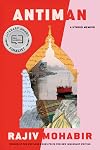
The Publisher Says: Winner of the Restless Books Prize for New Immigrant Writing, Rajiv Mohabir’s Antiman is an impassioned, genre-blending memoir that navigates the fraught constellations of race, sexuality, and cultural heritage that have shaped his experiences as an Indo-Guyanese queer poet and immigrant to the United States.
Growing up a Guyanese Indian immigrant in Central Florida, Rajiv Mohabir is fascinated by his family’s abandoned Hindu show more history and the legacy of his ancestors, who were indentured laborers on British sugarcane plantations. In Toronto he sits at the feet of Aji, his grandmother, listening to her stories and songs in her Caribbean Bhojpuri. By now Aji’s eleven children have immigrated to North America and busied themselves with ascension, Christianity, and the erasure of their heritage and Caribbean accents. But Rajiv wants to know more: where did he come from, and why does he feel so out of place?
Embarking on a journey of discovery, he lives for a year in Varanasi, on the banks of the Ganges, perfecting his Hindi and Bhojpuri and tracing the lineage of his Aji’s music. Returning to Florida, the cognitive dissonance of confederate flags, Islamophobia, and his father’s disapproval sends him to New York, where finds community among like-minded brown activists, work as an ESL teacher, and intoxication in the queer nightlife scene. But even in the South Asian paradise of Jackson Heights, Rajiv feels like an outsider: “Coolie” rather than Desi. And then the final hammer of estrangement falls when his cousin outs him as an “antiman”—a Caribbean slur for men who love men—and his father and aunts disown him.
But Aji has taught Rajiv resilience. Emerging from the chrysalis of his ancestral poetics into a new life, he embraces his identity as a poet and reclaims his status as an antiman—forging a new way of being entirely his own. Rapturous, inventive, and devastating in its critique of our own failures of inclusion, Antiman is a hybrid memoir that helps us see ourselves and relationships anew, and announces an exciting new talent in Rajiv Mohabir.
I RECEIVED A DRC FROM THE PUBLISHER VIA EDELWEISS+. THANK YOU.
My Review: If you read one sentence from this review, make it this one:
That's as perfect a description of the reason writers write, creators of anything create, as I can imagine there being.
Now. Remember who this is, talking to you: An avowed anti-poetry zealot. This is a person, the one writing this review, who reads poetry with a pained grimace (if required to in public) or not at all (if it can possibly be avoided).
You, my fellow Western people, need to read this poet's poetry of love and passion and the terror of not knowing what life is, what Life is we understand, but life? Why is there life? And what you will learn is that everyone fears death and hates loneliness and eagerly whores their body out for a brief look-in from connectedness to another.
It's all down to Ajiya, the author's grandmother, you see. Without her strength of will and flowering of soul, your author would not have come to be or learned to be. She powered his being, his existence in this Vale of Tears, with a dirty veil of Life cast aside at last so she could finally, finally! be where she belonged all along, with her grandson, her boy of the heart.
Inside, then, all of us. Everyone who reads this book. Everyone who has read the poems she gave to her grandson who turned them into words they weren't forged from and thus pounded a new meaning from the gold, the silver, the lead. We all have Rajiv Mohabir's Ajiya in us and we're lucky we do. It's a simple truth that our belovèd others are not always what we would've wished them to be. Immigrants are required to make themselves anew and Ajiya wasn't made of malleable stuff so she didn't. Instead she waited, quiet as she could make herself, until the ears she had got in exchange for the mouth she turned off showed up again.
So it is that her outsider Other grandson became the channel of her frequency and spoke its truth and its stories and its poems into our indifference-clouded intoxicated-with-vanity white/Western/privileged ears. His soul and hers...two for one...and you'll just have to pay for a single book. It's an amazing reading experience, with its Creole passages and its polyphonic choruses of lifestuff. Its ebullience carries you through the passages where cruel, small people following a character from a bad fantasy novel reject and belittle when they can be induced to notice anyone not like themselves.
That attitude is a specialist product, turned out by the megaton, of the US and its more revolting useless eaters.
There is absolutely a need for all y'all to come to this table, to sit down with all your long-lost spiritkin, and learn the songs and the poems of their walk through our world. Yours has shadows, but their light might help dispel those that frighten you the way night terrors and sleep paralysis...the states between states that humans do not want to inhabit...release you when they are rolled away.
I wait for years for reads like this to come along. show less
The Publisher Says: Winner of the Restless Books Prize for New Immigrant Writing, Rajiv Mohabir’s Antiman is an impassioned, genre-blending memoir that navigates the fraught constellations of race, sexuality, and cultural heritage that have shaped his experiences as an Indo-Guyanese queer poet and immigrant to the United States.
Growing up a Guyanese Indian immigrant in Central Florida, Rajiv Mohabir is fascinated by his family’s abandoned Hindu show more history and the legacy of his ancestors, who were indentured laborers on British sugarcane plantations. In Toronto he sits at the feet of Aji, his grandmother, listening to her stories and songs in her Caribbean Bhojpuri. By now Aji’s eleven children have immigrated to North America and busied themselves with ascension, Christianity, and the erasure of their heritage and Caribbean accents. But Rajiv wants to know more: where did he come from, and why does he feel so out of place?
Embarking on a journey of discovery, he lives for a year in Varanasi, on the banks of the Ganges, perfecting his Hindi and Bhojpuri and tracing the lineage of his Aji’s music. Returning to Florida, the cognitive dissonance of confederate flags, Islamophobia, and his father’s disapproval sends him to New York, where finds community among like-minded brown activists, work as an ESL teacher, and intoxication in the queer nightlife scene. But even in the South Asian paradise of Jackson Heights, Rajiv feels like an outsider: “Coolie” rather than Desi. And then the final hammer of estrangement falls when his cousin outs him as an “antiman”—a Caribbean slur for men who love men—and his father and aunts disown him.
But Aji has taught Rajiv resilience. Emerging from the chrysalis of his ancestral poetics into a new life, he embraces his identity as a poet and reclaims his status as an antiman—forging a new way of being entirely his own. Rapturous, inventive, and devastating in its critique of our own failures of inclusion, Antiman is a hybrid memoir that helps us see ourselves and relationships anew, and announces an exciting new talent in Rajiv Mohabir.
I RECEIVED A DRC FROM THE PUBLISHER VIA EDELWEISS+. THANK YOU.
My Review: If you read one sentence from this review, make it this one:
I'd never thought of writing as a gift, but a skill and a bravery that you have after refusing to burn up in flame. It was an act against death.
That's as perfect a description of the reason writers write, creators of anything create, as I can imagine there being.
Now. Remember who this is, talking to you: An avowed anti-poetry zealot. This is a person, the one writing this review, who reads poetry with a pained grimace (if required to in public) or not at all (if it can possibly be avoided).
You, my fellow Western people, need to read this poet's poetry of love and passion and the terror of not knowing what life is, what Life is we understand, but life? Why is there life? And what you will learn is that everyone fears death and hates loneliness and eagerly whores their body out for a brief look-in from connectedness to another.
It's all down to Ajiya, the author's grandmother, you see. Without her strength of will and flowering of soul, your author would not have come to be or learned to be. She powered his being, his existence in this Vale of Tears, with a dirty veil of Life cast aside at last so she could finally, finally! be where she belonged all along, with her grandson, her boy of the heart.
Inside, then, all of us. Everyone who reads this book. Everyone who has read the poems she gave to her grandson who turned them into words they weren't forged from and thus pounded a new meaning from the gold, the silver, the lead. We all have Rajiv Mohabir's Ajiya in us and we're lucky we do. It's a simple truth that our belovèd others are not always what we would've wished them to be. Immigrants are required to make themselves anew and Ajiya wasn't made of malleable stuff so she didn't. Instead she waited, quiet as she could make herself, until the ears she had got in exchange for the mouth she turned off showed up again.
So it is that her outsider Other grandson became the channel of her frequency and spoke its truth and its stories and its poems into our indifference-clouded intoxicated-with-vanity white/Western/privileged ears. His soul and hers...two for one...and you'll just have to pay for a single book. It's an amazing reading experience, with its Creole passages and its polyphonic choruses of lifestuff. Its ebullience carries you through the passages where cruel, small people following a character from a bad fantasy novel reject and belittle when they can be induced to notice anyone not like themselves.
That attitude is a specialist product, turned out by the megaton, of the US and its more revolting useless eaters.
There is absolutely a need for all y'all to come to this table, to sit down with all your long-lost spiritkin, and learn the songs and the poems of their walk through our world. Yours has shadows, but their light might help dispel those that frighten you the way night terrors and sleep paralysis...the states between states that humans do not want to inhabit...release you when they are rolled away.
I wait for years for reads like this to come along. show less
I don't usually read many memoirs, nor do I usually feel the need to continue reading something if it doesn't initially pull me in. For this one, I felt an obligation to read, a feeling that I should read it even though I struggled with it at times. Generally, I find it very hard to rate memoirs or even give much commentary on them because who am I to critique the story someone is telling of their life or the way in which they share that story?
I will say this one was hard for me for various show more reasons, including (but not limited to): dialect, multiple languages/references, poetry (not my forte at all), cultural knowledge which I am missing, my lack of historic & geographical background, destructive & abusive relationships, self-harm, & more. Once I decided to embrace my disquiet & go with the flow of it, regardless of my full understanding or not, I felt like an outsider looking in. Which is a good thing, imo, to upend me, to pull the rug out from under me, to destabilize me, to make me feel/see/begin to understand some of the myriad struggles, differences, challenges Mohabir has faced. His uniqueness. Lives different than mine. A skilled & clever turning of the tables, I think (even though I do not think that was the intent behind this book). It felt a bit like being tossed in to sink or swim. And while I didn't sink, neither did I swim. I learned, experienced, & ultimately walked away with some concrete knowledge, new experiences, & a surety of a vastness that I do not know.
I do very much like this review of Mohabir's memoir: https://www.ravenchronicles.org/book-reviews/shankar-narayan-reviews-rajiv-mohab.... show less
I will say this one was hard for me for various show more reasons, including (but not limited to): dialect, multiple languages/references, poetry (not my forte at all), cultural knowledge which I am missing, my lack of historic & geographical background, destructive & abusive relationships, self-harm, & more. Once I decided to embrace my disquiet & go with the flow of it, regardless of my full understanding or not, I felt like an outsider looking in. Which is a good thing, imo, to upend me, to pull the rug out from under me, to destabilize me, to make me feel/see/begin to understand some of the myriad struggles, differences, challenges Mohabir has faced. His uniqueness. Lives different than mine. A skilled & clever turning of the tables, I think (even though I do not think that was the intent behind this book). It felt a bit like being tossed in to sink or swim. And while I didn't sink, neither did I swim. I learned, experienced, & ultimately walked away with some concrete knowledge, new experiences, & a surety of a vastness that I do not know.
I do very much like this review of Mohabir's memoir: https://www.ravenchronicles.org/book-reviews/shankar-narayan-reviews-rajiv-mohab.... show less
“// The Amazon river dolphin dries their pink body on the riverbank before dancing at parties, attracted to the din of drums // They are a skilled musician, an expert of communication where human words deflate // Their words pulse throughout the Amazon Basin // You can hear them when you lose yourself in the rain forest // If you look into their eyes you will fall into a fever // They will impregnate you or cause you to impregnate them // Don’t blame your own practice of mischief on show more others //” show less

Just what I needed to read tonight as a Caribbean woman of the Indian diaspora. Loved the Hindi, Creole and Proper English depicting the heartbreaking shift and erasure of our culture.
Lists
Awards


You May Also Like
Associated Authors
Statistics
- Works
- 9
- Also by
- 10
- Members
- 87
- Popularity
- #211,167
- Rating
- 3.9
- Reviews
- 5
- ISBNs
- 12