

Tom Steyer
Author of Cheaper, Faster, Better: How We’ll Win the Climate War
About the Author
Works by Tom Steyer
Associated Works
Drawdown: The Most Comprehensive Plan Ever Proposed to Reverse Global Warming (2016) — Foreword, some editions — 628 copies, 13 reviews
Tagged
Common Knowledge
There is no Common Knowledge data for this author yet. You can help.
Members
Reviews
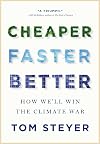
Steyer’s book is a rapid-fire text that seeks to motivate readers to become personally and civically engaged in fighting climate change. The tone is optimistic, upbeat, and decidedly technocentric in the solutions offered. Steyer has developed a perspective on the issue—and potential solutions—that are rooted in his own experience and expertise in the world of investment management and risk assessment. It’s a perspective that is perhaps underrepresented in many discussions of show more climate, which often focuses on morality-based arguments to save nature, arguments that are commonly dismissed as being economically infeasible or politically impossible. Instead Steyer lays out the business case for a wholesale transition to clean energy that also supports a healthy, prosperous, and more equitable society. He explains how the foundation for the transition has already been laid, stymied in large part by the oil and gas industry. He also seeks to point out ways that everyone can participate in the transition, although in the end, he offers little: run for office, go to work for clean tech, and reduce your personal carbon footprint.
Unsurprisingly given Steyer’s wealth and business background, the topic of personal carbon footprints gives him some difficulty. He includes a discussion against ‘footprint shaming’, in which anyone who participates in climate activism can be dismissed based on a personal, high-carbon choice (flying or driving a car). Certainly bad faith footprint shaming should be called out, but Steyer is left saying yes, it’s a critical moment in human history, but you can still enjoy life and vacations. Because the alternative would be the highly unpopular and anti-capitalist purism of banning airplanes and internal combustion engine cars. Clearly, Steyer doesn’t want to ruffle any well-to-do feathers and settles for pricking a few consciences.
The longer chapters of the book are interspersed with brief vignettes of ‘climate people’ Steyer has encountered through his climate investment firm, Galvanize. In these sections, we are introduced to people working on a wide range of innovations to address climate change. Steyer explains the gist and import of their projects in nontechnical terms, giving readers good insights into progress on a wide range of fronts. I found these vignettes interesting, giving me information about people and projects underway that I otherwise would not know about.
The writing style is decidedly chipper, squarely in the genre of those leadership and management books sold at airports (ah, irony). It also goes hard for the amusing/heartfelt personal anecdote (for example castrating piglets while interning on a ranch) that Steyer squeezes for ‘an important lesson’ that he summarizes in buzzy management-speak. We also get lots of rather tenuous analogies that at first brush seem clever but on reflection just land wrong. For example, Steyer compares the climate fight with World War II—a global threat calling for an all-in response—and describes the Victory Garden movement as one way that ordinary citizens supported the war effort. Then, of a colleague who holds a leadership position on climate, he writes, ‘To feel that the planet is doomed or that he’s unworthy of being part of the solution just because he flew on an airplane would be like telling people during World War II that they were not really anti-Nazi unless their victory garden was [very large].’ Not quite. It’s more like an officer in the army decided to release some German war prisoners into the forest while the higher-ups were distracted elsewhere. Victory Gardeners, largely women, located far from the battlelines of the war, are not analogous to a very wealthy board member heading up an NGO that directly promotes efforts to fight climate. The more apt lesson here would have been to agree that the colleague is an example of the challenge in changing personal behavior (especially among the wealthy), and to turn again to the importance of incentives, rules and regulations, and the search for personal fulfillment—the things Steyer tells us regular folks to take up in order to become ‘climate people’.
This is a book for those who are convinced that anthropomorphic climate change is real and is very much underway, are unsure if there is any feasible pathway to near- or net-zero carbon emissions, but would like to be convinced otherwise by someone who uses the vernacular of the ‘business case’. For these readers, Steyer offers an engaging read in a language they will readily follow. show less
Unsurprisingly given Steyer’s wealth and business background, the topic of personal carbon footprints gives him some difficulty. He includes a discussion against ‘footprint shaming’, in which anyone who participates in climate activism can be dismissed based on a personal, high-carbon choice (flying or driving a car). Certainly bad faith footprint shaming should be called out, but Steyer is left saying yes, it’s a critical moment in human history, but you can still enjoy life and vacations. Because the alternative would be the highly unpopular and anti-capitalist purism of banning airplanes and internal combustion engine cars. Clearly, Steyer doesn’t want to ruffle any well-to-do feathers and settles for pricking a few consciences.
The longer chapters of the book are interspersed with brief vignettes of ‘climate people’ Steyer has encountered through his climate investment firm, Galvanize. In these sections, we are introduced to people working on a wide range of innovations to address climate change. Steyer explains the gist and import of their projects in nontechnical terms, giving readers good insights into progress on a wide range of fronts. I found these vignettes interesting, giving me information about people and projects underway that I otherwise would not know about.
The writing style is decidedly chipper, squarely in the genre of those leadership and management books sold at airports (ah, irony). It also goes hard for the amusing/heartfelt personal anecdote (for example castrating piglets while interning on a ranch) that Steyer squeezes for ‘an important lesson’ that he summarizes in buzzy management-speak. We also get lots of rather tenuous analogies that at first brush seem clever but on reflection just land wrong. For example, Steyer compares the climate fight with World War II—a global threat calling for an all-in response—and describes the Victory Garden movement as one way that ordinary citizens supported the war effort. Then, of a colleague who holds a leadership position on climate, he writes, ‘To feel that the planet is doomed or that he’s unworthy of being part of the solution just because he flew on an airplane would be like telling people during World War II that they were not really anti-Nazi unless their victory garden was [very large].’ Not quite. It’s more like an officer in the army decided to release some German war prisoners into the forest while the higher-ups were distracted elsewhere. Victory Gardeners, largely women, located far from the battlelines of the war, are not analogous to a very wealthy board member heading up an NGO that directly promotes efforts to fight climate. The more apt lesson here would have been to agree that the colleague is an example of the challenge in changing personal behavior (especially among the wealthy), and to turn again to the importance of incentives, rules and regulations, and the search for personal fulfillment—the things Steyer tells us regular folks to take up in order to become ‘climate people’.
This is a book for those who are convinced that anthropomorphic climate change is real and is very much underway, are unsure if there is any feasible pathway to near- or net-zero carbon emissions, but would like to be convinced otherwise by someone who uses the vernacular of the ‘business case’. For these readers, Steyer offers an engaging read in a language they will readily follow. show less
 This review was written for LibraryThing Early Reviewers.
Summary: A climate activist and investor argues we can win the climate war through clean tech and free market capitalism.
Tom Steyer walked away from a highly successful investment fund he managed to focus on climate issues. Since then, he has advocated for clean-energy ballot measures and invested in clean technology firms. He even pursued a brief run for president on a climate platform. Reading Steyer is metaphorically, and perhaps literally, a breath of fresh air. Steyer moves past the show more standard binary of either climate action that is costly and government regulated and the fossil fuel industry arguments that we need to keep digging and drilling. From his work, he is convinced that mobilizing capital to invest in clean energy can be profitable, create jobs, and can be ramped up to reach climate goals. And we can do this without climate-shaming people.
He begins by describing his personal pivot to climate activism and investing. He became convinced of the real threat to life on our planet from climate change. And he discovered that the fossil fuel industry is also convinced of this. It has orchestrated campaigns to protect their industry, including the huge government handouts they receive each year. As a capitalist, he argues that this just doesn’t make sense, comparing it to the whaling industry, that tried to hang on as oil discoveries threatened to supplant them. Doesn’t it make more sense to shift our investment to new sources of energy, especially as these become cheaper to implement and scale up? Rather than get into the weeds of all the fossil fuel industry arguments, he applies “the Jane Austen test.” He asks “Are these guys trustworthy?”
He outlines the major areas where technology innovation is needed: electricity generation, transportation, manufacturing, agriculture, and building. The point is for each of us to assess to understand our choices and what we can do in each area. He argues against climate doomsayers and urges people to stop rooting for the end of the world, contending that we’ve just scratched the surface of what we can do. Instead, he argues for embracing a “walk-on” mentality. You accept you are an outsider, enjoy the game you can play as a JV and don’t relinquish your judgement to the insiders. It means doing what needs to be done even if you are not on “the first team.” This includes refusing to accept conventional wisdom and thinking smart. An example is the cattlemen who figured out you could grow beef and sequester carbon.
He argues against carbon-footprint shaming. Of course we should do what we can personally. But it can be more important to join collective actions like ballot initiatives that have the potential to be carbon-negative on a large scale. Steyer also believes it is time to take calculated risks to “go big.” We can timidly ask “what is right?” when we need to think about whether we are doing enough. This means winning in the marketplace by doing things that are not only cleaner but better and cheaper. And he offer examples of clean technologies that are doing just that.
Steyer believes the rules need to change so that fossil fuels don’t have an unfair advantage. He believes the best way to do this is to set standards but give lots of flexibility to industries as to how they meet them. He also proposes that getting better at measurements helps us better target interventions. Finally, messaging is more important than being right. What we call things is important.
Steyer compares this generation to the Greatest Generation of World War Two. Just as it was common to ask someone “what did you do during the war?” in an effort to which everyone was all in. He argues that we have this opportunity once again. One way or another, our children and grand-children will ask, “what did you do?”
I write this review on the night a president who opposes what Steyer advocates has taken office. I suspect this is especially a time for that “walk-on” mentality. It doesn’t look like the “rules” are going to favor clean tech. It’s going to take scrappy entrepreneurs who succeed because they are doing something better and cheaper. It would be great if they do this in America. But they might be more successful in other places more open to clean tech. The world needs this, even if the U.S. falls behind.
I like Steyer’s approach which argues that we can both walk and chew gum. We can be clean and profitable. We can invent in ways good for both people and the planet. Steyer impresses me because he has put his money and his life where his mouth is. The question is, will we jump in, or give over to despair? Will we believe lies that even those telling them don’t believe, or will we act on what we know is true while there is time?
_____________
Disclosure of Material Connection: I received a complimentary copy of this book for review from the publisher through LibraryThing’s Early Reviewer Program. show less
Tom Steyer walked away from a highly successful investment fund he managed to focus on climate issues. Since then, he has advocated for clean-energy ballot measures and invested in clean technology firms. He even pursued a brief run for president on a climate platform. Reading Steyer is metaphorically, and perhaps literally, a breath of fresh air. Steyer moves past the show more standard binary of either climate action that is costly and government regulated and the fossil fuel industry arguments that we need to keep digging and drilling. From his work, he is convinced that mobilizing capital to invest in clean energy can be profitable, create jobs, and can be ramped up to reach climate goals. And we can do this without climate-shaming people.
He begins by describing his personal pivot to climate activism and investing. He became convinced of the real threat to life on our planet from climate change. And he discovered that the fossil fuel industry is also convinced of this. It has orchestrated campaigns to protect their industry, including the huge government handouts they receive each year. As a capitalist, he argues that this just doesn’t make sense, comparing it to the whaling industry, that tried to hang on as oil discoveries threatened to supplant them. Doesn’t it make more sense to shift our investment to new sources of energy, especially as these become cheaper to implement and scale up? Rather than get into the weeds of all the fossil fuel industry arguments, he applies “the Jane Austen test.” He asks “Are these guys trustworthy?”
He outlines the major areas where technology innovation is needed: electricity generation, transportation, manufacturing, agriculture, and building. The point is for each of us to assess to understand our choices and what we can do in each area. He argues against climate doomsayers and urges people to stop rooting for the end of the world, contending that we’ve just scratched the surface of what we can do. Instead, he argues for embracing a “walk-on” mentality. You accept you are an outsider, enjoy the game you can play as a JV and don’t relinquish your judgement to the insiders. It means doing what needs to be done even if you are not on “the first team.” This includes refusing to accept conventional wisdom and thinking smart. An example is the cattlemen who figured out you could grow beef and sequester carbon.
He argues against carbon-footprint shaming. Of course we should do what we can personally. But it can be more important to join collective actions like ballot initiatives that have the potential to be carbon-negative on a large scale. Steyer also believes it is time to take calculated risks to “go big.” We can timidly ask “what is right?” when we need to think about whether we are doing enough. This means winning in the marketplace by doing things that are not only cleaner but better and cheaper. And he offer examples of clean technologies that are doing just that.
Steyer believes the rules need to change so that fossil fuels don’t have an unfair advantage. He believes the best way to do this is to set standards but give lots of flexibility to industries as to how they meet them. He also proposes that getting better at measurements helps us better target interventions. Finally, messaging is more important than being right. What we call things is important.
Steyer compares this generation to the Greatest Generation of World War Two. Just as it was common to ask someone “what did you do during the war?” in an effort to which everyone was all in. He argues that we have this opportunity once again. One way or another, our children and grand-children will ask, “what did you do?”
I write this review on the night a president who opposes what Steyer advocates has taken office. I suspect this is especially a time for that “walk-on” mentality. It doesn’t look like the “rules” are going to favor clean tech. It’s going to take scrappy entrepreneurs who succeed because they are doing something better and cheaper. It would be great if they do this in America. But they might be more successful in other places more open to clean tech. The world needs this, even if the U.S. falls behind.
I like Steyer’s approach which argues that we can both walk and chew gum. We can be clean and profitable. We can invent in ways good for both people and the planet. Steyer impresses me because he has put his money and his life where his mouth is. The question is, will we jump in, or give over to despair? Will we believe lies that even those telling them don’t believe, or will we act on what we know is true while there is time?
_____________
Disclosure of Material Connection: I received a complimentary copy of this book for review from the publisher through LibraryThing’s Early Reviewer Program. show less
This review was written for LibraryThing Early Reviewers.Tom Steyer’s Cheaper, Faster, Better: How We'll Win the Climate War presents a passionate, pragmatic blueprint for tackling the most urgent crisis of our time. The book deftly combines data-driven analysis with real-world success stories, illustrating that bold climate solutions need not break the bank—or move at a snail’s pace—to make a tangible impact. Steyer’s background in finance and environmental advocacy is evident in the clear-eyed strategies he proposes, spanning clean show more energy development, technological innovation, and policy reforms.
What sets this work apart is Steyer’s optimistic conviction that defeating climate change can simultaneously spur economic growth. Rather than framing green initiatives as societal burdens, he emphasizes their potential for job creation and cost savings, ultimately dispelling the myth that climate progress and prosperity are at odds.
Throughout, Steyer’s straightforward writing style and clear passion keep the narrative engaging. By weaving personal anecdotes together with scientific evidence, he makes a compelling case for immediate, decisive action. Cheaper, Faster, Better is an inspiring call to leverage technology, investment, and public will to drive us toward a cleaner, more sustainable future. show less
What sets this work apart is Steyer’s optimistic conviction that defeating climate change can simultaneously spur economic growth. Rather than framing green initiatives as societal burdens, he emphasizes their potential for job creation and cost savings, ultimately dispelling the myth that climate progress and prosperity are at odds.
Throughout, Steyer’s straightforward writing style and clear passion keep the narrative engaging. By weaving personal anecdotes together with scientific evidence, he makes a compelling case for immediate, decisive action. Cheaper, Faster, Better is an inspiring call to leverage technology, investment, and public will to drive us toward a cleaner, more sustainable future. show less
This review was written for LibraryThing Early Reviewers.Book Review: Cheaper, Faster, Better: How We'll Win the Climate War by Tom Steyer
*Rating: ★★★★☆
In Cheaper, Faster, Better, Tom Steyer, a former hedge fund manager turned climate activist, takes a decisive stand on climate action, presenting a multifaceted roadmap for winning the "climate war" through swift, large-scale adoption of green technologies. Steyer frames the climate crisis with a sense of urgency reminiscent of World War II, suggesting that the combination of an show more accelerating climate threat and a booming clean-energy sector places us at a pivotal crossroads.
This book’s strength lies in its blend of Steyer’s personal journey with actionable insights from his work in cleantech investment and public advocacy. Steyer takes readers through his transition from finance to activism, a shift he attributes to the growing recognition that unchecked climate change will devastate both the environment and the global economy. In an engaging, accessible style, Steyer argues that climate progress does not have to be economically regressive. Instead, he presents a vision for climate capitalism, where the drive for clean energy innovation can fuel prosperity and job creation.
Throughout, Steyer offers a compelling case against fossil fuel companies, tackling myths about the supposed prohibitive costs of clean energy and pushing for reforms that incentivize sustainable investment. Readers will appreciate his focus on “capitalism for good,” a realistic if ambitious vision for utilizing market forces to scale climate solutions rather than dismantling the structures that currently exist.
However, Cheaper, Faster, Better does tend to lean into optimism, sometimes bypassing a full consideration of the structural barriers that persist in transitioning to green energy at the scale Steyer envisions. Steyer’s focus on solutions, however empowering, could have benefited from an analysis of how political resistance and financial entrenchment in fossil fuels might temper the speed of progress. Nevertheless, for readers who are weary of inaction and eager for inspiration, Steyer’s message serves as a rallying cry for transformative change through pragmatic investment in green innovation.
In summary, Cheaper, Faster, Better will resonate with those seeking a hopeful yet grounded perspective on climate action. It provides a solid primer for understanding the economic dynamics of the clean-energy revolution and affirms the idea that scaling up climate progress can yield both environmental and economic dividends.
https://www.amazon.com/Cheaper-Faster-Better-Well-Climate-ebook/dp/B0CGDN37FX/re... show less
*Rating: ★★★★☆
In Cheaper, Faster, Better, Tom Steyer, a former hedge fund manager turned climate activist, takes a decisive stand on climate action, presenting a multifaceted roadmap for winning the "climate war" through swift, large-scale adoption of green technologies. Steyer frames the climate crisis with a sense of urgency reminiscent of World War II, suggesting that the combination of an show more accelerating climate threat and a booming clean-energy sector places us at a pivotal crossroads.
This book’s strength lies in its blend of Steyer’s personal journey with actionable insights from his work in cleantech investment and public advocacy. Steyer takes readers through his transition from finance to activism, a shift he attributes to the growing recognition that unchecked climate change will devastate both the environment and the global economy. In an engaging, accessible style, Steyer argues that climate progress does not have to be economically regressive. Instead, he presents a vision for climate capitalism, where the drive for clean energy innovation can fuel prosperity and job creation.
Throughout, Steyer offers a compelling case against fossil fuel companies, tackling myths about the supposed prohibitive costs of clean energy and pushing for reforms that incentivize sustainable investment. Readers will appreciate his focus on “capitalism for good,” a realistic if ambitious vision for utilizing market forces to scale climate solutions rather than dismantling the structures that currently exist.
However, Cheaper, Faster, Better does tend to lean into optimism, sometimes bypassing a full consideration of the structural barriers that persist in transitioning to green energy at the scale Steyer envisions. Steyer’s focus on solutions, however empowering, could have benefited from an analysis of how political resistance and financial entrenchment in fossil fuels might temper the speed of progress. Nevertheless, for readers who are weary of inaction and eager for inspiration, Steyer’s message serves as a rallying cry for transformative change through pragmatic investment in green innovation.
In summary, Cheaper, Faster, Better will resonate with those seeking a hopeful yet grounded perspective on climate action. It provides a solid primer for understanding the economic dynamics of the clean-energy revolution and affirms the idea that scaling up climate progress can yield both environmental and economic dividends.
https://www.amazon.com/Cheaper-Faster-Better-Well-Climate-ebook/dp/B0CGDN37FX/re... show less
This review was written for LibraryThing Early Reviewers.Statistics
- Works
- 1
- Also by
- 1
- Members
- 59
- Popularity
- #280,812
- Rating
- 3.8
- Reviews
- 11
- ISBNs
- 3
