
Eric Ravilious (1903–1942)
Author of High Street
About the Author
Works by Eric Ravilious
Eric Ravilious, 1903-42: A re-assessment of his life and work [Towner Art Gallery exhibition catalogue] (1986) 8 copies
Notes on the wood-engravings of Eric Ravilious, (Ariel books on the arts) (1946) — Illustrator — 5 copies
Ravilious at war : the complete work of Eric Ravilious, September 1939 - September 1942 (2002) 4 copies
Almanack 1929; 1 copy
Associated Works
The St Bride Notebook — Illustrator, some editions — 2 copies
Tagged
Common Knowledge
- Legal name
- Ravilious, Eric William
- Birthdate
- 1903-07-22
- Date of death
- 1942-09-02
- Gender
- male
- Occupations
- artist
war artist - Relationships
- Garwood, Tirzah (wife|1930-1942)
Ravilious, James (son) - Cause of death
- plane crash
- Nationality
- England
- Birthplace
- Acton, London, England, UK
- Place of death
- At sea (plane crash off Iceland)
Members
Reviews
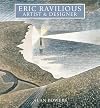
Following my reading of Sybil and Cyril by Jenny Uglow and Romantic Moderns by Alexandra Harris, this is a beautifully illustrated monograph of another English artist/illustrator of the inter-war years.
The text is interesting, providing some historical and biographical background, but concentrating on the art, and it is the numerous illustrations that make this book worthwhile.
Reading a whole book about Ravilious hasn’t been an artistic revelation, as I have already seen illustrations of show more what I still consider to be the most memorable and impactful works. However the author has done an excellent job of showing the different mediums in which Ravilious worked, woodcuts and watercolours are expected, but there are also murals (now mainly lost), designs for Wedgewood Potteries, fabric designs and even furniture.
For me, Ravilious’ most engaging picture is the watercolour Train Landscape from 1939, with the chalk Westbury Horse seen through a railway carriage window. It surprised me to realise that the picture only measures about 44cm x 55cm. However seeing illustrations of so much work by Ravilious, the consistent emotional detachment of the art became very evident as you are exposed to the repeated absence or simplification of human figures. But this detachment can also create a nostalgic, timeless quality, even when the landscape is anchored with contemporary (now historical) objects.
A 2013 Guardian review which I think captures something of what I feel:
[Ravilious] remains the artist of the empty landscape and the uninhabited room, of a transient period in national life when the old and the new could still, just, be reconciled – even if he did have to create a parallel imaginative reality in which to do it. show less
The text is interesting, providing some historical and biographical background, but concentrating on the art, and it is the numerous illustrations that make this book worthwhile.
Reading a whole book about Ravilious hasn’t been an artistic revelation, as I have already seen illustrations of show more what I still consider to be the most memorable and impactful works. However the author has done an excellent job of showing the different mediums in which Ravilious worked, woodcuts and watercolours are expected, but there are also murals (now mainly lost), designs for Wedgewood Potteries, fabric designs and even furniture.
For me, Ravilious’ most engaging picture is the watercolour Train Landscape from 1939, with the chalk Westbury Horse seen through a railway carriage window. It surprised me to realise that the picture only measures about 44cm x 55cm. However seeing illustrations of so much work by Ravilious, the consistent emotional detachment of the art became very evident as you are exposed to the repeated absence or simplification of human figures. But this detachment can also create a nostalgic, timeless quality, even when the landscape is anchored with contemporary (now historical) objects.
A 2013 Guardian review which I think captures something of what I feel:
[Ravilious] remains the artist of the empty landscape and the uninhabited room, of a transient period in national life when the old and the new could still, just, be reconciled – even if he did have to create a parallel imaginative reality in which to do it. show less
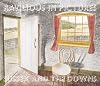
Gorgeous reproductions enhanced by neat one page essays explaining the locations & the circumstances in which the pictures were created.

Art Library - shelved at: B70
Lists
You May Also Like
Associated Authors
Statistics
- Works
- 16
- Also by
- 6
- Members
- 210
- Popularity
- #105,677
- Rating
- 3.9
- Reviews
- 3
- ISBNs
- 15
