
Works by Darin A. Croft
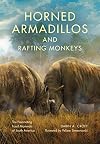
Horned Armadillos and Rafting Monkeys: The Fascinating Fossil Mammals of South America (Life of the Past) (2016) 24 copies, 2 reviews
Methods in Paleoecology: Reconstructing Cenozoic Terrestrial Environments and Ecological Communities (2018) — Editor — 1 copy
Tagged
Common Knowledge
Members
Reviews
Horned armadillos and rafting monkeys : the fascinating fossil mammals of South America by Darin A. Croft

From about the extinction of the dinosaurs until a few million years ago, South America was an island continent rather like Australia or Antarctica today, meaning that non-flying animals had a hard time getting there from other continents and vice versa. As hinted by the title, monkeys (and rodents) did manage to raft there from Africa during the Eocene, but otherwise the (non-bat) mammalian fauna consisted of endemic groups not found anywhere else. They included several types of show more "ungulates", some of which resembled tapirs and horses, sabre-toothed marsupial carnivores, and a great variety of sloths, some the size of elephants. When North and South America finally got back into contact, they exchanged mammals (and other animals, obviously), but generally speaking northern groups did better in the south than vice versa, and many southern groups died out.
After a general introduction, the book consists of chapters each organized around a specific site where mammal fossils have been found. A few pages describe the geological context of the site, then a series of two-page spreads each present one, or occasionally two, species found there, with a life reconstruction by palaeo-artist Velizar Simeonovski. Alongside the mammals there's a few reptiles and birds, incl Argentavis, possibly the largest flying bird ever.
It's quite good. If I'd wish for anything it's that Simeonovski would be a little more adventurous with the animals' appearance. He reconstructs every species in drab greys and browns, and while many modern mammals do look like that, surely ancient South America must have had the odd equivalent of a tiger, zebra, or even red deer. Don't let that dissuade you however; I heartily recommend it to anyone interested in palaeontology. show less
After a general introduction, the book consists of chapters each organized around a specific site where mammal fossils have been found. A few pages describe the geological context of the site, then a series of two-page spreads each present one, or occasionally two, species found there, with a life reconstruction by palaeo-artist Velizar Simeonovski. Alongside the mammals there's a few reptiles and birds, incl Argentavis, possibly the largest flying bird ever.
It's quite good. If I'd wish for anything it's that Simeonovski would be a little more adventurous with the animals' appearance. He reconstructs every species in drab greys and browns, and while many modern mammals do look like that, surely ancient South America must have had the odd equivalent of a tiger, zebra, or even red deer. Don't let that dissuade you however; I heartily recommend it to anyone interested in palaeontology. show less
Horned Armadillos and Rafting Monkeys: The Fascinating Fossil Mammals of South America (Life of the Past) by Darin A. Croft
On the whole, this is a typical addition to Indiana University Press's "Life of the Past" series, in that it's really most accessible to a reader with the equivalent of a college undergrad's exposure to science. That said, what I really like about this book is how it's organized in terms of the key collection sites in South America, as this gives one a better sense of what animals are in association with each other at a given period in the geological record. The single biggest new takeaway show more for me was that 3.3 million years ago there was a meteor strike in what is now Argentina, which likely softened up local populations in regards to then ongoing "Great American Biotic Interchange." show less
Awards

You May Also Like
Associated Authors
Statistics
- Works
- 2
- Members
- 25
- Popularity
- #508,560
- Rating
- 4.0
- Reviews
- 2
- ISBNs
- 4