
Yoru Sumino
Author of I Want to Eat Your Pancreas: The Complete Manga Collection
About the Author
Series
Works by Yoru Sumino
君の膵臓をたべたい 劇場特典 父と追憶の誰かに 2 copies
この気持ちもいつか忘れる 1 copy
Chcę zjeść twoją trzustkę. 2 1 copy
Chcę zjeść twoją trzustkę. 1 1 copy
Tagged
Common Knowledge
- Canonical name
- Sumino, Yoru
- Other names
- Sumino, Yoru
よる 住野
住野よる - Gender
- male
- Nationality
- Japan
- Associated Place (for map)
- Japan
Members
Reviews
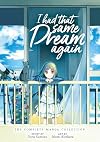
This is an instance, that while not misleading, the manga description for the book could never really do justice to the content within. A review is difficult as well, without giving away the quiet and touching gemstones that are best discovered as a surprise by the reader. And surprised they’ll be by this sweet and gentle tale which becomes more layered, and more mysterious, as it goes along.
Having recently received this, I picked it up a couple of evenings ago just to take a quick look show more before reading a new hardcover edition of Agatha Christie’s 4:50 From Paddington. Needless to say, I didn’t get to Paddington yet; I couldn’t put down this sweet, lovely story that both uplifts yet touches the heart. On one hand, it seems light and just incredibly cute, and there is humor, yet on another, it eventually becomes poignant enough to leave many readers a tad misty-eyed.
Beautifully drawn and compellingly told, Nanoka’s charming and cute personality as she interacts with her only true “friends” is tantamount to opening a window on life. It is a window where we gaze upon the possibilities when unimaginable things are thrown our way.
Along with her cat, Nanoka spends time on her way home each day with her young pretty friend who has sold her youth (prostitution), an outcast girl who cuts, but writes wonderful stories, and a kindly old woman. With each, Nanoka talks and shares what’s going on in her life, eats treats, and finds companionship. As she tries to fulfill her school assignment to discover what true happiness is for her, these friends and a boy in school who becomes an outcast will help her move forward, and discover the answer — and the truth.
I know some readers have commented that most adults will likely figure out what’s happening early on — especially when one of Nanoka’s friends suddenly disappears — but there are several possible variations, so it isn’t really “that” cut and dry. And Yoru Sumino makes the road getting there achingly lovely.
Nanoka is truly endearing, and the artwork here is as fabulous as Yoru Sumino’s lovingly crafted story. In addition to the cute Nanoka, all the other characters, both children and adults, were meticulously rendered; obviously they were given just as much thought by Sumino, and with an eye for presentation. I found the girl who had sold her youth, “Skank”, particularly well done, but that can be said of every character in this story.
What is cute and pleasant and charming from the very outset becomes incrementally lovelier and more substantive the deeper into the story readers get. I Had That Same Dream Again finally becomes sad and poignant, happy and uplifting all at once.
I can’t overstate how beautiful I Had That Same Dream Again is by the end, or how wildly easy it is for readers to get lost in its charm. It is filled with wonderful messages yet it is not heavy-handed — a real credit to Sumino’s storytelling ability.
Reading Yoru Sumino’s I Had That Same Dream Again is a rich and rewarding experience that touches the heart and the spirit, and will not be forgotten by anyone who takes the challenge. I also have I Want to Eat Your Pancreas by this same author, and now relish the thought of making time to read another work from this wonderful writer. I Had That Same Dream Again gets my highest recommendation. show less
Having recently received this, I picked it up a couple of evenings ago just to take a quick look show more before reading a new hardcover edition of Agatha Christie’s 4:50 From Paddington. Needless to say, I didn’t get to Paddington yet; I couldn’t put down this sweet, lovely story that both uplifts yet touches the heart. On one hand, it seems light and just incredibly cute, and there is humor, yet on another, it eventually becomes poignant enough to leave many readers a tad misty-eyed.
Beautifully drawn and compellingly told, Nanoka’s charming and cute personality as she interacts with her only true “friends” is tantamount to opening a window on life. It is a window where we gaze upon the possibilities when unimaginable things are thrown our way.
Along with her cat, Nanoka spends time on her way home each day with her young pretty friend who has sold her youth (prostitution), an outcast girl who cuts, but writes wonderful stories, and a kindly old woman. With each, Nanoka talks and shares what’s going on in her life, eats treats, and finds companionship. As she tries to fulfill her school assignment to discover what true happiness is for her, these friends and a boy in school who becomes an outcast will help her move forward, and discover the answer — and the truth.
I know some readers have commented that most adults will likely figure out what’s happening early on — especially when one of Nanoka’s friends suddenly disappears — but there are several possible variations, so it isn’t really “that” cut and dry. And Yoru Sumino makes the road getting there achingly lovely.
Nanoka is truly endearing, and the artwork here is as fabulous as Yoru Sumino’s lovingly crafted story. In addition to the cute Nanoka, all the other characters, both children and adults, were meticulously rendered; obviously they were given just as much thought by Sumino, and with an eye for presentation. I found the girl who had sold her youth, “Skank”, particularly well done, but that can be said of every character in this story.
What is cute and pleasant and charming from the very outset becomes incrementally lovelier and more substantive the deeper into the story readers get. I Had That Same Dream Again finally becomes sad and poignant, happy and uplifting all at once.
I can’t overstate how beautiful I Had That Same Dream Again is by the end, or how wildly easy it is for readers to get lost in its charm. It is filled with wonderful messages yet it is not heavy-handed — a real credit to Sumino’s storytelling ability.
Reading Yoru Sumino’s I Had That Same Dream Again is a rich and rewarding experience that touches the heart and the spirit, and will not be forgotten by anyone who takes the challenge. I also have I Want to Eat Your Pancreas by this same author, and now relish the thought of making time to read another work from this wonderful writer. I Had That Same Dream Again gets my highest recommendation. show less

A manga version of The Fault in Our Stars, wherein our introverted protagonist discovers his classmate's secret - she has a terminal disease with possibly only a year or so to live. It's long on schoolboy fantasy with the quiet, thoughtful lad being drawn out of his shell and away from his books by the attractive and outgoing girl, but it plays out so sweetly I was quite won over.
There is a twist near the end that doesn't ruin the book, but does mar the innocence of it all with some show more unnecessary cruelty, especially since the denouement plays out pretty much the same as it would have without it. show less

Yoru Sumino writes melancholy and morally complex stories about disaffected Japanese youth who are hiding their feelings of alienation beneath the banal exterior of model students. Her debut, I Want to Eat Your Pancreas had a classic Hollywood pairing: a perky and vivacious female lead, and a misanthropic male lead who gradually learns to embrace life. It had the familiar bones of films like Garden State but constructed with Sumino's musings on life, love, and fate in modern Japan. The show more result was life affirming and charming.
I Will Forget This Feeling Someday has similar themes and elements. The hero, Suzuki Kaya, is a well behaved student on the outside but consumed with apathy for life within. His raison d'etre becomes his mysterious encounters with a girl from another dimension whom he cannot see in full, only the parts of her body that emit an eerie biophosphorent glow. His meetings with her give his life meaning as they discover that events in their two worlds are mysteriously connected. However, Kaya starts taking destructive risks in his own world to try and help Chika in hers', and he neglects connections with his family and friends to obsess over her. Chika disappears, and his mother dies, which change Kaya's life.
As an adult, he begins dating a classmate that he once ignored in high school, Sanae. However, he confesses to Sanae that he doesn't love her, that he only loved once and now he does not have the capacity to do so. He tells her the story of Chika. Gradually, Sanae helps him realize that as much as he has been clinging to the memory of Chika and shutting out new connections and experiences, he has changed since Chika was in his life and forgotten what his feelings for her were like.
Here is where the book becomes moving and powerful, as Sumino unveils her true theme like a carver making a delicate rose out of wood. We all have seasons in our life that seem to define us, and we find it hard to let go of the happiness or even the pain of those days. We may shut out the present, not "seeing the forest for the trees"-but even while trying our hardest not to change we are changing more than we realize. Sanae helps Kaya realize this, and in a twist that does not quite explain the book's sci-fi elements of the first half of the book Kaya says goodbye to Chika. I didn't really want the sci-fi elements explained, really-while not a 'slam dunk' for me like I Want to Eat Your Pancreas, this novel is a surreal little fable that may take a while to tell you what its all about, but will touch your heart when it does open up.
credits:- someone from thestorygraph show less
I Will Forget This Feeling Someday has similar themes and elements. The hero, Suzuki Kaya, is a well behaved student on the outside but consumed with apathy for life within. His raison d'etre becomes his mysterious encounters with a girl from another dimension whom he cannot see in full, only the parts of her body that emit an eerie biophosphorent glow. His meetings with her give his life meaning as they discover that events in their two worlds are mysteriously connected. However, Kaya starts taking destructive risks in his own world to try and help Chika in hers', and he neglects connections with his family and friends to obsess over her. Chika disappears, and his mother dies, which change Kaya's life.
As an adult, he begins dating a classmate that he once ignored in high school, Sanae. However, he confesses to Sanae that he doesn't love her, that he only loved once and now he does not have the capacity to do so. He tells her the story of Chika. Gradually, Sanae helps him realize that as much as he has been clinging to the memory of Chika and shutting out new connections and experiences, he has changed since Chika was in his life and forgotten what his feelings for her were like.
Here is where the book becomes moving and powerful, as Sumino unveils her true theme like a carver making a delicate rose out of wood. We all have seasons in our life that seem to define us, and we find it hard to let go of the happiness or even the pain of those days. We may shut out the present, not "seeing the forest for the trees"-but even while trying our hardest not to change we are changing more than we realize. Sanae helps Kaya realize this, and in a twist that does not quite explain the book's sci-fi elements of the first half of the book Kaya says goodbye to Chika. I didn't really want the sci-fi elements explained, really-while not a 'slam dunk' for me like I Want to Eat Your Pancreas, this novel is a surreal little fable that may take a while to tell you what its all about, but will touch your heart when it does open up.
credits:- someone from thestorygraph show less
I knew nothing about this book when I started reading page one, and for the first 100 pages I found it slow going as we follow an elementary school latch-key kid. Nanoka doesn't have any real friends at school, so she wanders around her neighborhood and talks with the friends she has made there: an older woman, a cat with a cropped tail, and younger woman who lets ignorant, innocent Nanoka call her Skank-san from the graffiti on her apartment door . The biggest topic of conversation is show more Nanoka's school assignment to write about happiness and what it means to her, that is until the slice of life tone takes a darker turn when Nanoka comes across a teenager in a deserted building who is lightly cutting her forearms.
At this point, I had to stop and ask myself what was the point of this and do I really want to continue. I thought about where the book could possibly be going and suddenly made connectionsbetween the Triple Goddess and magical realism that laid out the rest of the book before me. I was eager to keep reading just to see if I was right.
And somewhere along the line as I conceitedly patted myself on the back for being right, I got caught up in the failures, successes and regrets of Nanoka's friends and her resistance to bullying and development of interpersonal skills. It's predictable and manipulative, but darn if it doesn't work.
It wasn't until I had finished the manga that I found out it that it was actually an adaptation of a novel and that it was by the same creators whose I Want to Eat Your Pancreas manga adaptation I adored a couple years back. I need to more actively seek out their other projects. show less
At this point, I had to stop and ask myself what was the point of this and do I really want to continue. I thought about where the book could possibly be going and suddenly made connections
And somewhere along the line as I conceitedly patted myself on the back for being right, I got caught up in the failures, successes and regrets of Nanoka's friends and her resistance to bullying and development of interpersonal skills. It's predictable and manipulative, but darn if it doesn't work.
It wasn't until I had finished the manga that I found out it that it was actually an adaptation of a novel and that it was by the same creators whose I Want to Eat Your Pancreas manga adaptation I adored a couple years back. I need to more actively seek out their other projects. show less
Lists
Awards


You May Also Like


Associated Authors
Statistics
- Works
- 27
- Members
- 926
- Popularity
- #27,711
- Rating
- 4.2
- Reviews
- 15
- ISBNs
- 51
- Languages
- 10
- Favorited
- 1