
Sara Tantlinger
Author of To Be Devoured
About the Author
Works by Sara Tantlinger
Associated Works
Field Notes from a Nightmare: An Anthology of Ecological Horror (2021) — Contributor — 10 copies, 1 review
Tagged
Common Knowledge
- Gender
- female
- Organizations
- Seton Hill University
Members
Reviews
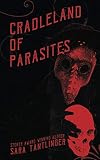
I'm not going to beat around the bush; I absolutely love this collection of plague poetry! The writing is beautiful, the imagery is exquisite (though ghastly and disturbing), and the focus on the Black Death is so cool...though a little unnerving considering when I read this (i.e. middle of a pandemic).
There are lots of intriguing overarching topics that span the collection; from the idea that this was either punishment or abandonment by God, to the utter havoc this disease caused in show more society, to the idea that it killed indiscriminately and leveled social classes. I also love how the author gives us a glimpse into the various perspectives from the time period. We see how the plague affected both prince and pauper alike, and some of my favorite poems are the ones written from the POV of people like the "Village Gravediggers" and the "Brothers of the Dead" (beaked plague doctors). There are also some cool poems that personify the disease as various demons, malicious spirits, and even a horseman of the apocalypse (Pestilence, of course).
It would appear that Tantlinger did her research for this collection. No one could write with such vivid authenticity about buboes, hemorrhaging, and puss otherwise (I hope). It also shows in poems such as "The Siege of Caffa" which is about diseased bodies being launched over city walls during wartime, and "Death Ships," which is about how the plague came to Sicily by boat. Such poems lend another level of weight and authenticity to what is already a well-thought-out collection. So many of these poems had me wanting to spend hours researching the terrifying historical veracity that spawned them.
I could go on and on about the poems in this collection. Like how there's one about people, in their petrified ignorance, who tried killing dogs and cats but left the rats alive. Or one about an awful storm that blows into a port city and exacerbates the disease. Or the ones toward the end of the collection that reach into the present and examine other infectious diseases, such as schistosomiasis, cysticercosis, and even covid. I could go on and on, but I'd rather you just go experience them for yourself!! show less
There are lots of intriguing overarching topics that span the collection; from the idea that this was either punishment or abandonment by God, to the utter havoc this disease caused in show more society, to the idea that it killed indiscriminately and leveled social classes. I also love how the author gives us a glimpse into the various perspectives from the time period. We see how the plague affected both prince and pauper alike, and some of my favorite poems are the ones written from the POV of people like the "Village Gravediggers" and the "Brothers of the Dead" (beaked plague doctors). There are also some cool poems that personify the disease as various demons, malicious spirits, and even a horseman of the apocalypse (Pestilence, of course).
It would appear that Tantlinger did her research for this collection. No one could write with such vivid authenticity about buboes, hemorrhaging, and puss otherwise (I hope). It also shows in poems such as "The Siege of Caffa" which is about diseased bodies being launched over city walls during wartime, and "Death Ships," which is about how the plague came to Sicily by boat. Such poems lend another level of weight and authenticity to what is already a well-thought-out collection. So many of these poems had me wanting to spend hours researching the terrifying historical veracity that spawned them.
I could go on and on about the poems in this collection. Like how there's one about people, in their petrified ignorance, who tried killing dogs and cats but left the rats alive. Or one about an awful storm that blows into a port city and exacerbates the disease. Or the ones toward the end of the collection that reach into the present and examine other infectious diseases, such as schistosomiasis, cysticercosis, and even covid. I could go on and on, but I'd rather you just go experience them for yourself!! show less
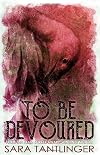
This novella is a case of an excellent execution transforming what could have been, in lesser hands, a bog-standard psychological horror story into something special. Tantlinger gives us an extraordinary first-person account, an unreliable (even to herself) narrator whose descent into madness may not be as gradual as it first appears. With equal parts of astute psychology and grotesquerie, this is a real winner for horror aficionados.
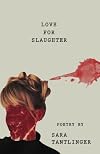
I've got some admittedly mixed feelings about this collection. On one hand, there are some gorgeous dark poems that made me glad to have picked up the collection, and when I first started reading the collection, I couldn't put it down, I enjoyed the work so much. As the collection kept unfolding, however, a few things became clear. First, there are definitely some poems here which don't hold their own weight, and while you could argue they belong in the collection thematically, it also show more doesn't feel as if they contribute anything not already offered by plenty of other poems in the collection, so losing those more dead-weight poems would have made for a stronger collection. Second, this is such a tightly themed collection, the images and ideas get repetitive, and I fear there's no other way to say it. If this had been a chapbook-length collection featuring perhaps a third of the poems here, chosen from among the best, I'd be in love with this work and shouting its praise to anyone who'd listen. As is, though...even though I could recognize the power in some of the images and language when it came to poems from around the mid-point on, a lot of the power was lost because they were striking the exact same notes and meanings as earlier poems.
I'm not sure I've ever appreciated poems by an author in a way that left me not so keen to check out their future full collections, but more interested in seeing what they'd have pop up in batches of 1-3 poems in journals, but that's how I feel here. I wish this collection had been pared down so that the whole would have had more impact, without the repetition that does get monotonous, or that some of these poems had been changed out for others which might have offered more breadth to the collection.
There are some gems here, but in terms of the collection as a whole, things felt a bit repetitive and unfinished, with a lot of the weaker poems being so simple and repetitive in meaning that they might as well have been a stanza taken from others. show less
I'm not sure I've ever appreciated poems by an author in a way that left me not so keen to check out their future full collections, but more interested in seeing what they'd have pop up in batches of 1-3 poems in journals, but that's how I feel here. I wish this collection had been pared down so that the whole would have had more impact, without the repetition that does get monotonous, or that some of these poems had been changed out for others which might have offered more breadth to the collection.
There are some gems here, but in terms of the collection as a whole, things felt a bit repetitive and unfinished, with a lot of the weaker poems being so simple and repetitive in meaning that they might as well have been a stanza taken from others. show less
Lists
Awards


You May Also Like
Associated Authors
Statistics
- Works
- 11
- Also by
- 15
- Members
- 252
- Popularity
- #90,784
- Rating
- 3.6
- Reviews
- 9
- ISBNs
- 13