
Joan Harrison (1) (1907–1994)
Author of Rebecca [1940 film]
For other authors named Joan Harrison, see the disambiguation page.
Works by Joan Harrison
Associated Works
Alfred Hitchcock: The Masterpiece Collection [14 films 1942-1976] (1942) — Writer — 117 copies, 2 reviews
Tagged
Common Knowledge
- Canonical name
- Harrison, Joan
- Birthdate
- 1907-06-26
- Date of death
- 1994-08-14
- Gender
- female
- Education
- University of Oxford (St. Hugh's College)
Sorbonne University - Occupations
- screenwriter
film producer
television producer - Relationships
- Ambler, Eric (husband)
- Short biography
- Joan Harrison was born in Guildford, Surrey, England, where her father was the publisher of two local newspapers. After attending a boarding school in Kent, she enrolled at Oxford University, graduating with honors in philosophy, politics, and economics. As an undergraduate, she reviewed films for the student newspaper. She later studied at the Sorbonne. In 1933, she was hired as a secretary by director Alfred Hitchcock. She soon graduated to reading books and scripts, writing synopses, and contributing to scripts. In 1939, she accompanied Hitchcock to Hollywood, where she worked as his assistant and as a writer on films. She received her first screen credit on Hitchcock's film Jamaica Inn (1939), based on the novel by Daphne du Maurier. She became the first female screenwriter to be nominated for the Academy Award for Best Original Screenplay when the category was introduced in 1940, and was the first screenwriter to receive two Academy Award nominations in the same year in separate categories, for co-writing the screenplay for Foreign Correspondent (original) and Rebecca (adapted), both directed by Hitchcock. In 1941, Harrison struck out on her own and got a job as a scriptwriter by MGM. In 1943, she became a pioneering female producer when she was hired by Universal, where her first film was Phantom Lady (1944). Also in 1944, she produced and shared the screenwriting credit for Dark Waters. In the 1940s and 1950s, she produced the mystery thrillers The Strange Affair of Uncle Harry; Nocturne; They Won't Believe Me; Ride the Pink Horse; Once More, My Darling; Circle of Danger, and more. From 1955 to 1962, she produced the television series Alfred Hitchcock Presents with Norman Lloyd. She and Lloyd also produced the 1968 TV anthology series Journey Into the Unknown. In 1958, she married mystery writer Eric Ambler. A biography of Joan Harrison called Phantom Lady by Christina Lane was published in 2020
- Nationality
- UK
- Birthplace
- Guildford, Surrey, England, UK
- Places of residence
- London, England, UK
Hollywood, California, USA - Place of death
- London, England, UK
- Associated Place (for map)
- England, UK
Members
Reviews
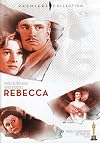
“Last night I dreamt I went to Manderly again….”
Joan Fontaine is captivating in Hitchcock’s beautifully realized romantic drama of a new wife competing with a memory so strong it hangs like a shadow over every facet of her existence. Robert E. Sherwood and Joan Harrison crafted a riveting screenplay from Michael Hogan and Scottish mystery writer Phillip MacDonald’s adaptation of Daphne Du Maurier’s now classic tale of dark romance.
Franz Waxman’s lovely score and George show more Barnes’ lushly photographed scenes frame David O. Selznick’s stellar production like a mist forming on the grounds of Manderly. A wonderful cast of screen veterans make this very long film a mesmerizing drama from which you can’t look away.
Olivier gives a strong performance as the dashing yet troubled widower, Maxim, but it is Fontaine as the young and unsure girl overwhelmed by his romantic attentions who stole our hearts and became a film favorite, winning the Academy Award the next year for Hitchcock’s Suspicion.
Fontaine is swept off her feet by the debonair but brooding widower, Maxim. Mousy and shy, there is an endearing charm to her performance in the early portion of the film which has the viewer falling in love with her. It all seems like a dream to her, and Hitchcock uses a rainy windshield to give she and the viewer a snow globe-like first glance at Manderly, further augmenting the story’s dreamlike quality.
Their fairy-tale romance has its darker elements, however, and from her first moments at Manderly she begins to realize that Rebecca, though long-dead, is in many ways still very much alive. She must compete with Rebecca’s figurative ghost at every turn, diminishing her self-confidence. Friends like Reginald Denny and Nigel Bruce cannot offset the twisted loyalty of Maxim’s housekeeper, Miss Danvers (Judith Anderson).
Just when she finds the strength to break free from Rebecca’s memory, a battered boat and startling revelations from Maxim about his marriage turn everything upside down. George Sanders causes much trouble during this phase of the story but the revelations are not as yet fully disclosed; nor is the outcome for Manderly and the couple certain in any way. Fontaine is amazing as she grows up and becomes an anchor for Maxim, finally becoming Mrs. De Winter.
A romantically haunting drama with a tremendously enchanting performance from Joan Fontaine, Rebecca is a cinematic masterpiece and a must-see film. show less
Joan Fontaine is captivating in Hitchcock’s beautifully realized romantic drama of a new wife competing with a memory so strong it hangs like a shadow over every facet of her existence. Robert E. Sherwood and Joan Harrison crafted a riveting screenplay from Michael Hogan and Scottish mystery writer Phillip MacDonald’s adaptation of Daphne Du Maurier’s now classic tale of dark romance.
Franz Waxman’s lovely score and George show more Barnes’ lushly photographed scenes frame David O. Selznick’s stellar production like a mist forming on the grounds of Manderly. A wonderful cast of screen veterans make this very long film a mesmerizing drama from which you can’t look away.
Olivier gives a strong performance as the dashing yet troubled widower, Maxim, but it is Fontaine as the young and unsure girl overwhelmed by his romantic attentions who stole our hearts and became a film favorite, winning the Academy Award the next year for Hitchcock’s Suspicion.
Fontaine is swept off her feet by the debonair but brooding widower, Maxim. Mousy and shy, there is an endearing charm to her performance in the early portion of the film which has the viewer falling in love with her. It all seems like a dream to her, and Hitchcock uses a rainy windshield to give she and the viewer a snow globe-like first glance at Manderly, further augmenting the story’s dreamlike quality.
Their fairy-tale romance has its darker elements, however, and from her first moments at Manderly she begins to realize that Rebecca, though long-dead, is in many ways still very much alive. She must compete with Rebecca’s figurative ghost at every turn, diminishing her self-confidence. Friends like Reginald Denny and Nigel Bruce cannot offset the twisted loyalty of Maxim’s housekeeper, Miss Danvers (Judith Anderson).
Just when she finds the strength to break free from Rebecca’s memory, a battered boat and startling revelations from Maxim about his marriage turn everything upside down. George Sanders causes much trouble during this phase of the story but the revelations are not as yet fully disclosed; nor is the outcome for Manderly and the couple certain in any way. Fontaine is amazing as she grows up and becomes an anchor for Maxim, finally becoming Mrs. De Winter.
A romantically haunting drama with a tremendously enchanting performance from Joan Fontaine, Rebecca is a cinematic masterpiece and a must-see film. show less

Joan Fontaine was wonderful in this sensitive film about a shy woman who unexpectedly finds love and allows her insecurities to fuel her imagination with suspicion. She easily won the Academy Award for her performance following her fine turn the prior year in Rebecca, for which she sadly did not. Based on a novel by Francis Iles, Hitchcock’s second film starring Fontaine is more about love and the fear of losing it than suspense, but still has enough of his little touches to make it show more enjoyable as both.
Joan Fontaine is the shy but wealthy Lina. Though her head is often buried in books, her heart still beats, and when she is shown a little attention by irresponsible charmer Johnnie Aysgarth (Cary Grant), who calls her monkey-face, she begins to fall in love. When she overhears her family talking about her, the viewer feels her pain. Fontaine is wonderful here — and all throughout this film classic — using subtle movements and expressions to convey the terrible hurt within her heart; and the doubts when the romance and adventure both she and those who know her thought she’d never experience appear to be in the offing. Fontaine is marvelous as she pines for the popular Johnnie to come calling again, until finally a cablegram salvages her pride in front of her skeptical family.
Grant is excellent as the off-beat and fun Johnnie. When Lina finds the courage to tell Johnnie she loves him, he realizes he feels the same and on a rainy night they dash off to get married. Lina begins to see Johnnie in a different light however, after they have tied the knot, when his pal Beaky (Nigel Bruce) comes calling. So used are we at seeing Bruce with Rathbone in Sherlock Homes it takes some getting used to at first to accept him as Johnnie’s pal. Once we do however he puts on a good show as the affable Beaky.
Johnnie’s gambling and irresponsible ways are off-set by his charm, and at first Lina’s faith in him is usually restored at the last moment. But too many things begin to add up, and not in Johnnie’s favor. Debts, theft, a death mirroring events in a mystery book, and a woman’s insecurities are blended to create mounting tension by Hitchcock as the film progresses; until finally, a truly terrible possibility comes into play.
Fontaine is simply enchanting in a tender and subtle performance and Cary Grant gives Johnnie just the right mix of charm and danger. The beautiful romantic score from Franz Waxman was Oscar-nominated. Heather Angel has a nice part as the maid Ethel, and Auriol Lee lends fine support as the mystery-writer friend of Lina. Sherlock Holmes’ Watson, Nigel Bruce, really shines as Johnnie’s likable pal, Beaky, giving a splendid performance. Though Hitchcock’s ending, which differs from the original source, has been disparaged by many fans and critics alike, the sensitive and romantic tone of the film almost demands the ending we get, and that’s all I can say. A very fine romantic film with an underscore of suspense, Suspicion is worth watching for Fontaine’s performance alone. show less
Joan Fontaine is the shy but wealthy Lina. Though her head is often buried in books, her heart still beats, and when she is shown a little attention by irresponsible charmer Johnnie Aysgarth (Cary Grant), who calls her monkey-face, she begins to fall in love. When she overhears her family talking about her, the viewer feels her pain. Fontaine is wonderful here — and all throughout this film classic — using subtle movements and expressions to convey the terrible hurt within her heart; and the doubts when the romance and adventure both she and those who know her thought she’d never experience appear to be in the offing. Fontaine is marvelous as she pines for the popular Johnnie to come calling again, until finally a cablegram salvages her pride in front of her skeptical family.
Grant is excellent as the off-beat and fun Johnnie. When Lina finds the courage to tell Johnnie she loves him, he realizes he feels the same and on a rainy night they dash off to get married. Lina begins to see Johnnie in a different light however, after they have tied the knot, when his pal Beaky (Nigel Bruce) comes calling. So used are we at seeing Bruce with Rathbone in Sherlock Homes it takes some getting used to at first to accept him as Johnnie’s pal. Once we do however he puts on a good show as the affable Beaky.
Johnnie’s gambling and irresponsible ways are off-set by his charm, and at first Lina’s faith in him is usually restored at the last moment. But too many things begin to add up, and not in Johnnie’s favor. Debts, theft, a death mirroring events in a mystery book, and a woman’s insecurities are blended to create mounting tension by Hitchcock as the film progresses; until finally, a truly terrible possibility comes into play.
Fontaine is simply enchanting in a tender and subtle performance and Cary Grant gives Johnnie just the right mix of charm and danger. The beautiful romantic score from Franz Waxman was Oscar-nominated. Heather Angel has a nice part as the maid Ethel, and Auriol Lee lends fine support as the mystery-writer friend of Lina. Sherlock Holmes’ Watson, Nigel Bruce, really shines as Johnnie’s likable pal, Beaky, giving a splendid performance. Though Hitchcock’s ending, which differs from the original source, has been disparaged by many fans and critics alike, the sensitive and romantic tone of the film almost demands the ending we get, and that’s all I can say. A very fine romantic film with an underscore of suspense, Suspicion is worth watching for Fontaine’s performance alone. show less

A newlywed's household appears to be obsessed with her husband's dead wife.
It might have been great, but there are a few major faults. One is how frustrating it is to continually see the protagonist not doing anything about her problems. The bit that almost ruined the movie for me is the costume ball scene; it's extremely suspenseful, but for all the wrong reasons (you know exactly what's going to happen, it's horrible and awkward and you don't want it to happen, and you have to sit there show more just waiting for it...).
Concept: B
Story: B
Characters: D
Dialog: A
Pacing: B
Cinematography: A
Special effects/design: A
Acting: A
Music: B
Enjoyment: B
GPA: 3.2/4 show less
It might have been great, but there are a few major faults. One is how frustrating it is to continually see the protagonist not doing anything about her problems. The bit that almost ruined the movie for me is the costume ball scene; it's extremely suspenseful, but for all the wrong reasons (you know exactly what's going to happen, it's horrible and awkward and you don't want it to happen, and you have to sit there show more just waiting for it...).
Concept: B
Story: B
Characters: D
Dialog: A
Pacing: B
Cinematography: A
Special effects/design: A
Acting: A
Music: B
Enjoyment: B
GPA: 3.2/4 show less

A woman's husband might be considering murder.
2.5/4 (Okay).
Do we really care if he is a murderer or not? I mean, we know he's a dick either way. When it comes to a fictional character, that's what really matters. Murder would just be a plot point.
2.5/4 (Okay).
Do we really care if he is a murderer or not? I mean, we know he's a dick either way. When it comes to a fictional character, that's what really matters. Murder would just be a plot point.
Lists
Awards


You May Also Like
Associated Authors
Statistics
- Works
- 4
- Also by
- 6
- Members
- 694
- Popularity
- #36,475
- Rating
- 3.8
- Reviews
- 18
- ISBNs
- 43
- Languages
- 2