
Meelis Friedenthal
Author of The Willow King
Works by Meelis Friedenthal
Associated Works
Tagged
Common Knowledge
- Birthdate
- 1973-10-24
- Gender
- male
- Nationality
- Estonia
- Birthplace
- Viljandi, Estonia
- Associated Place (for map)
- Viljandi, Estonia
Members
Reviews

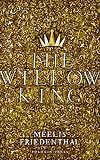
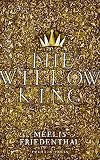
“The Willow King” by Meelis Friedenthal does not give up its secrets easily. Just as the dozens of images of birds, human faces and figures that are hidden inside the curlicue willow leaves of its cover art will not be obvious to the eye until you have examined it closely.
You can take it as the supernatural story of Laurentius Hylas who is a hapless university student suffering from melancholy who sickens further physically as he arrives in late 17th century Dorpat (present-day Tartu, show more Estonia) until he embraces his role of the titular monarch. You could also take it in a realist sense where the supernatural elements are fantasies and delusions.
I read “The Willow King” in its excellent new English translation by Matthew Hyde. Curiously, this is the only international translation to date (as of January 2017) that alters the original Estonian title “Mesilased” (The Bees). The Czech "Včely", the Dutch "De bijen", the Hungarian "Méhek", the Italian "Le api", the Latvian "Bites" and the Norwegian "Biene" all use a title equivalent to “Bees” or “The Bees”. This change is somewhat understandable as direct references to bees are few in the book except for a key discussion on pg. 139 where Laurentius states that “Plato wrote that the soul of a man who has lived a good life is reborn as a bee.” and fellow student Johannes says “bees are born out of a state of decay and putrefaction.” Just prior to this, Laurentius has been advised by University Professor Dimburg that for his illness to be cured “nigredo [i.e. putrefaction] is essential at all costs.”
Friedenthal has stated in an interview* that he took some of his themes from Virgil’s "Georgics" Book IV which is on the subject of bees and which also touches on the story of Orpheus and Eurydice which happens to be performed in a chamber opera performance in this book.
Dropping “The Bees” as the title does however make it odd that the subtitle “The Birds of the Muses” was left intact on the book’s title page. Bees were considered the birds of the Muses (the 9 Greek goddesses of the arts and sciences) in Greek mythology. As a further tie-in, Laurentius states on pg. 17: "Dorpat is the city most devoted to the Muses."
The theme of a “willow king” is more of a constant refrain in the book though, as when Laurentius' actions are treated as suspicious by the superstitious local Estonians when he goes to gather willow tree bark as a cure for his fever (this is an actual working real-life folk remedy, willow bark contains a substance similar to aspirin). The local legend has it that “Old Nick lives in the hollows of tall willow trees.” Laurentius has regular dreams and visions of a king with a tall crown and is even called the king by a fevered child.
My overall sense of the book is that Laurentius is undergoing a metamorphosis due to his taking a stance of sticking by the old ways (both the teachings of Aristotle and those of natural & folk medicine) vs. a progressive modernism (which in this 17th century time-frame is marked by the teachings of those such as Descartes, Newton and Boyle). This is just based on a single reading of the book which I still plan to read in the original Estonian.
In any case, “The Willow King” is a challenging read which does requires further nvestigation if you want to explore all of its references. But those are the sorts of books that I enjoy the most.
Friedenthal provides an extensive Author’s Note in an afterword which provides context about medieval humoral medicine, the great famine in Northern Europe in the late 17th century, the evil eye, superstition and witchcraft. It is probably well worth reading the afterword first as it doesn’t contain spoilers and helps to fix the setting and atmosphere of the book for you.
*see at the very end of “Mixing Academia with Literary Fiction” at http://www.baltictimes.com/news/articles/33675/
#ThereIsAlwaysOne
Erratum pg. 115
“… in the worst case he could up in the dock.” should presumably have been “… in the worst case he could end up in the dock." show less
You can take it as the supernatural story of Laurentius Hylas who is a hapless university student suffering from melancholy who sickens further physically as he arrives in late 17th century Dorpat (present-day Tartu, show more Estonia) until he embraces his role of the titular monarch. You could also take it in a realist sense where the supernatural elements are fantasies and delusions.
I read “The Willow King” in its excellent new English translation by Matthew Hyde. Curiously, this is the only international translation to date (as of January 2017) that alters the original Estonian title “Mesilased” (The Bees). The Czech "Včely", the Dutch "De bijen", the Hungarian "Méhek", the Italian "Le api", the Latvian "Bites" and the Norwegian "Biene" all use a title equivalent to “Bees” or “The Bees”. This change is somewhat understandable as direct references to bees are few in the book except for a key discussion on pg. 139 where Laurentius states that “Plato wrote that the soul of a man who has lived a good life is reborn as a bee.” and fellow student Johannes says “bees are born out of a state of decay and putrefaction.” Just prior to this, Laurentius has been advised by University Professor Dimburg that for his illness to be cured “nigredo [i.e. putrefaction] is essential at all costs.”
Friedenthal has stated in an interview* that he took some of his themes from Virgil’s "Georgics" Book IV which is on the subject of bees and which also touches on the story of Orpheus and Eurydice which happens to be performed in a chamber opera performance in this book.
Dropping “The Bees” as the title does however make it odd that the subtitle “The Birds of the Muses” was left intact on the book’s title page. Bees were considered the birds of the Muses (the 9 Greek goddesses of the arts and sciences) in Greek mythology. As a further tie-in, Laurentius states on pg. 17: "Dorpat is the city most devoted to the Muses."
The theme of a “willow king” is more of a constant refrain in the book though, as when Laurentius' actions are treated as suspicious by the superstitious local Estonians when he goes to gather willow tree bark as a cure for his fever (this is an actual working real-life folk remedy, willow bark contains a substance similar to aspirin). The local legend has it that “Old Nick lives in the hollows of tall willow trees.” Laurentius has regular dreams and visions of a king with a tall crown and is even called the king by a fevered child.
My overall sense of the book is that Laurentius is undergoing a metamorphosis due to his taking a stance of sticking by the old ways (both the teachings of Aristotle and those of natural & folk medicine) vs. a progressive modernism (which in this 17th century time-frame is marked by the teachings of those such as Descartes, Newton and Boyle). This is just based on a single reading of the book which I still plan to read in the original Estonian.
In any case, “The Willow King” is a challenging read which does requires further nvestigation if you want to explore all of its references. But those are the sorts of books that I enjoy the most.
Friedenthal provides an extensive Author’s Note in an afterword which provides context about medieval humoral medicine, the great famine in Northern Europe in the late 17th century, the evil eye, superstition and witchcraft. It is probably well worth reading the afterword first as it doesn’t contain spoilers and helps to fix the setting and atmosphere of the book for you.
*see at the very end of “Mixing Academia with Literary Fiction” at http://www.baltictimes.com/news/articles/33675/
#ThereIsAlwaysOne
Erratum pg. 115
“… in the worst case he could up in the dock.” should presumably have been “… in the worst case he could end up in the dock." show less
The 16th and 17th Centuries were an important period for the development of science as we know it. Unfortunately, the history we’re generally fed is a black-and-white narrative made of heroes and villians, with brave, progressive scientists forging ahead despite the supernatural trammels of religion (and, more specifically, the censorship of the Roman Catholic Church and its nefarious Inquisition).
The truth is much more nuanced and interesting. For a start, within science itself there show more were several competing approaches. The “mechanical science” of Kepler and Newton would eventually hold sway, but one should not discount the influence of the “natural philosophers” – early chemists and biologists such as Robert Boyle. Natural philosphers tended to follow theologically suspect pantheistic views (hence their clashes with the Church) but most of them also dabbled in alchemy and magic even whilst trying to study these esoteric subjects “empirically”. Some natural philosophers investigated folk remedies and witches' spells, in the belief that they had a basis in “real” science. Thus we meet, for instance, Jan Baptista van Helmont, a 17th Century scholar from the “Spanish Netherlands” (modern-day Belgium), who published studies on a method for treating gunshot wounds, involving dipping the offending weapon itself in a salve made up of, amongst other dubious ingredients, blood and “moss taken from a skull”. But it would be wrong to draw too clear a line between the “natural” and “mechanical” philosophers and brand the latter as more empirical and secular in approach. Newton dabbled in alchemy too, and Kepler had his quasi-supernatural theories about the “music of the spheres”. On the other hand, Helmont, when not hunting for moss in graveyards, was carrying out groundbreaking experiments which have gained him the epithet of “father of pneumatic chemistry”. In other words, this was an era in which the greatest and most rational of scientific minds held opinions which were, by present-day standards at least, manifestly irrational. (Some books which delve into these matters : [b:Miracles at the Jesus Oak: Histories of the Supernatural in Reformation Europe|1240360|Miracles at the Jesus Oak Histories of the Supernatural in Reformation Europe|Craig Harline|https://images.gr-assets.com/books/1182181393s/1240360.jpg|1229031], [b:Giordano Bruno and the Hermetic Tradition|230361|Giordano Bruno and the Hermetic Tradition|Frances A. Yates|https://images.gr-assets.com/books/1172913322s/230361.jpg|223095], [b:God's Philosophers: How the Medieval World Laid the Foundations of Modern Science|6601976|God's Philosophers How the Medieval World Laid the Foundations of Modern Science|James Hannam|https://images.gr-assets.com/books/1347395106s/6601976.jpg|6795846]).
In his novel “The Bees” (renamed as “The Willow King” in [a:Matthew Hyde|520463|Matthew Hyde|https://s.gr-assets.com/assets/nophoto/user/u_50x66-632230dc9882b4352d753eedf9396530.png] ’s excellent translation) Meelis Friedenthal takes us back to the late 17th Century and immerses us into the philosophical and scientific debates of the age. His protagonist Laurentius is a scholar who has just arrived to complete his medical studies at Dorpat (modern-day Tartu, Estonia), after having hastily abandoned his course at the University of Leiden under suspicion of heresy. Laurentius embodies the contradictions of his world. Well abreast of the cutting-edge works of Boyle and Descartes, he nonethless clings on to the outmoded views of Aristotle and the medical theories of Galen regarding the body’s “four humours”. Besides, Laurentius appears to be still in thrall to the superstitions of the common people. Over the course of a feverish week spent in a rain-sogged Estonia, where peasants are suffering a terrifying famine and word is spreading of a mysterious and devilish “willow king”, he finds himself taken over by the supernatural dread which marked his boyhood.
This is undoubtedly a quirky work or – if you are feeling ungenerous – a flawed one. Apart from a few chapters, the novel is largely rendered in a third-person narrative which generally follows the interior monologues of Laurentius, interspersed with occasional, pointless exclamations (“Ah!”, “Right!”, “Hopeless!”, “Very well!”) The characters often indulge in learned explanations and debates, providing us (quite unsubtly) with historical context and an overview of current philosophical trends. The plot is initially sketchy and eventually downright confusing.
Yet, despite my reservations, I lapped this novel up, haunted by its dark atmosphere and the author’s uncanny ability to recreate not just the sights and sounds of 17th century Estonia, but also the very thoughts of his characters. Indeed, my take on the novel is that it is a journey into the mindset of the period, and that the more fantastical parts of the plot are meant to represent the (for us) irrational beliefs of the time. Friedenthal moves deftly between genres – this is, nominally, a historical novel but, when Friedenthal pulls out all the stops, it ventures into Gothic and folk-horror territory and becomes deliciously creepy.
As my friend Alan suggested in an earlier review of the book, it makes sense to read the author’s afterword before delving into the book. It gives context to the novel without any spoilers and might make the work more intelligible to those who are new to the exciting historical period it portrays.
***
This review has now been uploaded also at https://endsoftheword.blogspot.com/2018/08/literary-folk-horror-willow-king-by.h... show less
The truth is much more nuanced and interesting. For a start, within science itself there show more were several competing approaches. The “mechanical science” of Kepler and Newton would eventually hold sway, but one should not discount the influence of the “natural philosophers” – early chemists and biologists such as Robert Boyle. Natural philosphers tended to follow theologically suspect pantheistic views (hence their clashes with the Church) but most of them also dabbled in alchemy and magic even whilst trying to study these esoteric subjects “empirically”. Some natural philosophers investigated folk remedies and witches' spells, in the belief that they had a basis in “real” science. Thus we meet, for instance, Jan Baptista van Helmont, a 17th Century scholar from the “Spanish Netherlands” (modern-day Belgium), who published studies on a method for treating gunshot wounds, involving dipping the offending weapon itself in a salve made up of, amongst other dubious ingredients, blood and “moss taken from a skull”. But it would be wrong to draw too clear a line between the “natural” and “mechanical” philosophers and brand the latter as more empirical and secular in approach. Newton dabbled in alchemy too, and Kepler had his quasi-supernatural theories about the “music of the spheres”. On the other hand, Helmont, when not hunting for moss in graveyards, was carrying out groundbreaking experiments which have gained him the epithet of “father of pneumatic chemistry”. In other words, this was an era in which the greatest and most rational of scientific minds held opinions which were, by present-day standards at least, manifestly irrational. (Some books which delve into these matters : [b:Miracles at the Jesus Oak: Histories of the Supernatural in Reformation Europe|1240360|Miracles at the Jesus Oak Histories of the Supernatural in Reformation Europe|Craig Harline|https://images.gr-assets.com/books/1182181393s/1240360.jpg|1229031], [b:Giordano Bruno and the Hermetic Tradition|230361|Giordano Bruno and the Hermetic Tradition|Frances A. Yates|https://images.gr-assets.com/books/1172913322s/230361.jpg|223095], [b:God's Philosophers: How the Medieval World Laid the Foundations of Modern Science|6601976|God's Philosophers How the Medieval World Laid the Foundations of Modern Science|James Hannam|https://images.gr-assets.com/books/1347395106s/6601976.jpg|6795846]).
In his novel “The Bees” (renamed as “The Willow King” in [a:Matthew Hyde|520463|Matthew Hyde|https://s.gr-assets.com/assets/nophoto/user/u_50x66-632230dc9882b4352d753eedf9396530.png] ’s excellent translation) Meelis Friedenthal takes us back to the late 17th Century and immerses us into the philosophical and scientific debates of the age. His protagonist Laurentius is a scholar who has just arrived to complete his medical studies at Dorpat (modern-day Tartu, Estonia), after having hastily abandoned his course at the University of Leiden under suspicion of heresy. Laurentius embodies the contradictions of his world. Well abreast of the cutting-edge works of Boyle and Descartes, he nonethless clings on to the outmoded views of Aristotle and the medical theories of Galen regarding the body’s “four humours”. Besides, Laurentius appears to be still in thrall to the superstitions of the common people. Over the course of a feverish week spent in a rain-sogged Estonia, where peasants are suffering a terrifying famine and word is spreading of a mysterious and devilish “willow king”, he finds himself taken over by the supernatural dread which marked his boyhood.
This is undoubtedly a quirky work or – if you are feeling ungenerous – a flawed one. Apart from a few chapters, the novel is largely rendered in a third-person narrative which generally follows the interior monologues of Laurentius, interspersed with occasional, pointless exclamations (“Ah!”, “Right!”, “Hopeless!”, “Very well!”) The characters often indulge in learned explanations and debates, providing us (quite unsubtly) with historical context and an overview of current philosophical trends. The plot is initially sketchy and eventually downright confusing.
Yet, despite my reservations, I lapped this novel up, haunted by its dark atmosphere and the author’s uncanny ability to recreate not just the sights and sounds of 17th century Estonia, but also the very thoughts of his characters. Indeed, my take on the novel is that it is a journey into the mindset of the period, and that the more fantastical parts of the plot are meant to represent the (for us) irrational beliefs of the time. Friedenthal moves deftly between genres – this is, nominally, a historical novel but, when Friedenthal pulls out all the stops, it ventures into Gothic and folk-horror territory and becomes deliciously creepy.
As my friend Alan suggested in an earlier review of the book, it makes sense to read the author’s afterword before delving into the book. It gives context to the novel without any spoilers and might make the work more intelligible to those who are new to the exciting historical period it portrays.
***
This review has now been uploaded also at https://endsoftheword.blogspot.com/2018/08/literary-folk-horror-willow-king-by.h... show less
The 16th and 17th Centuries were an important period for the development of science as we know it. Unfortunately, the history we’re generally fed is a black-and-white narrative made of heroes and villians, with brave, progressive scientists forging ahead despite the supernatural trammels of religion (and, more specifically, the censorship of the Roman Catholic Church and its nefarious Inquisition).
The truth is much more nuanced and interesting. For a start, within science itself there show more were several competing approaches. The “mechanical science” of Kepler and Newton would eventually hold sway, but one should not discount the influence of the “natural philosophers” – early chemists and biologists such as Robert Boyle. Natural philosphers tended to follow theologically suspect pantheistic views (hence their clashes with the Church) but most of them also dabbled in alchemy and magic even whilst trying to study these esoteric subjects “empirically”. Some natural philosophers investigated folk remedies and witches' spells, in the belief that they had a basis in “real” science. Thus we meet, for instance, Jan Baptista van Helmont, a 17th Century scholar from the “Spanish Netherlands” (modern-day Belgium), who published studies on a method for treating gunshot wounds, involving dipping the offending weapon itself in a salve made up of, amongst other dubious ingredients, blood and “moss taken from a skull”. But it would be wrong to draw too clear a line between the “natural” and “mechanical” philosophers and brand the latter as more empirical and secular in approach. Newton dabbled in alchemy too, and Kepler had his quasi-supernatural theories about the “music of the spheres”. On the other hand, Helmont, when not hunting for moss in graveyards, was carrying out groundbreaking experiments which have gained him the epithet of “father of pneumatic chemistry”. In other words, this was an era in which the greatest and most rational of scientific minds held opinions which were, by present-day standards at least, manifestly irrational. (Some books which delve into these matters : [b:Miracles at the Jesus Oak: Histories of the Supernatural in Reformation Europe|1240360|Miracles at the Jesus Oak Histories of the Supernatural in Reformation Europe|Craig Harline|https://images.gr-assets.com/books/1182181393s/1240360.jpg|1229031], [b:Giordano Bruno and the Hermetic Tradition|230361|Giordano Bruno and the Hermetic Tradition|Frances A. Yates|https://images.gr-assets.com/books/1172913322s/230361.jpg|223095], [b:God's Philosophers: How the Medieval World Laid the Foundations of Modern Science|6601976|God's Philosophers How the Medieval World Laid the Foundations of Modern Science|James Hannam|https://images.gr-assets.com/books/1347395106s/6601976.jpg|6795846]).
In his novel “The Bees” (renamed as “The Willow King” in [a:Matthew Hyde|520463|Matthew Hyde|https://s.gr-assets.com/assets/nophoto/user/u_50x66-632230dc9882b4352d753eedf9396530.png] ’s excellent translation) Meelis Friedenthal takes us back to the late 17th Century and immerses us into the philosophical and scientific debates of the age. His protagonist Laurentius is a scholar who has just arrived to complete his medical studies at Dorpat (modern-day Tartu, Estonia), after having hastily abandoned his course at the University of Leiden under suspicion of heresy. Laurentius embodies the contradictions of his world. Well abreast of the cutting-edge works of Boyle and Descartes, he nonethless clings on to the outmoded views of Aristotle and the medical theories of Galen regarding the body’s “four humours”. Besides, Laurentius appears to be still in thrall to the superstitions of the common people. Over the course of a feverish week spent in a rain-sogged Estonia, where peasants are suffering a terrifying famine and word is spreading of a mysterious and devilish “willow king”, he finds himself taken over by the supernatural dread which marked his boyhood.
This is undoubtedly a quirky work or – if you are feeling ungenerous – a flawed one. Apart from a few chapters, the novel is largely rendered in a third-person narrative which generally follows the interior monologues of Laurentius, interspersed with occasional, pointless exclamations (“Ah!”, “Right!”, “Hopeless!”, “Very well!”) The characters often indulge in learned explanations and debates, providing us (quite unsubtly) with historical context and an overview of current philosophical trends. The plot is initially sketchy and eventually downright confusing.
Yet, despite my reservations, I lapped this novel up, haunted by its dark atmosphere and the author’s uncanny ability to recreate not just the sights and sounds of 17th century Estonia, but also the very thoughts of his characters. Indeed, my take on the novel is that it is a journey into the mindset of the period, and that the more fantastical parts of the plot are meant to represent the (for us) irrational beliefs of the time. Friedenthal moves deftly between genres – this is, nominally, a historical novel but, when Friedenthal pulls out all the stops, it ventures into Gothic and folk-horror territory and becomes deliciously creepy.
As my friend Alan suggested in an earlier review of the book, it makes sense to read the author’s afterword before delving into the book. It gives context to the novel without any spoilers and might make the work more intelligible to those who are new to the exciting historical period it portrays.
***
This review has now been uploaded also at https://endsoftheword.blogspot.com/2018/08/literary-folk-horror-willow-king-by.h... show less
The truth is much more nuanced and interesting. For a start, within science itself there show more were several competing approaches. The “mechanical science” of Kepler and Newton would eventually hold sway, but one should not discount the influence of the “natural philosophers” – early chemists and biologists such as Robert Boyle. Natural philosphers tended to follow theologically suspect pantheistic views (hence their clashes with the Church) but most of them also dabbled in alchemy and magic even whilst trying to study these esoteric subjects “empirically”. Some natural philosophers investigated folk remedies and witches' spells, in the belief that they had a basis in “real” science. Thus we meet, for instance, Jan Baptista van Helmont, a 17th Century scholar from the “Spanish Netherlands” (modern-day Belgium), who published studies on a method for treating gunshot wounds, involving dipping the offending weapon itself in a salve made up of, amongst other dubious ingredients, blood and “moss taken from a skull”. But it would be wrong to draw too clear a line between the “natural” and “mechanical” philosophers and brand the latter as more empirical and secular in approach. Newton dabbled in alchemy too, and Kepler had his quasi-supernatural theories about the “music of the spheres”. On the other hand, Helmont, when not hunting for moss in graveyards, was carrying out groundbreaking experiments which have gained him the epithet of “father of pneumatic chemistry”. In other words, this was an era in which the greatest and most rational of scientific minds held opinions which were, by present-day standards at least, manifestly irrational. (Some books which delve into these matters : [b:Miracles at the Jesus Oak: Histories of the Supernatural in Reformation Europe|1240360|Miracles at the Jesus Oak Histories of the Supernatural in Reformation Europe|Craig Harline|https://images.gr-assets.com/books/1182181393s/1240360.jpg|1229031], [b:Giordano Bruno and the Hermetic Tradition|230361|Giordano Bruno and the Hermetic Tradition|Frances A. Yates|https://images.gr-assets.com/books/1172913322s/230361.jpg|223095], [b:God's Philosophers: How the Medieval World Laid the Foundations of Modern Science|6601976|God's Philosophers How the Medieval World Laid the Foundations of Modern Science|James Hannam|https://images.gr-assets.com/books/1347395106s/6601976.jpg|6795846]).
In his novel “The Bees” (renamed as “The Willow King” in [a:Matthew Hyde|520463|Matthew Hyde|https://s.gr-assets.com/assets/nophoto/user/u_50x66-632230dc9882b4352d753eedf9396530.png] ’s excellent translation) Meelis Friedenthal takes us back to the late 17th Century and immerses us into the philosophical and scientific debates of the age. His protagonist Laurentius is a scholar who has just arrived to complete his medical studies at Dorpat (modern-day Tartu, Estonia), after having hastily abandoned his course at the University of Leiden under suspicion of heresy. Laurentius embodies the contradictions of his world. Well abreast of the cutting-edge works of Boyle and Descartes, he nonethless clings on to the outmoded views of Aristotle and the medical theories of Galen regarding the body’s “four humours”. Besides, Laurentius appears to be still in thrall to the superstitions of the common people. Over the course of a feverish week spent in a rain-sogged Estonia, where peasants are suffering a terrifying famine and word is spreading of a mysterious and devilish “willow king”, he finds himself taken over by the supernatural dread which marked his boyhood.
This is undoubtedly a quirky work or – if you are feeling ungenerous – a flawed one. Apart from a few chapters, the novel is largely rendered in a third-person narrative which generally follows the interior monologues of Laurentius, interspersed with occasional, pointless exclamations (“Ah!”, “Right!”, “Hopeless!”, “Very well!”) The characters often indulge in learned explanations and debates, providing us (quite unsubtly) with historical context and an overview of current philosophical trends. The plot is initially sketchy and eventually downright confusing.
Yet, despite my reservations, I lapped this novel up, haunted by its dark atmosphere and the author’s uncanny ability to recreate not just the sights and sounds of 17th century Estonia, but also the very thoughts of his characters. Indeed, my take on the novel is that it is a journey into the mindset of the period, and that the more fantastical parts of the plot are meant to represent the (for us) irrational beliefs of the time. Friedenthal moves deftly between genres – this is, nominally, a historical novel but, when Friedenthal pulls out all the stops, it ventures into Gothic and folk-horror territory and becomes deliciously creepy.
As my friend Alan suggested in an earlier review of the book, it makes sense to read the author’s afterword before delving into the book. It gives context to the novel without any spoilers and might make the work more intelligible to those who are new to the exciting historical period it portrays.
***
This review has now been uploaded also at https://endsoftheword.blogspot.com/2018/08/literary-folk-horror-willow-king-by.h... show less
Dutch student Laurentis arrives at Tartu in 17th Century Estonia, to study philosophy. The city is steeped in the superstitions of the peasantry and the folk beliefs of the times. It is a time of famine, illness, cannabalism.
Initially narrated in the third person, this changes to a first person narrative. The story itself is more of a diarised account from his arrival on Monday, through to Friday / Saturday. Laurentis is sickly, suffering from the loss of his pet bird, and trying to settle show more into student life in a town preoccupied with witchcraft.
" ... everything which is concealed in hidden places .... can be made visible with reflected light ...."
Is Laurentis a witch or practitioner; was he suffering from delusions due the the fever of his illness or was he suffering a melancholy at the loss of his beloved pet ...... An interesting read. show less
Initially narrated in the third person, this changes to a first person narrative. The story itself is more of a diarised account from his arrival on Monday, through to Friday / Saturday. Laurentis is sickly, suffering from the loss of his pet bird, and trying to settle show more into student life in a town preoccupied with witchcraft.
" ... everything which is concealed in hidden places .... can be made visible with reflected light ...."
Is Laurentis a witch or practitioner; was he suffering from delusions due the the fever of his illness or was he suffering a melancholy at the loss of his beloved pet ...... An interesting read. show less
Awards

You May Also Like
Associated Authors
Statistics
- Works
- 8
- Also by
- 3
- Members
- 76
- Popularity
- #233,521
- Rating
- 3.4
- Reviews
- 7
- ISBNs
- 14
- Languages
- 4