
Kelly White
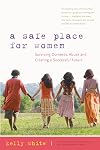
Author of A Safe Place for Women: How to Survive Domestic Abuse and Create a Successful Future
About the Author
Kelly White has been an advocate and voice for women and girls for 30 years, leading programs to end violence against women and children, and never forgetting the resiliency of the human spirit. (For more about the author, please see the first page.)
Works by Kelly White
Associated Works
Tagged
Common Knowledge
There is no Common Knowledge data for this author yet. You can help.
Members
Reviews
I am in the mental health industry, and I work on staff in a major research lab with some of the foremost authorities on family violence research, so I have some fairly robust knowledge and experience to support a critical review of this book.
That being said, I find very little to be critical of.
Immediately Ms. White addresses the disconnect between what we know about IPV as a general phenomenon and what we experience of IPV as direct service providers. I would have liked to read more about show more the less publicized aspects of IPV such as male victims of physical abuse and those dealing with the emotional terror of mentally imbalanced partners (as with Borderline Personality Traits, for instance, which as a counterpoint to the antisocial psychotic (80% male) perpetrator is more commonly (70%) found in women), but she rightly acknowledges it and moves on not in a dismissive fashion but simply in recognition that her own expertise and experience make her more useful in speaking to what she knows most about--the male perpetrating domestic terrorist and the recipients of his violence.
Ms. White balances a stirring personal narrative as well as the stories of others with discussion of the needs and concerns of providing prevention and services to these abused women and their kids, making it seem equally valuable to a professional reading for development as to a layperson reading for a compelling story.
Ms. White spends most of her time addressing the specifics of those most likely to need, use, or benefit from the services of an agency like hers without making the primary mistake of advocates and providers by dismissing the conclusions of empirical research on the dynamics of family violence.
Ms. White acknowledges that men are also victims of abuse (though cursorily) and does not vilify all men as co-perpetrators. Her discussion is rooted in the major advances of feminist theory which have shaped the growth of attention to the problem of domestic abuse, but tempers it with a basic humanism to draw it back to reality and consider alternative viewpoints in ways that many advocates don't.
The product of my own field, though important, is published research findings, which are dry, detached, and impersonal. The counterpoint generally is uninformed, man-hating extremist rhetoric about the fundamental social support for violence against women as a subservient class--generally a sentiment shaped as a response to the activists' own experience of victimization.
Ms. White, however, has produced with this book a phenomenal story, a wonderful resource, and a genuine reflection of both sides of caring for survivors of DV--the academic/political/legal/administrative side and the human/services/experiential side.
As another reviewer says, it should be marketed to a far broader audience than to survivors and service providers.
Brava. show less
That being said, I find very little to be critical of.
Immediately Ms. White addresses the disconnect between what we know about IPV as a general phenomenon and what we experience of IPV as direct service providers. I would have liked to read more about show more the less publicized aspects of IPV such as male victims of physical abuse and those dealing with the emotional terror of mentally imbalanced partners (as with Borderline Personality Traits, for instance, which as a counterpoint to the antisocial psychotic (80% male) perpetrator is more commonly (70%) found in women), but she rightly acknowledges it and moves on not in a dismissive fashion but simply in recognition that her own expertise and experience make her more useful in speaking to what she knows most about--the male perpetrating domestic terrorist and the recipients of his violence.
Ms. White balances a stirring personal narrative as well as the stories of others with discussion of the needs and concerns of providing prevention and services to these abused women and their kids, making it seem equally valuable to a professional reading for development as to a layperson reading for a compelling story.
Ms. White spends most of her time addressing the specifics of those most likely to need, use, or benefit from the services of an agency like hers without making the primary mistake of advocates and providers by dismissing the conclusions of empirical research on the dynamics of family violence.
Ms. White acknowledges that men are also victims of abuse (though cursorily) and does not vilify all men as co-perpetrators. Her discussion is rooted in the major advances of feminist theory which have shaped the growth of attention to the problem of domestic abuse, but tempers it with a basic humanism to draw it back to reality and consider alternative viewpoints in ways that many advocates don't.
The product of my own field, though important, is published research findings, which are dry, detached, and impersonal. The counterpoint generally is uninformed, man-hating extremist rhetoric about the fundamental social support for violence against women as a subservient class--generally a sentiment shaped as a response to the activists' own experience of victimization.
Ms. White, however, has produced with this book a phenomenal story, a wonderful resource, and a genuine reflection of both sides of caring for survivors of DV--the academic/political/legal/administrative side and the human/services/experiential side.
As another reviewer says, it should be marketed to a far broader audience than to survivors and service providers.
Brava. show less
 This review was written for LibraryThing Early Reviewers.
Kelly White is not the stereotypical battered wife. She's educated, self-sufficient, middle-class, with a non-abusive background. But she was the victim of domestic violence, as are countless other women who do not fit the profile of those at high risk. Because of her education and ability to support herself -- and an indomitable spirit -- she was able to get herself out of the abusive situation and has spent 25 years working to help other abused women, most of it as executive director of show more Austin's SafePlace.
Ms White reviews and integrates an amazing amount of research about abuse, identifies the difficulties and trends, and proposes directions and solutions for this very real problem. General statements and conclusions are reinforced by liberal examples from her own life, her experiences (and mistakes) working in women's shelters, and the stories of many other women with whom she has had personal contact. The result is a very readable, well-organized book which is fascinating as well as appalling.
Back in the mid-1970s, my job was working with rape and sexual abuse victims, trying to increase awareness, reporting, and successful prosecution by providing different procedures and attitudes and the involvement of women. The term "battered women" was just making its appearance back then and I was very peripherally involved with a local (brand new) shelter, because of the obvious overlap with sexual abuse. I requested this ER book hoping to see how far we have come in the last 30+ years. But despite our greater understanding of the problem and significant advances, we haven't come far enough. There's still a lot to be done.
This is a book which should be read by everyone involved with social services, and those who work with women or children -- teachers, coaches, care providers, doctors and nurses, counsellors and psychologists, lawyers. The greater awareness which can be gained from this book may very well result in much needed assistance for abused women, children and even men. My only real objection to the book is the subtitle: this is not really a book for women who need help getting out of an abusive situation; it is, rather, a book for those who wish to help them get out. show less
Ms White reviews and integrates an amazing amount of research about abuse, identifies the difficulties and trends, and proposes directions and solutions for this very real problem. General statements and conclusions are reinforced by liberal examples from her own life, her experiences (and mistakes) working in women's shelters, and the stories of many other women with whom she has had personal contact. The result is a very readable, well-organized book which is fascinating as well as appalling.
Back in the mid-1970s, my job was working with rape and sexual abuse victims, trying to increase awareness, reporting, and successful prosecution by providing different procedures and attitudes and the involvement of women. The term "battered women" was just making its appearance back then and I was very peripherally involved with a local (brand new) shelter, because of the obvious overlap with sexual abuse. I requested this ER book hoping to see how far we have come in the last 30+ years. But despite our greater understanding of the problem and significant advances, we haven't come far enough. There's still a lot to be done.
This is a book which should be read by everyone involved with social services, and those who work with women or children -- teachers, coaches, care providers, doctors and nurses, counsellors and psychologists, lawyers. The greater awareness which can be gained from this book may very well result in much needed assistance for abused women, children and even men. My only real objection to the book is the subtitle: this is not really a book for women who need help getting out of an abusive situation; it is, rather, a book for those who wish to help them get out. show less
This review was written for LibraryThing Early Reviewers.It would be difficult to overstate the importance of A Safe Place for Women by Kelly White. A well-educated and accomplished woman, White does not fit society’s stereotype of a battered wife. However, her riveting first-hand account of spousal abuse takes the reader on a very real and terrifying journey through the psychological and physical battering she endured during and after her five-year marriage. In this remarkable book, she explores the thinking of both perpetrator and victim, show more helping the reader understand how such a relationship sustains itself over time and why women return again and again to the men who hurt them.
White’s well-researched work delves into numerous aspects of domestic violence, including (but not limited to) historical and cultural factors contributing to the devaluation of women, generational patterns of abuse, groups most at risk of violence in the home, the relationship between substance abuse and battering, the effect of poverty on the equation, and the red flags that may signal a potentially abusive situation. Stories of other battered women are woven throughout, helping to drive home the need to address this tragic and often hidden societal problem.
White has used her personal experience as a springboard to assist thousands of women throughout her career as the executive director of such programs as Safe Place in Austin, TX, and now the Chicago Foundation for Women. In A Safe Place for Women, she goes far beyond telling her own story. She provides down-to-earth, practical guidance for creating and building effective domestic violence programs across the nation.
This is a must-read for anyone who has experienced or been affected by domestic violence. This is a must-read for all of us. show less
White’s well-researched work delves into numerous aspects of domestic violence, including (but not limited to) historical and cultural factors contributing to the devaluation of women, generational patterns of abuse, groups most at risk of violence in the home, the relationship between substance abuse and battering, the effect of poverty on the equation, and the red flags that may signal a potentially abusive situation. Stories of other battered women are woven throughout, helping to drive home the need to address this tragic and often hidden societal problem.
White has used her personal experience as a springboard to assist thousands of women throughout her career as the executive director of such programs as Safe Place in Austin, TX, and now the Chicago Foundation for Women. In A Safe Place for Women, she goes far beyond telling her own story. She provides down-to-earth, practical guidance for creating and building effective domestic violence programs across the nation.
This is a must-read for anyone who has experienced or been affected by domestic violence. This is a must-read for all of us. show less
This review was written for LibraryThing Early Reviewers.Overall, I found A Safe Place For Women engaging, informative, and moving. As a survivor of intimate partner violence with a bit of experience with domestic violence shelters, I found a lot in this book that either resonated with my previous experience or showed me new perspectives I had never considered.
That being said, I do have some minor criticisms of the book. Its subject matter is a bit disparate, covering White's personal experiences with IPV, general information on abuse, and tips show more and anecdotes about running a DV shelter (much of which also applies to other nonprofit organizations serving the community). At times the shifts in subject, and accompanying shifts in tone, are rather abrupt, and the quality of White's writing varies greatly depending on the topic. I found the sections on her personal experiences and the lengthy chapter dealing with the stories of various survivors to be incredibly affecting and well-written. Most of the chapters dealing with the ins and outs of nonprofit management were a bit less gripping, but were interesting nonetheless. A few sections, such as parts of the "Defining the Problem" chapter, get into quasi-academic territory, quoting statistics in what seems like an attempt to lay out a basis for her discussion of the impact of gender roles and patriarchal social structures on IPV. White seems out of her element engaging in this kind of discussion, and frankly, it's ineffective and probably unnecessary. Anyone who does not grasp the concept of institutionalized sexism and how it relates to IPV needs more than a book chapter to get them up to speed, and it's unlikely they'd pick this book up in the first place.
I've read a number of reviews of this book that recommend it to a wide audience. If it were only a memoir of White's abuse and recovery or a collection of stories from IPV victims like the "Survivors" chapter, I would agree. But the amount of material in the book about DV shelter logistics, nonprofit management, etc., make it a book that will ultimately appeal to a niche audience. I would recommend it to nonprofit workers and volunteers of all sorts and to IPV survivors with a keen interest in what goes on behind the scenes at DV shelters, but I don't think it would make a good choice for someone looking to read their first book about IPV or someone who simply has some passing curiosity about the topic. That being said, I gained a great deal from reading the book and found it well worth my time. show less
That being said, I do have some minor criticisms of the book. Its subject matter is a bit disparate, covering White's personal experiences with IPV, general information on abuse, and tips show more and anecdotes about running a DV shelter (much of which also applies to other nonprofit organizations serving the community). At times the shifts in subject, and accompanying shifts in tone, are rather abrupt, and the quality of White's writing varies greatly depending on the topic. I found the sections on her personal experiences and the lengthy chapter dealing with the stories of various survivors to be incredibly affecting and well-written. Most of the chapters dealing with the ins and outs of nonprofit management were a bit less gripping, but were interesting nonetheless. A few sections, such as parts of the "Defining the Problem" chapter, get into quasi-academic territory, quoting statistics in what seems like an attempt to lay out a basis for her discussion of the impact of gender roles and patriarchal social structures on IPV. White seems out of her element engaging in this kind of discussion, and frankly, it's ineffective and probably unnecessary. Anyone who does not grasp the concept of institutionalized sexism and how it relates to IPV needs more than a book chapter to get them up to speed, and it's unlikely they'd pick this book up in the first place.
I've read a number of reviews of this book that recommend it to a wide audience. If it were only a memoir of White's abuse and recovery or a collection of stories from IPV victims like the "Survivors" chapter, I would agree. But the amount of material in the book about DV shelter logistics, nonprofit management, etc., make it a book that will ultimately appeal to a niche audience. I would recommend it to nonprofit workers and volunteers of all sorts and to IPV survivors with a keen interest in what goes on behind the scenes at DV shelters, but I don't think it would make a good choice for someone looking to read their first book about IPV or someone who simply has some passing curiosity about the topic. That being said, I gained a great deal from reading the book and found it well worth my time. show less
This review was written for LibraryThing Early Reviewers.You May Also Like
Associated Authors
Statistics
- Works
- 9
- Also by
- 2
- Members
- 52
- Popularity
- #307,429
- Rating
- 4.0
- Reviews
- 9
- ISBNs
- 14
