
Carrie Doyle
Author of The Murder Game
Series
Works by Carrie Doyle
The Girl with the Dragonfruit Tattoo: A Tropical Island Cozy Mystery (Trouble in Paradise!) (2023) 17 copies, 3 reviews
It Take Two to Mango 2 copies
Tagged
Common Knowledge
There is no Common Knowledge data for this author yet. You can help.
Members
Reviews
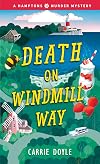
I really enjoyed this. I liked the lead character (though I don't think any head chef has as much free time on their hands as this one does)--she had a wry sense of humor. I felt like I got a good taste of the Hamptons--I loved the descriptions. I appreciated that many of the characters were a mix of good and bad (unlike in the Ellie Alexander bake shop mysteries, which are similarly good on descriptions in general). I found the wrap-up a little tedious and unrealistic, but --spoiler show more alert--at least it wasn't a long "hero in peril" climax. show less

This is a boarding school mystery. Luke, his roommate Oscar, and two girls Pippa and Kelsey sneak out late one night to a local make-out spot. They weren't expecting to overhear a murder.
Since they snuck out which could have consequences including expulsion, they want to keep their presence at the scene a secret. But Oscar is the sort of troublemaking kid who soon becomes a focus of the investigation. Luke is the stand-up, rule following kind of guy who has a past which includes his show more kidnapping and desperate escape through wooded country. He is trying to live down his reputation as the Kidnapped Kid but he still has the skills he needed when he was younger.
Once Oscar is accused, Luke becomes determined to find out who really killed the new Mrs. Heckler. He has lots of suspects besides his roommate who worked in her office to offset some demerits. Joanna Heckler was the sort of woman who always wanted the next new man which means that quite a few of the other male teachers now appear on Luke's suspect list along with her husband.
I liked Luke's growing relationship with Pippa who is a new student at the school. She left England under a sort of cloud because she was seen arguing with her best friend just before her friend was murdered. She was blamed but not charged and has come to the US to start over.
I liked the mysterious survival skills teacher who seems to know a lot more than he's saying and who pushes Luke to recover the skills that let him survive his own kidnapping.
This was an entertaining story and well-plotted mystery with interesting characters. I hope this isn't Luke's last adventure in crime-solving. show less
Since they snuck out which could have consequences including expulsion, they want to keep their presence at the scene a secret. But Oscar is the sort of troublemaking kid who soon becomes a focus of the investigation. Luke is the stand-up, rule following kind of guy who has a past which includes his show more kidnapping and desperate escape through wooded country. He is trying to live down his reputation as the Kidnapped Kid but he still has the skills he needed when he was younger.
Once Oscar is accused, Luke becomes determined to find out who really killed the new Mrs. Heckler. He has lots of suspects besides his roommate who worked in her office to offset some demerits. Joanna Heckler was the sort of woman who always wanted the next new man which means that quite a few of the other male teachers now appear on Luke's suspect list along with her husband.
I liked Luke's growing relationship with Pippa who is a new student at the school. She left England under a sort of cloud because she was seen arguing with her best friend just before her friend was murdered. She was blamed but not charged and has come to the US to start over.
I liked the mysterious survival skills teacher who seems to know a lot more than he's saying and who pushes Luke to recover the skills that let him survive his own kidnapping.
This was an entertaining story and well-plotted mystery with interesting characters. I hope this isn't Luke's last adventure in crime-solving. show less
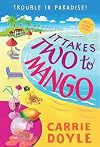
Agatha Raisin fans may want to give this fish-out-of-water New Yorker a look!
After Plum Lockhart lost her job as editor of a high-profile travel and leisure magazine (that immediately folded), she couldn't find another job, not anything, in the struggling New York magazine industry. Out of desperation, she accepted a position as a marketing and sales agent with a vacation property leasing agency, Jonathan Mayhew Caribbean Retreats, on the island of Paraiso.
Plum was sure the job would just show more be a temporary stop-gap until something more suitable came her way. But the heat, humidity, and animosity of one of her new co-workers, Damián Rodriguez, quickly wilted the enthusiasm she had for the job. When his relentless goading evolved into a bet that she couldn't lease out one of their agency's more difficult properties for the coming Presidents' Day weekend, Plum takes on the challenge with a vengeance. However, as the holiday approached and despite the cost discounts and other amenities offered, Plum received only one serious inquiry for the property.
Against her boss's orders, Plum secretly accepts a contract from a bachelor's party group, considered a "no-no" client at the Mayhew agency. All seems to be going well until one of the three young men is found dead by the villa's pool.
Even when all the apparent evidence seems to point at murder, everyone at the resort, including the local police, wants to rule it a tragic accident and sweep it under the rug so as not to upset the tourist trade. But Plum feels responsible and convinces the local police captain investigating the death to take a second look.
But things in Paraiso move at a much slower pace than in New York City, and patience is not Plum's strong suit, so she partners with the resort's head of security, the handsome and sexy Juan Kevin Muñoz, to investigate and move the case along.
This first book in Carrie Doyle's Trouble in Paradise series was fun and frothy, yet a seriously good murder mystery. Plum Lockhart is a tough sell as a likable main character at first. She's pushy, self-centered, and obliviously blunt at times. However, as the story unfolds, she begins to realize some of her flaws and softens up. She still has a ways to go, and it will be fun to witness any further reformation, much like M.C. Beaton's notoriously and originally unlikable heroine, 'Agatha Raisin' (who is actually mentioned in this novel.)
Plum has some engaging supporting characters in the office manager, Lucia Garcia, and the somewhat enigmatic Juan Kevin. I liked that Plum perceives she has a rival for Juan Kevin's attention around every corner; she's that personally insecure. I felt for her that she had so many frenemies, such as her former employee, Gerald Hand, lurking everywhere to see her at what she feels is her most vulnerable.
The author has created a beautiful island resort setting in Las Fruitas on Paraiso. The descriptions of just the drive between Plum's office, townhouse, or the hotel are full of atmospheric beauty, heat, and luxury.
The murder mystery and investigation were intriguing and made sense. There were plenty of possible suspects all along the way for readers' consideration. I was happy with the solution.
I recommend IT TAKES TWO TO MANGO to cozy mystery readers, especially those who would like a trip to a warmer climate, talk of exotic, fruity, umbrella-clad adult beverages, a laid-back pace, and a luxurious resort setting. In addition, I think that fans of M.C. Beaton's 'Agatha Raisin' may enjoy this new sleuth that shares many of her famous foibles. show less
After Plum Lockhart lost her job as editor of a high-profile travel and leisure magazine (that immediately folded), she couldn't find another job, not anything, in the struggling New York magazine industry. Out of desperation, she accepted a position as a marketing and sales agent with a vacation property leasing agency, Jonathan Mayhew Caribbean Retreats, on the island of Paraiso.
Plum was sure the job would just show more be a temporary stop-gap until something more suitable came her way. But the heat, humidity, and animosity of one of her new co-workers, Damián Rodriguez, quickly wilted the enthusiasm she had for the job. When his relentless goading evolved into a bet that she couldn't lease out one of their agency's more difficult properties for the coming Presidents' Day weekend, Plum takes on the challenge with a vengeance. However, as the holiday approached and despite the cost discounts and other amenities offered, Plum received only one serious inquiry for the property.
Against her boss's orders, Plum secretly accepts a contract from a bachelor's party group, considered a "no-no" client at the Mayhew agency. All seems to be going well until one of the three young men is found dead by the villa's pool.
Even when all the apparent evidence seems to point at murder, everyone at the resort, including the local police, wants to rule it a tragic accident and sweep it under the rug so as not to upset the tourist trade. But Plum feels responsible and convinces the local police captain investigating the death to take a second look.
But things in Paraiso move at a much slower pace than in New York City, and patience is not Plum's strong suit, so she partners with the resort's head of security, the handsome and sexy Juan Kevin Muñoz, to investigate and move the case along.
This first book in Carrie Doyle's Trouble in Paradise series was fun and frothy, yet a seriously good murder mystery. Plum Lockhart is a tough sell as a likable main character at first. She's pushy, self-centered, and obliviously blunt at times. However, as the story unfolds, she begins to realize some of her flaws and softens up. She still has a ways to go, and it will be fun to witness any further reformation, much like M.C. Beaton's notoriously and originally unlikable heroine, 'Agatha Raisin' (who is actually mentioned in this novel.)
Plum has some engaging supporting characters in the office manager, Lucia Garcia, and the somewhat enigmatic Juan Kevin. I liked that Plum perceives she has a rival for Juan Kevin's attention around every corner; she's that personally insecure. I felt for her that she had so many frenemies, such as her former employee, Gerald Hand, lurking everywhere to see her at what she feels is her most vulnerable.
The author has created a beautiful island resort setting in Las Fruitas on Paraiso. The descriptions of just the drive between Plum's office, townhouse, or the hotel are full of atmospheric beauty, heat, and luxury.
The murder mystery and investigation were intriguing and made sense. There were plenty of possible suspects all along the way for readers' consideration. I was happy with the solution.
I recommend IT TAKES TWO TO MANGO to cozy mystery readers, especially those who would like a trip to a warmer climate, talk of exotic, fruity, umbrella-clad adult beverages, a laid-back pace, and a luxurious resort setting. In addition, I think that fans of M.C. Beaton's 'Agatha Raisin' may enjoy this new sleuth that shares many of her famous foibles. show less
Signs I will hate the [insert book genre here: fantasy historical novel cozy mystery you have written:
(1) The point of view you have used is that of your main character, and your main character is:
a. Not terribly bright.
Antonia, main character of this novel, seems to have spent the last year or so of her life flinging money around like a crazed flowergirl tossing rose petals all over the congregation at a wedding. And then, because she has paid little to no attention to such matters, is show more shocked – SHOCKED, I say – when someone points out to her that, really, money is a rather finite thing when income is as limited as theirs is, and maybe she should stop spending quite so freely – and maybe shouldn't have ordered furniture shipped over from England and so forth. Shocked, I tell you. Also, someone makes an actual effort to kill her, and she … just … decides to decide that "It had just been a fluke".
b. Disgustingly judgmental.
Antonia instantly assesses the physical appearance of everyone she meeets. Reactions tend to be about 45% "oh he/she's ever so attractive until looked at more closely but then she/he's just average" and 45% outright contemptful "bleh", with the other 10% swooning and all-but-literally drooling adoration for a celebrity. For example, the incredibly ugly personality bound up in the reporter who gloms onto her is enclosed in an almost-attractive personage, but he's ridiculously short, therefore can't be attractive at all. (I'm five feet tall. This did not sit well with me.) Now, granted, of course everyone makes such assessments of other people – but even with my low opinion of humanity I cling to hope that most people aren’t this ugly in their internal monologue. Typical example of character description: "She had the husky voice of a smoker and the yellow stained teeth to confirm it. The green apron fit snugly over her Easter egg blue sweater and her low-hanging ample breasts were making an effort to burst out of the front but instead were flopping out to the sides. She had on gold dangling earrings that softened her somewhat harsh, bird-like features." Is that level of nastiness necessary?
c. Under the impression (s)he is a better detective than the detectives.
"I remember you used to be obsessed with your ex-husband’s cases. You were more of a detective than he was."
"I was better at it than he was."
d. Ridiculously vain over her appearance
She complacently notes that she doesn't have a single gray hair, and hopes she never will have. By that point, I was hoping much the same thing – because the only way you're going to naturally avoid gray hairs is to die young, and I was ready to kill her myself.
e. Surrounded by characters I came quickly to loathe almost as much as your main character.
This does not make for a pleasant reading experience.
(2) You apparently came across some facts in your research that you just have to regurgitate into your text, whether they make sense or not. After all, with these bits shoehorned in there, you can feel like you've done a public service. Or something.
I did not make note of how long the diatribe on bees went on. It was several pages, however, and for some unknown reason included ancient Egypt and multitudinous statistics.
a. However, all the research you did failed to make your writing accurate or entirely coherent.
- Bees' nests and hives are not the same thing.
- And this makes no sense: "Throughout much of the nineteenth century the Windmill Inn had housed a tannery in the barn out back; guests stayed in the main building while their saddles were treated." How can someone attempt to write a book in which a tannery is brought up without knowing that a tannery stank to high heaven, and any guest staying at an inn adjacent to a tannery would have most probably been those unable to afford better?
- "I have a garden out back. I love wild flowers." – If they're in a garden, does that not mean they're not actually wildflowers?
- "But I was his common-law wife for five years." No, you weren't. Common law marriage is not recognized in the state of New York – in fact, it's only recognized in a handful of states. So living with someone for five years – or fifteen, or eighty-two – just means you've lived with someone for that many years. You're either married or you're not. It took me less than five minutes to learn this.
(3). There are holes in your plot that could hold a spacious and overly expensive Hamptons inn.
- The owner of the inn in question prior to the piece of work that is Antonia died. Official cause of death: heart failure. Someone at some point mentions that there was swelling on the man's face that looked like (not was, mind: looked like) a beesting; was he allergic? Antonia takes this as a statement instead of a question and goes haring off in all directions a. spreading the unfounded rumor that the man was murdered by beesting (in December) and b. that he was allergic enough to bee venom that it would kill him. At no point does anyone ever actually say "Yes, this man was definitely highly allergic to beestings and being stung would cause his death" –that "common-law wife", the man's sister, and a woman who worked with for many years apparently knew nothing of any such allergy … and yet Antonia takes it as a given, and a highly unlikely and unusual method of murder. "You did know he was allergic to bees, didn’t you?" But - - - seriously, was he?? And – really? Based on absolutely nothing the so-brilliant Main Character actually is suggesting exhumation of the body??
(4) Your editor sucks, and your writing badly needs a good editor.
a. This is kind of self-evident – no examples needed.
- But because I made notes of them I'll give examples of bad writing anyway. "Maybe she just snapped one day with Gordon." The character Gordon's murder was not a "snappy" kind of murder – it was something that took planning and forethought. If someone "just snapped" they might have strangled or stabbed or shot the guy, but probably would not have located a bee, plotted out some way of conveying said bee to the victim's person in such a way that it would sting him, and watched while he asphyxiated.
- "She swallowed gently as if reluctant to release the sandwich from her tastebuds to her stomach." I'm not even starting on that. It's a terrible sentence in every possible way except actual grammar – I think it's technically correct. I'm just kind of afraid to go back and examine it.
- "It would make sense that he was after booze, thought Antonia. Didn’t he work at a liquor store?" Why would someone who worked at a liquor store be "after booze" someplace else?
- That's not what "impart" means.
- "I didn’t set out to have a beehive, it just sort of happened. I kind of inherited it. And they make the most delicious honey in the world!" This is a) asinine, and b) who or what are "they"? There is no plural anything in prior sentences
- Main character orders – in her own inn – a breakfast with "all the bells and whistles". And then hopes that the server knows what she meant. And then is content with what is brought – which, apparently, was tea and mini muffins. Given the absurd level of description in the book I would think I'd have been informed of every crumb on the tray, but no: mini muffins. That doesn't sound very bell-and-whistle to me. It's not even just whistle.
(5) You have littered the ground with suspects when there may not have even been any murders. Now, yes, it is accepted practice to obfuscate a killer's identity behind a cloud of other possibilities, but this is just ridiculous.
a. "They found arsenic in the cake, which Charmaine swore must have gotten in there by accident. She had picked some thyme from the garden to add to the cake and must have mistakenly included it, she claimed." – How could thyme a) mistakenly find its way into a cake, or b) be responsible for any quantity of arsenic?
(6) The book seems to be heavily padded.
- At one point I made a note: "oh my sweet god she ate crackers put away groceries watered a plant touched up makeup and put on lotion HELP ME". If any of the puttering that went on in several pages worth of wasted time ever became relevant, it was after I quit. Wait – the puttering, which also included long contemplation of a mysterious box she had been given along with a lengthy examination of said plant and whether she had killed it or not, did serve a purpose: it made her much too … busy to open this mysterious box before she decided she was needed in the kitchen. And so the box went unopened. For no legitimate reason.
- See above: bees.
- Am I supposed to really care that the main character loves her Uggs and that the fabric on her chair came from a company called Quadrille of which I've never heard?
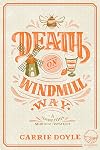
(7) Having a pretty cover will only make it worse that the book is bad. This has a very pretty cover. But it's a really rather bad book.
The usual disclaimer: I received this book via Netgalley for review. show less
(1) The point of view you have used is that of your main character, and your main character is:
a. Not terribly bright.
Antonia, main character of this novel, seems to have spent the last year or so of her life flinging money around like a crazed flowergirl tossing rose petals all over the congregation at a wedding. And then, because she has paid little to no attention to such matters, is show more shocked – SHOCKED, I say – when someone points out to her that, really, money is a rather finite thing when income is as limited as theirs is, and maybe she should stop spending quite so freely – and maybe shouldn't have ordered furniture shipped over from England and so forth. Shocked, I tell you. Also, someone makes an actual effort to kill her, and she … just … decides to decide that "It had just been a fluke".
b. Disgustingly judgmental.
Antonia instantly assesses the physical appearance of everyone she meeets. Reactions tend to be about 45% "oh he/she's ever so attractive until looked at more closely but then she/he's just average" and 45% outright contemptful "bleh", with the other 10% swooning and all-but-literally drooling adoration for a celebrity. For example, the incredibly ugly personality bound up in the reporter who gloms onto her is enclosed in an almost-attractive personage, but he's ridiculously short, therefore can't be attractive at all. (I'm five feet tall. This did not sit well with me.) Now, granted, of course everyone makes such assessments of other people – but even with my low opinion of humanity I cling to hope that most people aren’t this ugly in their internal monologue. Typical example of character description: "She had the husky voice of a smoker and the yellow stained teeth to confirm it. The green apron fit snugly over her Easter egg blue sweater and her low-hanging ample breasts were making an effort to burst out of the front but instead were flopping out to the sides. She had on gold dangling earrings that softened her somewhat harsh, bird-like features." Is that level of nastiness necessary?
c. Under the impression (s)he is a better detective than the detectives.
"I remember you used to be obsessed with your ex-husband’s cases. You were more of a detective than he was."
"I was better at it than he was."
d. Ridiculously vain over her appearance
She complacently notes that she doesn't have a single gray hair, and hopes she never will have. By that point, I was hoping much the same thing – because the only way you're going to naturally avoid gray hairs is to die young, and I was ready to kill her myself.
e. Surrounded by characters I came quickly to loathe almost as much as your main character.
This does not make for a pleasant reading experience.
(2) You apparently came across some facts in your research that you just have to regurgitate into your text, whether they make sense or not. After all, with these bits shoehorned in there, you can feel like you've done a public service. Or something.
I did not make note of how long the diatribe on bees went on. It was several pages, however, and for some unknown reason included ancient Egypt and multitudinous statistics.
a. However, all the research you did failed to make your writing accurate or entirely coherent.
- Bees' nests and hives are not the same thing.
- And this makes no sense: "Throughout much of the nineteenth century the Windmill Inn had housed a tannery in the barn out back; guests stayed in the main building while their saddles were treated." How can someone attempt to write a book in which a tannery is brought up without knowing that a tannery stank to high heaven, and any guest staying at an inn adjacent to a tannery would have most probably been those unable to afford better?
- "I have a garden out back. I love wild flowers." – If they're in a garden, does that not mean they're not actually wildflowers?
- "But I was his common-law wife for five years." No, you weren't. Common law marriage is not recognized in the state of New York – in fact, it's only recognized in a handful of states. So living with someone for five years – or fifteen, or eighty-two – just means you've lived with someone for that many years. You're either married or you're not. It took me less than five minutes to learn this.
(3). There are holes in your plot that could hold a spacious and overly expensive Hamptons inn.
- The owner of the inn in question prior to the piece of work that is Antonia died. Official cause of death: heart failure. Someone at some point mentions that there was swelling on the man's face that looked like (not was, mind: looked like) a beesting; was he allergic? Antonia takes this as a statement instead of a question and goes haring off in all directions a. spreading the unfounded rumor that the man was murdered by beesting (in December) and b. that he was allergic enough to bee venom that it would kill him. At no point does anyone ever actually say "Yes, this man was definitely highly allergic to beestings and being stung would cause his death" –that "common-law wife", the man's sister, and a woman who worked with for many years apparently knew nothing of any such allergy … and yet Antonia takes it as a given, and a highly unlikely and unusual method of murder. "You did know he was allergic to bees, didn’t you?" But - - - seriously, was he?? And – really? Based on absolutely nothing the so-brilliant Main Character actually is suggesting exhumation of the body??
(4) Your editor sucks, and your writing badly needs a good editor.
a. This is kind of self-evident – no examples needed.
- But because I made notes of them I'll give examples of bad writing anyway. "Maybe she just snapped one day with Gordon." The character Gordon's murder was not a "snappy" kind of murder – it was something that took planning and forethought. If someone "just snapped" they might have strangled or stabbed or shot the guy, but probably would not have located a bee, plotted out some way of conveying said bee to the victim's person in such a way that it would sting him, and watched while he asphyxiated.
- "She swallowed gently as if reluctant to release the sandwich from her tastebuds to her stomach." I'm not even starting on that. It's a terrible sentence in every possible way except actual grammar – I think it's technically correct. I'm just kind of afraid to go back and examine it.
- "It would make sense that he was after booze, thought Antonia. Didn’t he work at a liquor store?" Why would someone who worked at a liquor store be "after booze" someplace else?
- That's not what "impart" means.
- "I didn’t set out to have a beehive, it just sort of happened. I kind of inherited it. And they make the most delicious honey in the world!" This is a) asinine, and b) who or what are "they"? There is no plural anything in prior sentences
- Main character orders – in her own inn – a breakfast with "all the bells and whistles". And then hopes that the server knows what she meant. And then is content with what is brought – which, apparently, was tea and mini muffins. Given the absurd level of description in the book I would think I'd have been informed of every crumb on the tray, but no: mini muffins. That doesn't sound very bell-and-whistle to me. It's not even just whistle.
(5) You have littered the ground with suspects when there may not have even been any murders. Now, yes, it is accepted practice to obfuscate a killer's identity behind a cloud of other possibilities, but this is just ridiculous.
a. "They found arsenic in the cake, which Charmaine swore must have gotten in there by accident. She had picked some thyme from the garden to add to the cake and must have mistakenly included it, she claimed." – How could thyme a) mistakenly find its way into a cake, or b) be responsible for any quantity of arsenic?
(6) The book seems to be heavily padded.
- At one point I made a note: "oh my sweet god she ate crackers put away groceries watered a plant touched up makeup and put on lotion HELP ME". If any of the puttering that went on in several pages worth of wasted time ever became relevant, it was after I quit. Wait – the puttering, which also included long contemplation of a mysterious box she had been given along with a lengthy examination of said plant and whether she had killed it or not, did serve a purpose: it made her much too … busy to open this mysterious box before she decided she was needed in the kitchen. And so the box went unopened. For no legitimate reason.
- See above: bees.
- Am I supposed to really care that the main character loves her Uggs and that the fabric on her chair came from a company called Quadrille of which I've never heard?
(7) Having a pretty cover will only make it worse that the book is bad. This has a very pretty cover. But it's a really rather bad book.
The usual disclaimer: I received this book via Netgalley for review. show less
You May Also Like


Statistics
- Works
- 9
- Members
- 681
- Popularity
- #37,120
- Rating
- 3.7
- Reviews
- 35
- ISBNs
- 54