
Martin Wong (1946–1999)
Author of Martin Wong: Footprints, Poems, and Leaves
Works by Martin Wong
Associated Works
Tagged
Common Knowledge
- Birthdate
- 1946-07-11
- Date of death
- 1999-08-12
- Gender
- male
- Education
- Humboldt State College, Arcata (Bachelor's Degree in Ceramics)
- Occupations
- artist
set designer - Relationships
- Pinero, Miguel (partner)
- Birthplace
- Portland, Oregon, USA
- Places of residence
- New York, New York, USA
- Place of death
- San Francisco, California, USA
- Burial location
- San Francisco Columbarium, San Francisco, California, USA
- Associated Place (for map)
- USA
Members
Reviews
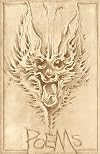
Self-published in 1968, Footprints, Poems, and Leaves collects dozens of poems written by Martin Wong between 1966 and 1968. Hand-written in a signature calligraphic style that he was just beginning to develop, the poems ebb and flow visually across the page, much like the fluctuating characters, scenes, and moods that inhabit them. This was Wong’s first book of poetry and it contains a double cover showcasing intricate drawings of skeletal angels and other tableaux, as well as a folded, show more looseleaf broadsheet containing two poems and a drawing of a boney leaf.
The poems were written during a relatively free period for the artist, shortly after he dropped out of Berkeley and began exploring San Francisco at the height of the hippy movement. The poems range from surrealist and pastoral descriptions of the urban subculture that surrounded him to downtrodden, travel-weary biographical entries that are both lonely and tender. Footprints, Poems, and Leaves functions like a journal capturing Wong’s tumultuous life in this period, which included being arrested at a queer, drug-fueled house party (along with Rudolf Nureyev and Dame Margot Fonteyn) and a stay in a mental institution in late 1967 and early 1968. Around the time of the book’s publication, Wong enrolled in Humboldt State University to finish his degree, beginning a new chapter for the artist.
Despite the dark backdrops of many of the works, the writing displays a playfulness with form and language and a sense of humor that can be seen throughout Wong’s later work as well. Altogether, Footprints, Poems, and Leaves creates a rich tapestry of visual poetry that is both a product of its time and the budding artistic mind of a young Martin Wong.
Martin Wong (1946-1999) was born in Portland, Oregon and raised in San Francisco, California. He studied ceramics at Humboldt State University, graduating in 1968. Wong was active in the performance art groups The Cockettes and Angels of Light before moving to New York in 1978. He exhibited for two decades at notable downtown galleries including EXIT ART, Semaphore, and P·P·O·W, among others, before his passing in San Francisco from an AIDS related illness. His work is represented in the collections of The Metropolitan Museum of Art, New York, NY; Museum of Modern Art, New York, NY; The Bronx Museum of the Arts, New York, NY; Whitney Museum of American Art, New York, NY; Cleveland Museum of Art, Cleveland, OH; Art Institute of Chicago, Chicago, IL; and the San Francisco Museum of Modern Art, San Francisco, CA, among others. Human Instamatic, a comprehensive retrospective, opened at the Bronx Museum of The Arts in November 2015, before traveling to the Wexner Center for the Arts in 2016 and the UC Berkeley Art Museum and Pacific Film Archive in 2017. In 2022, the first extensive, touring exhibition of Wong’s work in Europe, Martin Wong: Malicious Mischief, opened at Museo Centro de Arte Dos de Mayo in Madrid before traveling to KW Institute of Contemporary Art (Berlin), Camden Art Centre (London), and Stedelijk Museum (Amsterdam). show less
The poems were written during a relatively free period for the artist, shortly after he dropped out of Berkeley and began exploring San Francisco at the height of the hippy movement. The poems range from surrealist and pastoral descriptions of the urban subculture that surrounded him to downtrodden, travel-weary biographical entries that are both lonely and tender. Footprints, Poems, and Leaves functions like a journal capturing Wong’s tumultuous life in this period, which included being arrested at a queer, drug-fueled house party (along with Rudolf Nureyev and Dame Margot Fonteyn) and a stay in a mental institution in late 1967 and early 1968. Around the time of the book’s publication, Wong enrolled in Humboldt State University to finish his degree, beginning a new chapter for the artist.
Despite the dark backdrops of many of the works, the writing displays a playfulness with form and language and a sense of humor that can be seen throughout Wong’s later work as well. Altogether, Footprints, Poems, and Leaves creates a rich tapestry of visual poetry that is both a product of its time and the budding artistic mind of a young Martin Wong.
Martin Wong (1946-1999) was born in Portland, Oregon and raised in San Francisco, California. He studied ceramics at Humboldt State University, graduating in 1968. Wong was active in the performance art groups The Cockettes and Angels of Light before moving to New York in 1978. He exhibited for two decades at notable downtown galleries including EXIT ART, Semaphore, and P·P·O·W, among others, before his passing in San Francisco from an AIDS related illness. His work is represented in the collections of The Metropolitan Museum of Art, New York, NY; Museum of Modern Art, New York, NY; The Bronx Museum of the Arts, New York, NY; Whitney Museum of American Art, New York, NY; Cleveland Museum of Art, Cleveland, OH; Art Institute of Chicago, Chicago, IL; and the San Francisco Museum of Modern Art, San Francisco, CA, among others. Human Instamatic, a comprehensive retrospective, opened at the Bronx Museum of The Arts in November 2015, before traveling to the Wexner Center for the Arts in 2016 and the UC Berkeley Art Museum and Pacific Film Archive in 2017. In 2022, the first extensive, touring exhibition of Wong’s work in Europe, Martin Wong: Malicious Mischief, opened at Museo Centro de Arte Dos de Mayo in Madrid before traveling to KW Institute of Contemporary Art (Berlin), Camden Art Centre (London), and Stedelijk Museum (Amsterdam). show less
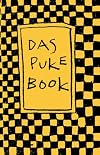
Das Puke Book is a small chapbook self-published by Martin Wong in 1977. Written in the early 1970s, the publication contains thirteen chapters of handwritten micro-fictions filled with cringeworthy stories unfolding in San Francisco and beyond.
Subtitled Da Otto Biography of Otto Peach Fuzz, the publication is populated with a cadre of colorful characters, some of who are obscure underground figures such as George “Hibiscus” Harris from the Cockettes and Angels of Light and Rodney Price show more and Debra “Beaver” Bauer from Angels of Light, while others such as Paul Gauguin, Vincent van Gogh, and God, are more well known. Although lighthearted, Wong paints unforgettably vivid scenes, such as Van Gogh attacking Gauguin with a razor, Beaver eating so many hot dogs she explodes, and God coming to San Francisco only to find a notebook that makes him so sick to his stomach that he vomits endlessly until the world ends. Written during his days working on the flyers and theatrical backdrops for the Angels of Light Free Theater and published just before his move to New York, these stories capture Wong’s playfulness and the absurdist, kaleidoscopic milieu of the moment in which they were written.
Many of these stories appeared before the book’s publication in Wong’s now-iconic calligraphic scrolls. Possessing a lifelong fascination with language and its representation, Wong began writing in a flickering, calligraphic style in the sixties that found a natural home in the psychedelic movement. During the period that Das Puke Book was written, the artist traveled to Nepal, India, and Afghanistan (which makes an appearance in chapter twelve) to take a mosaic workshop in Herat and study calligraphy and tantric painting. Upon his return, he referred to himself as a tantric set designer until concluding his work with the Angels of Light in 1973–the same year that he finished the work in this book.
Martin Wong (1946-1999) was born in Portland, Oregon and raised in San Francisco, California. He studied ceramics at Humboldt State University, graduating in 1968. Wong was active in the performance art groups The Cockettes and Angels of Light Free Theater before moving to New York in 1978. He exhibited for two decades at notable downtown galleries including EXIT ART, Semaphore, and P·P·O·W, among others, before his passing in San Francisco from an AIDS related illness. His work is represented in the collections of The Metropolitan Museum of Art, New York, NY; Museum of Modern Art, New York, NY; The Bronx Museum of the Arts, New York, NY; Whitney Museum of American Art, New York, NY; Cleveland Museum of Art, Cleveland, OH; Art Institute of Chicago, Chicago, IL; and the San Francisco Museum of Modern Art, San Francisco, CA, among others. Human Instamatic, a comprehensive retrospective, opened at the Bronx Museum of The Arts in November 2015, before traveling to the Wexner Center for the Arts in 2016 and the UC Berkeley Art Museum and Pacific Film Archive in 2017. In 2022, the first extensive, touring exhibition of Wong’s work in Europe, Martin Wong: Malicious Mischief, opened at Museo Centro de Arte Dos de Mayo in Madrid before traveling to KW Institute of Contemporary Art (Berlin), Camden Art Centre (London), and Stedelijk Museum (Amsterdam). show less
Subtitled Da Otto Biography of Otto Peach Fuzz, the publication is populated with a cadre of colorful characters, some of who are obscure underground figures such as George “Hibiscus” Harris from the Cockettes and Angels of Light and Rodney Price show more and Debra “Beaver” Bauer from Angels of Light, while others such as Paul Gauguin, Vincent van Gogh, and God, are more well known. Although lighthearted, Wong paints unforgettably vivid scenes, such as Van Gogh attacking Gauguin with a razor, Beaver eating so many hot dogs she explodes, and God coming to San Francisco only to find a notebook that makes him so sick to his stomach that he vomits endlessly until the world ends. Written during his days working on the flyers and theatrical backdrops for the Angels of Light Free Theater and published just before his move to New York, these stories capture Wong’s playfulness and the absurdist, kaleidoscopic milieu of the moment in which they were written.
Many of these stories appeared before the book’s publication in Wong’s now-iconic calligraphic scrolls. Possessing a lifelong fascination with language and its representation, Wong began writing in a flickering, calligraphic style in the sixties that found a natural home in the psychedelic movement. During the period that Das Puke Book was written, the artist traveled to Nepal, India, and Afghanistan (which makes an appearance in chapter twelve) to take a mosaic workshop in Herat and study calligraphy and tantric painting. Upon his return, he referred to himself as a tantric set designer until concluding his work with the Angels of Light in 1973–the same year that he finished the work in this book.
Martin Wong (1946-1999) was born in Portland, Oregon and raised in San Francisco, California. He studied ceramics at Humboldt State University, graduating in 1968. Wong was active in the performance art groups The Cockettes and Angels of Light Free Theater before moving to New York in 1978. He exhibited for two decades at notable downtown galleries including EXIT ART, Semaphore, and P·P·O·W, among others, before his passing in San Francisco from an AIDS related illness. His work is represented in the collections of The Metropolitan Museum of Art, New York, NY; Museum of Modern Art, New York, NY; The Bronx Museum of the Arts, New York, NY; Whitney Museum of American Art, New York, NY; Cleveland Museum of Art, Cleveland, OH; Art Institute of Chicago, Chicago, IL; and the San Francisco Museum of Modern Art, San Francisco, CA, among others. Human Instamatic, a comprehensive retrospective, opened at the Bronx Museum of The Arts in November 2015, before traveling to the Wexner Center for the Arts in 2016 and the UC Berkeley Art Museum and Pacific Film Archive in 2017. In 2022, the first extensive, touring exhibition of Wong’s work in Europe, Martin Wong: Malicious Mischief, opened at Museo Centro de Arte Dos de Mayo in Madrid before traveling to KW Institute of Contemporary Art (Berlin), Camden Art Centre (London), and Stedelijk Museum (Amsterdam). show less
You May Also Like
Associated Authors
Statistics
- Works
- 10
- Also by
- 1
- Members
- 26
- Popularity
- #495,360
- Reviews
- 2
- ISBNs
- 3