
Jessica Nutik Zitter
Author of Extreme Measures: Finding a Better Path to the End of Life
About the Author
Works by Jessica Nutik Zitter
Tagged
Common Knowledge
- Birthdate
- 20th century
- Gender
- female
- Education
- Stanford University (BS|Biology and Middle Eastern Studies
Case Western Reserve University School of Medicine (M.D.)
UC Berkeley (MPH|Master of Public Health) - Places of residence
- Oakland, California, USA
- Associated Place (for map)
- California, USA
Members
Reviews
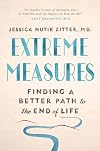
First of all, EXTREME MEASURES is a very tough book to read. And this may be particularly true for a reader like myself who, might as well admit it, is already well into that eighth inning of life. Because Dr. Nutik Zitter makes painfully clear, with many well-documented and dramatically presented case studies, how our health and medical system has, for perhaps way too long, gone in the direction of try everything, do anything, just keep the patient alive, even if the quality of life has show more markedly decreased, or will.
Early in her narrative, the author raises the picture of the kindly old grey-haired doctor so often seen in Norman Rockwell paintings, and admits -
"When I think of who I want at my bedside when I'm sick, it is someone like those doctors - someone who knows me well and will sit with me as long as I need, with a watchful, concerned eye."
Now instead of those old-fashioned doctors who treated the whole person, we have specialists and subspecialists who treat one organ, without taking into account the person. Although Nutik Zitter recognizes how unlikely it is that we'll ever get back to that country practitioner type, she does feel it is vitally important that the needs and the feelings of the patient take precedence again - that "patient autonomy implies that the patient is empowered to make decisions free from coercion." She stresses too the importance, in end-of-life situations, of "the ability to break bad news and reassess goals of care." Otherwise, too many patients end up on the medical and technological "conveyor belt" that leads to finishing their lives attached to machines and isolated from the warmth of family and human contact that might make death less frightening.
EXTREME MEASURES is chock full of case studies of people who do end up on that conveyor, many of which will make you wince in shock or in recognition, particularly if you have witnessed the slow and steady decline of a loved on, as I have. The author describes several kinds of death in clinical terms. One I recognized, VSED (voluntary stopping of eating and drinking). It was the method my mother chose at the age of 96. Death does not take long when this happens. Nutik Zitter explains why people choose to die this way, noting -
"Often this is due to the person's perception that her quality of life is no longer acceptable. The act may also provide a sense of control and autonomy at this most vulnerable time of life."
Overall, EXTREME MEASURES forces the reader to look closely at the end of life and at the choices available, addressing the importance of, say, advance directives, living wills, or medical powers of attorney. Too often in our society, people still turn away from death, try to deny it. But it is, after all, where we are all headed. Reading this book may be a good way into "having the talk" with your family and loved ones. I will recommend it for that reason. Note: I gave the book four stars, but that is probably way too 'subjective,' just because, as I said at the outset, this is a very tough book to read. Nutik Zitter has done her homework. She pulls no punches. She admits to making many mistakes herself as a one-time ICU practicing physician. I commend her for tackling such a tough subject - one that most people would probably prefer not to discuss.
- Tim Bazzett, author of the memoir, BOOKLOVER show less
Early in her narrative, the author raises the picture of the kindly old grey-haired doctor so often seen in Norman Rockwell paintings, and admits -
"When I think of who I want at my bedside when I'm sick, it is someone like those doctors - someone who knows me well and will sit with me as long as I need, with a watchful, concerned eye."
Now instead of those old-fashioned doctors who treated the whole person, we have specialists and subspecialists who treat one organ, without taking into account the person. Although Nutik Zitter recognizes how unlikely it is that we'll ever get back to that country practitioner type, she does feel it is vitally important that the needs and the feelings of the patient take precedence again - that "patient autonomy implies that the patient is empowered to make decisions free from coercion." She stresses too the importance, in end-of-life situations, of "the ability to break bad news and reassess goals of care." Otherwise, too many patients end up on the medical and technological "conveyor belt" that leads to finishing their lives attached to machines and isolated from the warmth of family and human contact that might make death less frightening.
EXTREME MEASURES is chock full of case studies of people who do end up on that conveyor, many of which will make you wince in shock or in recognition, particularly if you have witnessed the slow and steady decline of a loved on, as I have. The author describes several kinds of death in clinical terms. One I recognized, VSED (voluntary stopping of eating and drinking). It was the method my mother chose at the age of 96. Death does not take long when this happens. Nutik Zitter explains why people choose to die this way, noting -
"Often this is due to the person's perception that her quality of life is no longer acceptable. The act may also provide a sense of control and autonomy at this most vulnerable time of life."
Overall, EXTREME MEASURES forces the reader to look closely at the end of life and at the choices available, addressing the importance of, say, advance directives, living wills, or medical powers of attorney. Too often in our society, people still turn away from death, try to deny it. But it is, after all, where we are all headed. Reading this book may be a good way into "having the talk" with your family and loved ones. I will recommend it for that reason. Note: I gave the book four stars, but that is probably way too 'subjective,' just because, as I said at the outset, this is a very tough book to read. Nutik Zitter has done her homework. She pulls no punches. She admits to making many mistakes herself as a one-time ICU practicing physician. I commend her for tackling such a tough subject - one that most people would probably prefer not to discuss.
- Tim Bazzett, author of the memoir, BOOKLOVER show less
 This review was written for LibraryThing Early Reviewers.
This author trained first as an Intensive Care Specialist physician, but became increasingly troubled by the way many patients in ICU's were cared for. Descriptions of ventilator facilities that maintin patients who are placed on ventilators and will never be freed from them, is haunting. Numerous other situations are described; the author gives many patient scenarios of people she has cared for, or come to know, in ICU's around the country, recounting numerous efforts made to prolong life, show more with little thought about the quality of that life. Dr. Zitter does not take a bitter or judging tone toward other physicians, lauding them for their mostly tremendous committment to save the lives of their patients. But with her later training as a Palliative Care specialist, Dr. Zitter hopes to bring a new approach to medicine, where Patient Centered Care becomes the norm, so that patient's and their families are presented with very realistic information about their prognosis. And that those facing these choices about ventilators, CPR, heart defibrillators, feeding tubes, extensive chemotherapy, and many other options that the increasing medical technology provides us, will know all the realistic possible outcomes.
Dr. Zitter was not afraid to admit how complex this issue is for her on a very personal level, and also showed her own human emotional responses to many of her patients.
At the end of this book the author lists numerous resources, not only the Advanced Directieves that are fairly well known, but other documents and resources that could prove quite helpful. show less
Dr. Zitter was not afraid to admit how complex this issue is for her on a very personal level, and also showed her own human emotional responses to many of her patients.
At the end of this book the author lists numerous resources, not only the Advanced Directieves that are fairly well known, but other documents and resources that could prove quite helpful. show less

During her second week as an intern, Zitter responds to her first Code Blue. She expects it to play out like a television scene with the miraculous resuscitation of the patient and the grateful family hailing the doctors as heroes. The reality is far different: the elderly patient's skin is a waxy gray-yellow, his frame skeletal and each chest compression produces the sickening grinding sound of cracking bone. Worse yet, Zitter is called upon to take over compressions and must fight the show more rising nausea she feels. Afterwards she describes the experience as "I have just assaulted a dead body."
The majority of book comprises stories of patients who suffered meaninglessly because they (or their families) wanted everything done to prolong life. Some simply could not accept that death was inevitable. Cultural and language differences compounded the problem. Doctors and nurses were often guilty of the same impossible goal and it’s very difficult for them to stop treatment once it has begun. Even after transferring to Palliative Care, Zitter repeatedly has to fight against her instinct to "do something" because that is what doctors are trained to do and death means failure. "I came to see that in our zeal to save life, we often worsened death."
Zitter describes the discomfort of tracheotomies and feeding tubes. Many patients must be sedated or restrained to ensure that they don't pull the tubes out. She points out that the nutrition is of no actual benefit to a dying patient (and if aspirated may cause pneumonia) but many families have trouble with the idea of withholding food which we tend to equate with love. Skin begins to break down leading to infections and sepsis. Life-support patients may be transferred to LTACs or long term acute care facilities which she likens to ventilator warehouses where unconscious patients lie in beds as machines take over basic functions. It all sounds like a scene from a dystopian movie.
Zitter notes that doctors tend to die at home rather than tethered to machines in a hospital and they receive less intensive care before death. It is possible for the rest of us to avoid the pain and extension of the dying process if we can face the truth that we will die and prepare accordingly. The best part of the book is found in the Appendixes which give some resources about how to do just that. In addition to the more familiar Advance Directive and DNR (do not resuscitate) orders is the POLST or Physician Order for Life-Sustaining Treatment. That last one is a legal order which is "the only form that can release first responders like EMTs, paramedics, and ER doctors from an obligation to perform the treatment of life prolongation." Organizations and websites are listed including the intriguingly named Death Café and Death over Dinner both of which help facilitate conversations about how we want to be treated at the end of life.
The initial chapters suffer a bit from the repeated use of the phrases "end-of-life conveyor belt" and "full court press" but the writing style improves and the later chapters provide valuable information about the realities of dying in hospital care. The final edition will be indexed. show less
The majority of book comprises stories of patients who suffered meaninglessly because they (or their families) wanted everything done to prolong life. Some simply could not accept that death was inevitable. Cultural and language differences compounded the problem. Doctors and nurses were often guilty of the same impossible goal and it’s very difficult for them to stop treatment once it has begun. Even after transferring to Palliative Care, Zitter repeatedly has to fight against her instinct to "do something" because that is what doctors are trained to do and death means failure. "I came to see that in our zeal to save life, we often worsened death."
Zitter describes the discomfort of tracheotomies and feeding tubes. Many patients must be sedated or restrained to ensure that they don't pull the tubes out. She points out that the nutrition is of no actual benefit to a dying patient (and if aspirated may cause pneumonia) but many families have trouble with the idea of withholding food which we tend to equate with love. Skin begins to break down leading to infections and sepsis. Life-support patients may be transferred to LTACs or long term acute care facilities which she likens to ventilator warehouses where unconscious patients lie in beds as machines take over basic functions. It all sounds like a scene from a dystopian movie.
Zitter notes that doctors tend to die at home rather than tethered to machines in a hospital and they receive less intensive care before death. It is possible for the rest of us to avoid the pain and extension of the dying process if we can face the truth that we will die and prepare accordingly. The best part of the book is found in the Appendixes which give some resources about how to do just that. In addition to the more familiar Advance Directive and DNR (do not resuscitate) orders is the POLST or Physician Order for Life-Sustaining Treatment. That last one is a legal order which is "the only form that can release first responders like EMTs, paramedics, and ER doctors from an obligation to perform the treatment of life prolongation." Organizations and websites are listed including the intriguingly named Death Café and Death over Dinner both of which help facilitate conversations about how we want to be treated at the end of life.
The initial chapters suffer a bit from the repeated use of the phrases "end-of-life conveyor belt" and "full court press" but the writing style improves and the later chapters provide valuable information about the realities of dying in hospital care. The final edition will be indexed. show less
This review was written for LibraryThing Early Reviewers.Have you ever considered what it means to have a good death? What is a bad death? What kind of death would you envision for yourself, a parent or spouse? Perhaps you would prefer not to envision this possibility at all, but by avoiding the topic of death, we could be letting ourselves or our loved ones end up on the medical conveyor belt as described by Jessica Nutik Zitter, and ICU and palliative care specialist.
She has seen many deaths and asks us to consider the quality of our end of life show more experience: strapped down to a bed with tubes delivering liquid nutrition; a machine keeping the body breathing? Or perhaps at home, dying naturally with those close to us at our side?
In this book we are also asked to consider what quality of life we would find acceptable. Would medical measures that save your life but mean that you are incapacitated and unable to care for yourself be a life that you would find worth living?
We have a tendency to look to medical science to provide immortality, but the desire to fend off death at all costs can lead to an unnecessarily painful end.
Zitter shows us many cases, ask many questions and asks us to consider our responses to the end of life. Extreme Measures is a book that lay people and medical professionals will find thought-provoking and useful.
We often think of the fight against death as heroic, and it can be. But Zitter considers another kind of heroism: "Heroism doesn’t always mean fighting. Sometimes it means acknowledging the reality on the ground, retreating from the fight, and receiving the support you need from those around you." show less
She has seen many deaths and asks us to consider the quality of our end of life show more experience: strapped down to a bed with tubes delivering liquid nutrition; a machine keeping the body breathing? Or perhaps at home, dying naturally with those close to us at our side?
In this book we are also asked to consider what quality of life we would find acceptable. Would medical measures that save your life but mean that you are incapacitated and unable to care for yourself be a life that you would find worth living?
We have a tendency to look to medical science to provide immortality, but the desire to fend off death at all costs can lead to an unnecessarily painful end.
Zitter shows us many cases, ask many questions and asks us to consider our responses to the end of life. Extreme Measures is a book that lay people and medical professionals will find thought-provoking and useful.
We often think of the fight against death as heroic, and it can be. But Zitter considers another kind of heroism: "Heroism doesn’t always mean fighting. Sometimes it means acknowledging the reality on the ground, retreating from the fight, and receiving the support you need from those around you." show less
This review was written for LibraryThing Early Reviewers.Statistics
- Works
- 2
- Members
- 112
- Popularity
- #174,305
- Rating
- 4.3
- Reviews
- 12
- ISBNs
- 5
