
Andrea Offermann
Author of Yvain: The Knight of the Lion
Works by Andrea Offermann
Twenty-Four Hours 1 copy
Associated Works
Ghost Knight (2011) — Illustrator, some editions; Cover artist, some editions — 475 copies, 23 reviews
The Poisons of Caux: The Shepherd of Weeds (Book III) (2011) — Illustrator, some editions — 33 copies, 1 review
Drei Wünsche: Eine Weihnachtswundergeschichte (2011) — Illustrator, some editions — 16 copies, 1 review
Tagged
Common Knowledge
- Education
- Art Center College of Design
- Nationality
- Germany
- Birthplace
- Cologne, Germany
- Places of residence
- Hamburg, Germany
- Associated Place (for map)
- Germany
Members
Reviews

Yvain is an idiot. He's an idiot in the original, he's an idiot in this very close retelling. I appreciate, however, the careful twists of irony that Anderson and Offermann draw out in this rendition. The illustrations are splendid beyond measure, the thoughtfulness of the text is wonderful, the ambiguity of the characters tells whole volumes of story offstage, and Yvain is an idiot.
I'd say that I feel bad for Lunette, as well, but honestly, she's got a mean streak, and seems to be doing show more quite well thankyouverymuch. show less
I'd say that I feel bad for Lunette, as well, but honestly, she's got a mean streak, and seems to be doing show more quite well thankyouverymuch. show less
Before reading this graphic novelization of Chretien de Troyes's narrative, I reread "Yvain, or the Knight of the Lion," which I'd not done since studying it in Medieval Lit about ten years ago. I remembered vaguely that it was one of the fringe Arthurian romances and that it was the one where the lion randomly joins up with the hero, but otherwise, I didn't remember much. While rereading, I remembered a bit more about this story, one of the intriguing sort that at once create and satirize show more the chivalric ideal, so I was curious about what Anderson and Offermann would do with the story.
For the most part, the storyline and even the dialogue hew closely to the original; in his author's note, Anderson indicates this was intentionally the case and credits the translations he used, which is very nice. There are a few places where the story is noticeably abridged (such as Yvain's recovery from madness and the search for the mysterious "Knight of the Lion" by the disinherited sister and her messenger), but for the most part, all the important incidents follow the original in dialogue and action. In addition, the art clearly follows medieval conventions when feasible (hurrah for narrative tapestries!), and as the artist's note indicates, the dress and some symbolism of color and animals was also followed. So as a one-time student of medieval literature, I really appreciated this intentional emphasis on the fascinating original story and the richly textured art and material culture of the era.
The one criticism I have is perhaps unavoidlably the result of the translation from one medium to another: in attempting to depict the satire and complicated sympathies of the original, the graphic novel presents a much more cut-and-dried reading of the story and characters. To avoid spoilers, I won't go into detail, but there are more than a few points in the story where the text of the original suggests that the hero and other male characters are overlooking important elements in their interactions, especially with the many various women they encounter, whose speeches and actions often appear to belie their actual feelings towards the men. This sort of thing makes for fascinating literary reading, as the story can either be read as a straightforward adventure story or as a tongue-in-cheek tale or even as pointed social criticism. In the graphic novelization, these options are flattened out, mostly because the art dramatically heightens that male/female disconnection and emphasizes the darker undercurrents that de Troyes leaves possible but not necessary. I sympathize with the reading and think it's a valid interpretation, but it'd be unfortunate if this were the only version of the story that a reader became familiar with, as the interplay between possible interpretations and emotions in the original is more richly satisfying. show less
For the most part, the storyline and even the dialogue hew closely to the original; in his author's note, Anderson indicates this was intentionally the case and credits the translations he used, which is very nice. There are a few places where the story is noticeably abridged (such as Yvain's recovery from madness and the search for the mysterious "Knight of the Lion" by the disinherited sister and her messenger), but for the most part, all the important incidents follow the original in dialogue and action. In addition, the art clearly follows medieval conventions when feasible (hurrah for narrative tapestries!), and as the artist's note indicates, the dress and some symbolism of color and animals was also followed. So as a one-time student of medieval literature, I really appreciated this intentional emphasis on the fascinating original story and the richly textured art and material culture of the era.
The one criticism I have is perhaps unavoidlably the result of the translation from one medium to another: in attempting to depict the satire and complicated sympathies of the original, the graphic novel presents a much more cut-and-dried reading of the story and characters. To avoid spoilers, I won't go into detail, but there are more than a few points in the story where the text of the original suggests that the hero and other male characters are overlooking important elements in their interactions, especially with the many various women they encounter, whose speeches and actions often appear to belie their actual feelings towards the men. This sort of thing makes for fascinating literary reading, as the story can either be read as a straightforward adventure story or as a tongue-in-cheek tale or even as pointed social criticism. In the graphic novelization, these options are flattened out, mostly because the art dramatically heightens that male/female disconnection and emphasizes the darker undercurrents that de Troyes leaves possible but not necessary. I sympathize with the reading and think it's a valid interpretation, but it'd be unfortunate if this were the only version of the story that a reader became familiar with, as the interplay between possible interpretations and emotions in the original is more richly satisfying. show less
 This review was written for LibraryThing Early Reviewers.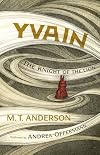
While it initially reads like a standard Arthurian tale (knights in shining armor, deeds of bravery), it reveals itself as a subversive and tragic tale. Yvain marries the widowed Lady Laudine, in dire need of a champion after he kills her husband, and asks her permission to travel with his friend proving themselves in tournaments. She gives her permission, with the caveat that he must return after a year. Of course, he forgets, and is subsequently denounced in front of King Arthur by a show more messenger from Lady Laudine.
Driven mad, Yvain wanders in the wilderness until he comes upon a lion locked in battle with some kind of wyvern. He slays it and earns the lion's loyalty. He travels around, slaying monsters and dueling, believing he will win his lady's heart back. As he appears before her, Lady Laudine is tricked into marrying him again, and lashes out that she must keep her word and enter into a loveless marriage.
Truly, one of the best graphic novels I've read in a long time.
The art is gorgeous and wonderfully intuitive in the reading, and while M.T. Anderson's translation of the story of Yvain is pretty standard, it's clear that he loves the story and the characters. show less
Driven mad, Yvain wanders in the wilderness until he comes upon a lion locked in battle with some kind of wyvern. He slays it and earns the lion's loyalty. He travels around, slaying monsters and dueling, believing he will win his lady's heart back. As he appears before her, Lady Laudine is tricked into marrying him again, and lashes out that she must keep her word and enter into a loveless marriage.
Truly, one of the best graphic novels I've read in a long time.
The art is gorgeous and wonderfully intuitive in the reading, and while M.T. Anderson's translation of the story of Yvain is pretty standard, it's clear that he loves the story and the characters. show less
I probably ought to stop reading medieval lit. I've read Beowulf, Chaucer, and an Icelandic saga I can't hope to name. It's not their fault, I just can't stop being a 21st century reader.
So while I can't say that I enjoyed the book, this is a consequence of reader/book pairing rather than a fault of the book. The writing is true to the era, and gracefully layers in more nuanced and balanced perspectives through it's illustration. These added layers build the story rather than undermine it. show more They make traditional heroes responsible for their actions, to the reader at least.
And I respect this. But ultimately neither the nuanced storytelling or original art could get me very excited about medieval lit. show less
So while I can't say that I enjoyed the book, this is a consequence of reader/book pairing rather than a fault of the book. The writing is true to the era, and gracefully layers in more nuanced and balanced perspectives through it's illustration. These added layers build the story rather than undermine it. show more They make traditional heroes responsible for their actions, to the reader at least.
And I respect this. But ultimately neither the nuanced storytelling or original art could get me very excited about medieval lit. show less
This review was written for LibraryThing Early Reviewers.Lists
Awards


You May Also Like
Associated Authors
Statistics
- Works
- 2
- Also by
- 15
- Members
- 154
- Popularity
- #135,794
- Rating
- 3.8
- Reviews
- 17
- ISBNs
- 3
