

Marcia Biederman
Author of Scan Artist: How Evelyn Wood Convinced the World That Speed-Reading Worked
Works by Marcia Biederman
Scan Artist: How Evelyn Wood Convinced the World That Speed-Reading Worked (2019) 37 copies, 3 reviews
Associated Works
Tagged
Common Knowledge
- Birthdate
- 1949-01-05
- Gender
- female
Members
Reviews
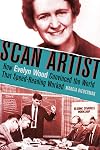
If you are from the the United States, and are on the north side or so of 60, you can remember when the advertising for Evelyn Wood and her "Reading Dynamics" approach to consuming print was omnipresent. I say consuming because the biggest participants in the programs marketed under Wood's name were professional men and middle managers drowning in paper, and who could get their employers to pay the tuition. The author was not one of those people, and by the way Biederman words her dedication show more she still seems put out that she fell for the false promises of the program!
As for Wood herself, she is an evasive character, much given to personal theatrics and putting the best spin on bad situations. When those situations could not be put in a good light, they were ignored, such as the adopted daughter who was mostly denied once she was no longer required as a nanny. The fact remains that Wood had enough credentials as a para-professional to earn credibility, at a time when remedial reading was an imperative for the masses of new students arriving in the precincts of higher education, and was then able to make contact with the Washington political establishment in such a way as to get positive attention. Wood and her business supporters never looked back from those publicity breakthroughs, and retained some relevance into the 1970s; though the skeptics were always nipping at the heels of the business edifice.
These days digital management of information has largely relegated speed reading to a fad that periodically pops up, and certainly not a "skill" that you have to pay real money to learn, but Biederman sees Wood and her husband as some of the great unrecognized scammers of the 20th century, and precursors of a whole style of business fakery that displays no sign of abating any time soon. show less
As for Wood herself, she is an evasive character, much given to personal theatrics and putting the best spin on bad situations. When those situations could not be put in a good light, they were ignored, such as the adopted daughter who was mostly denied once she was no longer required as a nanny. The fact remains that Wood had enough credentials as a para-professional to earn credibility, at a time when remedial reading was an imperative for the masses of new students arriving in the precincts of higher education, and was then able to make contact with the Washington political establishment in such a way as to get positive attention. Wood and her business supporters never looked back from those publicity breakthroughs, and retained some relevance into the 1970s; though the skeptics were always nipping at the heels of the business edifice.
These days digital management of information has largely relegated speed reading to a fad that periodically pops up, and certainly not a "skill" that you have to pay real money to learn, but Biederman sees Wood and her husband as some of the great unrecognized scammers of the 20th century, and precursors of a whole style of business fakery that displays no sign of abating any time soon. show less
Scan Artist: How Evelyn Wood Convinced the World That Speed-Reading Worked by Marcia Biederman is a highly recommended examination of the life of Evelyn Wood and her Reading Dynamics program.
As a fan of Saturday Night Live, I saw the hilarious third season mock commercial on 11/12/77 about the "Evelyn Woodski Slow Reading Course." For anyone who lived through the 60s and 70's', the name Evelyn Wood is closely associated with speed reading through her Reading Dynamics Institutes/classes which show more were widely advertised and held in many different cities across the country. As many people suspected, her program, advertising that program graduates could read Dr. Zhivago in one hour, were really a scam. She was, as many reading specialists, like George Spache, kept saying, teaching skimming, not reading, and the comprehension of what participants read was lacking. Wood was actually not a trained or veteran teacher, as she claimed.
Biederman presents this biography of Wood following her Mormon background and the missionary work she and her husband undertook with the Third Reich. Once she started her speed reading program, Wood was quick to market her program through those well-known individuals who took it, especially those in government. Many of her claims and connections to fame were exaggerated or misstated. Those who repeatedly tried to unmask Wood and the program were threatened with lawsuits, and labeled as narrow-minded. During the heyday of Reading Dynamics those who were dissatisfied with results from the expensive program were often blamed for their own lack of success and had no real recourse other than the Better Business Bureaus. She also actively suppressed or opposed all the scientific evidence about the lack of comprehension with her program.
Presented in a chronological timeline, Scan Artist covers the life of Evelyn Wood and her rise to fame as a reading teacher. While I thought this was a very interesting biography, Wood doesn't necessarily come across as a dynamic or compelling person. In some ways she was small-minded and downright cold/cruel at times, but she did have a lot of unmerited confidence in herself and speed reading. It was unfathomable that she got away with this scam for so long and managed to have people doubt themselves rather than the effectiveness of the system. Biederman does an excellent job capturing the historical setting and concerns of the decades covered.
I wanted to read this biography because I have always been a prolific reader and, although I haven't a clue what my reading speed is, I get along at a good pace with good comprehension. I know, however, I could never approach the "Dr. Zhivago-in-one-hour" level. I actually read everything I review, but I noticed over the years a few reviewers who seem to be reading dozens of books a day. When questioned, one claimed to be a speed reader. Based on the reviews, which seemed to just summarize the synopsis, I doubted the credibility of this claim. This biography confirmed my doubts.
Disclosure: My review copy was courtesy of the publisher/author.
http://www.shetreadssoftly.com/2019/08/scan-artist.html show less
As a fan of Saturday Night Live, I saw the hilarious third season mock commercial on 11/12/77 about the "Evelyn Woodski Slow Reading Course." For anyone who lived through the 60s and 70's', the name Evelyn Wood is closely associated with speed reading through her Reading Dynamics Institutes/classes which show more were widely advertised and held in many different cities across the country. As many people suspected, her program, advertising that program graduates could read Dr. Zhivago in one hour, were really a scam. She was, as many reading specialists, like George Spache, kept saying, teaching skimming, not reading, and the comprehension of what participants read was lacking. Wood was actually not a trained or veteran teacher, as she claimed.
Biederman presents this biography of Wood following her Mormon background and the missionary work she and her husband undertook with the Third Reich. Once she started her speed reading program, Wood was quick to market her program through those well-known individuals who took it, especially those in government. Many of her claims and connections to fame were exaggerated or misstated. Those who repeatedly tried to unmask Wood and the program were threatened with lawsuits, and labeled as narrow-minded. During the heyday of Reading Dynamics those who were dissatisfied with results from the expensive program were often blamed for their own lack of success and had no real recourse other than the Better Business Bureaus. She also actively suppressed or opposed all the scientific evidence about the lack of comprehension with her program.
Presented in a chronological timeline, Scan Artist covers the life of Evelyn Wood and her rise to fame as a reading teacher. While I thought this was a very interesting biography, Wood doesn't necessarily come across as a dynamic or compelling person. In some ways she was small-minded and downright cold/cruel at times, but she did have a lot of unmerited confidence in herself and speed reading. It was unfathomable that she got away with this scam for so long and managed to have people doubt themselves rather than the effectiveness of the system. Biederman does an excellent job capturing the historical setting and concerns of the decades covered.
I wanted to read this biography because I have always been a prolific reader and, although I haven't a clue what my reading speed is, I get along at a good pace with good comprehension. I know, however, I could never approach the "Dr. Zhivago-in-one-hour" level. I actually read everything I review, but I noticed over the years a few reviewers who seem to be reading dozens of books a day. When questioned, one claimed to be a speed reader. Based on the reviews, which seemed to just summarize the synopsis, I doubted the credibility of this claim. This biography confirmed my doubts.
Disclosure: My review copy was courtesy of the publisher/author.
http://www.shetreadssoftly.com/2019/08/scan-artist.html show less
Those of us who grew up in the fifties and sixties will remember Sputnik and the intense fear that permeated the American science and education communities. America could not be permitted to fall behind in the space or arms race and to stay ahead education was to be reformed and supported.
It was the perfect medium for Evelyn Wood and her husband to grow interest and support for her "dynamic" reading program that purported to not only increase reading speed, sometimes up to 25,000 words per show more minute, but also would increase comprehension and memory they claimed.
It was all bunk. Studies done by NASA in 2000 showed that while speeds supposedly increased comprehension declined. In fact, even an exceptional student whose eye can make four fixations per second, is limited to only 600 wpm and then they have to go back. The Woods' (her husband ran the business part) claimed that the secret was to enlarge the view and increase the number of words per fixation. Sounds good. Unfortunately there was little to it.
They were outstanding at publicity, but they had famous people in their corner, as well. JFK was a big advocate and had even recommended that her course should be required for Congress. (I don't remember any one suggesting it for Supreme Court Justices who do far more reading -- crucial reading -- than anyone else. Then again, JFK didn't write Profiles in Courage, either.)
Even the demonstrations had a catch. Before reading the book, demonstrators were allowed to peruse the cover and the book and take notes before whipping through the novel (rarely was it non-fiction.) Readers were often told to spend twenty minutes or so "previewing" the book before launching in a twenty minute "reading" of the entire book.
There are ways to increase your comprehension but they involve more prosaic tactics like previewing, reading the table of contents, building your vocabulary, reading a lot to increase subject matter, and reading often. It would appear there is a difference between comprehension and retention as well. I can often comprehend and understand the contents of a book, but what is singularly irritating is the inability to retain it all over decades. That's why I started taking notes years ago and writing reviews.
The rights to her "method" were purchased by the Famous Artists Schools in 1967. That organization suffered its own scandal following a Jessica Mitford expose that revealed the famous names associated with each genre had nothing to do with the students and were being paid for the use of their names, but had little other input into the business.
I have never been a particularly fast reader and took a speed reading course in the late seventies. Slowed me down.
Some reviewers have complained about the "digressions" on the Mormon relationship to the Nazi regime and the Woods' experience in Germany leading up to WW II. Both Church and Regime were authoritarian and it does appear that the LDS Church revised its lessons in Germany where there was an active mission and rising number of adherents to be compatible with Nazi doctrine. Superfluous perhaps, but quite interesting, nevertheless.
The Audiobook totally held my interest. The Kindle version is ridiculously overpriced as is typical of University presses. Competently read by Marguerite Gavin.
N.B. The latest reading hype comes from China. Called QSR it proclaims that readers need not even look at the pages as the rifle through a book. See Biederman's blog for more information. https://www.goodreads.com/author_blog_posts/19216101-in-newest-speed-reading-sca... show less
It was the perfect medium for Evelyn Wood and her husband to grow interest and support for her "dynamic" reading program that purported to not only increase reading speed, sometimes up to 25,000 words per show more minute, but also would increase comprehension and memory they claimed.
It was all bunk. Studies done by NASA in 2000 showed that while speeds supposedly increased comprehension declined. In fact, even an exceptional student whose eye can make four fixations per second, is limited to only 600 wpm and then they have to go back. The Woods' (her husband ran the business part) claimed that the secret was to enlarge the view and increase the number of words per fixation. Sounds good. Unfortunately there was little to it.
They were outstanding at publicity, but they had famous people in their corner, as well. JFK was a big advocate and had even recommended that her course should be required for Congress. (I don't remember any one suggesting it for Supreme Court Justices who do far more reading -- crucial reading -- than anyone else. Then again, JFK didn't write Profiles in Courage, either.)
Even the demonstrations had a catch. Before reading the book, demonstrators were allowed to peruse the cover and the book and take notes before whipping through the novel (rarely was it non-fiction.) Readers were often told to spend twenty minutes or so "previewing" the book before launching in a twenty minute "reading" of the entire book.
There are ways to increase your comprehension but they involve more prosaic tactics like previewing, reading the table of contents, building your vocabulary, reading a lot to increase subject matter, and reading often. It would appear there is a difference between comprehension and retention as well. I can often comprehend and understand the contents of a book, but what is singularly irritating is the inability to retain it all over decades. That's why I started taking notes years ago and writing reviews.
The rights to her "method" were purchased by the Famous Artists Schools in 1967. That organization suffered its own scandal following a Jessica Mitford expose that revealed the famous names associated with each genre had nothing to do with the students and were being paid for the use of their names, but had little other input into the business.
I have never been a particularly fast reader and took a speed reading course in the late seventies. Slowed me down.
Some reviewers have complained about the "digressions" on the Mormon relationship to the Nazi regime and the Woods' experience in Germany leading up to WW II. Both Church and Regime were authoritarian and it does appear that the LDS Church revised its lessons in Germany where there was an active mission and rising number of adherents to be compatible with Nazi doctrine. Superfluous perhaps, but quite interesting, nevertheless.
The Audiobook totally held my interest. The Kindle version is ridiculously overpriced as is typical of University presses. Competently read by Marguerite Gavin.
N.B. The latest reading hype comes from China. Called QSR it proclaims that readers need not even look at the pages as the rifle through a book. See Biederman's blog for more information. https://www.goodreads.com/author_blog_posts/19216101-in-newest-speed-reading-sca... show less
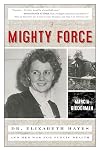
The Great Depression and World War II precipitated much change in the world around America and in America itself. These times witnessed America’s transition from a inwardly struggling economy into an international leader for human rights. Coal-mining towns transitioned from being operated by companies into independent villages responsible for their own self-government. As described in Biederman’s biography, the forgotten but strong figure Dr. Elizabeth Hayes led the way in pushing for show more modernization of these coal towns.
Hayes accomplished this by advocating for public health in her patients’ community. Her goals were plain. She wanted miners and their families to choose their medical care instead of having the company choose for them and also sought for them to own and run their own villages. These changes would make miners more responsible for their own upkeep because the companies felt pressure to serve the bottom line over public health.
To reach these goals, Hayes led the miners on a boycott over several weeks. Despite some hardship and push-back, they basically accomplished these aims for their town. Of course, with so much focus on financial and management, the courts became involved and through the courts, the media and then the masses. Both the media and the people loved the idea of a single woman leading a miners’ strike. She even faced personal hardship for them by having her house and clinic overtaken. As detailed in this book, these local changes soon culminated in changes by other coal-towns all over the country.
Biederman, a former mystery author and present-day journalist, keeps the action flowing throughout this book. As its main weakness, this book does not contain much character development. All the people are relatively static and unchanging. This is understandable, though still sad, given that Biederman’s source materials were mainly newspapers of the era, focused on quick stories instead of the evolving human saga. Some inner life and psychological focus would have been helpful, though, amidst all of the business material.
This book will gain readers especially among readers who appreciate a strong female protagonist. It also has historical value by elucidating the tenor of America amidst World War II. Women (and minorities) were relied upon during the distress of the war years, only to be pushed back into their prior roles. This story illustrates this trend well. People like Elizabeth Hayes showed that disadvantaged people could enact positive change and remain strong. Her story has not been widely shared in book-format prior to this biography. We are fortunate to have this tale available in print and preserved for the historical record. show less
Hayes accomplished this by advocating for public health in her patients’ community. Her goals were plain. She wanted miners and their families to choose their medical care instead of having the company choose for them and also sought for them to own and run their own villages. These changes would make miners more responsible for their own upkeep because the companies felt pressure to serve the bottom line over public health.
To reach these goals, Hayes led the miners on a boycott over several weeks. Despite some hardship and push-back, they basically accomplished these aims for their town. Of course, with so much focus on financial and management, the courts became involved and through the courts, the media and then the masses. Both the media and the people loved the idea of a single woman leading a miners’ strike. She even faced personal hardship for them by having her house and clinic overtaken. As detailed in this book, these local changes soon culminated in changes by other coal-towns all over the country.
Biederman, a former mystery author and present-day journalist, keeps the action flowing throughout this book. As its main weakness, this book does not contain much character development. All the people are relatively static and unchanging. This is understandable, though still sad, given that Biederman’s source materials were mainly newspapers of the era, focused on quick stories instead of the evolving human saga. Some inner life and psychological focus would have been helpful, though, amidst all of the business material.
This book will gain readers especially among readers who appreciate a strong female protagonist. It also has historical value by elucidating the tenor of America amidst World War II. Women (and minorities) were relied upon during the distress of the war years, only to be pushed back into their prior roles. This story illustrates this trend well. People like Elizabeth Hayes showed that disadvantaged people could enact positive change and remain strong. Her story has not been widely shared in book-format prior to this biography. We are fortunate to have this tale available in print and preserved for the historical record. show less
You May Also Like
Associated Authors
Statistics
- Works
- 6
- Also by
- 2
- Members
- 91
- Popularity
- #204,135
- Rating
- 3.7
- Reviews
- 5
- ISBNs
- 16