
Susan Wood (3)
Author of Esquivel! Space-Age Sound Artist
For other authors named Susan Wood, see the disambiguation page.
Susan Wood (3) has been aliased into Susan VanHecke.
Works by Susan Wood
Works have been aliased into Susan VanHecke.
Tagged
Common Knowledge
There is no Common Knowledge data for this author yet. You can help.
Members
Reviews
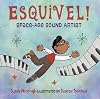
This picture book provides an overview of the life of musician Juan García Esquivel, starting with his childhood playing the piano for his family and ending with his years as a famous composer and orchestra leader, performing at the Stardust Hotel in Las Vegas and writing music for television shows.
I must confess to not knowing a single thing about Esquivel before reading this book, so everything in it was new to me. After I read this title, I did a brief skim of information about him show more online to see if this book covered his life well and it seems it did.
It is difficult to get a sense of sound from a visual medium like a book, although the use of onomatopoeia in the text combined with the hand lettering and flowy illustrations do attempt to evoke music. I definitely am interested in hearing samples of Esquivel's music after reading this book.
The illustrations in general struck me as a little unusual, with a very flat look to them. An illustrator's note explains how they are "inspired by ancient Mexican art, especially the Mixtec codex of the fourteenth and fifteenth centuries" but have "collage textures and photographic elements [added] electronically, using special computer software. I hope that like Esquivel, I, too, am breathing new life into a tradition of art." While the art style still isn't my favorite, this explanation went a long way towards making me appreciate them more. show less
I must confess to not knowing a single thing about Esquivel before reading this book, so everything in it was new to me. After I read this title, I did a brief skim of information about him show more online to see if this book covered his life well and it seems it did.
It is difficult to get a sense of sound from a visual medium like a book, although the use of onomatopoeia in the text combined with the hand lettering and flowy illustrations do attempt to evoke music. I definitely am interested in hearing samples of Esquivel's music after reading this book.
The illustrations in general struck me as a little unusual, with a very flat look to them. An illustrator's note explains how they are "inspired by ancient Mexican art, especially the Mixtec codex of the fourteenth and fifteenth centuries" but have "collage textures and photographic elements [added] electronically, using special computer software. I hope that like Esquivel, I, too, am breathing new life into a tradition of art." While the art style still isn't my favorite, this explanation went a long way towards making me appreciate them more. show less

Juan Garcia Esquivel, born in Mexico, became known for his quirky compositions and “lounge music.” As the author defines this in a note at the end of the book:
“Lounge music is a contemporary term for a type of easy-to-listen-to music that was popular in the 1950s and 1960s. The music seemed to transport listeners to another place - a tropical island, a jungle, or outer space. It had roots in jazz and often folded in exotic sounds - rhythms, melodies, instruments, even animal calls - show more from faraway places. The music was relaxing - you could lounge around listening to it.”
She writes that Esquivel also was a pioneer of stereo sound, now used almost universally.
She observes that although Esquivel died in 2002, his work still inspires contemporary artists in many fields.
Juan was fascinated by music from early childhood. He taught himself to play the piano and by age fourteen, had a job performing for a local radio staton. At 17, he was offered the job of orchestra leader for the station’s popular comedy show. The author writes:
“Juan tested and mixed and blended and arranged all sorts of sounds to match the imaginary situation [being acted out by the comedy team]. He was an artist, using dips and dabs of color to create a vivid landscape. But instead of paint, Juan used sound. Weird and wild sounds! Strange and exciting sounds!”
Soon he was winning awards, and got recruited by a record company in the United States. Juan drove all the way to New York City. He loved all the new instruments he discovered there: boobams, theremins, a buzzimba, the ondioline, and a gong. “So many odd, new sounds to play with - Juan was in heaven!”
He experimented with using stereophonic sound and with having vocalists sing sounds instead of words. People loved the results. He made many records, toured, made music for television and film, and performed in Las Vegas for fourteen years.
The author writes, “Now Juan wasn’t called Juan anymore. … Now Juan was the space-age sound artist known simply as ESQUIVEL! with an exclamation point!” She adds in her note that one Chicago newspaper columnist, after hearing his show, wrote, “Esquivel is so good, he deserves two exclamation points.”
Illustrator Duncan Tonatiuh is known for creating art inspired by ancient Mexican Mixtec codices from the fourteenth and fifteenth centuries. To that end he draws his figures in profile and uses the traditional shape of the number three for ears.
Tonatiuh updates his work by adding collage textures and photographic elements into his images electronically. The result is unique and appealing, and unlike any other picture book illustrator I can name. It adds so much to a story, as well as acquainting readers with an ancient tradition of art. In this book, Tonatiuh also plays with font and color to demonstrate the wild innovations of Esquivel.
At the end of the book, in addition to the notes by the author and by the illustrator, there is a page providing additional resources, including links to Youtube where you can hear Esquivel's music for yourself. I took the author's advice and listened to “Mini Skirt” and other songs, and couldn’t help bobbing with the music. Admittedly, it sounded very 50s-60s, but that just made it more fun!
Evaluation: This book demonstrates the rewards of thinking outside the box - in this case, successfully creating music from non-traditional sounds. Just as audiences in the late 18th Century thrilled to the unexpected touches of Franz Joseph Haydn's "Surprise" symphony, listeners in the 1950s and 1960s adored experiencing the inventiveness of Esquivel. Can kids pick up the similarities and differences? It would make for a great lesson and discussion session. show less
“Lounge music is a contemporary term for a type of easy-to-listen-to music that was popular in the 1950s and 1960s. The music seemed to transport listeners to another place - a tropical island, a jungle, or outer space. It had roots in jazz and often folded in exotic sounds - rhythms, melodies, instruments, even animal calls - show more from faraway places. The music was relaxing - you could lounge around listening to it.”
She writes that Esquivel also was a pioneer of stereo sound, now used almost universally.
She observes that although Esquivel died in 2002, his work still inspires contemporary artists in many fields.
Juan was fascinated by music from early childhood. He taught himself to play the piano and by age fourteen, had a job performing for a local radio staton. At 17, he was offered the job of orchestra leader for the station’s popular comedy show. The author writes:
“Juan tested and mixed and blended and arranged all sorts of sounds to match the imaginary situation [being acted out by the comedy team]. He was an artist, using dips and dabs of color to create a vivid landscape. But instead of paint, Juan used sound. Weird and wild sounds! Strange and exciting sounds!”
Soon he was winning awards, and got recruited by a record company in the United States. Juan drove all the way to New York City. He loved all the new instruments he discovered there: boobams, theremins, a buzzimba, the ondioline, and a gong. “So many odd, new sounds to play with - Juan was in heaven!”
He experimented with using stereophonic sound and with having vocalists sing sounds instead of words. People loved the results. He made many records, toured, made music for television and film, and performed in Las Vegas for fourteen years.
The author writes, “Now Juan wasn’t called Juan anymore. … Now Juan was the space-age sound artist known simply as ESQUIVEL! with an exclamation point!” She adds in her note that one Chicago newspaper columnist, after hearing his show, wrote, “Esquivel is so good, he deserves two exclamation points.”
Illustrator Duncan Tonatiuh is known for creating art inspired by ancient Mexican Mixtec codices from the fourteenth and fifteenth centuries. To that end he draws his figures in profile and uses the traditional shape of the number three for ears.
Tonatiuh updates his work by adding collage textures and photographic elements into his images electronically. The result is unique and appealing, and unlike any other picture book illustrator I can name. It adds so much to a story, as well as acquainting readers with an ancient tradition of art. In this book, Tonatiuh also plays with font and color to demonstrate the wild innovations of Esquivel.
At the end of the book, in addition to the notes by the author and by the illustrator, there is a page providing additional resources, including links to Youtube where you can hear Esquivel's music for yourself. I took the author's advice and listened to “Mini Skirt” and other songs, and couldn’t help bobbing with the music. Admittedly, it sounded very 50s-60s, but that just made it more fun!
Evaluation: This book demonstrates the rewards of thinking outside the box - in this case, successfully creating music from non-traditional sounds. Just as audiences in the late 18th Century thrilled to the unexpected touches of Franz Joseph Haydn's "Surprise" symphony, listeners in the 1950s and 1960s adored experiencing the inventiveness of Esquivel. Can kids pick up the similarities and differences? It would make for a great lesson and discussion session. show less
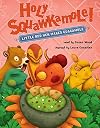
This is a retelling of Little Red Hen with a spicy, delicious twist.
The hen wants to make a scrumptious guacamole, but she's missing a few ingredients. That's fine; fresh is always best. And off she goes to get them, but the different vegetables, fruits and spices aren't as easy to pluck as she'd hoped. Another animal is always there who could help, but they're wrapped up in predicaments of their own, forcing her to do it all by herself. When the guacamole is ready, she asks who wants to eat show more it. Of course, all are ready to jump in. But this hen has planted a small surprise.
It's not hard to see the original story twisted into this guacamole surprise, but it still comes across fun and fresh. The cast of characters is original and fitting to the culture, not to mention the well-laid dab into the culture, which is sure to enrich the knowledge of little listeners. The text is simple enough for the younger aged listening groups and yet exciting enough for the slightly older too. Sprinkle in the fun outbursts—Holy Squawkamole!—and it's a delight for kids, especially as a read aloud.
The illustrations are bright and bold, and depict everything with enough reality to pull in to the scenes and inform young listeners at the same time. The emotions and animal characters' quirks come across nicely as well.
At the end of the book, there are several factual pages. The history of guacamole as well as a recipe insure young listeners will come out knowing more and be ready to gain hands on experience by creating their own delicious food. show less
The hen wants to make a scrumptious guacamole, but she's missing a few ingredients. That's fine; fresh is always best. And off she goes to get them, but the different vegetables, fruits and spices aren't as easy to pluck as she'd hoped. Another animal is always there who could help, but they're wrapped up in predicaments of their own, forcing her to do it all by herself. When the guacamole is ready, she asks who wants to eat show more it. Of course, all are ready to jump in. But this hen has planted a small surprise.
It's not hard to see the original story twisted into this guacamole surprise, but it still comes across fun and fresh. The cast of characters is original and fitting to the culture, not to mention the well-laid dab into the culture, which is sure to enrich the knowledge of little listeners. The text is simple enough for the younger aged listening groups and yet exciting enough for the slightly older too. Sprinkle in the fun outbursts—Holy Squawkamole!—and it's a delight for kids, especially as a read aloud.
The illustrations are bright and bold, and depict everything with enough reality to pull in to the scenes and inform young listeners at the same time. The emotions and animal characters' quirks come across nicely as well.
At the end of the book, there are several factual pages. The history of guacamole as well as a recipe insure young listeners will come out knowing more and be ready to gain hands on experience by creating their own delicious food. show less
The world of Juan Esquivel is laid out before s in this biographical picture book. Illustrated by the talented Duncan Tonatiuh, the book expresses in pictures the nuances and idiosyncrasies of Esquivel's music. Tonatiuh captures the musical journey of Esquivel borrowing from the ancient Mexican culture of the MIxtecs in the late 14th and 15th centuries. Music and sounds are expressed with imaged computer images and codex to express the multitude of sounds that Esquivel produced during his show more storied rise in music a as pioneer for experimenting with varied new instruments. Children from all ages would love this book as it visually reminds them of what the music may sound like, and it inspires even the most passive traveler on earth to go after their dreams. I will definitely use this book in class along with playing the music of Esquival to the children. It fascinated me enough to want to listen myself. show less
Lists
Youth: DEI (1)
Awards


You May Also Like
Associated Authors
Statistics
- Works
- 6
- Members
- 397
- Popularity
- #61,077
- Rating
- 3.9
- Reviews
- 21
- ISBNs
- 68
- Languages
- 1