
Kenneth M. Bilby
Author of True-Born Maroons
About the Author
Kenneth Bilby is an ethnomusicologist, writer, and lifelong student of Jamaican music. He is the former director of research at the Center for Black Research at Columbia College Chicago and currently a research associate at the Smithsonian Institution. Author of True-Born Maroons and coauthor of show more Caribbean Currents: Caribbean Music from Rumba to Reggae, his collection of field recordings of Jamaican traditional music is one of the largest, in the world. show less
Works by Kenneth M. Bilby
Associated Works
Tagged
Common Knowledge
Members
Reviews
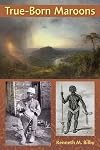
At the core of a volume that will surely be long regarded as the definitive study of the Jamaican Maroons is a valuable and unique anthology of oral narrative, collected by the author on visits spanning over a quarter-century. The Maroons, escaped slaves who successfully resisted the British occupation of Jamaica in the seventeenth and eighteenth centuries, are well known for the courage and indomitable spirit they manifested in their rebellion against “colonial slavocracy”. Yet until show more the appearance of Kenneth M. Bilby’s book what was known about them either never went beyond 1739, the year in whichthe British were forced to sign two treaties with them granting them autonomy in their territories, or else was mostly imagined about them, whether as heroic freedom-fighters glorified by Africans and other oppressed peoples, or as intractable savages who deserve vilification for defeating a race that regarded them as fit only for slavery, or as separatist elements undermining the national Jamaican motto of “many people, one nation”.
Bilby’s fascinating oral narratives cover the many aspects that constitute Maroon culture, including their origins and departure from Africa, captivity and rebellion against slavery, survival in difficult terrain and in the face of a technologically far superior force, the personalities, places, and deeds revered in their cultural memory, and much else. These accounts were not easy to come by: one reason for ignorance of true Maroon culture is that it was a culture of secrecy, and it took Bilby many visits over a long period of time to gain the confidence of Maroon communities to the point where they would share their secrets with him and trust him enough to allow him to publish only what they wished to make known about themselves. Informing much of their culture are the sacred rites of their Kromanti religion that symbolically express through sacred music, song and dance the cosmological principle that defines Maroon identity. Having participated in these rites and been inducted into many of their hidden secrets Bilby provides extensive and detailed descriptions, yet conscientiously warns us that “the half remains untold”.
The first part of True-Born Maroons consists of two highly informative and engaging chapters of introduction covering the requisite exposition of methodology and review of previous literature on the subject. It is a testimony to Bilby’s style in work and writing that these escape academic dryness without in the least bit compromising accuracy and seriousness of purpose. The story of the Maroons and outsiders’ notions of them is an intriguing tale with many lessons, anthropological or simply human, which the author draws and elucidates with sympathy and deep understanding for his subjects.
The narrations, which comprise the bulk of the volume, are similarly introduced and analyzed in an illuminating fashion. They are interspersed with a large number of rare photographs, as well as accounts by Western commentators, set aside in boxes so they are easily distinguishable, next to authentic Maroon accounts for purposes of comparison. The results are most enlightening. Bilby’s most laudable achievement, however, is that he allows the Maroons, whose towns are known to disappoint cultural tourists by looking just like all other Jamaican towns, to reveal in their own voices those hidden characteristics that make them so profoundly different and that constitute their special historical identity. show less
Bilby’s fascinating oral narratives cover the many aspects that constitute Maroon culture, including their origins and departure from Africa, captivity and rebellion against slavery, survival in difficult terrain and in the face of a technologically far superior force, the personalities, places, and deeds revered in their cultural memory, and much else. These accounts were not easy to come by: one reason for ignorance of true Maroon culture is that it was a culture of secrecy, and it took Bilby many visits over a long period of time to gain the confidence of Maroon communities to the point where they would share their secrets with him and trust him enough to allow him to publish only what they wished to make known about themselves. Informing much of their culture are the sacred rites of their Kromanti religion that symbolically express through sacred music, song and dance the cosmological principle that defines Maroon identity. Having participated in these rites and been inducted into many of their hidden secrets Bilby provides extensive and detailed descriptions, yet conscientiously warns us that “the half remains untold”.
The first part of True-Born Maroons consists of two highly informative and engaging chapters of introduction covering the requisite exposition of methodology and review of previous literature on the subject. It is a testimony to Bilby’s style in work and writing that these escape academic dryness without in the least bit compromising accuracy and seriousness of purpose. The story of the Maroons and outsiders’ notions of them is an intriguing tale with many lessons, anthropological or simply human, which the author draws and elucidates with sympathy and deep understanding for his subjects.
The narrations, which comprise the bulk of the volume, are similarly introduced and analyzed in an illuminating fashion. They are interspersed with a large number of rare photographs, as well as accounts by Western commentators, set aside in boxes so they are easily distinguishable, next to authentic Maroon accounts for purposes of comparison. The results are most enlightening. Bilby’s most laudable achievement, however, is that he allows the Maroons, whose towns are known to disappoint cultural tourists by looking just like all other Jamaican towns, to reveal in their own voices those hidden characteristics that make them so profoundly different and that constitute their special historical identity. show less
Awards

You May Also Like
Associated Authors
Statistics
- Works
- 3
- Also by
- 3
- Members
- 31
- Popularity
- #440,252
- Rating
- 3.7
- Reviews
- 1
- ISBNs
- 7