
Larissa Pham
Author of Pop Song: Adventures in Art & Intimacy
About the Author
Larissa Pham is an artist and writer in Brooklyn. She has written essays and criticism for The Paris Review Daily, The Nation, Art in America, Guernica, and elsewhere. She was an inaugural Yi Dae Up Fellowship recipient from Jack Jones Literary Arts.
Works by Larissa Pham
Associated Works
Tagged
Common Knowledge
- Birthdate
- 1992
- Birthplace
- Portland, Oregon, USA
- Associated Place (for map)
- Oregon, USA
Members
Reviews
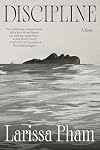
“Discipline” is a novel that questions not only its protagonist, Christina, but also the entire ecosystem surrounding the contemporary art scene. It’s deeply invested in interrogating what art is, who gets to validate it, and how fragile that validation can be.
Christina’s abandonment of painting after her bruising experience in graduate school—especially the silence (or betrayal) of her mentor—is less a clean break than a transformation of medium. She doesn’t stop being an show more artist; she relocates her artistic identity into writing. But the shift is uneasy. Her novel feels less like an act of creation and more like an act of retaliation. That tension is crucial to understanding Pham’s intention. She seems to suggest that when art is overly shaped by grievance, it risks becoming insular—more about settling scores than discovering meaning.
The book tour sections comprise about half of the narrative and can feel disconnected from the main story. I doubt that they are intended to directly illuminate the content of Christina’s novel so much as expose the environment surrounding the contemporary art scene (i.e., the expectations of audiences, the superficiality (and occasional absurdity) of literary conversations, and the pressure on artists to demonstrate coherence and intention. Christina is repeatedly asked to explain, justify, and package her work in ways that flatten it. These scenes highlight the gap between the messy process of making art and the tidy narratives demanded by the marketplace. In effect, the book tour isn’t about deepening our understanding of Christina’s novel. Instead, it’s about showing how art gets reframed, diluted, or even misunderstood once it enters the marketplace. The sense of disconnection may, in fact, be the point: the conversations drift because the discourse around art also often drifts.
The novel’s title seems to work on multiple levels. On the surface, it gestures toward artistic practice—the rigor, repetition, and self-denial required to produce meaningful work. But it also carries a punitive connotation. Christina has been “disciplined” by the art world: corrected, diminished, and subtly pushed out. Her writing becomes a form of self-discipline that attempts to reclaim authority by reshaping her narrative. Discipline also implies control, restraint, the management of feeling. Christina struggles with all three. This leaves one with an interesting conundrum: can art that emerges from unresolved hurt ever transcend it?
If the novel feels fragmented or indirect at times, this mirrors the fractured way art is created, consumed, and discussed in contemporary culture. Pham resists pat answers about what makes art “worthy.” Instead, she leaves us in the same uncertain position as Christina—trying to parse authenticity from performance, and intention from reception. show less
Christina’s abandonment of painting after her bruising experience in graduate school—especially the silence (or betrayal) of her mentor—is less a clean break than a transformation of medium. She doesn’t stop being an show more artist; she relocates her artistic identity into writing. But the shift is uneasy. Her novel feels less like an act of creation and more like an act of retaliation. That tension is crucial to understanding Pham’s intention. She seems to suggest that when art is overly shaped by grievance, it risks becoming insular—more about settling scores than discovering meaning.
The book tour sections comprise about half of the narrative and can feel disconnected from the main story. I doubt that they are intended to directly illuminate the content of Christina’s novel so much as expose the environment surrounding the contemporary art scene (i.e., the expectations of audiences, the superficiality (and occasional absurdity) of literary conversations, and the pressure on artists to demonstrate coherence and intention. Christina is repeatedly asked to explain, justify, and package her work in ways that flatten it. These scenes highlight the gap between the messy process of making art and the tidy narratives demanded by the marketplace. In effect, the book tour isn’t about deepening our understanding of Christina’s novel. Instead, it’s about showing how art gets reframed, diluted, or even misunderstood once it enters the marketplace. The sense of disconnection may, in fact, be the point: the conversations drift because the discourse around art also often drifts.
The novel’s title seems to work on multiple levels. On the surface, it gestures toward artistic practice—the rigor, repetition, and self-denial required to produce meaningful work. But it also carries a punitive connotation. Christina has been “disciplined” by the art world: corrected, diminished, and subtly pushed out. Her writing becomes a form of self-discipline that attempts to reclaim authority by reshaping her narrative. Discipline also implies control, restraint, the management of feeling. Christina struggles with all three. This leaves one with an interesting conundrum: can art that emerges from unresolved hurt ever transcend it?
If the novel feels fragmented or indirect at times, this mirrors the fractured way art is created, consumed, and discussed in contemporary culture. Pham resists pat answers about what makes art “worthy.” Instead, she leaves us in the same uncertain position as Christina—trying to parse authenticity from performance, and intention from reception. show less
This book was full of emotional pain from a woman trying to make sense of a man who caused her to experience profound hopelessness.
Christine was an artist who was enamored by her instructor in her graduate program whom she called the “old painter.” She had fallen deeply for him but to her surprise, he quickly became distant and indifferent. At that point, she lost all interest in creating art.
However, she picked up a new career as a writer and managed to pull off a publication with book show more events across the country. She revealed pieces of a love story here and there -- clearly a reflection from her past.
One has to wonder if Larissa Pham was writing, like her character, a version from her memories of past events. I found it especially fascinating as she mentioned various styles of paintings from women artists whom she admired.
The story moved quickly with a good flow. It was especially intriguing after Christine focused on a career as a writer. I felt like I was right behind her watching every move. You could easily feel the sense of anguish caused from Christine’s unsettling feeling with the old painter. His name was finally revealed at the end along with a mysterious twist.
My thanks to Random House and NetGalley for the ARC. My views I share are my own. show less
Christine was an artist who was enamored by her instructor in her graduate program whom she called the “old painter.” She had fallen deeply for him but to her surprise, he quickly became distant and indifferent. At that point, she lost all interest in creating art.
However, she picked up a new career as a writer and managed to pull off a publication with book show more events across the country. She revealed pieces of a love story here and there -- clearly a reflection from her past.
One has to wonder if Larissa Pham was writing, like her character, a version from her memories of past events. I found it especially fascinating as she mentioned various styles of paintings from women artists whom she admired.
The story moved quickly with a good flow. It was especially intriguing after Christine focused on a career as a writer. I felt like I was right behind her watching every move. You could easily feel the sense of anguish caused from Christine’s unsettling feeling with the old painter. His name was finally revealed at the end along with a mysterious twist.
My thanks to Random House and NetGalley for the ARC. My views I share are my own. show less
Awards


You May Also Like
Associated Authors
Statistics
- Works
- 4
- Also by
- 2
- Members
- 165
- Popularity
- #128,475
- Rating
- 3.4
- Reviews
- 2
- ISBNs
- 12