
Chris Gibson (2)
Author of British Secret Projects: Hypersonics, Ramjets and Missiles
For other authors named Chris Gibson, see the disambiguation page.
Series
Works by Chris Gibson
Nimrod's Genesis: RAF Maritime Patrol Projects and Weapons Since 1945 (Hikoki) (2015) 14 copies, 2 reviews
The Admiralty and AEW: Royal Navy Airborne Early Warning Projects (Project Tech Profile) (2011) 5 copies
Flypast January 2017 1 copy
Flypast March 2017 1 copy
Flypast Feuary 2017 1 copy
Flypast September 2018 1 copy
Flypast April 2017 1 copy
Flypast November 2018 1 copy
Flypast May 2018 1 copy
Flypast August 2018 1 copy
Flypast July 2018 1 copy
Flypast June 2018 1 copy
Flypast June 2017 1 copy
Flypast April 2018 1 copy
Flypast March 2018 1 copy
Flypast Febuary 2018 1 copy
Flypast May 2017 1 copy
Flypast December 2017 1 copy
Flypast July 2017 1 copy
Flypast August 2017 1 copy
Flypast September 2017 1 copy
Flypast October 2017 1 copy
Flypast November 2017 1 copy
Flypast August 2016 1 copy
Flypast Serptember 2016 1 copy
Flypast October 2016 1 copy
Flypast November 2016 1 copy
Flypas December 2016 1 copy
Flypast January 2018 1 copy
Tagged
Common Knowledge
There is no Common Knowledge data for this author yet. You can help.
Members
Reviews
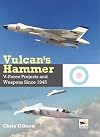
A detailed study of the RAF V-bomber force from the perspective of the industry teams working on its creation, its development, its weapons and their proposed replacements. For it is in the way of modern weapons design and procurement that when a weapons system enters service, military planners will begin to think about what will replace it. The design teams in the weapons industry will do likewise, as by keeping ahead of the curve in thinking about new weapons, they will be in the right show more place when the military come to them to ask for the next generation of kit. Trying to anticipate what the next generation of weapons specifications will be kept the British aviation industry in work throughout the 1950s and into the 1960s. It also meant that there was a degree of (small-'p') politicking going on in the upper echelons of industry, trying to divine what was in the minds of generals and politicians.
But there's a problem with making a coherent story out of this, because the product of so much of this activity was a series of paper proposals that ended up either being rejected or superseded before they could be turned into reality. Military technology was moving very fast in the 1950s, and one day's cutting-edge concepts could very easily turn out to be so much waste paper if the technology or the political thinking changed. So it was with manned bomber aircraft and the British nuclear deterrent. Once the thinking changed to favour the submarine-launched ballistic missile, the strategic nuclear bomber was yesterday's weapon system.
There are stories of international policy and negotiation in this book; but they are elbowed aside by the sheer weight of discussion about different specifications for different aircraft and missiles that never made it to production as new requirements were generated by the military planners. The author does his best with this material, and the accounts of, say, the cancellation of the Douglas Skybolt air-launched strategic ballistic missile, which the UK was very prepared to buy from the Americans, make for interesting reading. But these political stories are almost lost in the technical minutiae.
The wider story becomes clear, though; a nation, impoverished by winning a war it could barely afford, trying to keep up with two superpowers who could throw resources at problems. Solutions to those same problems were proposed which had an air of improvisation and shoestring budgets about them; it is only through a sense of national pride that we were still in the game by the end of the Cold War. When the British government first heard about the atomic bomb attacks on Hiroshima and Nagasaki, it was the Labour politician Aneurin Bevan who said "We've got to have this thing and there's got to be the bloody Union Jack on it", and a lot of people worked very hard to make that happen. This book is their memorial; without it, so many names and projects would be buried in documents in the National Archives.
The book itself is a very nice production, on good paper and with a keen eye for design. It is well illustrated with rare photographs, but do not expect an easy read. Still, there is some amusement to be had from considering the Ministry of Supply 'rainbow' code names for different projects - as well as Blue Steel (the cornerstone of so much of the pre-Polaris nuclear deterrent, at least on paper), there were projects with names like Blue Cat, Red Cat, Orange Herald, Red Beard, Red Shrimp and Violet Club. There was Green Cheese, Green Flash and Green Sparkler. And although the name Blue Danube was not instantly discernible as a free-fall nuclear weapon, when it came to Yellow Sun, the clue was definitely in the name. show less
But there's a problem with making a coherent story out of this, because the product of so much of this activity was a series of paper proposals that ended up either being rejected or superseded before they could be turned into reality. Military technology was moving very fast in the 1950s, and one day's cutting-edge concepts could very easily turn out to be so much waste paper if the technology or the political thinking changed. So it was with manned bomber aircraft and the British nuclear deterrent. Once the thinking changed to favour the submarine-launched ballistic missile, the strategic nuclear bomber was yesterday's weapon system.
There are stories of international policy and negotiation in this book; but they are elbowed aside by the sheer weight of discussion about different specifications for different aircraft and missiles that never made it to production as new requirements were generated by the military planners. The author does his best with this material, and the accounts of, say, the cancellation of the Douglas Skybolt air-launched strategic ballistic missile, which the UK was very prepared to buy from the Americans, make for interesting reading. But these political stories are almost lost in the technical minutiae.
The wider story becomes clear, though; a nation, impoverished by winning a war it could barely afford, trying to keep up with two superpowers who could throw resources at problems. Solutions to those same problems were proposed which had an air of improvisation and shoestring budgets about them; it is only through a sense of national pride that we were still in the game by the end of the Cold War. When the British government first heard about the atomic bomb attacks on Hiroshima and Nagasaki, it was the Labour politician Aneurin Bevan who said "We've got to have this thing and there's got to be the bloody Union Jack on it", and a lot of people worked very hard to make that happen. This book is their memorial; without it, so many names and projects would be buried in documents in the National Archives.
The book itself is a very nice production, on good paper and with a keen eye for design. It is well illustrated with rare photographs, but do not expect an easy read. Still, there is some amusement to be had from considering the Ministry of Supply 'rainbow' code names for different projects - as well as Blue Steel (the cornerstone of so much of the pre-Polaris nuclear deterrent, at least on paper), there were projects with names like Blue Cat, Red Cat, Orange Herald, Red Beard, Red Shrimp and Violet Club. There was Green Cheese, Green Flash and Green Sparkler. And although the name Blue Danube was not instantly discernible as a free-fall nuclear weapon, when it came to Yellow Sun, the clue was definitely in the name. show less

Although I've been a big fan of the author's work over the years I feel that this book is somewhat less successful. Instead of following a class of aircraft in RAF service, this time out Gibson is essentially trying to write a history of close support during the Cold War with a slant towards the RAF. This means that, while all the writing is informative, this book feels more like a collection of chapters chasing a theme; though Gibson winds up with a firm defense of the multi-role combat show more aircraft. That's probably a commentary on how much the poorly executed development and deployment of the Lockheed F-35 Lightning II has soured people on the concept of multi-role aircraft. show less

In the author's ongoing examination of the four dimensions of military aircraft in post-WWII Britain, that is to say "length, span, height & politics," it turns out that military transport aircraft are a much more contentious issue than one might imagine. This is between not spending more than necessary on support functions, the desire to preserve a British aviation industry (with its own "haves" and "have-nots") and British requirements that were often not easily met by simply buying show more something American off-the-shelf. More often than not the RAF simply had to "lump it," but they never went down without a fight! show less
A really excellent study that puts the evolution of the British nuclear deterrent into perspective, as author examines the decisions that were made to keep the manned bomber force viable. To a large degree this is a history of "stand-off" weapons used until a viable ballistic missile force could be deployed. Also, Gibson has little use for what might be called the traditional position of whining bitterly about the cancellations of much-touted aviation endeavors, seeing most of these projects show more as not being viable either because of changing technology or the limitations of the British economy. show less
You May Also Like
Associated Authors
Statistics
- Works
- 43
- Members
- 162
- Popularity
- #130,373
- Rating
- 3.9
- Reviews
- 9
- ISBNs
- 62
- Languages
- 6