
Luis Martín-Santos (1) (1924–1964)
Author of Time of Silence
For other authors named Luis Martín-Santos, see the disambiguation page.
About the Author
Image credit: Luis Martín-Santos (1950s)
Works by Luis Martín-Santos
Apólogos : y otras prosas inéditas — Author — 2 copies
Libertad, temporalidad y transferencia en el psicoanálisis existencial. Para una fenomenología de la cura psicoanalítica (1975) — Author — 1 copy
Claves para la lectura de TIempo de SIlencio — Author — 1 copy
Tagged
Common Knowledge
- Canonical name
- Martín-Santos, Luis
- Legal name
- Martín-Santos Ribera, Luis
- Birthdate
- 1924-11-11
- Date of death
- 1964-01-19
- Gender
- male
- Nationality
- Spain
- Associated Place (for map)
- Spain
Members
Reviews

I read this book a few months ago and didn't ever get around to writing a review. It's a classic of postwar Spanish fiction, and I went into it with high hopes; they were fulfilled for the most part, although there was something that kept me from being wildly enthusiastic about this book as I read it. Martín-Santos is known for incorporating a lot of modern, Joycean narrative techniques--stream of consciousness, interior monologue, fragmented narration--into his book at a time when that show more wasn't necessarily what Spanish literature was all about. It is an experimental book, I think it's fair to say, although not to the point that it's impossible to make heads or tails out of what you're reading. The author mixes a very erudite language and constant references to other works of literature and art with a generous helping of irony and dark humor; it was a combination that I very much enjoyed.
Pedro is a scientist trying to find a cure for cancer in a laboratory during the Franco regime. In his spare time, he sits around and talks with the three generations of women who own the pension house he stays at. They've got their eyes on him as the future spouse of Dorita, the youngest member of the clan. In a perfect world they'd like him to settle down, quit working in the laboratory and start practicing medicine, which would make him something of a model husband/provider. Pedro also goes out drinking on the weekends with his buddy Matías; during these benders they hang out first with artists at literary cafes and later make their way to the brothel, where they drunkenly attempt to consummate their evening with a little sex. Because Pedro is unable to obtain the steady supply of mice he needs to keep his experiment going via legitimate channels, he buys them from Muecas (mueca means "grimace" in Spanish), a relative of his lab assistant Amador, who lives in a Madrid shantytown. Muecas, his wife and his two daughters live in rather tight quarters, although he's managed to cobble together a residence that makes him something of a shantytown bourgeois. All four, though, sleep in the same bed. Suddenly, about 100 pages in, Pedro is summoned to the Muecas residence and asked to try and save the daughter's life. Florita (the daughter) was impregnated (by her father) and an attempted abortion failed badly and now she's bleeding to death. Pedro is unable to save her, but his appearance at the Muecas residence has some rather drastic and far-reaching consequences in Pedro's life, mostly due to a series of unfortunate misunderstandings regarding his actual role in the illegal medical procedure.
The book is divided up into nearly forty sections, and it often takes a bit of effort to figure out the perspective of each individual section. Three of them are interior monologues from the perspective of Pedro; others are from the perspective of, for example, Cartucho, the disgruntled admirer of Florita; still others take a more distant, third person perspective when recounting the Madrid cityscape through which Pedro passes. Different characters' back stories are intertwined, and you slowly come to understand how Muecas established himself in Madrid, how the family of three generations of women came to host Pedro, and how a particularly compelling painting by Goya comes to represent a certain class of Spanish intellectual that in turn encounters its maximal representation in José Ortega y Gasset, who gives a conference to a crowd of adoring women after Pedro analyzes the painting. As you progress farther into the book, the way the different sections interact becomes easier to understand. At first it's a little difficult to sort things out, but each section is strong enough in its own right to hold your attention. I especially enjoyed the first depiction of the laboratory, the story of the women in the pension house, and the arrival of Pedro and Amador to the shantytown.
Luis Martín-Santos was a psychiatrist as well as an author, and his background as a scientist in Franco's Spain and as a student of the human mind certainly contributed heavily to the content of this book. It certainly presents a rather pessimistic view of the possibility of glory and personal redemption via science. It also paints a rather dark picture of intellectual Spain in the 1950s, a country isolated from the scientific glory and progress of the United States. Pedro dreams of getting a scholarship to go do research in America, where he'd presumably be able to really accomplish things, rather than progressively killing more and more mice in a ridiculous and doomed attempt to find a cure for cancer and bring glory to the Spanish scientific establishment. show less
Pedro is a scientist trying to find a cure for cancer in a laboratory during the Franco regime. In his spare time, he sits around and talks with the three generations of women who own the pension house he stays at. They've got their eyes on him as the future spouse of Dorita, the youngest member of the clan. In a perfect world they'd like him to settle down, quit working in the laboratory and start practicing medicine, which would make him something of a model husband/provider. Pedro also goes out drinking on the weekends with his buddy Matías; during these benders they hang out first with artists at literary cafes and later make their way to the brothel, where they drunkenly attempt to consummate their evening with a little sex. Because Pedro is unable to obtain the steady supply of mice he needs to keep his experiment going via legitimate channels, he buys them from Muecas (mueca means "grimace" in Spanish), a relative of his lab assistant Amador, who lives in a Madrid shantytown. Muecas, his wife and his two daughters live in rather tight quarters, although he's managed to cobble together a residence that makes him something of a shantytown bourgeois. All four, though, sleep in the same bed. Suddenly, about 100 pages in, Pedro is summoned to the Muecas residence and asked to try and save the daughter's life. Florita (the daughter) was impregnated (by her father) and an attempted abortion failed badly and now she's bleeding to death. Pedro is unable to save her, but his appearance at the Muecas residence has some rather drastic and far-reaching consequences in Pedro's life, mostly due to a series of unfortunate misunderstandings regarding his actual role in the illegal medical procedure.
The book is divided up into nearly forty sections, and it often takes a bit of effort to figure out the perspective of each individual section. Three of them are interior monologues from the perspective of Pedro; others are from the perspective of, for example, Cartucho, the disgruntled admirer of Florita; still others take a more distant, third person perspective when recounting the Madrid cityscape through which Pedro passes. Different characters' back stories are intertwined, and you slowly come to understand how Muecas established himself in Madrid, how the family of three generations of women came to host Pedro, and how a particularly compelling painting by Goya comes to represent a certain class of Spanish intellectual that in turn encounters its maximal representation in José Ortega y Gasset, who gives a conference to a crowd of adoring women after Pedro analyzes the painting. As you progress farther into the book, the way the different sections interact becomes easier to understand. At first it's a little difficult to sort things out, but each section is strong enough in its own right to hold your attention. I especially enjoyed the first depiction of the laboratory, the story of the women in the pension house, and the arrival of Pedro and Amador to the shantytown.
Luis Martín-Santos was a psychiatrist as well as an author, and his background as a scientist in Franco's Spain and as a student of the human mind certainly contributed heavily to the content of this book. It certainly presents a rather pessimistic view of the possibility of glory and personal redemption via science. It also paints a rather dark picture of intellectual Spain in the 1950s, a country isolated from the scientific glory and progress of the United States. Pedro dreams of getting a scholarship to go do research in America, where he'd presumably be able to really accomplish things, rather than progressively killing more and more mice in a ridiculous and doomed attempt to find a cure for cancer and bring glory to the Spanish scientific establishment. show less
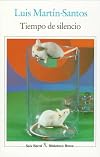
Siempre han existido, a lo largo de la historia de la literatura, escritores que han querido desafiar los límites establecidos por la lengua en sí, han querido romper con los cánones existentes, con lo que se consideraba narrativamente corriente. Siempre han existido este tipo de artistas que han cogido la pluma, la máquina de escribir, el ordenador o aquella libreta a cuadros, y han empezado a herir el papel con historias propias, historias que transformaron en reales (sí, seguramente show more lo sean) causando un dolor tan intenso en el lector que es complicado curar, en cierta parte, todas esas sensaciones que transmiten unas obras abocadas al éxito más ennegrecido.
Luis Martín-Santos perdió a su esposa y murió prematuramente, su vida fue ciertamente trágica, viviendo, además, en una coyuntura social muy complicada. Considerado a la altura de Joyce y su Ulisses, se presenta esta magnífica obra maestra, desdibujada por una literatura culta, enrevesada, poderosamente compleja, poderosamente brumosa. Pedro es un médico que investiga la herencia por gen del cáncer en ratones blancos. Pedro es un reflejo de Martín-Santos, Pedro es un hombre profundamente aletargado, profundamente silencioso, completamente sucumbido a un alrededor que no puede controlar. Por los desdichados caminos de su existencia, en la que reflexiona constantemente, se ve envuelto en un ardid que marcará su vida para siempre.
Son los personajes secundarios que rodean a Pedro de los que se vale el autor para hacernos llegar más detalles de él, mediante escuetos y hábiles diálogos. Pero es, sin duda, la narrativa íntima, la de los pensamientos, la que gobierna a lo largo de los numerosos capítulos de la novela. Valiéndose de la repetición, de interjecciones, de la adjetivación exhaustiva de los sentimientos, crea, paso a paso, esta joya que sufre constantes saltos de situación, lugar y tiempo. En ocasiones, pequeños cortes en el hilo narrativo, nos regala largas prosas poéticas que enfocas desde un punto irreal una situación trágica.
Qué osada de mí, atreverme a hacer una crítica a tan alta obra literaria. Muy recomendable, a pesar de su dificultad. Su hermosura e intensidad merecen la pena. show less
Luis Martín-Santos perdió a su esposa y murió prematuramente, su vida fue ciertamente trágica, viviendo, además, en una coyuntura social muy complicada. Considerado a la altura de Joyce y su Ulisses, se presenta esta magnífica obra maestra, desdibujada por una literatura culta, enrevesada, poderosamente compleja, poderosamente brumosa. Pedro es un médico que investiga la herencia por gen del cáncer en ratones blancos. Pedro es un reflejo de Martín-Santos, Pedro es un hombre profundamente aletargado, profundamente silencioso, completamente sucumbido a un alrededor que no puede controlar. Por los desdichados caminos de su existencia, en la que reflexiona constantemente, se ve envuelto en un ardid que marcará su vida para siempre.
Son los personajes secundarios que rodean a Pedro de los que se vale el autor para hacernos llegar más detalles de él, mediante escuetos y hábiles diálogos. Pero es, sin duda, la narrativa íntima, la de los pensamientos, la que gobierna a lo largo de los numerosos capítulos de la novela. Valiéndose de la repetición, de interjecciones, de la adjetivación exhaustiva de los sentimientos, crea, paso a paso, esta joya que sufre constantes saltos de situación, lugar y tiempo. En ocasiones, pequeños cortes en el hilo narrativo, nos regala largas prosas poéticas que enfocas desde un punto irreal una situación trágica.
Qué osada de mí, atreverme a hacer una crítica a tan alta obra literaria. Muy recomendable, a pesar de su dificultad. Su hermosura e intensidad merecen la pena. show less
Triste, deprimente, sombría, oscura, pesimista. Pero una maravilla a nivel lingüístico y descriptivo. El contexto social de la España de los 40 está representado con certeros dardos que dan en la diana y duelen

En la sórdido y desalentado recorrido de Tiempo de silencio (1962), una obra que transformó para siempre, elevándolas y abriéndolas al mundo, las aspiraciones de la novela española, se pueden admirar tanto el contenido intelectual como la técnica narrativa y el estilo, inspirados en muy heterogéneos modelos clásicos y contemporáneos. Al igual que en el Ulises de Joyce, la descripción de una ciudad contiene también la visión cultural del país: la acción narrativa sirve de show more soporte a soliloquios, digresiones y descripciones que presentan un panorama de la historia española desde la Edad Media. show less
Lists
Awards


You May Also Like
Associated Authors
Statistics
- Works
- 7
- Members
- 799
- Popularity
- #31,914
- Rating
- 3.8
- Reviews
- 21
- ISBNs
- 56
- Languages
- 5
- Favorited
- 1