
Aida Edemariam
Author of The Wife's Tale: A Personal History
About the Author
Works by Aida Edemariam
Associated Works
New Daughters of Africa: An International Anthology of Writing by Women of African Descent (2019) — Contributor — 115 copies, 1 review
Tagged
Common Knowledge
Members
Reviews

"Light rains, spots of fresh green grass. Storks fly north. Women prepare fuel for the rainy season: deadwood, and sundried cow dung coated with mud. Caravans hurry home from Sudan. Fishing in rivers. Children sing of the country’s wellbeing to storks, men and women picnic outside, celebrating the birthday of Mary."
This was every bit as marvellous as the reviews and prizes suggest it is. The author tells the story of her grandmother, who was married as a child and by virtue of a long life show more saw huge change in Ethiopia. She lived under imperial rule, witnessed the Italian invasion, and then British bombs. She lived through the takeover of the Marxist-Leninist influenced Derg, and the terrible famines everyone over a certain age will no doubt picture when someone mentions Ethiopia.
This isn't a universal picture: the author doesn't hide the affluence of her grandmother's family. But her privilege meant that she travelled and witnessed more than some, and as a woman her experience across the century is now very much of an almost unrecognisable past, and was of the past even to her children and grandchildren. I loved the way the author structured the book around Ethiopian months, with a description of the season and traditional work. show less
This was every bit as marvellous as the reviews and prizes suggest it is. The author tells the story of her grandmother, who was married as a child and by virtue of a long life show more saw huge change in Ethiopia. She lived under imperial rule, witnessed the Italian invasion, and then British bombs. She lived through the takeover of the Marxist-Leninist influenced Derg, and the terrible famines everyone over a certain age will no doubt picture when someone mentions Ethiopia.
This isn't a universal picture: the author doesn't hide the affluence of her grandmother's family. But her privilege meant that she travelled and witnessed more than some, and as a woman her experience across the century is now very much of an almost unrecognisable past, and was of the past even to her children and grandchildren. I loved the way the author structured the book around Ethiopian months, with a description of the season and traditional work. show less
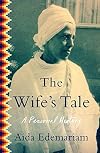
Aida Edemariam gives us an intimate portrait of her grandmother, Yetemegnu, and a short history of a changing, sometimes violently, Ethiopia. We see a woman who has some standing in society having to continuing survive the hard knocks that life gives her. She is married at 8 to a man who she does not know or love but ends up ferociously defending him. Grandmother, who can not read, has a severely constricted social life at the start. Their are many tragic moments for Yetemegnu, grandmother, show more and her beloved Ethiopia. So, at her death we are left saddened but in the glow of witnessing her struggles to be a person of some consequence and thinking that this was a life worth living.
Quotes: (page 16) “'Setechign,' said Tirunesh on a visit one day, as gently as she knew how. 'Isn't it time your daughter was betrothed? The deacon who reads to me-'
'She's a child. She's barely eight years old. I will not give my daughter to a man of thirty who has no women in his household, no mother in evidence, no nurse to care for her. How can you think of such a thing?'
Tirunesh turned to the elders. Deputations arrived at Mekonnen's house, bearing blandishments, arguments, testimonies of character. Mekonnen listened, resisted all of them.”
(page 126) “The sun would be high by the time she left the church. Everyone she passed bowed, How are you? Are you well? And she would bow back, murmuring, Well, thanks be to God. Ah well. And you, are you well? When in the final decades of her life she found herself living far from home this was the thing she missed the most: the sense of belonging recognition bestows, and her spot near the south door.”
(page 180) “And a capital's streets were so different from those of a provincial town like Gondar, however overweening the latter's self-opinion. So much disease, displayed for gain. So many young boys, younger than her son, gathering at street corners, offering shoe-shinning, boys from the regions sent to better their families' fortunes, boys carryng so much hope on their bony shoulders; hope, if they had failed the grade eight examinations in the new schools or knew no one influential, that would probably just wither away. Modernity then aped tradition, sending them out, like their fathers at church school, to beg for meals. But it did not offer tradition's safety nets, or any concrete promise of graduation to a different stage. She thought of their mothers and the tears welled. There were knots of donkeys, as always, and milling flocks of sheep. She watched as farmers picked choice specimens up by their front legs, or grasped rams by their curling horns and dragged them unceremoniously toward prospective customers. Mules, too, but this was less common than it used to be. They were outnumbered by cars now, driven by earnest young men in western suits, or even, sometimes, by a woman.” show less
Quotes: (page 16) “'Setechign,' said Tirunesh on a visit one day, as gently as she knew how. 'Isn't it time your daughter was betrothed? The deacon who reads to me-'
'She's a child. She's barely eight years old. I will not give my daughter to a man of thirty who has no women in his household, no mother in evidence, no nurse to care for her. How can you think of such a thing?'
Tirunesh turned to the elders. Deputations arrived at Mekonnen's house, bearing blandishments, arguments, testimonies of character. Mekonnen listened, resisted all of them.”
(page 126) “The sun would be high by the time she left the church. Everyone she passed bowed, How are you? Are you well? And she would bow back, murmuring, Well, thanks be to God. Ah well. And you, are you well? When in the final decades of her life she found herself living far from home this was the thing she missed the most: the sense of belonging recognition bestows, and her spot near the south door.”
(page 180) “And a capital's streets were so different from those of a provincial town like Gondar, however overweening the latter's self-opinion. So much disease, displayed for gain. So many young boys, younger than her son, gathering at street corners, offering shoe-shinning, boys from the regions sent to better their families' fortunes, boys carryng so much hope on their bony shoulders; hope, if they had failed the grade eight examinations in the new schools or knew no one influential, that would probably just wither away. Modernity then aped tradition, sending them out, like their fathers at church school, to beg for meals. But it did not offer tradition's safety nets, or any concrete promise of graduation to a different stage. She thought of their mothers and the tears welled. There were knots of donkeys, as always, and milling flocks of sheep. She watched as farmers picked choice specimens up by their front legs, or grasped rams by their curling horns and dragged them unceremoniously toward prospective customers. Mules, too, but this was less common than it used to be. They were outnumbered by cars now, driven by earnest young men in western suits, or even, sometimes, by a woman.” show less

This is a book that manages to be interesting without actually being terribly engaging. It is an account of the author's grandmother's life, taken from interviews over 20 years. It seems to wander about in tense and in the person, at times grandmother is "she" at others she is referred to by name. In the final portion of the book, the author appears in the first person and starts describing people by her relationship to them. It makes for a book that is hard to follow in places.
The show more chronology is also hard to follow. The books is divided into a number of years, but things like the interval between the children's births is never really described in detail (until the chronology at the end, by which time it;s to late). And I understand that is how you'd discuss life in memory, but it makes for a story that is curiously un-rooted. Then there are the many religious passages, which seemed to have barely any relationship to the events before or after their insertion. I'm not sure what they were supposed to contribute.
Having said that, it is a tale from a completely different time and culture and she lives through an awful lot in her 98 years. Married young to a man in his 30s there are hints of abuse, but it's in passing, as if it were normal. Then there are the impact of national and international events on the rural corner of Ethiopia, the Italian invasion, a couple of revolutions, a famine and through it all she survives. I liked the way she embraced technology like the radio and telephone, with delight.
It has a lot to interest the reader, I'm just not sure that the execution presents the material in the most engaging manner. show less
The show more chronology is also hard to follow. The books is divided into a number of years, but things like the interval between the children's births is never really described in detail (until the chronology at the end, by which time it;s to late). And I understand that is how you'd discuss life in memory, but it makes for a story that is curiously un-rooted. Then there are the many religious passages, which seemed to have barely any relationship to the events before or after their insertion. I'm not sure what they were supposed to contribute.
Having said that, it is a tale from a completely different time and culture and she lives through an awful lot in her 98 years. Married young to a man in his 30s there are hints of abuse, but it's in passing, as if it were normal. Then there are the impact of national and international events on the rural corner of Ethiopia, the Italian invasion, a couple of revolutions, a famine and through it all she survives. I liked the way she embraced technology like the radio and telephone, with delight.
It has a lot to interest the reader, I'm just not sure that the execution presents the material in the most engaging manner. show less

And a half star. Started this book in Gondar on my first visit to Africa. It helped bring a depth to my experiences and because I was there in many of the places she spent her life, brought sights and smells and sounds, plant and trees, animals and birds, food and drink, and people - all new to me and all making reading the memoir of Yetemegnu richer and deeper. I loved the structure and poetry of Aide Edemariam's writing and the description of recent (and some more ancient) history of Ethiopia.
Awards


You May Also Like
Associated Authors
Statistics
- Works
- 1
- Also by
- 1
- Members
- 131
- Popularity
- #154,466
- Rating
- 3.6
- Reviews
- 7
- ISBNs
- 13