
Elizabeth Dearnley
Author of Into the London Fog: Eerie Tales from the Weird City
About the Author
Elizabeth Dearnley gained her PhD from the University of Cambridge.
Works by Elizabeth Dearnley
Deadly Dolls: Midnight Tales of Uncanny Playthings: 50 (British Library Tales of the Weird) (2024) — Editor — 33 copies, 1 review
All of Them Witches 1 copy
Associated Works
Hellebore #4: The Yuletide Special — Contributor — 11 copies
Hellebore 11: The Animal Issue — Contributor — 3 copies
Tagged
Common Knowledge
- Gender
- female
Members
Reviews
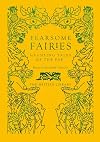
Fearsome Fairies: Haunting Tales of the Fae (British Library Hardback Classics) by Elizabeth Dearnley
“Up the airy mountain,
Down the rushy glen,
We daren’t go a-hunting
For fear of little men”
As I’ve repeatedly told anyone who will listen, the modern depiction of The People as tiny, tinkly, predominantly female figures flitting around on butterfly wings sprinkling pixie dust everywhere is a bunch of BS. It’s like painting bigfoot as a mangy chihuahua who’s blind in one eye. They are at best potentially dangerous and at worst just plain deadly. Anyhow, I thought this would be a good show more book to help get me in the spirit for Halloween season. It’s a collection of short stories from various writers and time periods, dating from 1867 up to 2014.
I will say, while the book is extremely well-made - nice, high-quality paper and so forth - I don’t know if I would have chosen canary yellow backing with green foil-stamping for a collection of what are supposed to be ‘haunting’ stories. But hey, what do I know? Maybe there’s someone out there who finds yellow terrifying. Once you get past the questionable aesthetics, though, the contents don’t disappoint:
The Banshee’s Warning - Charlotte Riddel (1867): nice short slow-burn type story with Netflix end-of-season reveals and plot twists at the finale.
Laura Silver Bell – J. Sheridan Le Fanu (1872): cool story with an unlikely protagonist, although that hardcore Northumbrian dialect takes a bit of getting used to.
The White People – Arthur Machen (1904): reads like a stream of consciousness fever dream, with lots of story-within-a-story twists.
In the Closed Room – Frances Hodgson Burnett (1904): an eerie tale by the author of The Secret Garden. More of a ghost story than a f*iry story, but still haunting. And there’s even a secret garden.
Lock-Out Time – J.M. Barrie (1906): yes, the same J.M. Barrie who wrote Peter Pan, and one of the greatest offenders in the Disneyfication of the fae in general. Still, it hints at the consequences of running off to play with Them.
By the Yellow Moonrock – Fiona Macleod (1921): creepy story about how truly dangerous the fae can be. And as it turns out, “Fiona Macleod” was a literary alter ego for Scottish novelist William Sharp that he presented as a real person for over a decade. His reasons for this are an interesting story in itself and another blow to the “only XYZ-demographic-people can realistically write XYZ-demographic-people,” crowd.
After Dark in the Playing Fields – M.R. James (1924): fun little short with talking animals and plenty of unspoken menace about just how “not Disney” the Good People are.
The Case of the Leannabh Sidhe – Margery Lawrence (1945): the longest offering in the collection, and the one I most enjoyed, it’s a classic Christie-esque detective story with drawing rooms and butlers muttering at the sideboard and so on, but with a supernatural element. Hercule Poirot meets Doctor Strange sort of thing. I think I may have to find more stuff by Ms. Lawrence.
The Trod – Algernon Blackwood (1946): interesting short about a man who is trying to save a woman from being taken by the f*iries. How successful he is, and whether or not she really even wants to be saved (even after asking to be) is all a bit vague.
The Erl-King – Angela Carter (1979): a dark, surreal short story by a woman who really knows how to paint an interesting picture with just a few words.
Concerning a Boy and a Girl Emerging from the Earth – Randolph Stow (1980): nicely done modern retelling of an old medieval legend.
In Yon Green Hill to Dwell – Jane Alexander (2014): there is an old (at least as early as 1549) Scottish ballad about a woman who saves her lover from the Queen of the F*iries. This really cool short story is about what happens next.
All in all, an excellent collection. show less
Down the rushy glen,
We daren’t go a-hunting
For fear of little men”
As I’ve repeatedly told anyone who will listen, the modern depiction of The People as tiny, tinkly, predominantly female figures flitting around on butterfly wings sprinkling pixie dust everywhere is a bunch of BS. It’s like painting bigfoot as a mangy chihuahua who’s blind in one eye. They are at best potentially dangerous and at worst just plain deadly. Anyhow, I thought this would be a good show more book to help get me in the spirit for Halloween season. It’s a collection of short stories from various writers and time periods, dating from 1867 up to 2014.
I will say, while the book is extremely well-made - nice, high-quality paper and so forth - I don’t know if I would have chosen canary yellow backing with green foil-stamping for a collection of what are supposed to be ‘haunting’ stories. But hey, what do I know? Maybe there’s someone out there who finds yellow terrifying. Once you get past the questionable aesthetics, though, the contents don’t disappoint:
The Banshee’s Warning - Charlotte Riddel (1867): nice short slow-burn type story with Netflix end-of-season reveals and plot twists at the finale.
Laura Silver Bell – J. Sheridan Le Fanu (1872): cool story with an unlikely protagonist, although that hardcore Northumbrian dialect takes a bit of getting used to.
The White People – Arthur Machen (1904): reads like a stream of consciousness fever dream, with lots of story-within-a-story twists.
In the Closed Room – Frances Hodgson Burnett (1904): an eerie tale by the author of The Secret Garden. More of a ghost story than a f*iry story, but still haunting. And there’s even a secret garden.
Lock-Out Time – J.M. Barrie (1906): yes, the same J.M. Barrie who wrote Peter Pan, and one of the greatest offenders in the Disneyfication of the fae in general. Still, it hints at the consequences of running off to play with Them.
By the Yellow Moonrock – Fiona Macleod (1921): creepy story about how truly dangerous the fae can be. And as it turns out, “Fiona Macleod” was a literary alter ego for Scottish novelist William Sharp that he presented as a real person for over a decade. His reasons for this are an interesting story in itself and another blow to the “only XYZ-demographic-people can realistically write XYZ-demographic-people,” crowd.
After Dark in the Playing Fields – M.R. James (1924): fun little short with talking animals and plenty of unspoken menace about just how “not Disney” the Good People are.
The Case of the Leannabh Sidhe – Margery Lawrence (1945): the longest offering in the collection, and the one I most enjoyed, it’s a classic Christie-esque detective story with drawing rooms and butlers muttering at the sideboard and so on, but with a supernatural element. Hercule Poirot meets Doctor Strange sort of thing. I think I may have to find more stuff by Ms. Lawrence.
The Trod – Algernon Blackwood (1946): interesting short about a man who is trying to save a woman from being taken by the f*iries. How successful he is, and whether or not she really even wants to be saved (even after asking to be) is all a bit vague.
The Erl-King – Angela Carter (1979): a dark, surreal short story by a woman who really knows how to paint an interesting picture with just a few words.
Concerning a Boy and a Girl Emerging from the Earth – Randolph Stow (1980): nicely done modern retelling of an old medieval legend.
In Yon Green Hill to Dwell – Jane Alexander (2014): there is an old (at least as early as 1549) Scottish ballad about a woman who saves her lover from the Queen of the F*iries. This really cool short story is about what happens next.
All in all, an excellent collection. show less
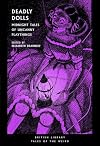
Deadly Dolls: Midnight Tales of Uncanny Playthings: 50 (British Library Tales of the Weird) by Elizabeth Dearnley
‘’Dark forebodings of a cruel, threatening, fate spread themselves over me like dark clouds, which no friendly sunbeam can penetrate. Now will I tell you what has befallen me.’’
The Sandman (E.T.A.Hoffman): A strange tale of a man plagued by his past and his obsession with a creature that cannot be loved.
The Dancing Partner (Jerome K. Jerome): The definition of the term ‘Danse Macabre’ acquires a new meaning in this story of dancing mannequins and damsels trapped in an eternal show more dance…
Crespian and Clairan (Joan Aiken): One of the eeriest, saddest stories I’ve ever read in which two children compete with each other while a Christmas present is watchful, exacting its revenge. The first pages with mentions of gales, the North Sea and the Viking invasions set the stage for the unfolding drama. Simply brilliant.
‘’Avril was working. Remove. Replace. Sort. Cut. Glue. She was humming to herself. Somewhere, deep inside where the Pain always was, she felt small stirrings of joy, of anticipation, of pleasure, such as she imagined a woman must feel when she was aware, for the first time, of a living child growing within her. Avril worked late. Choose. Change. Mould and twist. Make and yearn. All through the night.’’
The Doll Maker (Adele Geras): In another masterpiece, an elderly lady who has no children of her own, offers her services to the children of her neighbourhood by repairing their dolls. However, strange things begin to take place once the children leave this ‘Dolls’ Hospital’, carrying their repaired treasures in their hands. The dolls just aren’t the same anymore…Uncanny and haunting, an unforgettable story.
Supertoys Last All Summer Long (Brian Aldiss): In the story that inspired Steven Spielberg’s 1999 film A.I., the implications of having robotic children as surrogates for childlessness become a thorny issue.
The Doll (Vernon Lee): A life-looking doll that bears a striking resemblance to a complex noble lady becomes the centre of attention in this tale of passion, set in Umbria. This story was particularly impactful since it reminded me of the haunting dolls and puppets collection in Isola Madre and Isola Bella in Lake Maggiore and my trip there last summer.
‘’Is it possible to love someone so much, that it gives one a pleasure, an unaccountable pleasure to hurt them? To hurt them by jealousy I mean, and to hurt oneself at the same time. Pleasure and pain, an equal mingling of pleasure and pain, just as an experiment, a rare sensation?’’
The Doll (Daphne Du Maurier): Written in her trademark sensual and eerie style, Du Maurier’s story depicts the pain of a young man who has fallen in love with a strange woman. How can you compete against what you cannot understand?
The Devil Doll (Frederick E. Smith): I’ve always thought there is something unnatural, almost diabolic about ventriloquism. This story enforced my belief.
‘’A child kisses its toy before she pretends it sleeps although, even though she is only a child, she knows its eyes are not constructed to close so it will always be a sleeping beauty no kiss will awaken. One in the grip of savage loneliness might kiss the face he sees before him in the mirror for want of any other face to kiss. These are kisses of the same kind; they are the most poignant of kisses, for they are too humble and too despairing to wish or seek for any response.’’
The Lovers of Lady Purple (Angela Carter): Fireworks, the collection in which this story is included, was the first work by Angela Carter I read and it triggered my obsession with her. In this Oriental tale, Lady Purple becomes the symbol for the Virgin and the Prostitute, the figure that beckons from a dark corner during the night of the carnival.
The Dressmaker’s Doll (Agatha Christie): So many wonderful female writers in this collection! A doll that seems to have a mind of her own, spreads uneasiness and fear in an elegant fashion house.
The Patchwork Dolls (Ysabelle Cheung): This one was the only dud of the collection. Definitely creepy but jumping on the bandwagon of the so-called ‘otherness’ is something I do not appreciate.
The Haunted Dolls’ House (M.R.James): One of the most famous ‘Haunted House’ stories in which strange events taking place within a doll house unfold before the eyes of a shocked guest.
‘’I do not like this shop. It is a shop that has died.’’
The Inner Room (Robert Aickman): A young girl chooses a Victorian Gothic dollhouse as her birthday present. From the very first moments, her new acquisition fascinates and unsettles her. Soon, it begins to frighten her. One particular doll seems mad, another is monstrous, a third is on the verge of death. Nightmares begin. Noises and whispers in the darkness of her bedroom. Her brother discovers that there must be a secret room somewhere but it is impossible to discover it. Soon, war comes. The family is torn apart, the shadow of loss and disorientation plagues Lene as the years pass by. One day, she discovers an almost exact replica of her old dollhouse in the middle of a forest. A real, actual house. And she knocks on the door…
This is the best dollhouse mysterious story I’ve ever read. The toy becomes more than a paranormal prop. It becomes a metaphor for loss and uncertainty, for the secrets that cast a long shadow over every family, for the lost opportunities and the merciless time that does not come back.
The Mouse Queen ( Camilla Grudova): A couple of young academics specializing in Latin. The corpse of a female dwarf, pagan gods, Catholicism, Ovid, dolls, English Literature, Greek Mythology, motherhood and, naturally, Tchaikovsky and The Nutcracker in a story that is the definition of perfection.
‘’Amid all the triumphs of our civilization - yes, and amid the crushing problems of overpopulation too - it is sad to reflect how many millions of people suffer from increasing loneliness and isolation.’’
A thrilling, haunting addition to the Tales of the Weird series. Even the first paragraphs of the beautiful Introduction by Elizabeth Dearnley are scary.
Just put those creepy porcelain dolls in the attic…
My reviews can also be found on https://theopinionatedreaderblog.wordpress.com/ show less
The Sandman (E.T.A.Hoffman): A strange tale of a man plagued by his past and his obsession with a creature that cannot be loved.
The Dancing Partner (Jerome K. Jerome): The definition of the term ‘Danse Macabre’ acquires a new meaning in this story of dancing mannequins and damsels trapped in an eternal show more dance…
Crespian and Clairan (Joan Aiken): One of the eeriest, saddest stories I’ve ever read in which two children compete with each other while a Christmas present is watchful, exacting its revenge. The first pages with mentions of gales, the North Sea and the Viking invasions set the stage for the unfolding drama. Simply brilliant.
‘’Avril was working. Remove. Replace. Sort. Cut. Glue. She was humming to herself. Somewhere, deep inside where the Pain always was, she felt small stirrings of joy, of anticipation, of pleasure, such as she imagined a woman must feel when she was aware, for the first time, of a living child growing within her. Avril worked late. Choose. Change. Mould and twist. Make and yearn. All through the night.’’
The Doll Maker (Adele Geras): In another masterpiece, an elderly lady who has no children of her own, offers her services to the children of her neighbourhood by repairing their dolls. However, strange things begin to take place once the children leave this ‘Dolls’ Hospital’, carrying their repaired treasures in their hands. The dolls just aren’t the same anymore…Uncanny and haunting, an unforgettable story.
Supertoys Last All Summer Long (Brian Aldiss): In the story that inspired Steven Spielberg’s 1999 film A.I., the implications of having robotic children as surrogates for childlessness become a thorny issue.
The Doll (Vernon Lee): A life-looking doll that bears a striking resemblance to a complex noble lady becomes the centre of attention in this tale of passion, set in Umbria. This story was particularly impactful since it reminded me of the haunting dolls and puppets collection in Isola Madre and Isola Bella in Lake Maggiore and my trip there last summer.
‘’Is it possible to love someone so much, that it gives one a pleasure, an unaccountable pleasure to hurt them? To hurt them by jealousy I mean, and to hurt oneself at the same time. Pleasure and pain, an equal mingling of pleasure and pain, just as an experiment, a rare sensation?’’
The Doll (Daphne Du Maurier): Written in her trademark sensual and eerie style, Du Maurier’s story depicts the pain of a young man who has fallen in love with a strange woman. How can you compete against what you cannot understand?
The Devil Doll (Frederick E. Smith): I’ve always thought there is something unnatural, almost diabolic about ventriloquism. This story enforced my belief.
‘’A child kisses its toy before she pretends it sleeps although, even though she is only a child, she knows its eyes are not constructed to close so it will always be a sleeping beauty no kiss will awaken. One in the grip of savage loneliness might kiss the face he sees before him in the mirror for want of any other face to kiss. These are kisses of the same kind; they are the most poignant of kisses, for they are too humble and too despairing to wish or seek for any response.’’
The Lovers of Lady Purple (Angela Carter): Fireworks, the collection in which this story is included, was the first work by Angela Carter I read and it triggered my obsession with her. In this Oriental tale, Lady Purple becomes the symbol for the Virgin and the Prostitute, the figure that beckons from a dark corner during the night of the carnival.
The Dressmaker’s Doll (Agatha Christie): So many wonderful female writers in this collection! A doll that seems to have a mind of her own, spreads uneasiness and fear in an elegant fashion house.
The Patchwork Dolls (Ysabelle Cheung): This one was the only dud of the collection. Definitely creepy but jumping on the bandwagon of the so-called ‘otherness’ is something I do not appreciate.
The Haunted Dolls’ House (M.R.James): One of the most famous ‘Haunted House’ stories in which strange events taking place within a doll house unfold before the eyes of a shocked guest.
‘’I do not like this shop. It is a shop that has died.’’
The Inner Room (Robert Aickman): A young girl chooses a Victorian Gothic dollhouse as her birthday present. From the very first moments, her new acquisition fascinates and unsettles her. Soon, it begins to frighten her. One particular doll seems mad, another is monstrous, a third is on the verge of death. Nightmares begin. Noises and whispers in the darkness of her bedroom. Her brother discovers that there must be a secret room somewhere but it is impossible to discover it. Soon, war comes. The family is torn apart, the shadow of loss and disorientation plagues Lene as the years pass by. One day, she discovers an almost exact replica of her old dollhouse in the middle of a forest. A real, actual house. And she knocks on the door…
This is the best dollhouse mysterious story I’ve ever read. The toy becomes more than a paranormal prop. It becomes a metaphor for loss and uncertainty, for the secrets that cast a long shadow over every family, for the lost opportunities and the merciless time that does not come back.
The Mouse Queen ( Camilla Grudova): A couple of young academics specializing in Latin. The corpse of a female dwarf, pagan gods, Catholicism, Ovid, dolls, English Literature, Greek Mythology, motherhood and, naturally, Tchaikovsky and The Nutcracker in a story that is the definition of perfection.
‘’Amid all the triumphs of our civilization - yes, and amid the crushing problems of overpopulation too - it is sad to reflect how many millions of people suffer from increasing loneliness and isolation.’’
A thrilling, haunting addition to the Tales of the Weird series. Even the first paragraphs of the beautiful Introduction by Elizabeth Dearnley are scary.
Just put those creepy porcelain dolls in the attic…
My reviews can also be found on https://theopinionatedreaderblog.wordpress.com/ show less
‘’Like London fog itself, the power of the weird tale lies in its potential to suddenly shift from benign to baleful as the light changes. The stories in this collection all invite you to make your way through the smoke to take a closer look at some of the more uncanny corners of the city, just out of sight - but all you need to do is turn into a sidestreet, or look up, or down.’’
‘’What dangers linger just outside the apparent safety of an ordinary London terrace, hidden by fog, show more darkness, or simply the anonymity of the city? And what happens when the safe and sinister sides of London meet?’’
Elizabeth Dearnley
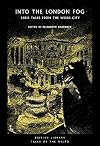
Through the fog and the dim glow of the streetlamps, the full moon glimmering on Father Thames, London rises. The metropolis in all its haunting, haunted, eerie glory. Its history, its mythology, its folklore, its secrets. Yes, Jack the Ripper gets all the twisted glory but what about Spring-Heeled Jack, the haunted houses, the eerie gardens, the moments that are frozen in the past only to be experienced by unaware passers-by? In this mesmerizing collection, beautifully edited and introduced by Elizabeth Dearnley, London rises from the fog and the mist. Don’t be afraid to answer its call…
Temple
The Telegram (Violent Hunt): A charismatic socialite faces the world alone after the death of her mother. Fervently hostile to marriage yet attracted to flirting, she has a faithful admirer that refuses to give up. And then something changes…Bottom line? Don’t toy with people’s feelings.
Regent’s Park
In the Séance Room (Lettice Galbraith): A prominent doctor cannot escape the wrath of a revenant that exposes a cruel injustice. Séance stories always exert an eerie power on the reader and this one is no exception.
‘’It was late August; it had been a steamy, showery day:At the moment the trees down the pavement glittered in an escape of humid yellow afternoon sun. Against the next batch of clouds, already piling up ink-dark, broken chimneys and parapets stood out. In her once familiar street, as in any unused channel, an unfamiliar queerness had silted up; a cat wove itself in and out of railings, but no human eye watched Mrs. Drover’s return.’’
Kensington
The Demon Lover (Elizabeth Bowen): A married woman receives a strange message. A return from the past, a jealous lover is about to find her. A meeting she has reasons to dread…An atmospheric, quintessentially British Gothic tale.
Mayfair
The Truth, the Whole Truth, and Nothing but the Truth (Rhoda Broughton): All Cecilia wanted was to find a Mayfair house. And she did find one. An opportunity too good to be true…
Soho
War - Extract from London in my Time (Thomas Burke): A problematic when viewed by today’s standards yet no less enticing account of Limehouse and its mysteries during the First World War blackouts.
‘’No one perhaps has ever felt passionately towards a lead pencil. But there are circumstances in which it can become supremely desirable to possess one; moments when we are set upon having an object, an excuse for walking half across London between tea and dinner.’’
‘’The hour should be the evening and the season winter, for in winter the champagne brightness of the air and the sociability of the streets are grateful. We are not then taunted as in the summer by the longing for shade and solitude and sweet airs from the hayfields. The evening hour, too, gives us the irresponsibility which darkness and lamplight bestow. We are no longer quite ourselves.’’
The Strand
Street Haunting (Virginia Woolf): The great writer composes an acute, haunting, even sad observation of the residents of the metropolis during the 1920s and an ode to the secret lives of readers. Where can the search for a pencil bring you? What secrets are lurking during the tender and mystical evening hour? London! Oh, London of mysteries!
Holborn
Pugilist Vs Poet - Extract from A Long Way from Home (Claude McKay): McKay narrates a moving account of the racism and cruelty within the bounds of the modern city.
Stoke Newington
N (Arthur Machen): An exciting story about a vanishing landscape, the visions created by a foggy winter’s night and the eerie phenomenon of spectral urban areas.
Whitechapel
The Lodger (Marie Belloc Lowndes): Well, it is Whitechapel, people. And what does come to mind when we stumble upon the word ‘’Whitechapel’’? Yes, exactly. Who is the Lodger of our story? How can you know the secrets your neighbour is harbouring most successfully?
Waterloo
My Girl and the City ( Sam Selvon): The relationship between two youths becomes a metaphor for the city that nurtures and deprives, the beehive that shelters and exposes.
‘’He was waiting for her; he had been waiting an hour and a half in a dusty suburban lane, with a row of big elms on one side and some eligible building sites on the other - and far away to the south-west the twinkling yellow lights of the Crystal Palace. It was not quiet like a country lane, for it had a pavement and lamp-posts, but it was not a bad place for a meeting all the same; and farther up, towards the cemetery, it was really quite rural, and almost pretty, especially in twilight. But twilight had long deepened into night, and still he waited.’’
Crystal Palace
The Mystery of the Semi-Detached (Edith Nesbit): The eerie Crystal Palace becomes the setting for mysterious omens and ominous visions that may or may not come to fruition…
Vauxhall
The Old House in Vauxhall Walk (Charlotte Riddell): A homeless young man finds refuge in a house which has an eerie reputation. His life will be altered in mysterious ways…
Putney & Bloomsbury
The Chippendale Manor (E.F.Benson): Bohemian Bloomsbury hides quite a lot of treasures. However, antiques can become dangerous and mirrors should always be approached with caution.
Peckham
Spring-Heeled Jack (Anonymous): In 1838, the first Victorian urban legend found its representation in the mysterious (and numerous) accounts of citizens who had witnessed the annoying (to put it mildly…) presence of Spring-Heeled Jack a.k.a. The Devil.
Others can keep their Rome and Paris. I’ll have my foggy, smoggy, eerie, haunting London and its mysticism until I die.
‘’One must have a thought - where buildings and the shadows of them encroach the railway tracks. Now the train crawls across the bridges, dark steel in the darkness: the thoughtful gloom of Waterloo: Charing Cross Bridge, Thames reflecting lights, and the silhouettes of the city buildings against the sky of the night.’’
My reviews can also be found on https://theopinionatedreaderblog.wordpress.com/ show less
‘’What dangers linger just outside the apparent safety of an ordinary London terrace, hidden by fog, show more darkness, or simply the anonymity of the city? And what happens when the safe and sinister sides of London meet?’’
Elizabeth Dearnley
Through the fog and the dim glow of the streetlamps, the full moon glimmering on Father Thames, London rises. The metropolis in all its haunting, haunted, eerie glory. Its history, its mythology, its folklore, its secrets. Yes, Jack the Ripper gets all the twisted glory but what about Spring-Heeled Jack, the haunted houses, the eerie gardens, the moments that are frozen in the past only to be experienced by unaware passers-by? In this mesmerizing collection, beautifully edited and introduced by Elizabeth Dearnley, London rises from the fog and the mist. Don’t be afraid to answer its call…
Temple
The Telegram (Violent Hunt): A charismatic socialite faces the world alone after the death of her mother. Fervently hostile to marriage yet attracted to flirting, she has a faithful admirer that refuses to give up. And then something changes…Bottom line? Don’t toy with people’s feelings.
Regent’s Park
In the Séance Room (Lettice Galbraith): A prominent doctor cannot escape the wrath of a revenant that exposes a cruel injustice. Séance stories always exert an eerie power on the reader and this one is no exception.
‘’It was late August; it had been a steamy, showery day:At the moment the trees down the pavement glittered in an escape of humid yellow afternoon sun. Against the next batch of clouds, already piling up ink-dark, broken chimneys and parapets stood out. In her once familiar street, as in any unused channel, an unfamiliar queerness had silted up; a cat wove itself in and out of railings, but no human eye watched Mrs. Drover’s return.’’
Kensington
The Demon Lover (Elizabeth Bowen): A married woman receives a strange message. A return from the past, a jealous lover is about to find her. A meeting she has reasons to dread…An atmospheric, quintessentially British Gothic tale.
Mayfair
The Truth, the Whole Truth, and Nothing but the Truth (Rhoda Broughton): All Cecilia wanted was to find a Mayfair house. And she did find one. An opportunity too good to be true…
Soho
War - Extract from London in my Time (Thomas Burke): A problematic when viewed by today’s standards yet no less enticing account of Limehouse and its mysteries during the First World War blackouts.
‘’No one perhaps has ever felt passionately towards a lead pencil. But there are circumstances in which it can become supremely desirable to possess one; moments when we are set upon having an object, an excuse for walking half across London between tea and dinner.’’
‘’The hour should be the evening and the season winter, for in winter the champagne brightness of the air and the sociability of the streets are grateful. We are not then taunted as in the summer by the longing for shade and solitude and sweet airs from the hayfields. The evening hour, too, gives us the irresponsibility which darkness and lamplight bestow. We are no longer quite ourselves.’’
The Strand
Street Haunting (Virginia Woolf): The great writer composes an acute, haunting, even sad observation of the residents of the metropolis during the 1920s and an ode to the secret lives of readers. Where can the search for a pencil bring you? What secrets are lurking during the tender and mystical evening hour? London! Oh, London of mysteries!
Holborn
Pugilist Vs Poet - Extract from A Long Way from Home (Claude McKay): McKay narrates a moving account of the racism and cruelty within the bounds of the modern city.
Stoke Newington
N (Arthur Machen): An exciting story about a vanishing landscape, the visions created by a foggy winter’s night and the eerie phenomenon of spectral urban areas.
Whitechapel
The Lodger (Marie Belloc Lowndes): Well, it is Whitechapel, people. And what does come to mind when we stumble upon the word ‘’Whitechapel’’? Yes, exactly. Who is the Lodger of our story? How can you know the secrets your neighbour is harbouring most successfully?
Waterloo
My Girl and the City ( Sam Selvon): The relationship between two youths becomes a metaphor for the city that nurtures and deprives, the beehive that shelters and exposes.
‘’He was waiting for her; he had been waiting an hour and a half in a dusty suburban lane, with a row of big elms on one side and some eligible building sites on the other - and far away to the south-west the twinkling yellow lights of the Crystal Palace. It was not quiet like a country lane, for it had a pavement and lamp-posts, but it was not a bad place for a meeting all the same; and farther up, towards the cemetery, it was really quite rural, and almost pretty, especially in twilight. But twilight had long deepened into night, and still he waited.’’
Crystal Palace
The Mystery of the Semi-Detached (Edith Nesbit): The eerie Crystal Palace becomes the setting for mysterious omens and ominous visions that may or may not come to fruition…
Vauxhall
The Old House in Vauxhall Walk (Charlotte Riddell): A homeless young man finds refuge in a house which has an eerie reputation. His life will be altered in mysterious ways…
Putney & Bloomsbury
The Chippendale Manor (E.F.Benson): Bohemian Bloomsbury hides quite a lot of treasures. However, antiques can become dangerous and mirrors should always be approached with caution.
Peckham
Spring-Heeled Jack (Anonymous): In 1838, the first Victorian urban legend found its representation in the mysterious (and numerous) accounts of citizens who had witnessed the annoying (to put it mildly…) presence of Spring-Heeled Jack a.k.a. The Devil.
Others can keep their Rome and Paris. I’ll have my foggy, smoggy, eerie, haunting London and its mysticism until I die.
‘’One must have a thought - where buildings and the shadows of them encroach the railway tracks. Now the train crawls across the bridges, dark steel in the darkness: the thoughtful gloom of Waterloo: Charing Cross Bridge, Thames reflecting lights, and the silhouettes of the city buildings against the sky of the night.’’
My reviews can also be found on https://theopinionatedreaderblog.wordpress.com/ show less
As others have noted, this selection of stories include some odd choices that have nothing to do with the weird, and the famous London fog barely makes an appearance throughout. However, the stories themselves are very good, and let us be very clear, tales of the weird are still rife throughout the work.
Of the non-weird offerings, a story by Virginia Woolf seems out of place save for the revelation of a descriptive experience of an evening walk along the London streets. This short entry was show more my first experience with Virginia Woolf's work and I was so enraptured with her writing that I am thankful for its inclusion and plan to seek out her works; likewise, an excerpt by Claude McKay.
So, despite the inclusion of a very few (and very enjoyable) non-weird tales, this collection of stories are well worth reading.
The stories include:
The Telegram by Violet Hunt
In the Séance Room by Lettice Galbraith
The Demon Lover by Elizabeth Bowen
The Truth, the Whole Truth, and Nothing but the Truth by Rhoda Broughton
War, an extract from London In My Time by Thomas Burke
Street Haunting by Virginia Woolf
Pugilist vs Poet, an extract from A Long Way from Home by Claude McKay
N by Arthur Machen
The Lodger by Marie Belloc Lowndes
My Girl and the City by Sam Selvon
The Mystery of the Semi-Detached by Edith Nesbit
The Old House in Vauxhall Walk by Charlotte Riddell
The Chippendale Mirror by E. F. Benson
Spring-Heeled Jack by Anonymous show less
Of the non-weird offerings, a story by Virginia Woolf seems out of place save for the revelation of a descriptive experience of an evening walk along the London streets. This short entry was show more my first experience with Virginia Woolf's work and I was so enraptured with her writing that I am thankful for its inclusion and plan to seek out her works; likewise, an excerpt by Claude McKay.
So, despite the inclusion of a very few (and very enjoyable) non-weird tales, this collection of stories are well worth reading.
The stories include:
The Telegram by Violet Hunt
In the Séance Room by Lettice Galbraith
The Demon Lover by Elizabeth Bowen
The Truth, the Whole Truth, and Nothing but the Truth by Rhoda Broughton
War, an extract from London In My Time by Thomas Burke
Street Haunting by Virginia Woolf
Pugilist vs Poet, an extract from A Long Way from Home by Claude McKay
N by Arthur Machen
The Lodger by Marie Belloc Lowndes
My Girl and the City by Sam Selvon
The Mystery of the Semi-Detached by Edith Nesbit
The Old House in Vauxhall Walk by Charlotte Riddell
The Chippendale Mirror by E. F. Benson
Spring-Heeled Jack by Anonymous show less
You May Also Like
Associated Authors
Statistics
- Works
- 7
- Also by
- 2
- Members
- 206
- Popularity
- #107,331
- Rating
- 4.0
- Reviews
- 5
- ISBNs
- 7