
Kristi Coulter
Author of Nothing Good Can Come from This: Essays
About the Author
Kristi Coulter holds an MFA in creative writing from the University of Michigan. She is a former Ragdale Foundation resident and the recipient of a grant from the National Foundation for Advancement in the Arts. Her work has appeared in The Awl, Marie Claire. Vox, Quartz, and elsewhere. She lives show more in Seattle, Washington. show less
Works by Kristi Coulter
Tagged
Common Knowledge
- Places of residence
- Seattle, Washington, USA
- Associated Place (for map)
- Washington, USA
Members
Reviews

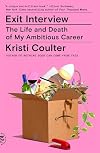
I don't want to give this book 5 stars, because it portrays the absolute worst of 21st century capitalism, enough to trigger me even though I left the workforce 10 months ago. Yet I can't not give it 5 stars. Exit Interview is brilliantly written, devastatingly incisive, and surprisingly humorous. Kristi Coulter spent 12 years working at Amazon in a variety of corporate positions. An overachiever since childhood, she viewed the offer of Senior Manager, Books & Media Merchandising an ideal show more way to grow professionally and escape the tedium of her current job. She had heard rumors that Amazon was a stressful workplace, but figured she was tough enough to handle anything.
By her second day, Kristi finds herself "drinking from the fire hose," with her direct reports complaining that they are stretched too thin and her bosses telling her to "find efficiencies" to meet their targets. Her colleagues reassure her they expect great things of her so often that she's ashamed to ask for help ("It feels like being Jesus, if everyone had a task list for Jesus written in acronyms he didn't understand"). Every workday includes at least six hours of meetings, and that's not counting the pre-meetings to strategize for the real meetings. Nobody knows what anyone else is doing, reorganizations happen frequently without warning, and the goals of one team are in direct conflict with another. Meanwhile, orders come down from CEO Jeff Bezos that are completely unrealistic and subject to change at his whim.
Through short, punchy chapters including a brutally honest (but fictional) job description, increasingly cynical aphorisms of professional advice, and illustrations of Amazon's "leadership principles" in their Orwellian reality ("Accomplish more with less" means laptops repaired with duct tape), Coulter helps the reader understand why she stayed for so long despite the toxic environment, how Amazon's touted "meritocracy" was just another word for sexism, and the series of events that motivated the girl who cried in kindergarten because she got one Not Satisfactory mark on a phonics worksheet to finally resign.
I haven't read a corporate takedown this powerful since Joshua Ferris' novel [b:Then We Came to the End|97782|Then We Came to the End|Joshua Ferris|https://i.gr-assets.com/images/S/compressed.photo.goodreads.com/books/1442800496l/97782._SY75_.jpg|2926759]. Our culture of prioritizing productivity above all, worshipping the wealthy, and demanding instant gratification has brought us to this place where Jeff Bezos can heap misery upon thousands in the name of "making customers happy." You can blame Kristi Coulter for being an "Amhole," but almost all of us are complicit. show less
By her second day, Kristi finds herself "drinking from the fire hose," with her direct reports complaining that they are stretched too thin and her bosses telling her to "find efficiencies" to meet their targets. Her colleagues reassure her they expect great things of her so often that she's ashamed to ask for help ("It feels like being Jesus, if everyone had a task list for Jesus written in acronyms he didn't understand"). Every workday includes at least six hours of meetings, and that's not counting the pre-meetings to strategize for the real meetings. Nobody knows what anyone else is doing, reorganizations happen frequently without warning, and the goals of one team are in direct conflict with another. Meanwhile, orders come down from CEO Jeff Bezos that are completely unrealistic and subject to change at his whim.
Through short, punchy chapters including a brutally honest (but fictional) job description, increasingly cynical aphorisms of professional advice, and illustrations of Amazon's "leadership principles" in their Orwellian reality ("Accomplish more with less" means laptops repaired with duct tape), Coulter helps the reader understand why she stayed for so long despite the toxic environment, how Amazon's touted "meritocracy" was just another word for sexism, and the series of events that motivated the girl who cried in kindergarten because she got one Not Satisfactory mark on a phonics worksheet to finally resign.
I haven't read a corporate takedown this powerful since Joshua Ferris' novel [b:Then We Came to the End|97782|Then We Came to the End|Joshua Ferris|https://i.gr-assets.com/images/S/compressed.photo.goodreads.com/books/1442800496l/97782._SY75_.jpg|2926759]. Our culture of prioritizing productivity above all, worshipping the wealthy, and demanding instant gratification has brought us to this place where Jeff Bezos can heap misery upon thousands in the name of "making customers happy." You can blame Kristi Coulter for being an "Amhole," but almost all of us are complicit. show less
Well this was a horror movie in book form, and I listened with the equivalent of my hands covering my eyes. I have no idea what the author actually did at Amazon as it was like listening to a foreign language for a lot of it, but I’m amazed she lasted for over a decade there. This was a strange listen as she seems to be missing some self-awareness or else she’s slightly gaslighting the reader into thinking that, but frankly I’m sure the stock options soothed some issues. But if this is show more how the tech world is (and it does sound like it’s all accurate—I won’t be arguing how much men can suck) then I’m grateful to not be in that world no matter how much money you can make. show less

"This is why I drank, you know. Because I wanted every day to be like that. I wanted every day to feel like a movie montage, or at least to end in an epiphany, or at least to have a clear narrative arc, or at least to make some level of sense."
A memoir told in essay form, Nothing Good Can Come from This, is the non-chronological tale of Coulter’s life from alcoholic to sober woman. As with most books of essays some were stronger than others, but on a whole Coulter does a great job of show more making you feel her emotion and understand her journey. Feminism, love, politics, and culture all make an appearance and create for some hard-hitting, and sometimes humorous, stories and anecdotes.
"What's a girl to do when a bunch of dudes have just told her, in front of an audience, that she's wrong about what it's like to be herself?
I can see some people finding this a bit "woe is me" as she is an upper class white female with a good job, loving husband, and a childhood only partially marred by her parents. I, however, think it goes to show that alcoholism can consume anyone, not just those with downtrodden lives or no money in the bank.
"Take away my money or my extreme whiteness, and it might be clear that getting a lot of ethanol into my bloodstream as fast as possible is all I really care about." show less
A memoir told in essay form, Nothing Good Can Come from This, is the non-chronological tale of Coulter’s life from alcoholic to sober woman. As with most books of essays some were stronger than others, but on a whole Coulter does a great job of show more making you feel her emotion and understand her journey. Feminism, love, politics, and culture all make an appearance and create for some hard-hitting, and sometimes humorous, stories and anecdotes.
"What's a girl to do when a bunch of dudes have just told her, in front of an audience, that she's wrong about what it's like to be herself?
I can see some people finding this a bit "woe is me" as she is an upper class white female with a good job, loving husband, and a childhood only partially marred by her parents. I, however, think it goes to show that alcoholism can consume anyone, not just those with downtrodden lives or no money in the bank.
"Take away my money or my extreme whiteness, and it might be clear that getting a lot of ethanol into my bloodstream as fast as possible is all I really care about." show less
Essays about and adjacent to the author's decision to stop drinking after she finally recognized that drinking a bottle of wine every night was not a healthy reaction to stress. Interesting that she refers to her employer only as a "large tech company" in this book; five years later she would publish [b:Exit Interview: The Life and Death of My Ambitious Career|65215677|Exit Interview The Life and Death of My Ambitious Career|Kristi show more Coulter|https://i.gr-assets.com/images/S/compressed.photo.goodreads.com/books/1678754329l/65215677._SY75_.jpg|100097283] as an insider's look at her years at Amazon. There is some overlap between the two books, but not enough to detract from appreciating either one. I'm not sure I would have read Nothing Good if I hadn't already devoured Exit Interview but I'm glad to get more insight into Coulter's views on feminism, corporate culture, obsessions that can fill the space left by alcohol, and, apparently, the world's best husband. show less
Awards

Statistics
- Works
- 3
- Members
- 265
- Popularity
- #86,990
- Rating
- 4.0
- Reviews
- 8
- ISBNs
- 9