
M. W. Craven
Author of The Puppet Show
About the Author
Series
Works by M. W. Craven
Nobody’s Hero: Ben Koenig 1 copy
Associated Works
Birds, Strangers and Psychos: New stories inspired by Alfred Hitchcock (2025) — Contributor — 12 copies, 1 review
Murder in Harrogate: Stories Inspired by the Theakston Old Peculier Crime Writing Festival (2024) — Contributor — 11 copies
Tagged
Common Knowledge
- Birthdate
- 1968
- Gender
- male
- Education
- Studium der Sozialpädagogik
- Occupations
- probation officer
- Awards and honors
- CWA Gold Dagger 2019
Ian Fleming Steel Dagger Award 2022 - Nationality
- UK
- Birthplace
- Carlisle, England, UK
- Places of residence
- Newcastle, England, UK
- Map Location
- England, UK
- Associated Place (for map)
- England, UK
Members
Reviews
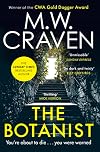
This originally appeared at The Irresponsible Reader.
---
Poe nodded. ‘I hate locked room mysteries,' he said.
WHAT'S THE BOTANIST ABOUT?
There's little that mystery readers/watchers enjoy more than a locked-room mystery, but you can understand why someone who actually has to solve mysteries for a living isn't quite a fan.
And that's not good for him because there are two cases in this book involving locked room mysteries—one Poe and Tilly are assigned to, one they take because they're asked show more (and would take on even if they weren't).
It occurs to me that I should probably define the term I keep using, just to be careful. Last year, Gigi Pandian (no slouch when it comes to locked-room mysteries) provided one on CrimeReads:
Locked-room mystery: A crime has been committed in a room or other location that’s been sealed from the inside, with no way out. An example is a dead man found inside a windowless room that’s been sealed from the inside, dead from a gunshot wound that people outside the room heard fired, yet inside the room there’s no gun and no way for the culprit to have escaped. Thus a locked room is only part of the equation; the key is that the situation appears impossible.
And Poe has two cases to work through. Should be easy, right?
CASE #2 (CHRONOLOGICALLY, ANYWAY)
Back in 2020, when I posted about The Curator, I said: "I know it’d be pushing things to have [Estelle Doyle] play a larger role in these books than she does, but the few scenes we have with her are just not enough to satisfy." I'm so glad to be wrong—Doyle does play that larger role here, and it's as good as I'd hoped it'd be.
Doyle, I should probably say, is a forensic Pathologist—one of the best around. She's Poe's go-to person any time he had questions about something wet and organic." She shamelessly and aggressively flirts with him, going out of her way to make him uncomfortable—we're told that "Poe was terrified and bewitched in equal measure." Some things never change—in 2018's Black Summer, Poe thinks she's “incredibly sexy and utterly terrifying.”
And she's been arrested for her father's murder. Her comment to the police? "Tell Washington Poe." That's all she has to say to get Poe on the case, subverting the work that the DCI (and the rest of the Northumbria police) have done on the case.
There's no evidence that anyone but Estelle or her father was in the house the day he was shot. There's also no gun. Is it any wonder that Poe hates locked room mysteries?
CASE #1
So the case that DS Washington Poe is supposed to be working on is hunting down a poisoner that the press has dubbed The Botanist.
His victims are high-profile figures, generally in the news for less than admirable activities/views (a racist political analyst, etc.). He mails them a poem and a pressed flower, and then they die a few days later. It doesn't matter what precautions they take, how involved the police are, how secure their living space is...they die. It's that simple.
Because these are notorious figures, The Botanist quickly develops a fan base—people are celebrating him, making him into a folk hero of sorts. There's a lot of pressure on Poe and the other detectives working the case to put an end to his career before he inspires copycats/disciples. The dynamic of a large degree of public sympathy for the killer is a new angle for this series, and I really appreciated it.
A QUICK WORD ABOUT TILLY
I've been anticipating what Poe might need next and I have a program running. It’s called RipplePlace and I expect the results in approximately ninety seconds.’
‘And what's that?'
‘It’s a search and merge algorithm, sorting key data into lexicographical order,' Bradshaw explained, explaining nothing.
And with that she left the room. Doyle looked at the empty doorway in amusement. ‘I think she may be my favourite person ever,' she said.
Poe nodded. 'You understand any of that?’ he asked.
‘Not a word.'
Tilly Bradshaw isn't as prominent in this novel as readers are used to—and really couldn't be, because of all the other characters running around, and the way that the story had to be paced. But even when she wasn't "on camera" (if you will), she was a presence—people were sharing some tidbit about her, using something she'd dug up, etc.
And when she was "on camera"? It was gold. She'd pull off some sort of wizardry with tech, get some sort of data put together in a way no one else would, or would say/do something to make you grin (at least). She really is a great character. It's hard to disagree with Doyle, she just might be my favorite.
SO, WHAT DID I THINK ABOUT THE BOTANIST?
Poe had seen people die before. Too many times. Perceived wisdom was that police officers became desensitised to death, but he wasn’t sure it was true. It certainly wasn’t for him. The dead stayed with him. Haunted his dreams and occupied his waking thoughts. They were the soundtrack to his life and the day he couldn’t hear them would be the day he handed in his warrant card. Poe needed to live among the dead. It was how he protected the living.
One of my favorite days the last few summers have been the day the new Washington Poe/Tilly Bradshaw book arrives—topped only by the day I get to start it. This year has been no exception—I finished it five days ago, and am still riding the high.
Time with these characters is like walking into Cheers—you know everyone, you enjoy their company, the only thing you don't know is what escapade they're in the middle of. Sure, Sam and the gang were never on the hunt for a serial killer,* but you get my point. Craven takes some of the relationships in new directions here, brings in some new figures, and generally keeps them from being stale—but Poe, Tilly, Flynn, and Doyle are who we've come to know and love(?) over the last four novels.
* Or did they? I don't know—they got into some strange areas there in Season 11.
The cases were just great. Estelle's case was on the easy side for the reader to suss out (and I was close to right on the motive, as right as Poe was)—but that didn't make it any less satisfying to read. And the reveal (and the events that led to it) were pulled off so well that I'm not going to complain a bit.
The solution to The Botanist case, on the other hand, was brilliant. I don't want to say more than that so I don't tip off anyone, but when the pieces started fitting together enough that you could see the solution coming? I had to stop for a minute to laugh at how perfect it was—but it's one thing to figure out how the killer's doing something, it's a whole nother thing to catch him. Craven's ending was fantastic—when I was finished, I wrote my last note: "the last 30 pages made me happier than almost anything else this year."
For me, one of the best parts was how much of this book is dependent on characters other than our protagonists. Absolutely, the cases don't get solved without Poe and Tilly—their investigations, research, bold moves, etc. are essential. But the secondary characters are are who provide the brilliance, the plans, and the insights that stop the Botanist and set up the dynamite conclusion. The day isn't saved without our hero, but Poe doesn't save the day. Fans of the series aren't going to mind it because of the way that Craven has constructed this universe—he's set up the other characters to be the kind of people that operate at Poe's level (if not beyond it), so by all means, let them shine. Also, it makes the whole series more grounded, more believable if it's not always Washington Poe who solves everything.
Clearly, I loved this. I strongly recommend it—and everything Craven's written. Now it's time for me to start waiting for my favorite day of the summer of 2023. show less
---
Poe nodded. ‘I hate locked room mysteries,' he said.
WHAT'S THE BOTANIST ABOUT?
There's little that mystery readers/watchers enjoy more than a locked-room mystery, but you can understand why someone who actually has to solve mysteries for a living isn't quite a fan.
And that's not good for him because there are two cases in this book involving locked room mysteries—one Poe and Tilly are assigned to, one they take because they're asked show more (and would take on even if they weren't).
It occurs to me that I should probably define the term I keep using, just to be careful. Last year, Gigi Pandian (no slouch when it comes to locked-room mysteries) provided one on CrimeReads:
Locked-room mystery: A crime has been committed in a room or other location that’s been sealed from the inside, with no way out. An example is a dead man found inside a windowless room that’s been sealed from the inside, dead from a gunshot wound that people outside the room heard fired, yet inside the room there’s no gun and no way for the culprit to have escaped. Thus a locked room is only part of the equation; the key is that the situation appears impossible.
And Poe has two cases to work through. Should be easy, right?
CASE #2 (CHRONOLOGICALLY, ANYWAY)
Back in 2020, when I posted about The Curator, I said: "I know it’d be pushing things to have [Estelle Doyle] play a larger role in these books than she does, but the few scenes we have with her are just not enough to satisfy." I'm so glad to be wrong—Doyle does play that larger role here, and it's as good as I'd hoped it'd be.
Doyle, I should probably say, is a forensic Pathologist—one of the best around. She's Poe's go-to person any time he had questions about something wet and organic." She shamelessly and aggressively flirts with him, going out of her way to make him uncomfortable—we're told that "Poe was terrified and bewitched in equal measure." Some things never change—in 2018's Black Summer, Poe thinks she's “incredibly sexy and utterly terrifying.”
And she's been arrested for her father's murder. Her comment to the police? "Tell Washington Poe." That's all she has to say to get Poe on the case, subverting the work that the DCI (and the rest of the Northumbria police) have done on the case.
There's no evidence that anyone but Estelle or her father was in the house the day he was shot. There's also no gun. Is it any wonder that Poe hates locked room mysteries?
CASE #1
So the case that DS Washington Poe is supposed to be working on is hunting down a poisoner that the press has dubbed The Botanist.
His victims are high-profile figures, generally in the news for less than admirable activities/views (a racist political analyst, etc.). He mails them a poem and a pressed flower, and then they die a few days later. It doesn't matter what precautions they take, how involved the police are, how secure their living space is...they die. It's that simple.
Because these are notorious figures, The Botanist quickly develops a fan base—people are celebrating him, making him into a folk hero of sorts. There's a lot of pressure on Poe and the other detectives working the case to put an end to his career before he inspires copycats/disciples. The dynamic of a large degree of public sympathy for the killer is a new angle for this series, and I really appreciated it.
A QUICK WORD ABOUT TILLY
I've been anticipating what Poe might need next and I have a program running. It’s called RipplePlace and I expect the results in approximately ninety seconds.’
‘And what's that?'
‘It’s a search and merge algorithm, sorting key data into lexicographical order,' Bradshaw explained, explaining nothing.
And with that she left the room. Doyle looked at the empty doorway in amusement. ‘I think she may be my favourite person ever,' she said.
Poe nodded. 'You understand any of that?’ he asked.
‘Not a word.'
Tilly Bradshaw isn't as prominent in this novel as readers are used to—and really couldn't be, because of all the other characters running around, and the way that the story had to be paced. But even when she wasn't "on camera" (if you will), she was a presence—people were sharing some tidbit about her, using something she'd dug up, etc.
And when she was "on camera"? It was gold. She'd pull off some sort of wizardry with tech, get some sort of data put together in a way no one else would, or would say/do something to make you grin (at least). She really is a great character. It's hard to disagree with Doyle, she just might be my favorite.
SO, WHAT DID I THINK ABOUT THE BOTANIST?
Poe had seen people die before. Too many times. Perceived wisdom was that police officers became desensitised to death, but he wasn’t sure it was true. It certainly wasn’t for him. The dead stayed with him. Haunted his dreams and occupied his waking thoughts. They were the soundtrack to his life and the day he couldn’t hear them would be the day he handed in his warrant card. Poe needed to live among the dead. It was how he protected the living.
One of my favorite days the last few summers have been the day the new Washington Poe/Tilly Bradshaw book arrives—topped only by the day I get to start it. This year has been no exception—I finished it five days ago, and am still riding the high.
Time with these characters is like walking into Cheers—you know everyone, you enjoy their company, the only thing you don't know is what escapade they're in the middle of. Sure, Sam and the gang were never on the hunt for a serial killer,* but you get my point. Craven takes some of the relationships in new directions here, brings in some new figures, and generally keeps them from being stale—but Poe, Tilly, Flynn, and Doyle are who we've come to know and love(?) over the last four novels.
* Or did they? I don't know—they got into some strange areas there in Season 11.
The cases were just great. Estelle's case was on the easy side for the reader to suss out (and I was close to right on the motive, as right as Poe was)—but that didn't make it any less satisfying to read. And the reveal (and the events that led to it) were pulled off so well that I'm not going to complain a bit.
The solution to The Botanist case, on the other hand, was brilliant. I don't want to say more than that so I don't tip off anyone, but when the pieces started fitting together enough that you could see the solution coming? I had to stop for a minute to laugh at how perfect it was—but it's one thing to figure out how the killer's doing something, it's a whole nother thing to catch him. Craven's ending was fantastic—when I was finished, I wrote my last note: "the last 30 pages made me happier than almost anything else this year."
For me, one of the best parts was how much of this book is dependent on characters other than our protagonists. Absolutely, the cases don't get solved without Poe and Tilly—their investigations, research, bold moves, etc. are essential. But the secondary characters are are who provide the brilliance, the plans, and the insights that stop the Botanist and set up the dynamite conclusion. The day isn't saved without our hero, but Poe doesn't save the day. Fans of the series aren't going to mind it because of the way that Craven has constructed this universe—he's set up the other characters to be the kind of people that operate at Poe's level (if not beyond it), so by all means, let them shine. Also, it makes the whole series more grounded, more believable if it's not always Washington Poe who solves everything.
Clearly, I loved this. I strongly recommend it—and everything Craven's written. Now it's time for me to start waiting for my favorite day of the summer of 2023. show less
This originally appeared at The Irresponsible Reader.
---
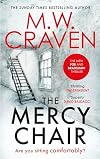
WHAT'S THE MERCY CHAIR ABOUT?
The book opens with Washington Poe in one of the least likely places we've seen him—therapy. Sure, he's not there because he really wants to be—but he's still there. Dr. Clara Lang is a trauma therapist, and she's trying to help Poe recover from a case that drove him to the point that an "incident" occurred (SPOILER: it's nothing as bad as what he did prior to The Puppet Show, but this one had show more witnesses).
He's not in a good space—nightmares are plaguing him, and the circumstances around this case are likely what pushed him over the edge. The founder of a group called The Children of Job—an independent religious group associated with "extreme" views on sex, sexuality, government, and several other "culture war"-type issues—has been murdered. Stoned to death, to be precise. Poe and Tilly's old friend, the Bishop of Carlisle, wants them to look into this—the Children of Job have been trying to be recognized for years, and while he's disinclined to do that, he'd like to get this murder cleared up and to explore the group some. Enter our heroes.
It's a brutal, brutal murder—but as the investigation goes on, they learn more and more about this Church, its practices and beliefs—practices that aren't just questionably acceptable or orthodox—but some that are downright criminal. And every secret, every layer of mystery, that Poe uncovers shows another layer of dirt and darkness. You won't feel that bad for the murder victim for too long.
Also, their agency is being audited by the government—one auditor, Linus, is assigned to Poe and Tilly while they conduct this investigation. Poe dubs him an intern and treats him like one—hoping to dissuade him from continuing this "audit" or at least not to let things get bogged down by Linus. Poe can see through the story he and his DI have been fed about this auditor, but he's still stuck with him for the duration, as complicating as his presence/observation is (if only because Poe has to worry about his real purpose).
THE RELIGION OF THE CHILDREN OF JOB (AND OTHERS)
I have several questions regarding the beliefs of this group, The Children of Job. For example, what's with that name? It's an odd one to pick. The leader/founder of the group is covered in religious tattoos, but they seem like a fundamentalist group (and are compared to Westboro Baptist Church)—and I really don't see those two going together. But I could be wrong there. But other things that don't work with that group are things like the dichotomy of mortal and venial sins (something we're told the CoJ do hold to).
I get it—the main thing we're supposed to focus on with this group is their controversial (at best) beliefs and practices. They're supposed to be the intolerant, unthinking group that Poe can rail and push against. But the lack of a coherent religious worldview and practice really doesn't work. Yes, they should seem aberrant to Poe and Tilly's secular point of view and to the Bishop of Carlisle's very un-secular perspective, that's beside the point. It should sill seem internally consistent—and the Children of Job don't. They really feel like a hodgepodge of hot-button Evangelical/Evangelical-ish beliefs and practices forced into some religious chimera.
If, like most readers (I suspect), you don't notice or care about this sort of thing, you'll do fine. On the other hand, if you take this stuff seriously and expect sectarian groups that border on being a cult would take it seriously, too...it will bother you. It should bother the COJ. Does this impact the experience of the reader? Not really. Does it impact the hunt for the killer, his/her/their motivation? Nope. Does it impact Poe, Tilly, or anyone else we care about in the book? Nope. Did it/does it occupy too much real estate in my mind? Yup.
Along these lines—sort of, we're told that Poe's "intern" Linus read theology at university, and he's treated as the investigation's religion expert after that. Which is fine, it's not like they can call the Bishop of Carlisle every time something comes up. But in Chapter 17 he pokes at one of my pet peeves, calling the last book in the New Testament "Revelations." Now, the name of the book is singular—coming from the opening line, "The Revelation of Jesus Christ..." Back in Chapter 11, he got the name right. So, is he just sloppy? Maybe (but the more we get to know him, the less likely that seems). And for all her lack of interest in religion, how does Tilly not catch something like that and harp on it? Is this a case of sloppy copy editing? That's possible. But I don't know, and it irks me. It's not a big deal, but it's one of those errors that's like nails on a chalkboard to me.
POE'S LIFE BATTLES
One of the problems with juice and smoothie bars was that however much they dressed it up, they really only served fruit and vegetables. It didn’t matter that the ingredients had been blended, put in a cup and served with a soggy cardboard straw, it was still a gunky mess of unpalatable leafy greens and unbearably sour or sickeningly sweet fruits. Ingredients supermarkets wouldn't put on the same aisles were forced together then given misleading names such as Liquid Sunshine and Endless Summer.
But the main problem was that for a supposedly fast and convenient food, smoothie and juice bars were slow and inconvenient. Poe reckoned he and Linus had been waiting for fifteen minutes. And, to make matters worse, the place Bradshaw had sent them no longer did milkshakes. The teenager behind the counter had offered Poe frozen yoghurt instead, to which Poe had replied, ‘T'd rather piss in my shoes.’
While they waited Linus said, “You seem to have a lot of these little “life battles”, Poe.’
‘What battles?’
‘Well, this one for a start. All you had to do was say no thanks to the frozen yoghurt. Instead, it became a whole big thing. I'd be surprised if they don’t spit in our smoothies.’
‘And I'd be surprised if you noticed,’ Poe said.
It will come as no surprise to anyone who's read this series—or any of Craven's work because it's true of all his protagonists—that Washington Poe's greatest enemy is himself. As seen, even Linus (who hasn't known Poe that long—and is kept at arm's length) can see it.*
* Also, I rather enjoyed that pericope.
Each book in the series explores—in one way or another—Poe's propensity to engage in these life battles, and what they cost him—whether it be his home, his job, his credibility, the purchase price for a roasted goat, or spit in Tilly's smoothie (spit in Linus' smoothie would be a gift to Poe).
To some extent those close to Poe, or those who've worked with him and have seen what his methods/personality result in, can tolerate this, or make allowances for it. But
Now, any armchair therapist would tie this into his mother abandoning him and him telling himself (or Linus in a couple of pages after this) that he just doesn't care about what other people think. But that's garbage, and as much as Poe will tell that story to himself—he may even believe it—this comes from a dark place (no surprise) and potentially wreaks havoc on his personal life. It's done that to his career—and it may do it to individual cases.
When we first met him, there was D.I. Stephanie Flynn—a friend of sorts—and, that's about all we know about in Poe's life outside of work (and since they worked together...). But now he has a home, he has Edgar. He has grown over this series—see his relationship with Tilly, with Estelle—and even his working relationship with the police in Cumbria. There are people and things besides his stubborn self-reliance in his life. He might even be fighting fewer life battles. Hopefully not too many—he might be a slightly less entertaining character if he gives up on them completely. But seeing gradual change—growth, thankfully—in a mature character is a great feature in a series.
And all of that is due to Tilly Bradshaw. But following up on that is for another time...
PHYSICAL DESCRIPTIONS
In the past, I've talked about Craven's ability to make you see a physical location—and kind of feel, smell, and hear it, too. There are a couple of locations like that in this book (the most striking I'm not going to talk about, you get to find it and be haunted by it yourself).
But I haven't done a great job in talking about his gift for physical description. There are some dazzling examples in this book. Like:
[Name] was as thin as garlic skin and twice as pale. He had hair like an unshorn sheep, and the physique of someone who drank his meals. His back was banana-curved. Given his background, Poe had been expecting an older version of Joshua Meade. Prim and prissy with a distasteful look, as if he had something smelly on his upper lip. But, in his ratty dressing gown and even rattier sandals, [Name] looked like a featherweight Merlin. His toenails were jagged and yellow and dirtier than a dustbin lid.
Virginia Rose was thinner than a lolly stick and meaner than skimmed milk. Her words were precise, her vowels trimmed. She spoke as if it was a necessary but unpleasant chore. Poe reckoned that five hundred years earlier she would have been a witchfinder’s assistant, gleefully passing them the heretic’s fork. Some people just gave off that vibe.
You don't get descriptions like that everywhere, you know? Seriously, I could read pages and pages of those kinds of snapshots. I'm not even sure that Poe needs to do much but wander around a city and people-watch to make me want to read the thing.
Yes, I read this and other series for the stories and the characters—but when an author like Craven gives you this kind of detail, delivered in this kind of way (what one author recently described to me as "sparkle")? That's when he gets a lifelong reader, even if he doesn't seem to know how many times to use the letter s in "Revelation."
STORY-TELLING
The novel as a whole is about Washington Poe telling a story. And throughout it, a few people have stories to tell him (sometimes announced as such, sometimes not).
There's an extent to which every mystery/detective/police procedural is about storytelling—the story the evidence presents (or seems to present, for Mickey Haller, Eddie Flynn, Andy Carpenter, and the like), the stories the witnesses tell, the stories that the detective/whoever assembles over the case, the stories the criminal tells, and so on—in addition to the story the novelist is telling.
But few are as upfront and in-your-face about it as The Mercy Chair is. Craven forces the reader—well, okay, that's overstating it. Craven invites the reader to think about the layers of story in the book you're holding/listening to—it's similar to Churchill's line about "a riddle, wrapped in a mystery, inside an enigma." I can't delve into it to the depth it deserves in a post like this—nor am I sure I have the ability to explore it as it should be in general—but, like the section above, not every author delivers this kind of layer, meta-commentary, or element (whatever you choose to think of it) to a police procedural. So many—many that I enjoy, I hasten to add—are satisfied delivering a plot, a dose of character development, a clever mystery, and calling it a day. It's the special authors that give you space and textual reasons to chew on things beyond the basics.
SO, WHAT DID I THINK ABOUT THE MERCY CHAIR?
Don't ask me why—I don't often find myself suffering from (and/or enjoying) the phenomenon called "Book Hangovers"—I think part of it is that I have so many books on my TBR that I don't have time. For those of you who don't know what I'm talking about, one blogger defines them as "all those thoughts and feelings you get after reading a good book that prevents you from moving forward in your real life and/or your reading life." Well, I got one from The Mercy Chair—not only could I not move on nearly as quickly as I typically do, I couldn't even write anything that night. I was just in a mental daze that left me in a state to watch some mindless TV until I went to sleep. It just got under my skin, worked its way into the folds of my cerebral cortex, and into my bone marrow.
Basically, it haunted me for a few days.
And I loved it for it. Make no mistake, all of this is a good thing. A very good thing.
And then...when it came time to write this post, I kept coming up with more and more to say—and have exerted more self-control than I like (and a lot of trimming) to keep this from being a pamphlet.
I've said little about Tilly, which is a little odd. I could be wrong (I likely am), but I think the percentage of the novel that features her is smaller than usual. But it works (this time), due to the nature of the stories that Poe and Craven are telling. But when she's around, she's as fantastic as always (I have to bite my tongue on a couple of scenes that I really want to get into). Also, before the events of the novel begin—Tilly gets to shine in a very non-crime-fighting way. It's good to have the reminder that not only does Poe think she's brilliant—she actually is.
The book as a whole is the darkest yet in this series—possibly the darkest thing that Craven has written (I still have one pre-Poe book to read, so I can't weigh in on that). But it doesn't stop being entertaining—thankfully. There's at least one "awwww"-inducing moment as well as some lightness, some hope, some Poe and Tilly nonsense just around the corner up until the end game. And by that point, you're so hooked by the tension and wowed by the revelations that you don't care. I'm including the revelations that you may have guessed at, or close to—because the bits of them that you haven't guessed at will make you feel like your hunches were useless anyway. It's a good thing no one in my family dared to interrupt me during the last 80-100 pages, I'd probably have fewer people talking to me today.
It didn't end quite as neatly as many of these books do—but it's so close that no one's going to care (and who doesn't like a little ambivalence anyway?)—and there's a problem discussed in the closing pages that is going to make things difficult for the partnership in at least the next book. I don't expect that it'll last too long—and at the very least it'll be something that Poe and Tilly overcome. I'm not saying it'll be a "super easy, barely an inconvenience" type of thing, but I don't see Craven as having written himself into a corner. Still, it's the closest thing we've gotten to a cliffhanger in the series.
The Mercy Chair is going to go down as one of my highlights of the year, and will likely be one of the high points of this series. It'll be hard to distinguish it from the rest of the high points—the Washington Poe/Tilly Bradshaw books are filled with them, but I do think The Mercy Chair will poke up a little higher than the rest of this Himilayan-esque series.
Read this. Read everything Craven has published—and probably will publish. Heck, go through his trash to see if you can find a to-do list/shopping list—they're probably worth reading.* Once you shake the heebie-jeebies that this novel will induce, you'll be glad you did.
* Please don't do that, I was just joking. That'd be creepy. Also...probably not safe, we know what kind of twisted things his mind is capable of, don't make him angry. show less
---
WHAT'S THE MERCY CHAIR ABOUT?
The book opens with Washington Poe in one of the least likely places we've seen him—therapy. Sure, he's not there because he really wants to be—but he's still there. Dr. Clara Lang is a trauma therapist, and she's trying to help Poe recover from a case that drove him to the point that an "incident" occurred (SPOILER: it's nothing as bad as what he did prior to The Puppet Show, but this one had show more witnesses).
He's not in a good space—nightmares are plaguing him, and the circumstances around this case are likely what pushed him over the edge. The founder of a group called The Children of Job—an independent religious group associated with "extreme" views on sex, sexuality, government, and several other "culture war"-type issues—has been murdered. Stoned to death, to be precise. Poe and Tilly's old friend, the Bishop of Carlisle, wants them to look into this—the Children of Job have been trying to be recognized for years, and while he's disinclined to do that, he'd like to get this murder cleared up and to explore the group some. Enter our heroes.
It's a brutal, brutal murder—but as the investigation goes on, they learn more and more about this Church, its practices and beliefs—practices that aren't just questionably acceptable or orthodox—but some that are downright criminal. And every secret, every layer of mystery, that Poe uncovers shows another layer of dirt and darkness. You won't feel that bad for the murder victim for too long.
Also, their agency is being audited by the government—one auditor, Linus, is assigned to Poe and Tilly while they conduct this investigation. Poe dubs him an intern and treats him like one—hoping to dissuade him from continuing this "audit" or at least not to let things get bogged down by Linus. Poe can see through the story he and his DI have been fed about this auditor, but he's still stuck with him for the duration, as complicating as his presence/observation is (if only because Poe has to worry about his real purpose).
THE RELIGION OF THE CHILDREN OF JOB (AND OTHERS)
I have several questions regarding the beliefs of this group, The Children of Job. For example, what's with that name? It's an odd one to pick. The leader/founder of the group is covered in religious tattoos, but they seem like a fundamentalist group (and are compared to Westboro Baptist Church)—and I really don't see those two going together. But I could be wrong there. But other things that don't work with that group are things like the dichotomy of mortal and venial sins (something we're told the CoJ do hold to).
I get it—the main thing we're supposed to focus on with this group is their controversial (at best) beliefs and practices. They're supposed to be the intolerant, unthinking group that Poe can rail and push against. But the lack of a coherent religious worldview and practice really doesn't work. Yes, they should seem aberrant to Poe and Tilly's secular point of view and to the Bishop of Carlisle's very un-secular perspective, that's beside the point. It should sill seem internally consistent—and the Children of Job don't. They really feel like a hodgepodge of hot-button Evangelical/Evangelical-ish beliefs and practices forced into some religious chimera.
If, like most readers (I suspect), you don't notice or care about this sort of thing, you'll do fine. On the other hand, if you take this stuff seriously and expect sectarian groups that border on being a cult would take it seriously, too...it will bother you. It should bother the COJ. Does this impact the experience of the reader? Not really. Does it impact the hunt for the killer, his/her/their motivation? Nope. Does it impact Poe, Tilly, or anyone else we care about in the book? Nope. Did it/does it occupy too much real estate in my mind? Yup.
Along these lines—sort of, we're told that Poe's "intern" Linus read theology at university, and he's treated as the investigation's religion expert after that. Which is fine, it's not like they can call the Bishop of Carlisle every time something comes up. But in Chapter 17 he pokes at one of my pet peeves, calling the last book in the New Testament "Revelations." Now, the name of the book is singular—coming from the opening line, "The Revelation of Jesus Christ..." Back in Chapter 11, he got the name right. So, is he just sloppy? Maybe (but the more we get to know him, the less likely that seems). And for all her lack of interest in religion, how does Tilly not catch something like that and harp on it? Is this a case of sloppy copy editing? That's possible. But I don't know, and it irks me. It's not a big deal, but it's one of those errors that's like nails on a chalkboard to me.
POE'S LIFE BATTLES
One of the problems with juice and smoothie bars was that however much they dressed it up, they really only served fruit and vegetables. It didn’t matter that the ingredients had been blended, put in a cup and served with a soggy cardboard straw, it was still a gunky mess of unpalatable leafy greens and unbearably sour or sickeningly sweet fruits. Ingredients supermarkets wouldn't put on the same aisles were forced together then given misleading names such as Liquid Sunshine and Endless Summer.
But the main problem was that for a supposedly fast and convenient food, smoothie and juice bars were slow and inconvenient. Poe reckoned he and Linus had been waiting for fifteen minutes. And, to make matters worse, the place Bradshaw had sent them no longer did milkshakes. The teenager behind the counter had offered Poe frozen yoghurt instead, to which Poe had replied, ‘T'd rather piss in my shoes.’
While they waited Linus said, “You seem to have a lot of these little “life battles”, Poe.’
‘What battles?’
‘Well, this one for a start. All you had to do was say no thanks to the frozen yoghurt. Instead, it became a whole big thing. I'd be surprised if they don’t spit in our smoothies.’
‘And I'd be surprised if you noticed,’ Poe said.
It will come as no surprise to anyone who's read this series—or any of Craven's work because it's true of all his protagonists—that Washington Poe's greatest enemy is himself. As seen, even Linus (who hasn't known Poe that long—and is kept at arm's length) can see it.*
* Also, I rather enjoyed that pericope.
Each book in the series explores—in one way or another—Poe's propensity to engage in these life battles, and what they cost him—whether it be his home, his job, his credibility, the purchase price for a roasted goat, or spit in Tilly's smoothie (spit in Linus' smoothie would be a gift to Poe).
To some extent those close to Poe, or those who've worked with him and have seen what his methods/personality result in, can tolerate this, or make allowances for it. But
Now, any armchair therapist would tie this into his mother abandoning him and him telling himself (or Linus in a couple of pages after this) that he just doesn't care about what other people think. But that's garbage, and as much as Poe will tell that story to himself—he may even believe it—this comes from a dark place (no surprise) and potentially wreaks havoc on his personal life. It's done that to his career—and it may do it to individual cases.
When we first met him, there was D.I. Stephanie Flynn—a friend of sorts—and, that's about all we know about in Poe's life outside of work (and since they worked together...). But now he has a home, he has Edgar. He has grown over this series—see his relationship with Tilly, with Estelle—and even his working relationship with the police in Cumbria. There are people and things besides his stubborn self-reliance in his life. He might even be fighting fewer life battles. Hopefully not too many—he might be a slightly less entertaining character if he gives up on them completely. But seeing gradual change—growth, thankfully—in a mature character is a great feature in a series.
And all of that is due to Tilly Bradshaw. But following up on that is for another time...
PHYSICAL DESCRIPTIONS
In the past, I've talked about Craven's ability to make you see a physical location—and kind of feel, smell, and hear it, too. There are a couple of locations like that in this book (the most striking I'm not going to talk about, you get to find it and be haunted by it yourself).
But I haven't done a great job in talking about his gift for physical description. There are some dazzling examples in this book. Like:
[Name] was as thin as garlic skin and twice as pale. He had hair like an unshorn sheep, and the physique of someone who drank his meals. His back was banana-curved. Given his background, Poe had been expecting an older version of Joshua Meade. Prim and prissy with a distasteful look, as if he had something smelly on his upper lip. But, in his ratty dressing gown and even rattier sandals, [Name] looked like a featherweight Merlin. His toenails were jagged and yellow and dirtier than a dustbin lid.
Virginia Rose was thinner than a lolly stick and meaner than skimmed milk. Her words were precise, her vowels trimmed. She spoke as if it was a necessary but unpleasant chore. Poe reckoned that five hundred years earlier she would have been a witchfinder’s assistant, gleefully passing them the heretic’s fork. Some people just gave off that vibe.
You don't get descriptions like that everywhere, you know? Seriously, I could read pages and pages of those kinds of snapshots. I'm not even sure that Poe needs to do much but wander around a city and people-watch to make me want to read the thing.
Yes, I read this and other series for the stories and the characters—but when an author like Craven gives you this kind of detail, delivered in this kind of way (what one author recently described to me as "sparkle")? That's when he gets a lifelong reader, even if he doesn't seem to know how many times to use the letter s in "Revelation."
STORY-TELLING
The novel as a whole is about Washington Poe telling a story. And throughout it, a few people have stories to tell him (sometimes announced as such, sometimes not).
There's an extent to which every mystery/detective/police procedural is about storytelling—the story the evidence presents (or seems to present, for Mickey Haller, Eddie Flynn, Andy Carpenter, and the like), the stories the witnesses tell, the stories that the detective/whoever assembles over the case, the stories the criminal tells, and so on—in addition to the story the novelist is telling.
But few are as upfront and in-your-face about it as The Mercy Chair is. Craven forces the reader—well, okay, that's overstating it. Craven invites the reader to think about the layers of story in the book you're holding/listening to—it's similar to Churchill's line about "a riddle, wrapped in a mystery, inside an enigma." I can't delve into it to the depth it deserves in a post like this—nor am I sure I have the ability to explore it as it should be in general—but, like the section above, not every author delivers this kind of layer, meta-commentary, or element (whatever you choose to think of it) to a police procedural. So many—many that I enjoy, I hasten to add—are satisfied delivering a plot, a dose of character development, a clever mystery, and calling it a day. It's the special authors that give you space and textual reasons to chew on things beyond the basics.
SO, WHAT DID I THINK ABOUT THE MERCY CHAIR?
Don't ask me why—I don't often find myself suffering from (and/or enjoying) the phenomenon called "Book Hangovers"—I think part of it is that I have so many books on my TBR that I don't have time. For those of you who don't know what I'm talking about, one blogger defines them as "all those thoughts and feelings you get after reading a good book that prevents you from moving forward in your real life and/or your reading life." Well, I got one from The Mercy Chair—not only could I not move on nearly as quickly as I typically do, I couldn't even write anything that night. I was just in a mental daze that left me in a state to watch some mindless TV until I went to sleep. It just got under my skin, worked its way into the folds of my cerebral cortex, and into my bone marrow.
Basically, it haunted me for a few days.
And I loved it for it. Make no mistake, all of this is a good thing. A very good thing.
And then...when it came time to write this post, I kept coming up with more and more to say—and have exerted more self-control than I like (and a lot of trimming) to keep this from being a pamphlet.
I've said little about Tilly, which is a little odd. I could be wrong (I likely am), but I think the percentage of the novel that features her is smaller than usual. But it works (this time), due to the nature of the stories that Poe and Craven are telling. But when she's around, she's as fantastic as always (I have to bite my tongue on a couple of scenes that I really want to get into). Also, before the events of the novel begin—Tilly gets to shine in a very non-crime-fighting way. It's good to have the reminder that not only does Poe think she's brilliant—she actually is.
The book as a whole is the darkest yet in this series—possibly the darkest thing that Craven has written (I still have one pre-Poe book to read, so I can't weigh in on that). But it doesn't stop being entertaining—thankfully. There's at least one "awwww"-inducing moment as well as some lightness, some hope, some Poe and Tilly nonsense just around the corner up until the end game. And by that point, you're so hooked by the tension and wowed by the revelations that you don't care. I'm including the revelations that you may have guessed at, or close to—because the bits of them that you haven't guessed at will make you feel like your hunches were useless anyway. It's a good thing no one in my family dared to interrupt me during the last 80-100 pages, I'd probably have fewer people talking to me today.
It didn't end quite as neatly as many of these books do—but it's so close that no one's going to care (and who doesn't like a little ambivalence anyway?)—and there's a problem discussed in the closing pages that is going to make things difficult for the partnership in at least the next book. I don't expect that it'll last too long—and at the very least it'll be something that Poe and Tilly overcome. I'm not saying it'll be a "super easy, barely an inconvenience" type of thing, but I don't see Craven as having written himself into a corner. Still, it's the closest thing we've gotten to a cliffhanger in the series.
The Mercy Chair is going to go down as one of my highlights of the year, and will likely be one of the high points of this series. It'll be hard to distinguish it from the rest of the high points—the Washington Poe/Tilly Bradshaw books are filled with them, but I do think The Mercy Chair will poke up a little higher than the rest of this Himilayan-esque series.
Read this. Read everything Craven has published—and probably will publish. Heck, go through his trash to see if you can find a to-do list/shopping list—they're probably worth reading.* Once you shake the heebie-jeebies that this novel will induce, you'll be glad you did.
* Please don't do that, I was just joking. That'd be creepy. Also...probably not safe, we know what kind of twisted things his mind is capable of, don't make him angry. show less
This originally appeared at The Irresponsible Reader.
---
‘Sean Carroll’s a kite enthusiast,’ Bradshaw said after Nightingale had ended the call. ‘He’s not a dork.’
Poe grunted. He had a problem with ‘enthusiasts’. As far as he was concerned, on the ladder of weird interests that eventually escalated to criminal behaviour, enthusiasts were only a rung below Obsessives, and he’d seen first-hand what obsessed people were capable of...
Yup, this case is strange enough that Poe show more is driven to consult a kite dork—sorry, enthusiast—that's just how desperate he is for a clue. Not only has Poe seen first-hand what obsessed people can do, he's frequently the obsessed person in question--he can make Harry Bosh look laid-back.
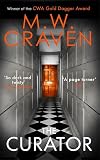
WHAT'S THE CURATOR ABOUT?
It all starts around Christmas—two severed fingers are found in a public location with no indication how they got there. Tests show that one finger was removed from the victim while they were alive, the other after they were dead. Two more sets of fingers show up in equally public, yet hard to access places. Clearly, there is a creative, disturbed and clever killer at work. The local police waste no time in calling in Washington Poe—this is up his alley, near his home, and the replacement for Detective Superintendent Gamble knows they need his assistance. With Poe comes his DI, a very pregnant Stephanie Flynn, and Tilly, everyone's favorite analyst.
Racing against the clock—the last thing anyone wants is another pair of fingers showing up—Poe and Tilly do all they can to figure out what the victims have in common, or what would make them a target. And what "#BSC6" could mean—it was left at each scene, and even Tilly is stumped by it.
They catch a break or two, and Poe makes the most of it. Before long, they're able to make an arrest, Tilly is able to do things with that evidence that even Poe didn't know she could do—solidifying the case they have against their suspect—who begins confessing to crimes no one knew about. But he won't confess to the killing.
And then there's a phone call from a crusading FBI Agent to Poe. And suddenly, everything that Poe thought they'd established about the killer is thrown out the window.
From that point on, I couldn't believe what I was reading. It was surprise after surprise after surprise. The twists didn't stop coming—I'm pretty much at a loss for words. Is there a word that means "more than intricate"? If so, I need to learn it so I can describe this novel. Craven doesn't cheat when it comes to his twists and reveals—it's all there in the book for you to find. But you probably won't, because Craven's smarter than almost all of his readers.
WHAT ABOUT THE CHARACTERS?
The real draw to these books are Poe and Tilly. Everything readers liked about the before is back. Their camaraderie is as strong as ever and the reader can feel it radiating off the page, who needs a friendship of your own if you can live vicariously through theirs?
In The Puppet Show, Poe was trying to find his footing again after being reactivated. In Black Summer, he's fighting to protect his reputation and career. Here? Poe's just a man on a mission, with no distractions or hindrances in his way. Poe unleashed is a great thing to behold.
As much as Poe's a local legend among Law Enforcement, it won't be long until Tilly's as much of a star (if not more). Watching her win over a bunch of jaded, cynical cops by being her brilliant, socially awkward self was so much fun. (her interaction with a representative from the Ministry of Defense might have been more entertaining, but not by much)
I don't want to take away anything from DI Flynn—her role in this is pivotal, but her role in the investigation isn't as large as it has been before, making her more of a supportive character than usual. Her condition, and Poe's protective instincts (despite Flynn's objections), won't allow for anything else.
Detective Superintendent Nightengale is a no-nonsense woman. She's clearly a good officer, a good manager. She wants to do things by the book, but she's clever enough to give Poe and Tilly all the latitude she can for them to do a more effective job than the by-the-book route, just in case. I'm sure that eventually,, she'll run out of the patience required to deal with this team—but that's a plot complication for another day (and one I look forward to).
Estelle Doyle, the pathologist we met in Black Summer is back and just as wonderful. I know it'd be pushing things to have her play a larger role in these books than she does, but the few scenes we have with her are just not enough to satisfy.
Neither space or time permit me to discuss the other standout characters—on both sides of the law. I would like to talk a bit about the eponymous Curator, because the Curator is the kind of character that you want to sit around discussing for a couple of hours. Obviously, I can't do that here.
SO WHAT DID I THINK ABOUT THE CURATOR?
In addition to the plot and characters, there's real pathos, real tension, real heart—and even some real laughs. I'm not sure I breathed enough in the last seventy-five pages, it's probably good that I wasn't hooked up to an oximeter, the alarms that it would have sounded would've been really distracting. As usual, this is given to us via Craven's crisp and compelling prose. Combine those characteristics with a top-notch mystery? And you've got a book that deserves all the accolades the first two books in this series has received, and then some. As good as The Puppet Show and Black Summer were (two of the best books I've read in the last two years), The Curator is better.
It was two days after I finished this before I could start another book—three before I could start another novel. That is rare for me. But I needed some time to recover/come down from this one. Pick an element—plot, atmosphere, character, pacing, complexity, twists—Craven nails it all. This is an exceptional work. It's pointless for me to say anything else, why try to gild the lily? show less
---
‘Sean Carroll’s a kite enthusiast,’ Bradshaw said after Nightingale had ended the call. ‘He’s not a dork.’
Poe grunted. He had a problem with ‘enthusiasts’. As far as he was concerned, on the ladder of weird interests that eventually escalated to criminal behaviour, enthusiasts were only a rung below Obsessives, and he’d seen first-hand what obsessed people were capable of...
Yup, this case is strange enough that Poe show more is driven to consult a kite dork—sorry, enthusiast—that's just how desperate he is for a clue. Not only has Poe seen first-hand what obsessed people can do, he's frequently the obsessed person in question--he can make Harry Bosh look laid-back.
WHAT'S THE CURATOR ABOUT?
It all starts around Christmas—two severed fingers are found in a public location with no indication how they got there. Tests show that one finger was removed from the victim while they were alive, the other after they were dead. Two more sets of fingers show up in equally public, yet hard to access places. Clearly, there is a creative, disturbed and clever killer at work. The local police waste no time in calling in Washington Poe—this is up his alley, near his home, and the replacement for Detective Superintendent Gamble knows they need his assistance. With Poe comes his DI, a very pregnant Stephanie Flynn, and Tilly, everyone's favorite analyst.
Racing against the clock—the last thing anyone wants is another pair of fingers showing up—Poe and Tilly do all they can to figure out what the victims have in common, or what would make them a target. And what "#BSC6" could mean—it was left at each scene, and even Tilly is stumped by it.
They catch a break or two, and Poe makes the most of it. Before long, they're able to make an arrest, Tilly is able to do things with that evidence that even Poe didn't know she could do—solidifying the case they have against their suspect—who begins confessing to crimes no one knew about. But he won't confess to the killing.
And then there's a phone call from a crusading FBI Agent to Poe. And suddenly, everything that Poe thought they'd established about the killer is thrown out the window.
From that point on, I couldn't believe what I was reading. It was surprise after surprise after surprise. The twists didn't stop coming—I'm pretty much at a loss for words. Is there a word that means "more than intricate"? If so, I need to learn it so I can describe this novel. Craven doesn't cheat when it comes to his twists and reveals—it's all there in the book for you to find. But you probably won't, because Craven's smarter than almost all of his readers.
WHAT ABOUT THE CHARACTERS?
The real draw to these books are Poe and Tilly. Everything readers liked about the before is back. Their camaraderie is as strong as ever and the reader can feel it radiating off the page, who needs a friendship of your own if you can live vicariously through theirs?
In The Puppet Show, Poe was trying to find his footing again after being reactivated. In Black Summer, he's fighting to protect his reputation and career. Here? Poe's just a man on a mission, with no distractions or hindrances in his way. Poe unleashed is a great thing to behold.
As much as Poe's a local legend among Law Enforcement, it won't be long until Tilly's as much of a star (if not more). Watching her win over a bunch of jaded, cynical cops by being her brilliant, socially awkward self was so much fun. (her interaction with a representative from the Ministry of Defense might have been more entertaining, but not by much)
I don't want to take away anything from DI Flynn—her role in this is pivotal, but her role in the investigation isn't as large as it has been before, making her more of a supportive character than usual. Her condition, and Poe's protective instincts (despite Flynn's objections), won't allow for anything else.
Detective Superintendent Nightengale is a no-nonsense woman. She's clearly a good officer, a good manager. She wants to do things by the book, but she's clever enough to give Poe and Tilly all the latitude she can for them to do a more effective job than the by-the-book route, just in case. I'm sure that eventually,, she'll run out of the patience required to deal with this team—but that's a plot complication for another day (and one I look forward to).
Estelle Doyle, the pathologist we met in Black Summer is back and just as wonderful. I know it'd be pushing things to have her play a larger role in these books than she does, but the few scenes we have with her are just not enough to satisfy.
Neither space or time permit me to discuss the other standout characters—on both sides of the law. I would like to talk a bit about the eponymous Curator, because the Curator is the kind of character that you want to sit around discussing for a couple of hours. Obviously, I can't do that here.
SO WHAT DID I THINK ABOUT THE CURATOR?
In addition to the plot and characters, there's real pathos, real tension, real heart—and even some real laughs. I'm not sure I breathed enough in the last seventy-five pages, it's probably good that I wasn't hooked up to an oximeter, the alarms that it would have sounded would've been really distracting. As usual, this is given to us via Craven's crisp and compelling prose. Combine those characteristics with a top-notch mystery? And you've got a book that deserves all the accolades the first two books in this series has received, and then some. As good as The Puppet Show and Black Summer were (two of the best books I've read in the last two years), The Curator is better.
It was two days after I finished this before I could start another book—three before I could start another novel. That is rare for me. But I needed some time to recover/come down from this one. Pick an element—plot, atmosphere, character, pacing, complexity, twists—Craven nails it all. This is an exceptional work. It's pointless for me to say anything else, why try to gild the lily? show less
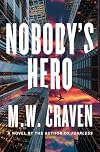
WHAT'S NOBODY'S HERO ABOUT?
A decade ago, Ben Koenig helped a woman disappear—and to do so in a way that even he (who knew more than anyone else in the world about it) wouldn't be able to track her. But now, she's surfaced—as someone responsible for a couple of brazen murders on the streets of London. He and his watcher/minder/handler Jen Draper are tasked with finding her and finding out what made her come into the open.
It takes all of their creative approaches to investigating—and show more Draper's security firm's extensive resources—plus a little luck to get on the path. But will they survive it?
Standing in their was is a team of assassins, criminal police officers, smugglers of various stripes, petty criminals—and bigger ones—and schemes that are truly chilling. Their strengths? The aforementioned creativity and extensive resources, some assistance from a certain Agency, their shared drive, Koenig's lack of fear, his strange humor and odd trivia.
Obviously, the bad guys are in for trouble.
A DARING MOVE
Far too often when someone/some group in a novel has a completely innovative, genius, unbelievably original idea, it really isn't. At best they're usually clever, but nowhere near as mind-blowing as characters act. Too often, I think authors would be better off alluding to a plan without giving us all the details, and readers have to suspend disbelief to keep going.
For a while, I was worried that Craven had bitten off more than he could chew in revealing all that he did—when it was all shadows, I was really invested. But as the book progressed and we got more and more details about the scheme afoot, the more I realized that this was one of those exceptions that proved the rule. There's some really ingenious stuff going on here.
I should've trusted the mind that brought us The Botanist (as only one example).
Can I promise that every reader is going to have their mind boggled by this? No. But even the cynics or the people who suss it out before the reveal are going to admit that this is atypically clever, and you can absolutely understand why Koenig and Draper have such difficulty with this—and are willing to risk so much to stop it.
The Title
I'm not going to get into it now, but I can imagine that more than one book club is going to spend some fun time speculating about/arguing over who the title is referring to.
I mean, I've spent some time speculating about it and arguing with myself over the identity. I figure Craven has multiple characters in mind, actually, rather than just one. But I'm prepared to be wrong about that.
CAVEAT LECTOR, OR, THE FIGHT SCENES
If you're like me, and decided at one point or another to not have a meal while watching Bones, at least until the (first) body is taken back to the Lab (the CSIs may have driven viewers to a similar choice), you're going to want to take a similar approach to the fight scenes in this book. That's actually an excess of caution, you're really only going to need it for some. But better be safe than sorry—really.
Now, once you put the meatball sub aside, these fight scenes are really well-written. I think they're better than those in Fearless. Craven brings the goods in the technical sense/ability to depict things clearly, the impact on the plot, and the overall entertainment value.
SO, WHAT DID I THINK ABOUT NOBODY'S HERO?
This is really one of those books best discussed among people who've read it—most of the glowing things I want to say would reveal too much—and you don't have to read too much of Craven's work to know it'd be a bad idea to cross him. So what can I say?
Let's start with this—between Fearless and Nobody's Hero I read a couple of thrillers with a one-man Army in the Reacher/Koenig/Ash/Ryan/Orphan X etc. mold that soured me on the whole thing, so I started this with a little trepidation. Also, I didn't know how he'd follow up Fearless and feared a little sophomore slump. It took me very little time to cast all that aside and just have a blast with this—I'm back to my appreciation of the genre, and I don't know if Craven has the word "slump" in his vocabulary.
Ben Koenig is one of those characters that I hope to spend a lot of time with, there's just something about him that I really like. It was good to see Jen Draper in action and to see the shift in the relationship between these two from where it was in Fearless and the beginning of this book to the end. They're a good team.
I don't know where to put this, but I need to say that between what we see in Nobody's Hero and some of the Poe series, I really have to wonder what kind of drinking establishments Craven frequents (or I hope, for his sake, used to frequent).
One of the assassins has a...let's put it generously and vaguely...a quirk. It feels like the kind of thing that Craven stumbled upon at some point in the last 15 years and said, "I need to put this in a book some day." I'm very glad it did—I'm not convinced that a hitman could become a success with that quirk, really. But Craven uses it so well, that I'm not going to complain. I really enjoyed the way it paid off.
We didn't get a monologue at the end by an evil mastermind, which still happens even after being made a cliché decades ago—it wasn't necessary, and what we got instead was so entertaining. It was truly a great change from what was expected.
I don't know that we need that last reveal—nor does the series—but, I look forward to Craven coming back to it in the future (however far away that future may or may not be).
Action, snark, and some really great twists. There's a momentum to this that builds and builds and builds as the tension ratchets up in a way that shows you're in the hands of a Thriller Master. Sure, every decent thriller has that characteristic. But anyone who's read a couple of thrillers knows the difference between standard-issue momentum and tension and something special. This is the latter, and it ain't even close.
Do you need to read Fearless before this? No. Will it help a little? Not much, but yes. The important thing is that you read both of them. You won't want to put it down once you pick it up.
Long live Ben Koenig. show less
A decade ago, Ben Koenig helped a woman disappear—and to do so in a way that even he (who knew more than anyone else in the world about it) wouldn't be able to track her. But now, she's surfaced—as someone responsible for a couple of brazen murders on the streets of London. He and his watcher/minder/handler Jen Draper are tasked with finding her and finding out what made her come into the open.
It takes all of their creative approaches to investigating—and show more Draper's security firm's extensive resources—plus a little luck to get on the path. But will they survive it?
Standing in their was is a team of assassins, criminal police officers, smugglers of various stripes, petty criminals—and bigger ones—and schemes that are truly chilling. Their strengths? The aforementioned creativity and extensive resources, some assistance from a certain Agency, their shared drive, Koenig's lack of fear, his strange humor and odd trivia.
Obviously, the bad guys are in for trouble.
A DARING MOVE
Far too often when someone/some group in a novel has a completely innovative, genius, unbelievably original idea, it really isn't. At best they're usually clever, but nowhere near as mind-blowing as characters act. Too often, I think authors would be better off alluding to a plan without giving us all the details, and readers have to suspend disbelief to keep going.
For a while, I was worried that Craven had bitten off more than he could chew in revealing all that he did—when it was all shadows, I was really invested. But as the book progressed and we got more and more details about the scheme afoot, the more I realized that this was one of those exceptions that proved the rule. There's some really ingenious stuff going on here.
I should've trusted the mind that brought us The Botanist (as only one example).
Can I promise that every reader is going to have their mind boggled by this? No. But even the cynics or the people who suss it out before the reveal are going to admit that this is atypically clever, and you can absolutely understand why Koenig and Draper have such difficulty with this—and are willing to risk so much to stop it.
The Title
I'm not going to get into it now, but I can imagine that more than one book club is going to spend some fun time speculating about/arguing over who the title is referring to.
I mean, I've spent some time speculating about it and arguing with myself over the identity. I figure Craven has multiple characters in mind, actually, rather than just one. But I'm prepared to be wrong about that.
CAVEAT LECTOR, OR, THE FIGHT SCENES
If you're like me, and decided at one point or another to not have a meal while watching Bones, at least until the (first) body is taken back to the Lab (the CSIs may have driven viewers to a similar choice), you're going to want to take a similar approach to the fight scenes in this book. That's actually an excess of caution, you're really only going to need it for some. But better be safe than sorry—really.
Now, once you put the meatball sub aside, these fight scenes are really well-written. I think they're better than those in Fearless. Craven brings the goods in the technical sense/ability to depict things clearly, the impact on the plot, and the overall entertainment value.
SO, WHAT DID I THINK ABOUT NOBODY'S HERO?
This is really one of those books best discussed among people who've read it—most of the glowing things I want to say would reveal too much—and you don't have to read too much of Craven's work to know it'd be a bad idea to cross him. So what can I say?
Let's start with this—between Fearless and Nobody's Hero I read a couple of thrillers with a one-man Army in the Reacher/Koenig/Ash/Ryan/Orphan X etc. mold that soured me on the whole thing, so I started this with a little trepidation. Also, I didn't know how he'd follow up Fearless and feared a little sophomore slump. It took me very little time to cast all that aside and just have a blast with this—I'm back to my appreciation of the genre, and I don't know if Craven has the word "slump" in his vocabulary.
Ben Koenig is one of those characters that I hope to spend a lot of time with, there's just something about him that I really like. It was good to see Jen Draper in action and to see the shift in the relationship between these two from where it was in Fearless and the beginning of this book to the end. They're a good team.
I don't know where to put this, but I need to say that between what we see in Nobody's Hero and some of the Poe series, I really have to wonder what kind of drinking establishments Craven frequents (or I hope, for his sake, used to frequent).
One of the assassins has a...let's put it generously and vaguely...a quirk. It feels like the kind of thing that Craven stumbled upon at some point in the last 15 years and said, "I need to put this in a book some day." I'm very glad it did—I'm not convinced that a hitman could become a success with that quirk, really. But Craven uses it so well, that I'm not going to complain. I really enjoyed the way it paid off.
We didn't get a monologue at the end by an evil mastermind, which still happens even after being made a cliché decades ago—it wasn't necessary, and what we got instead was so entertaining. It was truly a great change from what was expected.
I don't know that we need that last reveal—nor does the series—but, I look forward to Craven coming back to it in the future (however far away that future may or may not be).
Action, snark, and some really great twists. There's a momentum to this that builds and builds and builds as the tension ratchets up in a way that shows you're in the hands of a Thriller Master. Sure, every decent thriller has that characteristic. But anyone who's read a couple of thrillers knows the difference between standard-issue momentum and tension and something special. This is the latter, and it ain't even close.
Do you need to read Fearless before this? No. Will it help a little? Not much, but yes. The important thing is that you read both of them. You won't want to put it down once you pick it up.
Long live Ben Koenig. show less
Lists
Awards


You May Also Like


Associated Authors
Statistics
- Works
- 21
- Also by
- 4
- Members
- 1,778
- Popularity
- #14,480
- Rating
- 4.1
- Reviews
- 93
- ISBNs
- 179
- Languages
- 11
- Favorited
- 5