

Renee Nault
Author of The Handmaid's Tale (Graphic Novel)
About the Author
Series
Works by Renee Nault
Salvage: A Graphic Novel 4 copies
Witchling 4 copies
Associated Works
Angel Catbird Volume 2: To Castle Catula (2017) — Contributor, some editions — 112 copies, 3 reviews
Tagged
Common Knowledge
- Nationality
- Canada
- Birthplace
- Vancouver, British Columbia, Canada
- Associated Place (for map)
- British Columbia, Canada
Members
Reviews
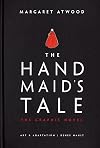
Artist Renée Nault pulled key scenes from Margaret Atwood’s The Handmaid’s Tale to make this powerful graphic-novel companion. I abandoned the source material many years ago out of annoyance and boredom with Atwood’s passive writing style. So much of the story’s impact comes from the shocking and frightening dystopian elements she dreamed up, and fortunately, this adaptation does justice to those with vivid, expressive drawings. It maintains the contemplative tone of the source show more material but winnowed that down so it balances rather than overwhelms. Atwood’s main ideas were also preserved.
Nault’s ink-and-watercolor artwork is beautiful, and her artistic interpretation suits the cast of characters. The commander and his wife are old and look severe, with the wife’s anger and anguish written on her pinched and gaunt face. June is young, with a doll face and delicate frame that reinforce her vulnerability. The rebelliousness of June’s friend Moira comes through in her punkish appearance, as shown in flashback scenes.
Being already familiar with the story, I can’t speak for readers who make this adaptation their first experience with The Handmaid’s Tale, but Gilead is here in all its horror. At the least, readers will feel what Atwood intended for them to feel: alarm over the oppressive and especially repellent misogyny. show less
Nault’s ink-and-watercolor artwork is beautiful, and her artistic interpretation suits the cast of characters. The commander and his wife are old and look severe, with the wife’s anger and anguish written on her pinched and gaunt face. June is young, with a doll face and delicate frame that reinforce her vulnerability. The rebelliousness of June’s friend Moira comes through in her punkish appearance, as shown in flashback scenes.
Being already familiar with the story, I can’t speak for readers who make this adaptation their first experience with The Handmaid’s Tale, but Gilead is here in all its horror. At the least, readers will feel what Atwood intended for them to feel: alarm over the oppressive and especially repellent misogyny. show less
(I am using this book for the "A Graphic Novel" category of Extreme Book Nerd.)
Whew. This was INTENSE. I did not know that this book existed until recently; my boss found it on the shelf. I mean, the story of "The Handmaid's Tale" is familiar to many people, but to see it come alive in a graphic novel form.....wow.
What the hardest thing about "The Handmaid's Tale" is is that it feels too....real. It is why I have not watched the Hulu adaptation; the visuals make the Offred's story all to show more visual and raw. It scares me that we have similarities to Gilead. I hate how there are Christians who are judgmental and two-faced like the Commander.
Still though, I could not put the book down. It's been a while since I have read the source novel but this adaptation holds its own. show less
Whew. This was INTENSE. I did not know that this book existed until recently; my boss found it on the shelf. I mean, the story of "The Handmaid's Tale" is familiar to many people, but to see it come alive in a graphic novel form.....wow.
What the hardest thing about "The Handmaid's Tale" is is that it feels too....real. It is why I have not watched the Hulu adaptation; the visuals make the Offred's story all to show more visual and raw. It scares me that we have similarities to Gilead. I hate how there are Christians who are judgmental and two-faced like the Commander.
Still though, I could not put the book down. It's been a while since I have read the source novel but this adaptation holds its own. show less
I couldn't handle re-reading the Margaret Atwood classic novel and SUPER couldn't handle the TV series, so I grabbed this when I saw it at the library. It's a masterful rendition of a story that now seems both timeless and inevitable, and so valuable to have this roadmap of what to watch out for if Pence ever becomes president. The only missing element is fundamentalism, although it really IS part and parcel of the worship of males. Offred, her background with her daughter, and the events show more leading up to Gilead, are hauntingly rendered by a blazingly sharp hand that can also evoke tenderness. All credit to the illustrator and to her fine adaptation. show less
In The Handmaid’s Tale: The Graphic Novel, Renée Nault adapts Margaret Atwood’s 1985 dystopian novel. The story focuses on Offred, a handmaid living in Gilead. The nation of Gilead formed after conservative Christian fundamentalists used a national tragedy to seize control of the government and economics, imposing their vision of a Christian utopia in which women exist solely to serve men. Gilead uses Biblical justifications for their laws, denying women the right to own property, give show more evidence in court, and requires two witnesses in order to prove a crime occurred. Atwood's description of sexual politics in this fictional society closely mirrors that desired by modern religious fundamentalists and political conservatives.
Nault’s artwork captures both the brutality of Gilead, with her paint resembling smeared blood during the Particicution scene, as well as a dreamlike aesthetic that helps to convey the inner turmoil and psychological damage of fundamentalist thought. Her watercolors also parallel Atwood’s use of flowers in the text, at times standing in visually for characters in the women’s sphere of Gileadean society as well as the politicization of reproduction and as a marker of the transition of time. Nault brilliantly brings to visual life the story and the themes of Atwood’s work, complimenting and enhancing the text. show less
Nault’s artwork captures both the brutality of Gilead, with her paint resembling smeared blood during the Particicution scene, as well as a dreamlike aesthetic that helps to convey the inner turmoil and psychological damage of fundamentalist thought. Her watercolors also parallel Atwood’s use of flowers in the text, at times standing in visually for characters in the women’s sphere of Gileadean society as well as the politicization of reproduction and as a marker of the transition of time. Nault brilliantly brings to visual life the story and the themes of Atwood’s work, complimenting and enhancing the text. show less
Lists
You May Also Like
Associated Authors
Statistics
- Works
- 4
- Also by
- 4
- Members
- 866
- Popularity
- #29,560
- Rating
- 4.0
- Reviews
- 36
- ISBNs
- 11
- Languages
- 5