
Thorn Mooney
Author of The Witch's Path: Advancing Your Craft at Every Level
About the Author
Thorn Mooney is a Witch of more than twenty years and the high priestess of Foxfire, a traditional Gardnerian coven thriving in the American South. She holds graduate degrees in religious studies and English literature and has worked as a writer and tarot reader. Thorn maintains a longstanding show more YouTube channel and has been blogging about Witchcraft and the occult for more than a decade. She's also a regular at Pagan festivals throughout the United States. Visit her at www.ThornTheWitch.com. show less
Works by Thorn Mooney
Tagged
Common Knowledge
There is no Common Knowledge data for this author yet. You can help.
Members
Reviews
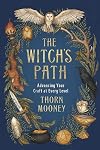
The author makes a very good point about reading books but not doing the exercises, and that’s what I’ve done here. I like the stance of the author about learning, and this is not a how-to book so much as a reminder on living. I will return to it one day since it is harder to take in so much from an audiobook, but that day will be when I’m ready to do more work. It’s true that a lot of people are witches now, but I still don’t think of myself as one because I haven’t truly show more started. This read made me think about that and all the “witchiness” books I have as well. show less
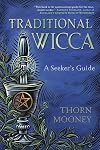
If you are looking for a clear explanation of lineaged, initiatory witchcraft, this is it. If you are looking for a coven, thinking of joining a coven, or merely curious, I would recommend reading this book. Even if you are an experienced Wiccan initiate, you could benefit from the perspectives offered in this book.
If your coven is open to seekers, this book should go straight to the top of your recommended reading list, for seekers, new initiates, and even old hands. It's clearly written, show more engaging, well-structured, and scholarly. The reference to traditional Wicca in the title refers to lineaged, initiatory Wiccan traditions with a degree system and a shared body of lore and rituals.
The book first of all describes what traditional Wicca is, what distinguishes it from non-lineaged and non-initiatory forms of Wicca and witchcraft, and a bit about its history.
Mooney does an excellent job of clearing up some of the major misconceptions about Wicca. One of these is the purpose of the degree system (I and several others also liken it to the guild system of apprentice, journeyman, master). She tackles the concept of hierarchy in this system very well indeed. I've always shied away from the word hierarchy, but she tackles it head-on, and does a great job of rehabilitating it.
Another source of angst and misunderstanding is the practice of working skyclad. The section discussing this is excellent, indeed one of the best I have read, and explains it really well.
I also liked the section on initiation and what makes it different from self-initiation (again, similar to my own ideas on the subject). My take is that self-initiation may confer psychological transformation and an encounter with the gods, but by definition, it cannot confer group membership, lineage, or access to the knowledge of a specific tradition. Mooney does an excellent job of explaining the academic theory around the concept of initiation, too.
There's an important section about red flags and safety, many of which are similar to the red flags and safety checks for online dating.
There are some things that I would have given more emphasis to, and other things that I would have given less emphasis to, but that's why more than one book about the Craft exists!
It must also be stated that this book is about seeking and joining a coven in the USA, where there are numerous other witchcraft and Wiccan traditions besides the ones that are available in the UK. There are also slight differences of practice and emphasis between Wicca in Britain, Canada, the USA, and Europe. As this book is written by an American, the emphasis is primarily on the Craft in the USA.
However, the key points, such as the distinguishing features of traditional Wicca, what makes a good coven, which seekers are likely to be successful at finding a coven, and the etiquette of seeking and being in a coven, are all commonalities across cultures.
One bit that made me laugh out loud in sympathy was the observation that the best asset of every seeker is good manners - this is so, so true. Lazy and entitled people don't make good initiates.
There are so many great things about this book (and I'm not just saying all these nice things because my book is listed in the recommended reading - I genuinely think this is a super helpful book).
There are also some beautiful poetic evocations of being in a Wiccan circle, and some really helpful magical and life advice, including a lovely section on the Witches' Pyramid for new initiates.
The checklist of questions for seekers to ask themselves, and the outline of what to put in an initial inquiry email, are also really good.
If all coven leaders, seekers, trainees, and initiates took the advice in this book to heart, it would save a lot of hassle.
Buy it, read it, recommend it to your friends! show less
If your coven is open to seekers, this book should go straight to the top of your recommended reading list, for seekers, new initiates, and even old hands. It's clearly written, show more engaging, well-structured, and scholarly. The reference to traditional Wicca in the title refers to lineaged, initiatory Wiccan traditions with a degree system and a shared body of lore and rituals.
The book first of all describes what traditional Wicca is, what distinguishes it from non-lineaged and non-initiatory forms of Wicca and witchcraft, and a bit about its history.
Mooney does an excellent job of clearing up some of the major misconceptions about Wicca. One of these is the purpose of the degree system (I and several others also liken it to the guild system of apprentice, journeyman, master). She tackles the concept of hierarchy in this system very well indeed. I've always shied away from the word hierarchy, but she tackles it head-on, and does a great job of rehabilitating it.
Another source of angst and misunderstanding is the practice of working skyclad. The section discussing this is excellent, indeed one of the best I have read, and explains it really well.
I also liked the section on initiation and what makes it different from self-initiation (again, similar to my own ideas on the subject). My take is that self-initiation may confer psychological transformation and an encounter with the gods, but by definition, it cannot confer group membership, lineage, or access to the knowledge of a specific tradition. Mooney does an excellent job of explaining the academic theory around the concept of initiation, too.
There's an important section about red flags and safety, many of which are similar to the red flags and safety checks for online dating.
There are some things that I would have given more emphasis to, and other things that I would have given less emphasis to, but that's why more than one book about the Craft exists!
It must also be stated that this book is about seeking and joining a coven in the USA, where there are numerous other witchcraft and Wiccan traditions besides the ones that are available in the UK. There are also slight differences of practice and emphasis between Wicca in Britain, Canada, the USA, and Europe. As this book is written by an American, the emphasis is primarily on the Craft in the USA.
However, the key points, such as the distinguishing features of traditional Wicca, what makes a good coven, which seekers are likely to be successful at finding a coven, and the etiquette of seeking and being in a coven, are all commonalities across cultures.
One bit that made me laugh out loud in sympathy was the observation that the best asset of every seeker is good manners - this is so, so true. Lazy and entitled people don't make good initiates.
There are so many great things about this book (and I'm not just saying all these nice things because my book is listed in the recommended reading - I genuinely think this is a super helpful book).
There are also some beautiful poetic evocations of being in a Wiccan circle, and some really helpful magical and life advice, including a lovely section on the Witches' Pyramid for new initiates.
The checklist of questions for seekers to ask themselves, and the outline of what to put in an initial inquiry email, are also really good.
If all coven leaders, seekers, trainees, and initiates took the advice in this book to heart, it would save a lot of hassle.
Buy it, read it, recommend it to your friends! show less
Review: The Witch’s Path
Whether or not you’re feeling stuck in your witchy or Wiccan path, do yourself a favour and buy this book.
It offers sensible and inspiring advice for deepening every aspect of your witchcraft practice. Each chapter focuses on a specific area of witchy life: ritual, personal practice, community (both online and offline). The exercises at the end of each chapter are grouped by earth, air, fire, and water, thereby offering different approaches to deepen and/or revive show more your practice, depending on where you’re experiencing a lack.
Like all of Thorn Mooney’s work, it’s well written, intellectually stimulating, well-informed, and accessible. Highly recommended. show less
Whether or not you’re feeling stuck in your witchy or Wiccan path, do yourself a favour and buy this book.
It offers sensible and inspiring advice for deepening every aspect of your witchcraft practice. Each chapter focuses on a specific area of witchy life: ritual, personal practice, community (both online and offline). The exercises at the end of each chapter are grouped by earth, air, fire, and water, thereby offering different approaches to deepen and/or revive show more your practice, depending on where you’re experiencing a lack.
Like all of Thorn Mooney’s work, it’s well written, intellectually stimulating, well-informed, and accessible. Highly recommended. show less
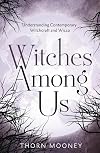
This was a short introduction to a very broad topic (the many varieties of witchcraft that exist today) and as such, was necessarily an overview. It is aimed at people who don’t know anything about witchcraft and want to understand it as a cultural phenomenon.
Each of the chapters could have been an entire book because of the scope of the work, but the succinctness in dealing with multiple versions of witchcraft and multiple histories was good. The book does not brush the controversial show more issues aside, either. I also appreciated that each chapter has a list of further reading from both scholars and witches (some of whom are both). The footnotes are also excellent.
My only criticism is that if this book is aimed at non-scholars, some of the language is quite scholarly, and may be less familiar to a general audience. A little bit more unpacking of terms, or a glossary, might help. It might have been nice to include some anecdotes, which Thorn has used very effectively in her other books. I was a little surprised that the bibliography didn’t include all the sources listed in the chapters and footnotes (perhaps an editorial decision?)
The book would be helpful for many people seeking to get an overview of contemporary witchcraft. For those of us situated in one area of the contemporary witchcraft community, it is helpful to get an overview of the other areas. I’d love to see an expanded version of this book aimed at practitioners and seekers. I think it would be helpful for people who are considering becoming a witch, so that they could understand the variety of traditions available. show less
Each of the chapters could have been an entire book because of the scope of the work, but the succinctness in dealing with multiple versions of witchcraft and multiple histories was good. The book does not brush the controversial show more issues aside, either. I also appreciated that each chapter has a list of further reading from both scholars and witches (some of whom are both). The footnotes are also excellent.
My only criticism is that if this book is aimed at non-scholars, some of the language is quite scholarly, and may be less familiar to a general audience. A little bit more unpacking of terms, or a glossary, might help. It might have been nice to include some anecdotes, which Thorn has used very effectively in her other books. I was a little surprised that the bibliography didn’t include all the sources listed in the chapters and footnotes (perhaps an editorial decision?)
The book would be helpful for many people seeking to get an overview of contemporary witchcraft. For those of us situated in one area of the contemporary witchcraft community, it is helpful to get an overview of the other areas. I’d love to see an expanded version of this book aimed at practitioners and seekers. I think it would be helpful for people who are considering becoming a witch, so that they could understand the variety of traditions available. show less
Statistics
- Works
- 3
- Members
- 218
- Popularity
- #102,473
- Rating
- 4.7
- Reviews
- 5
- ISBNs
- 10
- Languages
- 1
- Favorited
- 1