

Latoya Watkins
Author of Perish
Works by Latoya Watkins
The Book of Chuck: A Novel 3 copies
Associated Works
Tagged
Common Knowledge
- Gender
- female
- Short biography
- LaToya Watkins' writing has appeared in A Public Space, The Sun, Kweli Journal, McSweeney's Quarterly Concern, Kenyon Review, The Pushcart Prize Anthology, and elsewhere. She is a Kimibilo fellow and has received support from the Bread Loaf Writers' Conference, MacDowell, OMI: Arts, Yaddo, Hedgebrook, and the Camargo Foundation. She is the author of Perish and Holler, Child.
Members
Reviews
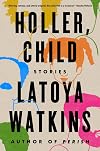
These heartbreaking stories are told by Black women and men who can hardly get off their West Texas Striver's Row to make satisfactory lives due to racism and lack of opportunity. Each has had more than their share of unfulfilled hopes, and it is difficult to not conclude that the same generational wealth accumulated by white people, or a guaranteed basic monthly income, or some form of financial reparations, would not have made a tremendous difference in their lives. Mothers and children show more are the primary protagonists - most of them in conflict but yearning for better connections and more visible love. Among them: a messianic prophet; a former ranch hand brought down by city life; widows and women whose men and children don't survive; a gay man whose family cannot accept him; a son who makes the same misjudgment with a girl that was made against his mother; and all manners of painful betrayals. All of the voices are resonant, needful, and unique. show less
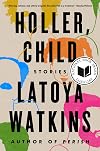
Holler, Child is a collection of short stories that drop you straight into a difficult place and then proceed to show you how much worse things can get. The stories are raw and stark, grim and devastating.
Generational trauma keeps perpetuating and no one is safe from betrayal and abandonment. Parental warnings are never heeded, as though familial patterns must play themselves out again and again, wreaking perpetual havoc.
The author’s voice is strong and sure, her characters springing to show more life on the pages, daring us look away. Their tales are harrowing and heartbreaking. The first two (‘The Mother’ and ‘Cutting Horse’) and the last one, ‘Time After’, are perfectly-crafted stories. ‘Time After’ moved me to tears. show less
Generational trauma keeps perpetuating and no one is safe from betrayal and abandonment. Parental warnings are never heeded, as though familial patterns must play themselves out again and again, wreaking perpetual havoc.
The author’s voice is strong and sure, her characters springing to show more life on the pages, daring us look away. Their tales are harrowing and heartbreaking. The first two (‘The Mother’ and ‘Cutting Horse’) and the last one, ‘Time After’, are perfectly-crafted stories. ‘Time After’ moved me to tears. show less

fiction, short stories -- masterful storytelling, each story packs quite a punch with each character suffering their own separate kind of grief or loss or vulnerability. I really enjoyed this collection and am glad I finally got around to reading this.
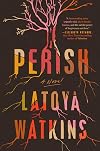
Perish: A Novel, LaToya Watkins, author; Jeremy Michael Durm, Keyonni James, Chante McCormick, Lisa Renee Pitts, Kacie Rogers, narrator
This is a novel about several generations of the Turner family, a family in turmoil as it travels on its chaotic journey to a final moment of discovery and an attempt to resolve its history of shame, guilt and failures. It starts with Helen Jean, in 1955, in Jerusalem, Texas. Her mother, Dimple Mae, is a rather benign, mentally disturbed figure; her father, show more Albert Pines, is a violent and cruel man. The story continues as it follows generations of this family, and Helen Jean’s siblings, into the early part of the following century, until it concludes in 2012, with the death of the matriarch and the revelation of many of the secrets she kept for decades, secrets she shielded not only from the children, but also hidden from herself, so she would not have to face them.
As Ernestine, Helen Jean’s cousin, keeps questioning her about whether or not her homebred recipe for an abortion is working, Sixteen-year-old Helen Jean grows more and more aware that it is not. She is just a young teenager who has been impregnated by her father. It was not the first time that she had been raped by him, but it is the first time that the abortion has failed. So begins a family not born of love, but instead of Helen Jean’s determination to save herself by marrying a man she does not love, but a man who wants to marry her and take care of her. So, she marries Jessie B., a man almost twice her age, and for awhile, he does take care of her. Although she could not bring herself to love this child, borne from her father’s seed, she vowed she would care for it when it was born, and she does only that.
From her children, and from her troubled soul, and other partners, there came other children. They also begat progeny. Each came with their own set of issues. Each was touched by the “sins of the father”, in some way, a father whose sins echoed and carried from generation to generation. There simply seemed to be no escape from this pattern of pain.
This was the saddest and most hopeless story, until the very end, when some semblance of an awakening or closure reaches some of the siblings, some in a positive way and some in a drastic and negative way. As many secrets are revealed, some family members are able to free themselves and move forward to a better world for themselves, to try to improve their lot in life, or perhaps to end its pattern of destruction. Still, they were unable to alter the damage caused by the original sins, the damage already done.
It was hard to keep track of the abundance of family members, as it told the story of each, going back and forth in time, and before long I was not sure who was anyone’s father or sibling. However, the story is knitted together in the end without any loose threads. The print book would be better than an audio book since it is easier to refer back to a character that way and to hold onto the storyline. Still, Helen Jean’s world is not a world that I am familiar with, and I found it somewhat hard to follow, both in language, the temperament of the characters, and their lifestyle. I found it very sad and wished that the conclusion really did present some hopefulness for the future of those who find themselves in such dire circumstances.
As the words “bear it or perish” are repeated in the narrative, it indicates how difficult it truly is to move on with your life if you try to fight the obstacles you can’t change. It reminds the reader that we all need the courage to change the things we can and accept the things we cannot, as a certain kind of black culture, racism, incest, police brutality, crime, drugs, and physical and sexual abuse are among the many subjects exposed and illuminated. show less
This is a novel about several generations of the Turner family, a family in turmoil as it travels on its chaotic journey to a final moment of discovery and an attempt to resolve its history of shame, guilt and failures. It starts with Helen Jean, in 1955, in Jerusalem, Texas. Her mother, Dimple Mae, is a rather benign, mentally disturbed figure; her father, show more Albert Pines, is a violent and cruel man. The story continues as it follows generations of this family, and Helen Jean’s siblings, into the early part of the following century, until it concludes in 2012, with the death of the matriarch and the revelation of many of the secrets she kept for decades, secrets she shielded not only from the children, but also hidden from herself, so she would not have to face them.
As Ernestine, Helen Jean’s cousin, keeps questioning her about whether or not her homebred recipe for an abortion is working, Sixteen-year-old Helen Jean grows more and more aware that it is not. She is just a young teenager who has been impregnated by her father. It was not the first time that she had been raped by him, but it is the first time that the abortion has failed. So begins a family not born of love, but instead of Helen Jean’s determination to save herself by marrying a man she does not love, but a man who wants to marry her and take care of her. So, she marries Jessie B., a man almost twice her age, and for awhile, he does take care of her. Although she could not bring herself to love this child, borne from her father’s seed, she vowed she would care for it when it was born, and she does only that.
From her children, and from her troubled soul, and other partners, there came other children. They also begat progeny. Each came with their own set of issues. Each was touched by the “sins of the father”, in some way, a father whose sins echoed and carried from generation to generation. There simply seemed to be no escape from this pattern of pain.
This was the saddest and most hopeless story, until the very end, when some semblance of an awakening or closure reaches some of the siblings, some in a positive way and some in a drastic and negative way. As many secrets are revealed, some family members are able to free themselves and move forward to a better world for themselves, to try to improve their lot in life, or perhaps to end its pattern of destruction. Still, they were unable to alter the damage caused by the original sins, the damage already done.
It was hard to keep track of the abundance of family members, as it told the story of each, going back and forth in time, and before long I was not sure who was anyone’s father or sibling. However, the story is knitted together in the end without any loose threads. The print book would be better than an audio book since it is easier to refer back to a character that way and to hold onto the storyline. Still, Helen Jean’s world is not a world that I am familiar with, and I found it somewhat hard to follow, both in language, the temperament of the characters, and their lifestyle. I found it very sad and wished that the conclusion really did present some hopefulness for the future of those who find themselves in such dire circumstances.
As the words “bear it or perish” are repeated in the narrative, it indicates how difficult it truly is to move on with your life if you try to fight the obstacles you can’t change. It reminds the reader that we all need the courage to change the things we can and accept the things we cannot, as a certain kind of black culture, racism, incest, police brutality, crime, drugs, and physical and sexual abuse are among the many subjects exposed and illuminated. show less
Awards


You May Also Like
Associated Authors
Statistics
- Works
- 3
- Also by
- 2
- Members
- 173
- Popularity
- #123,687
- Rating
- 3.8
- Reviews
- 6
- ISBNs
- 11