
Gerald Brenan (1) (1894–1987)
Author of The Spanish Labyrinth: An Account of the Social and Political Background of the Spanish Civil War
For other authors named Gerald Brenan, see the disambiguation page.
Gerald Brenan (1) has been aliased into Edward Fitz Gerald Brenan.
Works by Gerald Brenan
Works have been aliased into Edward Fitz Gerald Brenan.
The Spanish Labyrinth: An Account of the Social and Political Background of the Spanish Civil War (1943) 420 copies, 7 reviews
Associated Works
Works have been aliased into Edward Fitz Gerald Brenan.
Tagged
Common Knowledge
- Legal name
- Brenan, Edward FitzGerald
- Birthdate
- 1894-04-07
- Date of death
- 1987-01-19
- Gender
- male
- Education
- Radley College, Radley, Oxfordshire, England, UK
- Occupations
- author
- Organizations
- British Army (WWI)
- Awards and honors
- Commander of the Order of the British Empire (1982)
- Relationships
- Carrington, Dora (lover)
Woolsey, Gamel (wife)
Partridge, Ralph (friend) - Nationality
- UK
- Birthplace
- Sliema, Malta
- Places of residence
- Yegen, Granada, Spain
Churriana, Spain
Aldbourne, Wiltshire, England, UK
Alhaurín el Grande, Málaga, Spain - Place of death
- Alhaurín el Grande, Málaga, Spain
- Burial location
- English Cemetery, Malaga, Spain
- Associated Place (for map)
- Spain
Members
Reviews
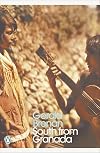
This non-fiction travel book is as close to literature as travel books can get. Gerald Brenan, after serving in the British army in the First World War, decides to stretch his meagre savings as long as possible by living extremely cheaply in a very small village called Yegen in the mountainous regions in the south of Spain. This book, describing him living amongst these people in the 1920's, captures pretty much every conceivable angle of that village and its surrounding area, along with show more visits from famous arts figure friends from the Bloomsbury group, including Virginia Woolf.
There are two features that make the book so special. First, it describes a part of the western world that still carried its own unique identity, before the cultural and technological influx from the rest of the Western World homogenised it. Thus, the Yegen people are completely saturated with strange traditions, apparently Christian in many cases, but clearly owing their origins, in the main, to past pagan habits. The Islamic history of the place also plays a part, as does general superstitions. Whereas cosmopolitan places not too far away, such as Madrid, would have largely shed such primitive, but colourful, supersitions, Yegen seems still build on them. They pervade every aspect of life, especially that of courtship, which is even more formalistic and repressed than Victorian English rules of etiquette.
The second feature that makes the book so special is the eye of its author. Brenan was clearly both a tremendously robust, positive and adventurous man, which helped him fall in love with a place where medicine and education were so lacking. But he was also extremely good at both embracing the culture he was living inside, and remaining a distanced observer to it. Nowhere is this more apparent when he walks by a barred window and somehow accidentally seems to become a serious boyfriend of some young woman. This requires him to visit her window every evening from dusk, and spend hours talking with her. Only when he realises she is physically rather squat and unattractive after a possible promenade offer does he make his excuses, weeks later! But he notes carefully all the standard phrases she comes up with, as if she could be one of a thousand courting clones. But his eye for psychological detail brilliantly captures so many colourful characters in his time there that these are what elevate the book far beyond a normal travel book, and almost turn it, at times, into a Dostoyevskian novel (most apparent in his tour guide acquaintance who shows him round all the Almeria brothels - a man that claims he is riddled by STDs, but is still addicted to prostitutes despite this, even to the extent that he can't afford to feed his own children. All this is very dramatic and sad, but then it's revealed that the man is sexually completely non-functional, without any children, and it's all an act!).
Although occasional passages seem a little tedious, reverting almost to text-book level detail about the region's history, on the whole this is very easy and exciting reading. Told at times with a beautiful poetical style, this book is a pleasure to read, and gives a fascinating and immersive glimpse into a vibrant place and time that no longer exists. show less
There are two features that make the book so special. First, it describes a part of the western world that still carried its own unique identity, before the cultural and technological influx from the rest of the Western World homogenised it. Thus, the Yegen people are completely saturated with strange traditions, apparently Christian in many cases, but clearly owing their origins, in the main, to past pagan habits. The Islamic history of the place also plays a part, as does general superstitions. Whereas cosmopolitan places not too far away, such as Madrid, would have largely shed such primitive, but colourful, supersitions, Yegen seems still build on them. They pervade every aspect of life, especially that of courtship, which is even more formalistic and repressed than Victorian English rules of etiquette.
The second feature that makes the book so special is the eye of its author. Brenan was clearly both a tremendously robust, positive and adventurous man, which helped him fall in love with a place where medicine and education were so lacking. But he was also extremely good at both embracing the culture he was living inside, and remaining a distanced observer to it. Nowhere is this more apparent when he walks by a barred window and somehow accidentally seems to become a serious boyfriend of some young woman. This requires him to visit her window every evening from dusk, and spend hours talking with her. Only when he realises she is physically rather squat and unattractive after a possible promenade offer does he make his excuses, weeks later! But he notes carefully all the standard phrases she comes up with, as if she could be one of a thousand courting clones. But his eye for psychological detail brilliantly captures so many colourful characters in his time there that these are what elevate the book far beyond a normal travel book, and almost turn it, at times, into a Dostoyevskian novel (most apparent in his tour guide acquaintance who shows him round all the Almeria brothels - a man that claims he is riddled by STDs, but is still addicted to prostitutes despite this, even to the extent that he can't afford to feed his own children. All this is very dramatic and sad, but then it's revealed that the man is sexually completely non-functional, without any children, and it's all an act!).
Although occasional passages seem a little tedious, reverting almost to text-book level detail about the region's history, on the whole this is very easy and exciting reading. Told at times with a beautiful poetical style, this book is a pleasure to read, and gives a fascinating and immersive glimpse into a vibrant place and time that no longer exists. show less

This is a fantastic book. It's a description of life in Yegen, the isolated and almost self-sufficient village in the Alpujarra region of Southern Spain where Gerald Brenan lived in the 1920's and 1930's. He describes the everyday life of the villagers and the festivals marking the agricultural year (which although nominally Catholic, have probably been performed almost unchanged since pagan times). He is a keen walker, on one occasion walking 60 miles home from Granada over the mountains in show more one day, starting at 3 am and arriving in the village at 10 pm. He is interested in the geography, archaeology, history, flora and fauna of the area as well as the people and describes everything in great detail. There are a couple of chapters about Bloomsbury friends such as Virginia Woolf visiting from England, but it is mostly about Spain and the way of life in the Alpujarra. show less
First person account of living in the Alpujarra, an impoverished, backward region of Southern Spain, in the years following the First World War. Excellent description of village life and the characters who lived there, showing empathy and real understanding of the realities involved. NB Later on, the author was living in Malaga when the Spanish civil war broke out in 1936 - his wife's account of this period, "Death's Other Kingdom" is worth a read.

This is an illuminating account of travel in post civil war Spain, circa 1949, a vanished world to us today. Best when describing the people, the characters met by the author and his wife, some of the more discursive passages are less interesting (to this reader, at least). The extreme poverty in some of Spain's out of the way villages is movingly portrayed and the author's passionate love of the country is clearly apparent. This is the Spain of Hemingway that had it's last glimmers in the show more 1960's, light years from the modern, fully integrated European state we see today. show less
Lists
Awards

You May Also Like
Associated Authors
Statistics
- Works
- 15
- Also by
- 2
- Members
- 1,207
- Popularity
- #21,276
- Rating
- 3.6
- Reviews
- 21
- ISBNs
- 82
- Languages
- 6