
Thomas O'Malley (1)
Author of In the Province of Saints: A Novel
For other authors named Thomas O'Malley, see the disambiguation page.
Series
Works by Thomas O'Malley
Tagged
Common Knowledge
Members
Reviews
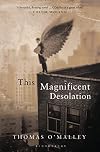
The title of this novel refers to the description of the lunar landscape given by Buzz Aldrin, the second man to walk on the moon. The world of the novel, however, is more desolate than magnificent.
At the age of ten, Duncan awakens to his life in an orphanage in northern Minnesota in the Iron Range region. He has no memory of the first ten years of his life. His mother, Maggie Bright, a has-been soprano, shows up and takes him to San Francisco to live with her and her sometimes live-in show more boyfriend, Joshua McGreevey, a Vietnam vet.
Although there are some important events, this is no action-filled plot; a large portion of the book consists of dialogue, lengthy descriptions of setting, and flights of imagination, much of which emphasizes life’s unrelenting suffering. In a relatively short period of time, the characters confront violence, depression, illness, and suicide.
Each of the characters is haunted by a past which in all cases involves some type of parental abandonment. It is soon clear that “there is no salvation and no redemption from the past,” but, like sewage, “The rain always pushed up the past so that you couldn’t forget it.” Maggie had a promising career as an opera singer, but a damaged larynx and a series of poor choices have led her to seeking solace in alcoholic oblivion. Joshua is another “damaged, fragile” soul because of his experiences in Vietnam; he is still in a state of war which he describes as “never forgetting even when you want to.” Duncan has “a singular longing that transfigures all other needs and desires,” the desire “to go home.” His mother does come for him, but there is much else he wants to know about his father and the first ten years of his life.
The seemingly endless despair is reflected in the setting. There is very little nice weather in either Minnesota or San Francisco; both places are constantly bombarded by storms of snow or rain or wind. Pathetic fallacy is used repeatedly; again and again the emotions of the characters are emphasized in lengthy descriptions of the weather and the behaviour of birds. For example, Maggie suddenly becomes angry with Duncan, and this description follows: “The day has darkened and Duncan is aware for the first time of the shadows . . . and the shifting gray beyond the kitchen windows. . . . Gulls shriek as they swoop down across the street . . . and a distant clap of thunder is quickly followed by rain tapping the glass . . . and then the shift siren from the Edison plant sounds, startling the both of them.” The constant use of these types of descriptions becomes tedious.
Amidst the litany of loneliness and regrets, it is difficult to find hope. The suggestion seems to be that there is hope because, as Duncan is told by one of the priests at the orphanage, “Through the gifts of the Holy Spirit [people] are granted the knowledge, the wisdom to see and understand, to perceive the divine in all things. And it is this ability to see which lifts [humans] from de profundis – out of the depths.” Duncan seems to have this ability; his mother, for example, speaks of her child as “her sweet, strange, beautiful Duncan, who managed to believe in angels and God and all manner of goodness in the world with such faith that it made her heart ache to experience it.” Maggie tells Duncan that even the monsters in one’s nightmares are “something very special and important given to people, it explained that which could not be explained, and only the very blessed received such aid.” She herself tries to reach the divine through her music; she says, “Always . . . the voice is striving to reach the heavens.” Duncan recognizes her search, “those notes and measures that could hold the soul . . . These songs shared a special grace, for in them, Duncan knows, she found her way to God.”
Duncan finds comfort in his belief that “God was with them, he was everywhere around them, they were in His care – he hadn’t forsaken or abandoned Duncan . . . and his heart seems to swell with the sense of Him.” The reader, however, may not find this assurance convincing, especially considering Duncan’s unfaltering belief that the astronauts never returned from the first manned moon landing. Children may have the ability to hold on to “their dreams and wishes” and, like Duncan, materialize ghosts of people “into being by the power of [their] longing.” Many writers have explored the idea that children are closer to divinity than adults; William Wordsworth, for example, explored this idea in his “Ode, Intimations of Immortality,” and William Blake’s “Songs of Innocence” and “Songs of Experience” contrast children’s and adult’s views of the world. In the end, Duncan should realize that he was mistaken about the fates of the Apollo 11 astronauts. Joshua’s fate certainly throws into question the goodness of the world and even Duncan’s mother thinks that eventually “the world would crush” Duncan’s belief in goodness, so there seems little relief for the overpowering bleakness of the novel: “The overwhelming reality of heartbreak and loss is simply too much to consider . . . “
The author is deft in his use of words, but I found the suffering and sadness so overwhelming that finishing the novel was a real struggle. Maggie works with terminally ill cancer patients and “she often feels so powerless and sad it is as if a great weight were placed upon her heart that she feels will never lift.” That is how I felt while reading this book. I saw the desolation but not the magnificence.
Note: I received a pre-release copy of the book from the publisher via NetGalley. show less
At the age of ten, Duncan awakens to his life in an orphanage in northern Minnesota in the Iron Range region. He has no memory of the first ten years of his life. His mother, Maggie Bright, a has-been soprano, shows up and takes him to San Francisco to live with her and her sometimes live-in show more boyfriend, Joshua McGreevey, a Vietnam vet.
Although there are some important events, this is no action-filled plot; a large portion of the book consists of dialogue, lengthy descriptions of setting, and flights of imagination, much of which emphasizes life’s unrelenting suffering. In a relatively short period of time, the characters confront violence, depression, illness, and suicide.
Each of the characters is haunted by a past which in all cases involves some type of parental abandonment. It is soon clear that “there is no salvation and no redemption from the past,” but, like sewage, “The rain always pushed up the past so that you couldn’t forget it.” Maggie had a promising career as an opera singer, but a damaged larynx and a series of poor choices have led her to seeking solace in alcoholic oblivion. Joshua is another “damaged, fragile” soul because of his experiences in Vietnam; he is still in a state of war which he describes as “never forgetting even when you want to.” Duncan has “a singular longing that transfigures all other needs and desires,” the desire “to go home.” His mother does come for him, but there is much else he wants to know about his father and the first ten years of his life.
The seemingly endless despair is reflected in the setting. There is very little nice weather in either Minnesota or San Francisco; both places are constantly bombarded by storms of snow or rain or wind. Pathetic fallacy is used repeatedly; again and again the emotions of the characters are emphasized in lengthy descriptions of the weather and the behaviour of birds. For example, Maggie suddenly becomes angry with Duncan, and this description follows: “The day has darkened and Duncan is aware for the first time of the shadows . . . and the shifting gray beyond the kitchen windows. . . . Gulls shriek as they swoop down across the street . . . and a distant clap of thunder is quickly followed by rain tapping the glass . . . and then the shift siren from the Edison plant sounds, startling the both of them.” The constant use of these types of descriptions becomes tedious.
Amidst the litany of loneliness and regrets, it is difficult to find hope. The suggestion seems to be that there is hope because, as Duncan is told by one of the priests at the orphanage, “Through the gifts of the Holy Spirit [people] are granted the knowledge, the wisdom to see and understand, to perceive the divine in all things. And it is this ability to see which lifts [humans] from de profundis – out of the depths.” Duncan seems to have this ability; his mother, for example, speaks of her child as “her sweet, strange, beautiful Duncan, who managed to believe in angels and God and all manner of goodness in the world with such faith that it made her heart ache to experience it.” Maggie tells Duncan that even the monsters in one’s nightmares are “something very special and important given to people, it explained that which could not be explained, and only the very blessed received such aid.” She herself tries to reach the divine through her music; she says, “Always . . . the voice is striving to reach the heavens.” Duncan recognizes her search, “those notes and measures that could hold the soul . . . These songs shared a special grace, for in them, Duncan knows, she found her way to God.”
Duncan finds comfort in his belief that “God was with them, he was everywhere around them, they were in His care – he hadn’t forsaken or abandoned Duncan . . . and his heart seems to swell with the sense of Him.” The reader, however, may not find this assurance convincing, especially considering Duncan’s unfaltering belief that the astronauts never returned from the first manned moon landing. Children may have the ability to hold on to “their dreams and wishes” and, like Duncan, materialize ghosts of people “into being by the power of [their] longing.” Many writers have explored the idea that children are closer to divinity than adults; William Wordsworth, for example, explored this idea in his “Ode, Intimations of Immortality,” and William Blake’s “Songs of Innocence” and “Songs of Experience” contrast children’s and adult’s views of the world. In the end, Duncan should realize that he was mistaken about the fates of the Apollo 11 astronauts. Joshua’s fate certainly throws into question the goodness of the world and even Duncan’s mother thinks that eventually “the world would crush” Duncan’s belief in goodness, so there seems little relief for the overpowering bleakness of the novel: “The overwhelming reality of heartbreak and loss is simply too much to consider . . . “
The author is deft in his use of words, but I found the suffering and sadness so overwhelming that finishing the novel was a real struggle. Maggie works with terminally ill cancer patients and “she often feels so powerless and sad it is as if a great weight were placed upon her heart that she feels will never lift.” That is how I felt while reading this book. I saw the desolation but not the magnificence.
Note: I received a pre-release copy of the book from the publisher via NetGalley. show less

There are many good novels published that satisfy a reader, amuse and entertain, but nothing compares to the rare moment when you unearth a novel that catches hold of you, insinuates itself into your subconscious and takes root, refusing to let you go after the final page. ‘This Magnificent Desolation’ by Thomas O’Malley was one of these discoveries.
Duncan’s life was marked as different from the moment of his birth, in the centre of a storm so cold and violent that it robbed many of show more their lives. The harshness of the storm that laid waste to the celebrants on a bright, holiday train, freezing them where they sat, beating back the optimistic cheer of their final journey with the brutally realistic horror of life and death, bore Duncan into the world of this novel. This intrusion of the bleakest of realities follows Duncan as he comes of age in a world that has no soft edges in this atmospheric story of a boy finding his place in a complicated and difficult world.
This is a novel built of character and atmosphere. The harsh reality of Duncan’s abandonment at a local seminary and orphanage and his subsequent reconnection with his flawed and difficult mother as an older child, is balanced by the magic and mysticism of the internal world Duncan hides behind – a world where science meets angels, where the transcripts of the moon landings from which the title of the book is taken, become a devotional litany to a young boy searching for explanations for the losses he suffered, transporting him to a place where the people who both loved and failed him could live on, neither heaven nor hell, merely voices in the static of an old radio filling the loneliness of the night.
O’Malley’s characters, on the surface, should be difficult to like. Among them, Duncan’s mother, a damaged alcoholic who builds a history for them from penny postcards and lies to salve her broken conscience and Joshua, the shattered Vietnam veteran who can no more shed the psychological scars of the war than he can rid himself of the physical markings that brand him as different. It is O’Malley’s empathetic realisation of these people though, his ability to make the reader see what they are trying to be as well as who they are, to perceive not just their limitations but their aspirations, that instead bonds us to them in a way that persists long after the book is closed.
The world O’Malley creates in ‘This Magnificent Desolation’ is one that transcends time. Nominally, this story is set in the 1980s, a post-Vietnam world that, amongst the poor and the fractured, is a place where the war refuses to relinquish its grip despite the intercession of time. The atmosphere created by O’Malley’s prose though, could easily be that of post-Second World War America – the bar that Maggie sings in reminiscent of a 1950s dance hall, but as broken as its inhabitants, decaying in a world that it no longer has a place in. This reinforces the essential sense of otherness that lives in this novel, a sense that contributes to the dreadful beauty of the work.
‘This Magnificent Desolation’ is an easy work to read but a difficult one to categorise. From a novel that could be purely bleak, instead O’Malley elicits a kind of hope – not a simple, clean sense of optimism but a sense that, at least for Duncan, there may be some kind of happy ending ahead. What O’Malley leads us to understand is that there is a novel, more complex realisation of happiness than any conventional portrayal. For Duncan, that begins as he leaves me behind but I know that I will never truly leave Duncan behind, even as I close the book, sit back and breathe. show less
Duncan’s life was marked as different from the moment of his birth, in the centre of a storm so cold and violent that it robbed many of show more their lives. The harshness of the storm that laid waste to the celebrants on a bright, holiday train, freezing them where they sat, beating back the optimistic cheer of their final journey with the brutally realistic horror of life and death, bore Duncan into the world of this novel. This intrusion of the bleakest of realities follows Duncan as he comes of age in a world that has no soft edges in this atmospheric story of a boy finding his place in a complicated and difficult world.
This is a novel built of character and atmosphere. The harsh reality of Duncan’s abandonment at a local seminary and orphanage and his subsequent reconnection with his flawed and difficult mother as an older child, is balanced by the magic and mysticism of the internal world Duncan hides behind – a world where science meets angels, where the transcripts of the moon landings from which the title of the book is taken, become a devotional litany to a young boy searching for explanations for the losses he suffered, transporting him to a place where the people who both loved and failed him could live on, neither heaven nor hell, merely voices in the static of an old radio filling the loneliness of the night.
O’Malley’s characters, on the surface, should be difficult to like. Among them, Duncan’s mother, a damaged alcoholic who builds a history for them from penny postcards and lies to salve her broken conscience and Joshua, the shattered Vietnam veteran who can no more shed the psychological scars of the war than he can rid himself of the physical markings that brand him as different. It is O’Malley’s empathetic realisation of these people though, his ability to make the reader see what they are trying to be as well as who they are, to perceive not just their limitations but their aspirations, that instead bonds us to them in a way that persists long after the book is closed.
The world O’Malley creates in ‘This Magnificent Desolation’ is one that transcends time. Nominally, this story is set in the 1980s, a post-Vietnam world that, amongst the poor and the fractured, is a place where the war refuses to relinquish its grip despite the intercession of time. The atmosphere created by O’Malley’s prose though, could easily be that of post-Second World War America – the bar that Maggie sings in reminiscent of a 1950s dance hall, but as broken as its inhabitants, decaying in a world that it no longer has a place in. This reinforces the essential sense of otherness that lives in this novel, a sense that contributes to the dreadful beauty of the work.
‘This Magnificent Desolation’ is an easy work to read but a difficult one to categorise. From a novel that could be purely bleak, instead O’Malley elicits a kind of hope – not a simple, clean sense of optimism but a sense that, at least for Duncan, there may be some kind of happy ending ahead. What O’Malley leads us to understand is that there is a novel, more complex realisation of happiness than any conventional portrayal. For Duncan, that begins as he leaves me behind but I know that I will never truly leave Duncan behind, even as I close the book, sit back and breathe. show less
This Magnificent Desolation is four hundred and one pages of somewhat carefully constructed prose that lacks quotes around dialog. I suspect loss of punctuation was used to make the separation of thought from speech vague, to lead to a dream like quality to the story.
The novel begins with the Bill Safire actual speech prepared for Nixon to read in the event that the first Moon landing in 1969 left the astronauts stranded and dying on the Moon, rather than returning to Earth and adoration. show more
And it ends with an excerpt from the NASA flight log, with the first words about the moon landing are repeated three times (Beautiful view, magnificent sight, magnificent desolation), and then a fictional part about Michael Collins not replying is added to the very end.
In between, the novel follows a small handful of folks that feel abandoned or forsaken from a parent, or a lover. These feelings are amplified by the more than ample writing.
Whether you are pining for a parrot, a parent, astronauts, or a planet, this magnificent desolation is everywhere. Just remember, it is magnificent, and it can be shared. show less
The novel begins with the Bill Safire actual speech prepared for Nixon to read in the event that the first Moon landing in 1969 left the astronauts stranded and dying on the Moon, rather than returning to Earth and adoration. show more
And it ends with an excerpt from the NASA flight log, with the first words about the moon landing are repeated three times (Beautiful view, magnificent sight, magnificent desolation), and then a fictional part about Michael Collins not replying is added to the very end.
In between, the novel follows a small handful of folks that feel abandoned or forsaken from a parent, or a lover. These feelings are amplified by the more than ample writing.
Whether you are pining for a parrot, a parent, astronauts, or a planet, this magnificent desolation is everywhere. Just remember, it is magnificent, and it can be shared. show less

Hate was the only thing that could make one stronger, and he hated not just himself but every low-down bookie, thug, and peddler of junk and underage girls. Someday the fires of hell would take them all away, and he wished that he’d be able to sit on the precipice , taking in his last fix, and watch them all burn and suffer, knowing that soon enough the flames would eventually come his way and pull him down to join them.
It was a bit difficult for me to make up my mind regarding my rating show more of this book because while I really enjoyed the first half of the book, I wasn't as thrilled about the second half. This book follows two friends, Cal and Dante, who both have their fair share of hardship and pain as they try to figure out who killed Dante's sister-in-law, Sheila. From the book description I thought that Cal would be a lot more well-adjusted than Dante, but he was pretty screwed up too. I liked Cal a bit more than Dante but they were both interesting characters to follow.
I really enjoyed the first half of this book and couldn't put it down while reading it. I liked getting to read about Cal and Dante and seeing the dynamics of their neighborhood. I felt like the book kind of slowed down at about 50% of the way through and the plot didn't progress as much. Things really started to pick up towards the end and there was some great action (and also some heartbreak). I have to say that I wasn't all that satisfied with how everything was resolved. It almost seemed like the authors realized that they had to end the story so then the characters just went wild. I still had some questions that I felt like were not answered. From what I have seen I think that this is the first in a series but I can't see what could happen in a sequel to this (but I would be interested in reading said sequel). Thanks to Netgalley and the publisher for the galley. show less
It was a bit difficult for me to make up my mind regarding my rating show more of this book because while I really enjoyed the first half of the book, I wasn't as thrilled about the second half. This book follows two friends, Cal and Dante, who both have their fair share of hardship and pain as they try to figure out who killed Dante's sister-in-law, Sheila. From the book description I thought that Cal would be a lot more well-adjusted than Dante, but he was pretty screwed up too. I liked Cal a bit more than Dante but they were both interesting characters to follow.
I really enjoyed the first half of this book and couldn't put it down while reading it. I liked getting to read about Cal and Dante and seeing the dynamics of their neighborhood. I felt like the book kind of slowed down at about 50% of the way through and the plot didn't progress as much. Things really started to pick up towards the end and there was some great action (and also some heartbreak). I have to say that I wasn't all that satisfied with how everything was resolved. It almost seemed like the authors realized that they had to end the story so then the characters just went wild. I still had some questions that I felt like were not answered. From what I have seen I think that this is the first in a series but I can't see what could happen in a sequel to this (but I would be interested in reading said sequel). Thanks to Netgalley and the publisher for the galley. show less
Awards

You May Also Like
Associated Authors
Statistics
- Works
- 4
- Members
- 149
- Popularity
- #139,412
- Rating
- 2.8
- Reviews
- 10
- ISBNs
- 35