
Nancy Goldstein (2)
Author of Jackie Ormes: The First African American Woman Cartoonist
For other authors named Nancy Goldstein, see the disambiguation page.
Works by Nancy Goldstein
Tagged
Common Knowledge
- Birthdate
- 20th century
- Gender
- female
- Relationships
- Goldstein, Laurence (husband)
Members
Reviews
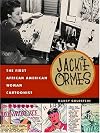
In Jackie Ormes: The First African American Woman Cartoonist, Nancy Goldstein discusses the current dearth of scholarship on non-white comics creators, writing, “Largely missing from many of the scores of histories, retrospectives, and anthologies of comics and cartoons is work that documents and surveys the artistic production of African Americans” (pg. 2). Her work demonstrates how Jackie Ormes used the medium of newspaper comics to tell entertaining stories and debate social issues show more relevant to her readers. In addition to tackling issues including restrictive covenants, environmental pollution’s affects on the urban poor, and lynching, Goldstein argues, “Especially remarkable is the extent to which Ormes in Patty-Jo ’n’ Ginger boldly critiques American foreign and domestic policy during the cold war years,” including HUAC (pg. 4). Goldstein continues, “Regardless of their subject, many of Ormes’s cartoons and comics served to advance the cause of racial uplift, important to the [Pittsburgh] Courier’s editors and columnists, community leaders, and other African Americans” (pg. 4). Looking ahead to future scholarship, Goldstein writes, “An encyclopedic study of African American cartoonists needs to be undertaken. As the only black woman cartoonist of the time, Jackie Ormes seems an exceptionally fitting subject with whom to begin that effort” (pg. 5).
Linking Ormes’s art to the Chicago Renaissance of the Great Depression, Goldstein writes, “The topics that she chose for her cartoons reveal that Ormes had much in common with others who were using their art to address the many obstacles facing African Americans” (pg. 25). Ormes’s later political activism in the 1940s and 1950s brought her to the attention of the FBI, as many of the civil rights causes she supported were also supported by the Communist Party. According to Goldstein, Ormes’s “complete [FBI] dossier stands at 287 pages, surpassing baseball star Jackie Robinson’s 131-page brief, but it is considerably outstripped by Eleanor Roosevelt’s 3,371-page FBI file” (pg. 30). Goldstein continues, “In spite of the possibility that the FBI might use her art against her, and at considerable risk to her privacy, Ormes continued to express her outrage at foreign and domestic policy, racism, and class bigotry. Had the FBI scrutinized the cartoons, their strongly polemical messages alone may have spurred investigation” (pg. 31). As to the manner in which Ormes used her characters as extensions of herself, Goldstein writes, “Her [character Patty-Jo’s] comments, humor, and opinions are decidedly Ormes’s, expounding, for instance, on taxes, labor strikes, McCarthyism, and the vagaries of abstract art, as well as fashions and relations between the sexes” (pg. 40).
Discussing the black press, Goldstein writes, “Cartoons added wit and humor to the colorful mix of the black press in the middle of the twentieth century. But beyond their entertainment value, comics often carried messages of protest, satirizing unjust laws and social norms in ways that at times would have been risky for writers to take on in print” (pg. 54). Goldstein continues, “Comics in the black newspapers were remarkable in their energy, skill, timeliness, and original points of view that were conveyed by every character in the series – whether cowboy, detective, space invader, hero, villain, funny kid, or glamour girl” (pg. 61). In terms of content, Goldstein describes Ormes’s character Ginger, “She remains safely within the erotic boundaries of the time: desirable but never provocative, a charmer but not a seductress, viewed partly unclothed, yes, but only in private spaces like her dressing room or when accidentally slipping on Patty-Jo’s misplaced roller skate, with her skirt flying above her shapely legs. When she gazes directly at the viewer, her look is one of surprise at Patty-Jo’s words, never the sexy come-hither glances of other pinups” (pg. 83). Beyond the unique editorial space that Ormes found for mild sexuality in comparison to more mainstream (read: white) comic strips, Ormes’s use of herself as a model also offered a form of agency. In terms of dialogue, Goldstein writes, “Today some of Patty-Jo’s ongoing complaints and attacks on the status quo would likely be found on a newspaper’s editorial pages. She railed against racism, against restrictions on free speech, and against the confining nature of popular ads, fashions, or styles” (pg. 85).
Discussing the preservation of newspaper comics, Goldstein writes, “Original copies of the Courier’s comic section are nearly impossible to find today. In spite of the good intentions of our nation’s libraries, they must take the blame for many comics that were destroyed, including hard copies of Torchy in Heartbeats missing from the more than two hundred strips that Ormes drew during its four-year lifetime” (pg. 132). Part of this was due to a lack of space and the prioritization of material for microfilming. Goldstein turns to Ormes’s content, writing, “Ormes’s 1953-54 series introduces something entirely new to American comic strips, when Torchy tackles environmental racism… It is this activist story line with which Ormes is most frequently identified in anthologies and encyclopedias today” (pg. 137). In this way, she brought attention to the condition of south side Chicago neighborhoods where affluent communities dumped their waste in neighborhoods that were primarily home to people of color.
Goldstein concludes that Ormes’s “messages of strength, resourcefulness, and humor communicated strategies for people of color in their pursuit of the American dream. When the political associations that nourished Ormes’s opinions became risky – and no doubt unpopular with some people – her strength of character helped her remain steadfast in her activism and hold close her friendships” (pg. 180). Goldstein further cautions that a great deal of progress remains to happen, for while cartoonists like Ormes and others have recently gained scholarly attention, the field remains white-dominated and scholarship focusing on black cartoonists is still lacking. Goldstein uses this book for her own activism, “to call for old African American newspapers with comic strips and cartoons or original art to be offered to the Cartoon Research Library,” the Comic Art Collection at the Michigan State University Library, or the Center for Research Libraries in Chicago (pg. 181). show less
Linking Ormes’s art to the Chicago Renaissance of the Great Depression, Goldstein writes, “The topics that she chose for her cartoons reveal that Ormes had much in common with others who were using their art to address the many obstacles facing African Americans” (pg. 25). Ormes’s later political activism in the 1940s and 1950s brought her to the attention of the FBI, as many of the civil rights causes she supported were also supported by the Communist Party. According to Goldstein, Ormes’s “complete [FBI] dossier stands at 287 pages, surpassing baseball star Jackie Robinson’s 131-page brief, but it is considerably outstripped by Eleanor Roosevelt’s 3,371-page FBI file” (pg. 30). Goldstein continues, “In spite of the possibility that the FBI might use her art against her, and at considerable risk to her privacy, Ormes continued to express her outrage at foreign and domestic policy, racism, and class bigotry. Had the FBI scrutinized the cartoons, their strongly polemical messages alone may have spurred investigation” (pg. 31). As to the manner in which Ormes used her characters as extensions of herself, Goldstein writes, “Her [character Patty-Jo’s] comments, humor, and opinions are decidedly Ormes’s, expounding, for instance, on taxes, labor strikes, McCarthyism, and the vagaries of abstract art, as well as fashions and relations between the sexes” (pg. 40).
Discussing the black press, Goldstein writes, “Cartoons added wit and humor to the colorful mix of the black press in the middle of the twentieth century. But beyond their entertainment value, comics often carried messages of protest, satirizing unjust laws and social norms in ways that at times would have been risky for writers to take on in print” (pg. 54). Goldstein continues, “Comics in the black newspapers were remarkable in their energy, skill, timeliness, and original points of view that were conveyed by every character in the series – whether cowboy, detective, space invader, hero, villain, funny kid, or glamour girl” (pg. 61). In terms of content, Goldstein describes Ormes’s character Ginger, “She remains safely within the erotic boundaries of the time: desirable but never provocative, a charmer but not a seductress, viewed partly unclothed, yes, but only in private spaces like her dressing room or when accidentally slipping on Patty-Jo’s misplaced roller skate, with her skirt flying above her shapely legs. When she gazes directly at the viewer, her look is one of surprise at Patty-Jo’s words, never the sexy come-hither glances of other pinups” (pg. 83). Beyond the unique editorial space that Ormes found for mild sexuality in comparison to more mainstream (read: white) comic strips, Ormes’s use of herself as a model also offered a form of agency. In terms of dialogue, Goldstein writes, “Today some of Patty-Jo’s ongoing complaints and attacks on the status quo would likely be found on a newspaper’s editorial pages. She railed against racism, against restrictions on free speech, and against the confining nature of popular ads, fashions, or styles” (pg. 85).
Discussing the preservation of newspaper comics, Goldstein writes, “Original copies of the Courier’s comic section are nearly impossible to find today. In spite of the good intentions of our nation’s libraries, they must take the blame for many comics that were destroyed, including hard copies of Torchy in Heartbeats missing from the more than two hundred strips that Ormes drew during its four-year lifetime” (pg. 132). Part of this was due to a lack of space and the prioritization of material for microfilming. Goldstein turns to Ormes’s content, writing, “Ormes’s 1953-54 series introduces something entirely new to American comic strips, when Torchy tackles environmental racism… It is this activist story line with which Ormes is most frequently identified in anthologies and encyclopedias today” (pg. 137). In this way, she brought attention to the condition of south side Chicago neighborhoods where affluent communities dumped their waste in neighborhoods that were primarily home to people of color.
Goldstein concludes that Ormes’s “messages of strength, resourcefulness, and humor communicated strategies for people of color in their pursuit of the American dream. When the political associations that nourished Ormes’s opinions became risky – and no doubt unpopular with some people – her strength of character helped her remain steadfast in her activism and hold close her friendships” (pg. 180). Goldstein further cautions that a great deal of progress remains to happen, for while cartoonists like Ormes and others have recently gained scholarly attention, the field remains white-dominated and scholarship focusing on black cartoonists is still lacking. Goldstein uses this book for her own activism, “to call for old African American newspapers with comic strips and cartoons or original art to be offered to the Cartoon Research Library,” the Comic Art Collection at the Michigan State University Library, or the Center for Research Libraries in Chicago (pg. 181). show less
While it’s not unusual that I had never heard of Jackie Ormes, it is unfortunate. I have always been interested in the early days of comic art and have read many histories of comic books and cartooning without coming across her name.
Why is Jackie Ormes so important? Not only was she an entertaining African-American cartoonist, but she was also an important contributor to the American civil rights movement by making sure her voice was heard in the best way she knew how. She was never afraid show more to confront prejudice and racist bigotry in her strips, but remained entertaining while she did it. Her work at different times appeared in the Chicago Defender and, later, the Pittsburgh Courier, a paper that had regional editions and delivered news, opinion and Jackie’s cartoons to the African American family from coast to coast.
In 1945 she began what is arguably her best, and certainly most political work, Patty-Jo ‘n’ Ginger. The precocious and politically wise Patty-Jo was able to speak the truth as honestly as perhaps only Boondocks and Doonsbury have mastered today, and certainly in a much more volatile era. The single panel cartoon “expounding on taxes, labor strikes, McCarthyism, and the vagaries of abstract art, as well as fashions and relations between the sexes” was an outlet for Ormes’ frontline political voice, leading eventually to her being investigated by the FBI during the McCarthy Inquisition.
Jackie Ormes was always interested in fashion and in 1950 she created Torchy in Heartbeats, a multi-paneled feature that ran for four years of adventure and romance and included, as a bonus, fashion paper dolls called Torchy’s Togs.
Nancy Goldstein’s book is very well researched, despite the lack of documents such as personal letters, letters to editors or articles and essays about her cartooning. The book is a pleasure to read and I thoroughly enjoyed learning about the work of Jackie Ormes, the first African American woman cartoonist. show less
Why is Jackie Ormes so important? Not only was she an entertaining African-American cartoonist, but she was also an important contributor to the American civil rights movement by making sure her voice was heard in the best way she knew how. She was never afraid show more to confront prejudice and racist bigotry in her strips, but remained entertaining while she did it. Her work at different times appeared in the Chicago Defender and, later, the Pittsburgh Courier, a paper that had regional editions and delivered news, opinion and Jackie’s cartoons to the African American family from coast to coast.
In 1945 she began what is arguably her best, and certainly most political work, Patty-Jo ‘n’ Ginger. The precocious and politically wise Patty-Jo was able to speak the truth as honestly as perhaps only Boondocks and Doonsbury have mastered today, and certainly in a much more volatile era. The single panel cartoon “expounding on taxes, labor strikes, McCarthyism, and the vagaries of abstract art, as well as fashions and relations between the sexes” was an outlet for Ormes’ frontline political voice, leading eventually to her being investigated by the FBI during the McCarthy Inquisition.
Jackie Ormes was always interested in fashion and in 1950 she created Torchy in Heartbeats, a multi-paneled feature that ran for four years of adventure and romance and included, as a bonus, fashion paper dolls called Torchy’s Togs.
Nancy Goldstein’s book is very well researched, despite the lack of documents such as personal letters, letters to editors or articles and essays about her cartooning. The book is a pleasure to read and I thoroughly enjoyed learning about the work of Jackie Ormes, the first African American woman cartoonist. show less
 This review was written for LibraryThing Early Reviewers.
Nancy Goldstein’s Jackie Ormes: The First African American Woman Cartoonist can be broken down into three sections. It begins with a short biography, placing emphasis on her cartooning career from the late 1930s to the mid 1950s with two of the largest African American newspapers in the United States. It continues with a closer examination of the four comic strips that she created during this time, and finishes with a chapter describing the manufacture of a doll based on her most popular show more cartoon creation, placing this production within the larger history of African American Dolls.
While the short biography provides the readers with an overview of Ormes’s life and career and the necessary context in which to place her artwork, it is hampered, as noted by the author, by a lack of any personal writings or correspondence. (The death of her only child is essentially dealt with in one paragraph ).Despite this lack of depth, the author is still successful in giving the reader a taste of Ormes’ humorous, sparkling and feisty personality although, by the shortness of her biography, one is left with the impression that her life is more inspiring than it is compelling.
The final section, dealing with the creation of the Patty-Jo doll is bound to be of most interest to doll collectors. While some of the asides are a case of “too much information” for the non-initiated, it provides the reader with a useful overview of the problems of marketing an African American Doll and why Ormes’ doll was of such importance.
It is in the lavishly illustrated middle section that Goldstein’s book truly shines. Dozens of cartoon panels, dealing with such subjects as racism, the House Un-American Activities Committe and the Korean war, are reproduced and annotated, placing the often topical humour and allusions in context for the reader. It was also enlightening to read about the differences between cartooning for the smaller African American newspapers and the large mainstream syndicates, and Ormes’ working her fashion interests into her panels was delightful. show less
While the short biography provides the readers with an overview of Ormes’s life and career and the necessary context in which to place her artwork, it is hampered, as noted by the author, by a lack of any personal writings or correspondence. (The death of her only child is essentially dealt with in one paragraph ).Despite this lack of depth, the author is still successful in giving the reader a taste of Ormes’ humorous, sparkling and feisty personality although, by the shortness of her biography, one is left with the impression that her life is more inspiring than it is compelling.
The final section, dealing with the creation of the Patty-Jo doll is bound to be of most interest to doll collectors. While some of the asides are a case of “too much information” for the non-initiated, it provides the reader with a useful overview of the problems of marketing an African American Doll and why Ormes’ doll was of such importance.
It is in the lavishly illustrated middle section that Goldstein’s book truly shines. Dozens of cartoon panels, dealing with such subjects as racism, the House Un-American Activities Committe and the Korean war, are reproduced and annotated, placing the often topical humour and allusions in context for the reader. It was also enlightening to read about the differences between cartooning for the smaller African American newspapers and the large mainstream syndicates, and Ormes’ working her fashion interests into her panels was delightful. show less
This review was written for LibraryThing Early Reviewers.
Mildly interesting, rather too in-depth for me. I don't really care about her childhood, marriages, living arrangements - and about her politics only as they relate to her cartoons. A good display of her work as well. If you really want to know about African-American life in the South and Midwest in the early parts of last century, this is great. Not for me.
This review was written for LibraryThing Early Reviewers.Lists
Awards

You May Also Like
Associated Authors
Statistics
- Works
- 1
- Members
- 96
- Popularity
- #196,088
- Rating
- 3.4
- Reviews
- 16
- ISBNs
- 4
