
David DeSilva
Author of Invitation to the New Testament: Participant Book (A Short-term DISCIPLE Bible Study)
David DeSilva is David deSilva (1). For other authors named David deSilva, see the disambiguation page.
David DeSilva (1) has been aliased into David A. DeSilva.
Works by David DeSilva
Works have been aliased into David A. DeSilva.
Invitation to the New Testament: Participant Book (A Short-term DISCIPLE Bible Study) (2005) 174 copies, 1 review
Associated Works
Works have been aliased into David A. DeSilva.
Tagged
Common Knowledge
There is no Common Knowledge data for this author yet. You can help.
Members
Reviews
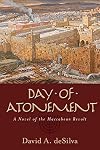
I have not seen many novels set in this time period, let alone this subject; I was thrilled to read this one. The subtitle led me to believe it would be a blow-by-blow description of the Maccabean Revolt itself and aftermath, but it turned out to be the author's speculation on what **could have happened** to bring on this revolt. He tells the stories of two sets of brothers, one priestly, and the other simple metalworkers. One brother of each is more conservative, one more flexible. I was show more enthralled. The author is probably a non-Jew and probably didn't get every detail right, but the importance of the novel was the theme: Jews [or any minority religious group] living in a foreign culture, in this case the Seleucid Empire: how much should they adapt or hold to their laws and traditions?
The conflict between those who want to keep Torah as law of Jerusalem and Hellenizers becomes more and more pointed and serious, with the change of High Priest: from Honiah, the fiercely conservative; Jason, who wants some Hellenization but won't give up the main points of the Torah; finally to Menelaus [appointed through simony] and who permits desecration of the Temple by allowing practice of the foreign Greek and Syrian religions, including animal [including the pig] sacrifices there. In 21st century terms I thought of Political Correctness run amok.
When asked if people can still be "right with God" if they don't offer a Temple sacrifice, one character quotes the sage Ben Sira:
"The person who keeps the Torah makes his offering; the person who heeds the commandments sacrifices an offering of well-being. Return a kindness and you make a grain offering; give alms and you make a thanksgiving offering. Forsake wickedness and you make an atonement offering."
Some Jews accept the situation, others avoid the Temple and worship in secret and still others: Mattathias and his sons foment a rebellion against the draconian laws about their religion. One son, Judah ben Mattathias is told that he will be the hammer in God's hand. One scene involving an old priest and a family was hagiographical. I liked the quotations from the psalms and the Apocrypha [Deuterocanonical Books]. This thoughtful novel brought the era to life. From the List of Characters I was surprised so many actually lived!
Highly recommended. show less
The conflict between those who want to keep Torah as law of Jerusalem and Hellenizers becomes more and more pointed and serious, with the change of High Priest: from Honiah, the fiercely conservative; Jason, who wants some Hellenization but won't give up the main points of the Torah; finally to Menelaus [appointed through simony] and who permits desecration of the Temple by allowing practice of the foreign Greek and Syrian religions, including animal [including the pig] sacrifices there. In 21st century terms I thought of Political Correctness run amok.
When asked if people can still be "right with God" if they don't offer a Temple sacrifice, one character quotes the sage Ben Sira:
"The person who keeps the Torah makes his offering; the person who heeds the commandments sacrifices an offering of well-being. Return a kindness and you make a grain offering; give alms and you make a thanksgiving offering. Forsake wickedness and you make an atonement offering."
Some Jews accept the situation, others avoid the Temple and worship in secret and still others: Mattathias and his sons foment a rebellion against the draconian laws about their religion. One son, Judah ben Mattathias is told that he will be the hammer in God's hand. One scene involving an old priest and a family was hagiographical. I liked the quotations from the psalms and the Apocrypha [Deuterocanonical Books]. This thoughtful novel brought the era to life. From the List of Characters I was surprised so many actually lived!
Highly recommended. show less
 This review was written for LibraryThing Early Reviewers.
I've always had a keen anthropological interest in all thing religious because of the profound impact (both positive and negative) religion has on our society in the past and present. Also, most religions have great stories and I'm a sucker for the well-told tale. The Maccabean Revolt has all the elements of a rousing tale: people oppressed by a cruel dictator, martyrs to the cause, the rise of an underground rebellion with both spiritual leaders and national heroes to lead a guerrilla show more movement, and a final battle where the ragtag rebels defeat the evil overlord and his well-equipped army. There's a reason this story is repeated in various places and times throughout history and saturates our pop culture (think the American Revolution and Star Wars). It appeals to our sense of justice and allows us to think we could be heroes and part of something bigger, grander; that we can take control over our fate and prevail. As much as I enjoy such tales (I won't tell you how many times I've watched Star Wars!), I'm sure I wouldn't want to live them.
I knew the basics of the Maccabean Revolt before I read this book which helps to understand its context. The themes explored by deSilva resonate in today's culture wars. The Jews of Jerusalem wrestle with "What it is to be a Jew" in their rapidly Hellenizing city. The religious element cling to a strict interpretation of their laws. The commercial elements and some power elite see much to be admired in greater ties with other cultures and loosening the laws that forbid such interactions, keeping Jews isolated and without allies or power. Once that loosening is accomplished a zealot "reformer" realizes his dream of absolute power and imposes foreign religions and rites on his fellow Jews, taking personal revenge for his exclusion from power in the past. It's the tragedy of the extremes where neither side will bend or accommodate. The middle way (proposed and practiced by a number of the characters)--leaving religion of all kinds protected and practiced in the private sphere (home and temple) while making the public and commerce inclusive--is rejected by both sides leaving armed conflict as the only solution. (For folks who want a deeper insight into how this is played out in today's world, I highly recommend The Battle for God: A History of Fundamentalism by Karen Armstrong who looks at these movements through time in Judaism, Christianity, and Islam.)
In spite of deSilva's title, this book only covers the lead up to and the initial opening skirmishes in the Revolt. He tells his story mainly through the eyes of two families. Two powerful brothers who dominate the priesthood: Honiah an unbending conservative and Jason (born Yeshua) a progressive "modernizer," and their many adherents, play out the political background giving us insight in the workings of power through government, religion, and commerce. The other is a humble family of silversmiths--three brothers, their wives, and mother--dealing with the changes in their culture. They give us insight into the effects of the decisions of the leaders on the lives of everyday people.
I found the plot complicated, the story fascinating, and the history meticulous--tons of detail on clothes, food, architecture, rituals, etc. However I found the book slow moving until the last 50-75 pages. If it wasn't for my OCD, I'm not sure I would have finished it, but the ending paid off. My major complaint about the book as literature/entertainment is that I found the characters generally flat. They kept me at a distance. I read about how they felt and but didn't feel their anguish, joy, disappointment, etc., thus my three star rating. I liked it, but more for the history than the story. Which is a shame, because the Maccabean Revolt is a great story.
NOTE: I received a free copy from the publisher in return for an honest review. show less
I knew the basics of the Maccabean Revolt before I read this book which helps to understand its context. The themes explored by deSilva resonate in today's culture wars. The Jews of Jerusalem wrestle with "What it is to be a Jew" in their rapidly Hellenizing city. The religious element cling to a strict interpretation of their laws. The commercial elements and some power elite see much to be admired in greater ties with other cultures and loosening the laws that forbid such interactions, keeping Jews isolated and without allies or power. Once that loosening is accomplished a zealot "reformer" realizes his dream of absolute power and imposes foreign religions and rites on his fellow Jews, taking personal revenge for his exclusion from power in the past. It's the tragedy of the extremes where neither side will bend or accommodate. The middle way (proposed and practiced by a number of the characters)--leaving religion of all kinds protected and practiced in the private sphere (home and temple) while making the public and commerce inclusive--is rejected by both sides leaving armed conflict as the only solution. (For folks who want a deeper insight into how this is played out in today's world, I highly recommend The Battle for God: A History of Fundamentalism by Karen Armstrong who looks at these movements through time in Judaism, Christianity, and Islam.)
In spite of deSilva's title, this book only covers the lead up to and the initial opening skirmishes in the Revolt. He tells his story mainly through the eyes of two families. Two powerful brothers who dominate the priesthood: Honiah an unbending conservative and Jason (born Yeshua) a progressive "modernizer," and their many adherents, play out the political background giving us insight in the workings of power through government, religion, and commerce. The other is a humble family of silversmiths--three brothers, their wives, and mother--dealing with the changes in their culture. They give us insight into the effects of the decisions of the leaders on the lives of everyday people.
I found the plot complicated, the story fascinating, and the history meticulous--tons of detail on clothes, food, architecture, rituals, etc. However I found the book slow moving until the last 50-75 pages. If it wasn't for my OCD, I'm not sure I would have finished it, but the ending paid off. My major complaint about the book as literature/entertainment is that I found the characters generally flat. They kept me at a distance. I read about how they felt and but didn't feel their anguish, joy, disappointment, etc., thus my three star rating. I liked it, but more for the history than the story. Which is a shame, because the Maccabean Revolt is a great story.
NOTE: I received a free copy from the publisher in return for an honest review. show less
This review was written for LibraryThing Early Reviewers.Daniel deSilva’s debut novel, Day of Atonement, takes place in the time between the Testaments. A seminary professor, deSilva’s subject matter, the Maccabean uprising, is not well known to many Christians particularly, Protestants. He drew upon the Apocrypha for his inspiration and produced a novel that those interested in Biblical history will find interesting. It also is a book that will make you think, causing the reader to draw a parallel between the Hellenized Jewish faith of the show more the last centuries before the birth of Christ and the modern day Christian church.
DeSilva uses both historical and fictional characters to explore the political and religious culture of Judea in the time of Seleucid domination of the region. Greek culture is seen by many intellectuals and society elites in Jerusalem as the means to advance the nation of Israel. Backward religious rites, adherence to outmoded laws and religious texts relegated to mythical stories are sneered at by those who know what is best for the nation set aside by God. Compromise and assimilation lead to a watered down and polluted version of true faith.
While the historical context of the novel is interesting, I found myself thinking more and more about the Christian church in western society. There is much to think about as the church begins to look more and more like the culture surrounding it. The narrative is a bit slow, but the research is solid, and I believe fans of strict history will like this book. Interesting and little known events combine with eternal truths to create a novel for those who like to be challenged by their fiction.
Audience: adults.
To purchase a copy of this book, click HERE.
(Thanks to Kregel for a review copy. All opinions expressed are mine alone.) show less
DeSilva uses both historical and fictional characters to explore the political and religious culture of Judea in the time of Seleucid domination of the region. Greek culture is seen by many intellectuals and society elites in Jerusalem as the means to advance the nation of Israel. Backward religious rites, adherence to outmoded laws and religious texts relegated to mythical stories are sneered at by those who know what is best for the nation set aside by God. Compromise and assimilation lead to a watered down and polluted version of true faith.
While the historical context of the novel is interesting, I found myself thinking more and more about the Christian church in western society. There is much to think about as the church begins to look more and more like the culture surrounding it. The narrative is a bit slow, but the research is solid, and I believe fans of strict history will like this book. Interesting and little known events combine with eternal truths to create a novel for those who like to be challenged by their fiction.
Audience: adults.
To purchase a copy of this book, click HERE.
(Thanks to Kregel for a review copy. All opinions expressed are mine alone.) show less
Day of Atonement is a well written, clearly well-researched piece of historical fiction on the subject of the Maccabean Revolt.
Jerusalem is occupied by the Greeks. Some want to accept all that the Greeks have to offer - education, sports, architecture, commerce - and in exchange adopt a more relaxed 'live and let live' attitude to people of all faiths. Others are fiercely opposed to the Hellenization of the city at the expense of their relationship with G-d and the laws of the Torah. The show more story follows the lives of people on both sides as tensions and anger lead to all-out war.
I liked this book. I thought the emphasis was on the events leading up to the revolt rather than the revolt itself. There was a lot of attention paid to the details of clothing, the food, the homes, the Temple, which I liked. Unfortunately, I was disappointed in the character development. I sometimes didn't know who was who and had to go back in the book to remind myself. In the end I didn't really care about any of them.
This book is worth a read - but perhaps not necessarily a 'keeper'. show less
Jerusalem is occupied by the Greeks. Some want to accept all that the Greeks have to offer - education, sports, architecture, commerce - and in exchange adopt a more relaxed 'live and let live' attitude to people of all faiths. Others are fiercely opposed to the Hellenization of the city at the expense of their relationship with G-d and the laws of the Torah. The show more story follows the lives of people on both sides as tensions and anger lead to all-out war.
I liked this book. I thought the emphasis was on the events leading up to the revolt rather than the revolt itself. There was a lot of attention paid to the details of clothing, the food, the homes, the Temple, which I liked. Unfortunately, I was disappointed in the character development. I sometimes didn't know who was who and had to go back in the book to remind myself. In the end I didn't really care about any of them.
This book is worth a read - but perhaps not necessarily a 'keeper'. show less
This review was written for LibraryThing Early Reviewers.Statistics
- Works
- 4
- Also by
- 1
- Members
- 240
- Popularity
- #94,568
- Rating
- 4.0
- Reviews
- 13
- ISBNs
- 28
