
Eliza Robertson (1)
Author of Demi-Gods
For other authors named Eliza Robertson, see the disambiguation page.
About the Author
Image credit: Eliza Robertson by Katrina Afonso
Works by Eliza Robertson
Tagged
Common Knowledge
- Other names
- Robertson, Eliza K.
- Gender
- female
- Education
- University of Victoria, British Columbia, Canada (Political Science and Creative Writing)
University of East Anglia (MA|Creative Writing) - Nationality
- Canada
- Birthplace
- Vancouver, British Columbia, Canada
- Places of residence
- Montréal, Québec, Canada
- Map Location
- Canada
Members
Reviews
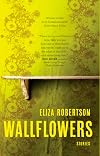
Eliza Robertson’s story collection, Wallflowers, strives for startling effect through eccentric story structures and narrative experimentation. The book includes 17 pieces, many of which chronicle lives of missed opportunity and emotional isolation. A lot of the people we meet in these pages are broken, emotionally and/or physically. “Ship’s Log” is exactly what the title says: a story in the form of logbook entries. However, these entries are composed by a boy imagining that the show more hole he is digging will aid in his escape from an untenable situation. In “Slimebank Taxonomy” Gin, suffering from postpartum depression, wants nothing to do with her new baby and finds solace collecting animal corpses from a tailings pond. “We Walked on Water,” narrated by the sister of the dead girl, recounts a tragic occurrence at a competitive sporting event. And in the title story, “Who Will Water the Wallflowers?” a teenage girl house-sitting for a neighbour finds herself facing a flash flood situation with nothing to rely on but her own wits. Robertson’s sentences have polish and sheen to spare. Her prose is so precisely composed that it can sometimes seem sculpted rather than written. The stories shimmer with vibrant imagery and surprising but apt metaphors. For all their technical virtuosity however, what often seems to be missing (“We Walked on Water” is a notable exception) is a way for the reader to burrow into the characters’ lives and forge a meaningful connection with them. Many of Robertson’s people observe the world from within the bubble of an exceedingly bizarre perspective (see “Ship’s Log”). Many of them behave oddly as well, but because we are held at a distance from their inner lives, their odd behaviour does not arouse much curiosity or sympathy—it’s just odd. Some stories come across as a challenge the author set herself, as in “Missing Tiger, Camels Found Alive,” based on an incident that occurred a few years ago in Quebec involving the theft of zoo animals, which never really comes alive. “Where Have You Fallen, Have You Fallen?” which effectively describes a budding attraction between a young man and woman, is written in eight numbered sections, but these are arranged in reverse chronological order, from eight to one, so that as the story ends the two are yet to meet. The story is clever and succeeds in nudging the reader out of his comfort zone, but upon reflection you can’t help but wonder what the author has gained by so brazenly upending conventional structures, other than to appear clever. In the end, the impression left by Wallflowers is one of technique overwhelming story: that the manner of the telling takes precedence over what is being told. We finish the book dazzled by the author’s technical brilliance, but the stories themselves fade quickly from the memory. It’s clear however, that Eliza Robertson is a fearless and exceptionally talented writer. Wallflowers shows huge promise. Perhaps her next book will deliver on that promise. show less
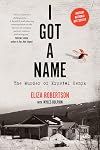
In 1992, Krystal Senyk was murdered in Carcross, Yukon. Ronald Bax was charged with her murder, but had disappeared after the shooting and has never been found. Thirty years later, author Eliza Robertson has written this book about her search for Ronald Bax.
This book is well written and researched. The author always makes clear what the evidence supports and where there is ambiguity and speculation or "feelings". In this way, she can give a nuanced picture of events without distorting the show more story.
The book looks at Krystal's life and at the impact of her murder on her family. It looks at her relationship with Colleen, who was trying to leave an abusive relationship with Ronald Bax. Krystal was supporting her friend, and became a target for Bax's anger and violence. It examines the RCMP's actions/inactions and goes deeper into the many cases of women, especially Indigenous women, who are not believed or protected by the legal system.
At this time, Ronald Bax remains missing; some believe he died shortly after Krystal's murder, perhaps by suicide. This book keeps Krystal's memory alive and is a good exploration of the way murders are investigated in Canada.
The book ends with two pages Krystal herself wrote, which is very moving. show less
This book is well written and researched. The author always makes clear what the evidence supports and where there is ambiguity and speculation or "feelings". In this way, she can give a nuanced picture of events without distorting the show more story.
The book looks at Krystal's life and at the impact of her murder on her family. It looks at her relationship with Colleen, who was trying to leave an abusive relationship with Ronald Bax. Krystal was supporting her friend, and became a target for Bax's anger and violence. It examines the RCMP's actions/inactions and goes deeper into the many cases of women, especially Indigenous women, who are not believed or protected by the legal system.
At this time, Ronald Bax remains missing; some believe he died shortly after Krystal's murder, perhaps by suicide. This book keeps Krystal's memory alive and is a good exploration of the way murders are investigated in Canada.
The book ends with two pages Krystal herself wrote, which is very moving. show less
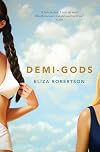
Demi-Gods by Eliza Robertson is a magnificent, little gem of a book that will read like a tale you would have picked up in English class.
Seriously, Eliza's writing feels like it should be in a hall of fame somewhere. The way she crafted the story was marvelous and I'm thoroughly impressed by her skill. And this was only a debut?! Imagine how much better she's going to get.
But, despite it being this masterpiece of a book, it was honestly not for me. I didn't enjoy this book one bit. I wanted show more to DNF it, but I also wanted to finish it because Eliza's writing deserved the respect of a finished read. It wasn't the writing style or the tone, it was just the plot that had me feeling kinda 'meh'. I felt like I didn't know where this book was going and by the end I still didn't feel like it had a concrete beginning, middle and end. Despite it being a contemporary beauty, it just felt like a story not a novel.
There's lots of strange familial/non-familial incest in this book. Lots of hookups with the new boyfriend's kids and strange ties throughout the story. It's an unsettling story, but Eliza makes it intriguing. I would say this book is not for the faint of heart, easily.
We watch Willa's life and family dynamics change as she experiments with sex and emotions, all in the 50s. It's dark, unsettling, bizarre, and abusive at times. The entire family turns out to have issues and you watch how people influence each other and take on each other's traits.
My biggest con was the lack of quotation marks in my copy. I couldn't tell what was supposed to be dialogue every once and a while, so I'd have to go back and re-read sections over and over, which just distracted me more than anything.
If I could have my wish, I would want this examined or explained to me. Why was this book made this way? What are the themes? I want an English Professor to break it down because I think this is the perfect book to be analyzed. There's something there that I'm not seeing. Oh, how I miss those high school days with English essays... just me?
I would say this book is in a niche market. You'll either love it or you won't. I can see why so many people love it, but it's just not for me. I can totally appreciate it and I think Eliza deserves all the cred, but it's just not a book I'll pick up again. All the love!
One out of five stars. show less
Seriously, Eliza's writing feels like it should be in a hall of fame somewhere. The way she crafted the story was marvelous and I'm thoroughly impressed by her skill. And this was only a debut?! Imagine how much better she's going to get.
But, despite it being this masterpiece of a book, it was honestly not for me. I didn't enjoy this book one bit. I wanted show more to DNF it, but I also wanted to finish it because Eliza's writing deserved the respect of a finished read. It wasn't the writing style or the tone, it was just the plot that had me feeling kinda 'meh'. I felt like I didn't know where this book was going and by the end I still didn't feel like it had a concrete beginning, middle and end. Despite it being a contemporary beauty, it just felt like a story not a novel.
There's lots of strange familial/non-familial incest in this book. Lots of hookups with the new boyfriend's kids and strange ties throughout the story. It's an unsettling story, but Eliza makes it intriguing. I would say this book is not for the faint of heart, easily.
We watch Willa's life and family dynamics change as she experiments with sex and emotions, all in the 50s. It's dark, unsettling, bizarre, and abusive at times. The entire family turns out to have issues and you watch how people influence each other and take on each other's traits.
My biggest con was the lack of quotation marks in my copy. I couldn't tell what was supposed to be dialogue every once and a while, so I'd have to go back and re-read sections over and over, which just distracted me more than anything.
If I could have my wish, I would want this examined or explained to me. Why was this book made this way? What are the themes? I want an English Professor to break it down because I think this is the perfect book to be analyzed. There's something there that I'm not seeing. Oh, how I miss those high school days with English essays... just me?
I would say this book is in a niche market. You'll either love it or you won't. I can see why so many people love it, but it's just not for me. I can totally appreciate it and I think Eliza deserves all the cred, but it's just not a book I'll pick up again. All the love!
One out of five stars. show less
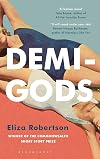
Summertime in the early 1950s. Willa and her older sister Joan would like to have a relaxing time at their summer home together with their mom. But the mother has a new lover, Eugene, and to the girls‘ surprise, Eugene has invited his two sons to spend the summer with them. Kenneth and Patrick are slightly older than the girls immediately attract their attention. No, they definitely are not like brothers and sisters, Joan and Kenneth quickly fall for each other. For Willa and Patrick show more things are not that easy. Over the next years, they regularly meet and between Willa and Patrick a strange connection is formed. On the one hand, the boy can arouse feelings in her, but on the other, what he is doing to her repels her and she senses that his behaviour is far from being normal and acceptable. But what is there she can to about it? It will take years until she can free herself.
“Demi-God” – according to the Merriam-Webster definition, it is a mythological being with more power than a mortal but less than a god or a person so outstanding as to seem to approach the divine. For all female members of the family, the male counterparts are somehow demi-gods, at least in so far as they cannot refrain from their attraction. The mother is charmed by Eugene, Joan falls for Kenneth and also Willa has a special liking for Patrick. It is not quite clear what makes those three that outstanding, but their appeal is obvious. They can exert power over the women in different ways, but it is only Patrick how openly abuses this.
Before coming to this, what I liked especially about the novel was the atmosphere. You can sense immediately that Eliza Robertson is great at creating certain moods and you actually can feel this carefree time of being young during summer holidays when the days seem endless, when the sun is shining and when there are no worries and fears. I also appreciated her characters, first of all the mother who is neither completely stereotypical but nevertheless clearly represents a certain kind of woman of her time. In the focus of the novel are the girls and their relationship. It is not always easy to be sisters, at times they can confide in each other, at others they can’t. Yet, there is something like unconditional love between them, if one needs the other, she can surely count on her.
In this nice and loving ambiance now enters the evil that can be found in human beings. To name it openly, the novel is about sexual abuse, about menacing and exerting power over a weaker person. Willa is first too young, then unsure of how to react and how to qualify what happens to her. It is not the all bad and awful situation – this is what makes the novel especially impressive. It only happens at single instances, partly, she isn’t even sure if she did actually refuse it or even contributed to it happening. This makes it even more awful, because the girl is left alone with her feelings and worries. She plays normal and hides what has happened. It does not take much to imagine that there might be millions of girls out there suffering from the same abuse and feeling helpless and powerless.
Thus, the novel takes up a very serious topic and hopefully some readers might recognize that what Willa is going through is far from acceptable and can find a way of seeking help if they are in need. show less
“Demi-God” – according to the Merriam-Webster definition, it is a mythological being with more power than a mortal but less than a god or a person so outstanding as to seem to approach the divine. For all female members of the family, the male counterparts are somehow demi-gods, at least in so far as they cannot refrain from their attraction. The mother is charmed by Eugene, Joan falls for Kenneth and also Willa has a special liking for Patrick. It is not quite clear what makes those three that outstanding, but their appeal is obvious. They can exert power over the women in different ways, but it is only Patrick how openly abuses this.
Before coming to this, what I liked especially about the novel was the atmosphere. You can sense immediately that Eliza Robertson is great at creating certain moods and you actually can feel this carefree time of being young during summer holidays when the days seem endless, when the sun is shining and when there are no worries and fears. I also appreciated her characters, first of all the mother who is neither completely stereotypical but nevertheless clearly represents a certain kind of woman of her time. In the focus of the novel are the girls and their relationship. It is not always easy to be sisters, at times they can confide in each other, at others they can’t. Yet, there is something like unconditional love between them, if one needs the other, she can surely count on her.
In this nice and loving ambiance now enters the evil that can be found in human beings. To name it openly, the novel is about sexual abuse, about menacing and exerting power over a weaker person. Willa is first too young, then unsure of how to react and how to qualify what happens to her. It is not the all bad and awful situation – this is what makes the novel especially impressive. It only happens at single instances, partly, she isn’t even sure if she did actually refuse it or even contributed to it happening. This makes it even more awful, because the girl is left alone with her feelings and worries. She plays normal and hides what has happened. It does not take much to imagine that there might be millions of girls out there suffering from the same abuse and feeling helpless and powerless.
Thus, the novel takes up a very serious topic and hopefully some readers might recognize that what Willa is going through is far from acceptable and can find a way of seeking help if they are in need. show less
Lists
Awards


Statistics
- Works
- 5
- Members
- 137
- Popularity
- #149,083
- Rating
- 2.8
- Reviews
- 6
- ISBNs
- 37