
Alexander Dan Vilhjálmsson
Author of Shadows of the Short Days
About the Author
Image credit: Alexander Dan Vilhjálmsson
Series
Works by Alexander Dan Vilhjálmsson
Associated Works
Tagged
Common Knowledge
- Birthdate
- 1988
- Gender
- male
- Education
- University of Iceland (Creative Writing)
Middlesex University (Creative & Media Studies exchange student) - Occupations
- novelist
lyricist - Agent
- Jennifer Jackson (Donald Maass Literary Agency)
- Nationality
- Iceland
- Places of residence
- Reykjavík, Iceland
- Associated Place (for map)
- Reykjavík, Iceland
Members
Reviews
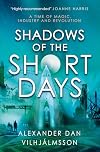
Hrímland was first written back in 2014 in Icelandic, translated and then published by Gollancz in the U.K. in 2019, then reached U.S. shores through Titan Books in paperback in October 2020. There is a brilliant piece on John Scalzi's The Big Idea blog about Alexander Dan Vilhjálmsson’s process of translating his own work, exploring the use of language, and deciding what to keep or not along the way. I was delighted at the introduction and glossary that presented me with the proper show more pronunciations and definitions I would need for some words that were not familiar to me as a U.S. reader. By the second chapter, I was barely having to glance back to make sure I was getting something reasonably right. The word choices helped draw me into the fantastical world of Hrímland. The back of the book mentions Shadows of the Short Days is for fans of China Miéville and Neil Gaiman. I would add to that alchemical blend a touch of Elizabeth Hand and dash of Charles DeLint.
Hrímland is an introduction to an Iceland inhabited by pure humans, huldufólk (extradimensional exiles), huldumanneskja (those born of human and huldufólk parents), náskári (the ravenfolk), marbendill (aquatic folk), and the four landvættir (the spirits of the land). We are introduced to Sæmundur who has been expelled from the Svartiskóli, the School of Supernatural Sciences and driven by an obsessive need for knowledge and understanding of terrifying, undefinable, spoken magic called galdur. Its companion is seiður, a more orderly, land-based, sorcerous energy (seiðmagn) that can be harnessed by industrial means. We also meet Garún, a mixed-breed artist of huldufólk and human parents with a foot in both worlds and part of neither. She is on a singular quest for belonging by destroying the Kalmar Commonwealth’s hold over her homeland and guided at times by her demon-powered audioskull that plays changeable music through her headphones to alert her of danger.
As our two obsessed protagonists continue on their separate journeys, we are introduced to a Reykjavík where everything is a potential threat under an authoritarian regime that is deeply intelligent, crafty, spies on its own citizens, and has no qualms about using violence to put down protests. At their disposal is not only a looming airship and a prison from which none escape, but also disturbing seiðskratti (wielders of seiðmagn) in red robes and plague doctor masks who call to mind the worst imaginings of inquisitional torturers. Sæmundur and Garún continue to spiral into ever deeper shadows and riskier situations in their personal quests from venturing into the Forgotten Downtown to the depths of Svartiskóli’s forbidden magical library. The protest scenes and dystopian atmosphere are very timely as our world sees a rise in authoritarianism and as one character points out, “They will kill us for demanding civil rights and rewrite history to make us sound like hooligans.”
At turns deeply satisfying, rebellious, and disturbing. Vilhjálmsson plays with music, sound, and silence as a part of his rich worldbuilding. At one point he calls this out directly: “As a composer [Sæmundur and Vilhjálmsson both] break up his work with the absence of sound, he used the silences as well to draw in the power from beyond, lying behind the entirety of creation.” If as Vilhjálmsson writes, “No space is as infinite as the gulf between the mind of a living being and the reality outside it,” he has done an excellent job at creating a bridge between one mind and another to draw the reader into his astonishing first novel.
As we get toward the end of this Icelandic opera, we are treated to a carefully orchestrated discordant tone. Where other authors might linger over action in Reykjavík at a particularly dramatic moment, Vilhjálmsson instead pulls us headlong into the obsessive nature of the protagonists with shorter passages switching between the two that rushes the reader into the explosive crescendo of a conclusion that should not be told here, only experienced. show less
Hrímland is an introduction to an Iceland inhabited by pure humans, huldufólk (extradimensional exiles), huldumanneskja (those born of human and huldufólk parents), náskári (the ravenfolk), marbendill (aquatic folk), and the four landvættir (the spirits of the land). We are introduced to Sæmundur who has been expelled from the Svartiskóli, the School of Supernatural Sciences and driven by an obsessive need for knowledge and understanding of terrifying, undefinable, spoken magic called galdur. Its companion is seiður, a more orderly, land-based, sorcerous energy (seiðmagn) that can be harnessed by industrial means. We also meet Garún, a mixed-breed artist of huldufólk and human parents with a foot in both worlds and part of neither. She is on a singular quest for belonging by destroying the Kalmar Commonwealth’s hold over her homeland and guided at times by her demon-powered audioskull that plays changeable music through her headphones to alert her of danger.
As our two obsessed protagonists continue on their separate journeys, we are introduced to a Reykjavík where everything is a potential threat under an authoritarian regime that is deeply intelligent, crafty, spies on its own citizens, and has no qualms about using violence to put down protests. At their disposal is not only a looming airship and a prison from which none escape, but also disturbing seiðskratti (wielders of seiðmagn) in red robes and plague doctor masks who call to mind the worst imaginings of inquisitional torturers. Sæmundur and Garún continue to spiral into ever deeper shadows and riskier situations in their personal quests from venturing into the Forgotten Downtown to the depths of Svartiskóli’s forbidden magical library. The protest scenes and dystopian atmosphere are very timely as our world sees a rise in authoritarianism and as one character points out, “They will kill us for demanding civil rights and rewrite history to make us sound like hooligans.”
At turns deeply satisfying, rebellious, and disturbing. Vilhjálmsson plays with music, sound, and silence as a part of his rich worldbuilding. At one point he calls this out directly: “As a composer [Sæmundur and Vilhjálmsson both] break up his work with the absence of sound, he used the silences as well to draw in the power from beyond, lying behind the entirety of creation.” If as Vilhjálmsson writes, “No space is as infinite as the gulf between the mind of a living being and the reality outside it,” he has done an excellent job at creating a bridge between one mind and another to draw the reader into his astonishing first novel.
As we get toward the end of this Icelandic opera, we are treated to a carefully orchestrated discordant tone. Where other authors might linger over action in Reykjavík at a particularly dramatic moment, Vilhjálmsson instead pulls us headlong into the obsessive nature of the protagonists with shorter passages switching between the two that rushes the reader into the explosive crescendo of a conclusion that should not be told here, only experienced. show less
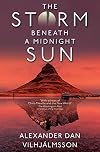
The Storm Beneath the Sun is more likable and less ambitious than the first book in the series, and much of the charm is taken off, along with the flaws.
The story focuses on three main characters, with occasionally chapters from other points of view. Kari is a royal sorcerer, a specialist in biothamautury who joins an archeological dig bent on uncovering and harnessing the power of a dead god. Elka is an addict trying to get clean, moving to a offshore island and working in a fish processing show more plant while haunted by her past. Solvi is Elka's 10 year-old son, an artist and fabulist who wants to protect his mother.
The plots intersect around an ancient plan by a vanished pre-human civilization to birth something monstrous out of the moon. Kari realizes that the royal officials running the dig have secret ambitions that mean disaster, and defects to a terrorist group. Elka is brought into the Church of the Deep, a unique insular religion that is a front for the same ancient plan. And Solvi is the only person who seems to care that the Church of the Deep is a murderous fish cult and must be stopped.
There are some moments that really work. Kari is a survivor of Saemunder's fungal attack against the university, and only survived by fusing his mouth and nose shut with magic. He's restored a semblance of his old face, but it's a poor mask over a mutating monstrosity. Ingi is an ambassador from the beings behind the plot, a brain in a mechanical box, who is delightfully untrustworthy. The battle scenes are great, and Solvi has both real trauma and talent.
The issue is that even as the stakes are higher, the goals of the characters are so much lower. Garun and Saemunder from the first book were willing to burn the world in the flames of their ambition. Kari, Elka, and Solvi just want to get through to the next day, whether the threat is local bullies or the vengeance of ancient dead gods. The book tries to have its cake and eat it, triggering an apocalypse and then showing a world 10 years later where magic is returning, and the worst abuses of the old system are being stripped away. The final section feels like a novella length draft of a third book.
I enjoyed both of these books for what they were, but there's a lot in the New Weird that ranks higher. show less
The story focuses on three main characters, with occasionally chapters from other points of view. Kari is a royal sorcerer, a specialist in biothamautury who joins an archeological dig bent on uncovering and harnessing the power of a dead god. Elka is an addict trying to get clean, moving to a offshore island and working in a fish processing show more plant while haunted by her past. Solvi is Elka's 10 year-old son, an artist and fabulist who wants to protect his mother.
The plots intersect around an ancient plan by a vanished pre-human civilization to birth something monstrous out of the moon. Kari realizes that the royal officials running the dig have secret ambitions that mean disaster, and defects to a terrorist group. Elka is brought into the Church of the Deep, a unique insular religion that is a front for the same ancient plan. And Solvi is the only person who seems to care that the Church of the Deep is a murderous fish cult and must be stopped.
There are some moments that really work. Kari is a survivor of Saemunder's fungal attack against the university, and only survived by fusing his mouth and nose shut with magic. He's restored a semblance of his old face, but it's a poor mask over a mutating monstrosity. Ingi is an ambassador from the beings behind the plot, a brain in a mechanical box, who is delightfully untrustworthy. The battle scenes are great, and Solvi has both real trauma and talent.
The issue is that even as the stakes are higher, the goals of the characters are so much lower. Garun and Saemunder from the first book were willing to burn the world in the flames of their ambition. Kari, Elka, and Solvi just want to get through to the next day, whether the threat is local bullies or the vengeance of ancient dead gods. The book tries to have its cake and eat it, triggering an apocalypse and then showing a world 10 years later where magic is returning, and the worst abuses of the old system are being stripped away. The final section feels like a novella length draft of a third book.
I enjoyed both of these books for what they were, but there's a lot in the New Weird that ranks higher. show less
***WHO SUCKED ME IN?***
Literature Science Alliance in their ALL MY UNREAD BOOKS || My Physical TBR || August 2021 [CC] video on YouTube published on donderdag 20 augustus 2021
I've never read a fantasy from an Icelandic author. Superficial I know.
Literature Science Alliance in their ALL MY UNREAD BOOKS || My Physical TBR || August 2021 [CC] video on YouTube published on donderdag 20 augustus 2021
I've never read a fantasy from an Icelandic author. Superficial I know.
Lists
You May Also Like
Associated Authors
Statistics
- Works
- 3
- Also by
- 2
- Members
- 131
- Popularity
- #154,466
- Rating
- 3.4
- Reviews
- 4
- ISBNs
- 13
- Languages
- 1