
Margaret Rogerson (1)
Author of Sorcery of Thorns
For other authors named Margaret Rogerson, see the disambiguation page.
About the Author
Image credit: Margaret Rogerson at BookCon By Rhododendrites - Own work, CC BY-SA 4.0, https://commons.wikimedia.org/w/index.php?curid=79478222
Series
Works by Margaret Rogerson
Tagged
Common Knowledge
- Birthdate
- 20th Century
- Gender
- female
- Nationality
- USA
- Places of residence
- Cincinnati, Ohio, USA
- Associated Place (for map)
- Ohio, USA
Members
Reviews
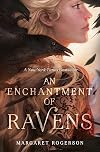
Isobel is one of the most sought after portrait artists in Whimsy, a city between the human and fae lands. She lives there with her aunt Emma and her sister March and May, twin girls who used to be goats before the fair folk changed their lives. Isobel supports her family with her Craft and is paid in enchantments. Her patron Gadfly, a delightful and frivolous fae, warns her of the arrival of Rook, the prince of the Autumn Court. She becomes infatuated with him during the course of painting show more his infuriating portrait that always has something off around the eyes. Finally figuring out the detail, she sends along the painting only to find later that she depicted a deep, human sorrow in his eyes. He abducts her from her house and plans to take her to his realm to stand trial for the transgression, only to be taken way off course by fairy beasts, creeping rot, the Wild Hunt, and other assorted chaos. Will Isobel ever make it back home to her family? Will Rook ever gain back his people's respect?
An Enchantment of Ravens is my favorite read of this year. The writing is poetic, the worldbuilding dazzles, plus the characters and romance are well developed. Right from the beginning of the novel. I was sucked into the story right from the beginning because of Margaret Rogerson's unique world. Her take on the fair folk and the rules of her world are like nothing I've ever seen. Humans create Crafts like cooking, art, and music that the fair folk covet above all things. Fairies will die if they attempt to create anything of the sort, but surround themselves with these things anyway. The age of the Craft doesn't matter as fairies can glamour it to look as it did when it was new. The fae pay humans in enchantments that need to be carefully worded or they could ruin lives with their trickster ways. On the other hand, enchantments can provide food, protection, and other necessities for human life. Humans need to be cautious living in Whimsy because of fairy whims and all carry iron somewhere on them for protection.
The fair folk live for centuries and have no concept of time, but feel very little emotion. Human emotion is frowned upon and seen as weakness, opening up opportunites for other fae to take what they have. Despite this, the veneer of manners and composure are paramount to their kind. They have to respond to niceties like bowing, responding in kind to thank yous, and so on. The fair folk are beautiful, but alien, selfish, and cruel underneath their glamour. Each fae has one flaw in their glamour that sets them apart from humans whether it's fingers that are too long, emaciation, or height. The Spring Court is the only fairy court we see and it seems beautiful and fantastic at first until the horrific, cruel elements are revealed over time. The power of true names works both ways in this world where knowing it gives the person absolute power over another no matter if they are human or fey. Rogerson takes well known rules of fairies, gives them a twist, and adds her own unique ones to create a singular, detailed fantastical world.
The characters and their relationships are incredibly well drawn. Isobel is a practical, serious person forced to grow up early in life. She has been making portraits for the fair folk most of her life, so she has a healthy caution about them. Every time one comes in for a portrait, she's careful to be polite and as inoffensive as possible. The enchantments she earns are carefully worded because she knows their mischief could be disastrous to her and her family. Although her sisters are magicked goats, she loves them all the same and cares for them unconditionally. Over the course of the story, she demonstrates cleverness, ingenuity, and compassion. I love a heroine with a strong will, realistic familial connections, and good sense. All of her decisions are not always the best, but she has a good head on her shoulders that serves her well throughout the novel.
Her romance with Rook starts as a sudden infatuation based on his carefully crafted facade. When he shows who he truly is, Isobel understandably hates him because he's petty, vain, and inhuman. Over the course of their journey, they both reveal what's under their respective protective shells while fighting to protect each other and navigating fae lands infected with rot, fae society, and numerous enemies. Love kind of sneaks up on them when they weren't looking. Their declarations aren't poetic or idealistic and they disagree and see things they don't like in each other, but they grow to love by getting to know each other. I haven't read such a good romance in a while. The Good Law condemns fae and human lovers to death and one solution to this problem is the Green Well, which has the power to turn a human into a fairy. Isobel soundly rejects this because of all she would lose, namely her art. It's not just a interesting detail to flesh her out or be forgotten; it's an intrinsic part of her character that she isn't willing to compromise on, even in the face of the death. Her art is also used
I could write so much more about An Enchantment of Ravens because I loved every bit of it. I wanted to read it super fast to see what happened, but also wanted to savor the world slowly. I've been reading a lot lately and this one amazed me. I had to be left alone to read the last 100 pages so I could find out what happened with tears streaming down my face. I'm disappointed to see it's a stand alone novel, but I hope other stories will take place in that world. Margaret Rogerson has made me a lifelong fan with this one book and I can't recommend it highly enough. show less
An Enchantment of Ravens is my favorite read of this year. The writing is poetic, the worldbuilding dazzles, plus the characters and romance are well developed. Right from the beginning of the novel. I was sucked into the story right from the beginning because of Margaret Rogerson's unique world. Her take on the fair folk and the rules of her world are like nothing I've ever seen. Humans create Crafts like cooking, art, and music that the fair folk covet above all things. Fairies will die if they attempt to create anything of the sort, but surround themselves with these things anyway. The age of the Craft doesn't matter as fairies can glamour it to look as it did when it was new. The fae pay humans in enchantments that need to be carefully worded or they could ruin lives with their trickster ways. On the other hand, enchantments can provide food, protection, and other necessities for human life. Humans need to be cautious living in Whimsy because of fairy whims and all carry iron somewhere on them for protection.
The fair folk live for centuries and have no concept of time, but feel very little emotion. Human emotion is frowned upon and seen as weakness, opening up opportunites for other fae to take what they have. Despite this, the veneer of manners and composure are paramount to their kind. They have to respond to niceties like bowing, responding in kind to thank yous, and so on. The fair folk are beautiful, but alien, selfish, and cruel underneath their glamour. Each fae has one flaw in their glamour that sets them apart from humans whether it's fingers that are too long, emaciation, or height. The Spring Court is the only fairy court we see and it seems beautiful and fantastic at first until the horrific, cruel elements are revealed over time. The power of true names works both ways in this world where knowing it gives the person absolute power over another no matter if they are human or fey. Rogerson takes well known rules of fairies, gives them a twist, and adds her own unique ones to create a singular, detailed fantastical world.
The characters and their relationships are incredibly well drawn. Isobel is a practical, serious person forced to grow up early in life. She has been making portraits for the fair folk most of her life, so she has a healthy caution about them. Every time one comes in for a portrait, she's careful to be polite and as inoffensive as possible. The enchantments she earns are carefully worded because she knows their mischief could be disastrous to her and her family. Although her sisters are magicked goats, she loves them all the same and cares for them unconditionally. Over the course of the story, she demonstrates cleverness, ingenuity, and compassion. I love a heroine with a strong will, realistic familial connections, and good sense. All of her decisions are not always the best, but she has a good head on her shoulders that serves her well throughout the novel.
Her romance with Rook starts as a sudden infatuation based on his carefully crafted facade. When he shows who he truly is, Isobel understandably hates him because he's petty, vain, and inhuman. Over the course of their journey, they both reveal what's under their respective protective shells while fighting to protect each other and navigating fae lands infected with rot, fae society, and numerous enemies. Love kind of sneaks up on them when they weren't looking. Their declarations aren't poetic or idealistic and they disagree and see things they don't like in each other, but they grow to love by getting to know each other. I haven't read such a good romance in a while. The Good Law condemns fae and human lovers to death and one solution to this problem is the Green Well, which has the power to turn a human into a fairy. Isobel soundly rejects this because of all she would lose, namely her art. It's not just a interesting detail to flesh her out or be forgotten; it's an intrinsic part of her character that she isn't willing to compromise on, even in the face of the death. Her art is also used
I could write so much more about An Enchantment of Ravens because I loved every bit of it. I wanted to read it super fast to see what happened, but also wanted to savor the world slowly. I've been reading a lot lately and this one amazed me. I had to be left alone to read the last 100 pages so I could find out what happened with tears streaming down my face. I'm disappointed to see it's a stand alone novel, but I hope other stories will take place in that world. Margaret Rogerson has made me a lifelong fan with this one book and I can't recommend it highly enough. show less
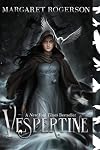
It turns out if you take the movie Venom and rework it so that the action takes place in an alt-medieval France with a young nun who is being possessed by the rare and powerful spirit of a dead person, I will like it a lot more! Artemisia of Naimes is a far more engaging protagonist for me than Eddie Brock ever was, though. She has the Sight (the ability to see the spirits of the dead), a past which has left her with a lot of trauma, and a real struggle when it comes to dealing with people. show more I was pleasantly surprised by the complexity of the questions which Margaret Rogerson asks about the religion which she created here—I was expecting something which was far more reductive and obvious and Mists of Avalon-y than what we actually got. I really enjoyed this, know I would have loved it if I read it as a teen, and if this does turn out to be a series would happily continue along with it. show less
Sorcery of Thorns: Heart-racing fantasy from the New York Times bestselling author of An Enchantment of Ravens by Margaret Rogerson

{first of 2 in Sorcery of Thorns duology; fantasy, adventure, magic}
Fantasy set in a library where the books are alive - what's not to love?
Instead of being hailed as a hero she is treated as a villain and taken to the capital, Brassbridge, to face the Magesterium (the council of sorcerers) by the forbidding Magister Thorn - who is curiously young and somewhat discombobulated by Elisabeth's forthright behaviour (such as grabbing his hair to investigate the rumour that sorcerers have pointed ears (he did not)). But then, alone in the capital, she discovers a plot that could threaten the very fabric of the world but no one believes her and Nathaniel Thorn - and his demon familiar Silas - are the only ones she can turn to to help her save Austermeer and the world.
This was a lot of fun and a bit irreverent even though the fate of the world was at stake. I liked the ending - the epilogue tied things up neatly - but I'm glad I have the novella which continues Elisabeth's story. There is a bit of romance and even an almost-bedroom scene but I'd say it's still YA-rated. Silas was nicely written, between his fastidious valet persona and the glimpses we got of him as a terrifyingly inhuman demon.
Recommended.
March 2025
4 stars show less
Fantasy set in a library where the books are alive - what's not to love?
And on the shelves, winding around and around, reachable only by ladders ...show more
Elisabeth lit up. "Grimoires," she breathed, even more delighted than before.
Nathaniel's expression grew odd. "You like this place?"
"Of course I do. It has books in it."
He just stood there, not trying to stop her, so Elisabeth clambered up the nearest ladder. She had spotted a
familiar title on the shelf, winking its gilt for attention. When she reached for it, it squirmed free of its neighbors and dropped eagerly into her hand.Elisabeth has grown up in one of the Great Libraries of Austermeer, having been left on the doorstep of Summershall library as a baby, and spent her life exploring its secret passageways, absorbing the atmosphere of parchment and ink and listening to the snoring of the dozing grimoires.
"I knew you had to be here somewhere!" she said to the Lexicon. She hadn't seen it since the ride into Brassbridge. "I can't believe he stole you."
The grimoire gave a guilty rustle. She looked over her shoulder at the marvelous, sparkling chaos of the study.
The Libraries hold the grimoires safely contained for the sorcerers of Austermeer to come and refer to but librarians consider sorcerers to be evil and corrupted by the demons from whom they get their magical powers. Now, at nearly seventeen, Elisabeth is an apprentice librarian sharing a room with her best friend Katrien and her dearest wish is to become a fully fledged warden like her mentor, Director Irena. But one night one of the grimoires that Summershall library guards transforms into a Malefict and goes on a rampage, threatening the civilians of the nearby town so Elisabeth has no choice but to destroy it, losing forever the spells contained inside.
Elisabeth demonstrated to the steward that she would be an ideal candidate by lifting up one end of a cabinet in his office, uncovering a booklouse underneath and stomping on it, much to the delight of a young apprentice who happened to be passing by. She then sat down opposite the steward's desk and answered a number of job-related questions such as how quickly she could run, and whether she strongly valued keeping all ten of her fingers. The steward seemed impress that she found all of his questions perfectly reasonable. Most people, he explained, walked straight out the door.
"But this is a library," she replied in surprise. "What do they expect - that the books won't try to bite off their fingers?"
Instead of being hailed as a hero she is treated as a villain and taken to the capital, Brassbridge, to face the Magesterium (the council of sorcerers) by the forbidding Magister Thorn - who is curiously young and somewhat discombobulated by Elisabeth's forthright behaviour (such as grabbing his hair to investigate the rumour that sorcerers have pointed ears (he did not)). But then, alone in the capital, she discovers a plot that could threaten the very fabric of the world but no one believes her and Nathaniel Thorn - and his demon familiar Silas - are the only ones she can turn to to help her save Austermeer and the world.
"What are you writing?" Among the physician's scribbled notes, she had made out the word "delusions."(Ladies, take note.)
He snapped the notebook shut. "I know all of this must be very frightening for you, but try not to agitate yourself. Excitement will only worsen the inflammation."
She stared. "The - what?"
"The inflammation of your brain, Miss Scrivener," he explained patiently. "It is quite common among women who read novels."
Before Elisabeth could think of a reply to this baffling remark, he called Hannah back into the room, who looked pinched with worry. "Please tell the Chancellor that I prescribe a strict period of bed rest for the patient," he said to her. "It is clear that this is a classic case of hysteria. Miss Scrivener should exert herself as little as possible. Once the swelling in her brain subsides, her mind may return to normal."
This was a lot of fun and a bit irreverent even though the fate of the world was at stake. I liked the ending - the epilogue tied things up neatly - but I'm glad I have the novella which continues Elisabeth's story. There is a bit of romance and even an almost-bedroom scene but I'd say it's still YA-rated. Silas was nicely written, between his fastidious valet persona and the glimpses we got of him as a terrifyingly inhuman demon.
Silas's gaze disengaged from Nathaniel, slowly, as though he found it difficult to look away, and fixed upon her instead. Her breath caught at the emptiness in his night-dark eyes, but she didn't waver.Elisabeth is a feisty, commonsensical heroine whose first reaction is usually to draw her sword in defence and I loved Nathaniel’s almost non-sequitur comments
"How old are you?"she asked.and Katrien’s irrepressible curiosity. And, of course, the Libraries and the sentient books!
"Eighteen."
She sat back in surprise. "Truly?"
"I haven't sacrifced virgins tor my pertect cheekbones, if that's what you mean. Virgins, in general, have fewer magical properties than people tend to assume."
Elisabeth tried not to look too relieved by that information.
Recommended.
March 2025
4 stars show less

Isobel lives on the edge of Faerie, and the Fae crave the portraits she can paint of them. She bargains carefully for enchantments that will protect and provide for her family, carefully worded to avoid ill effects. When Rook, the Autumn Prince, arrives for a portrait session, things are somehow different. There's something about his eyes -- sorrow, she finally realizes, an emotion that the Fae aren't supposed to be able to feel. Isobel is drawn to the faerie prince, but she knows that they show more cannot break the Good Law, which forbids faerie/human relationships. When the portrait, with its telling revelation of Rook's sorrow is unveiled before the court, a furious Rook returns, dragging Isobel to his court to stand trial. Surrounded by the Fae court, who can Isobel trust?
I enjoyed this story, though it has some flaws. I liked the setting and descriptions, and the conceit that the Fae can't make art (Craft, as the book calls it, which can include things like Isobel's paintings, but also food, clothing, furniture, etc.) and therefore bargain with their human neighbors to obtain it. I thought there were some pacing issues, and I wasn't entirely convinced at the insta-love that characterizes the romantic plot. I listened to the audiobook, and I always enjoy Julia Whelan's narration, which may be part of the reason the book's shortcomings didn't bother me until after I finished listening. All in all, if you enjoy stories of humans in the faerie court, you might like this one, if the things I mentioned aren't deal-breakers for you. show less
I enjoyed this story, though it has some flaws. I liked the setting and descriptions, and the conceit that the Fae can't make art (Craft, as the book calls it, which can include things like Isobel's paintings, but also food, clothing, furniture, etc.) and therefore bargain with their human neighbors to obtain it. I thought there were some pacing issues, and I wasn't entirely convinced at the insta-love that characterizes the romantic plot. I listened to the audiobook, and I always enjoy Julia Whelan's narration, which may be part of the reason the book's shortcomings didn't bother me until after I finished listening. All in all, if you enjoy stories of humans in the faerie court, you might like this one, if the things I mentioned aren't deal-breakers for you. show less
Lists
Awards


You May Also Like


Associated Authors
Statistics
- Works
- 6
- Members
- 7,174
- Popularity
- #3,418
- Rating
- 4.0
- Reviews
- 208
- ISBNs
- 99
- Languages
- 11
- Favorited
- 3