
Abigail Rine Favale
Author of The Genesis of Gender: A Christian Theory
About the Author
Works by Abigail Rine Favale
Tagged
Common Knowledge
- Gender
- female
Members
Reviews
No one can serve two masters. Either you will hate the one and love the other, or you will be devoted to the one and despise the other.
– Matt. 6:24a, ESV
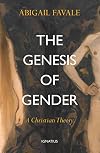
Twenty-first century America is caught in a battle for blind allegiance. In only a few decades we have culturally enshrined the sanctity of individual truths because, in a postmodern context, we cannot have Cartesian certainty in our knowledge of others or even of ourselves. The resulting subjectivity has led to tribalism where we are show more united or divided according to our adoption of ideological worldviews in toto. In this environment, Christians have encountered increasing relational tension as we struggle to adapt to the zeitgeist without compromising the scriptural and doctrinal moorings of our worldview. Now that feminism and its ideological offspring (the gender paradigm) have become foundational for much of western society, Christians face a false dichotomy: fully adopt or fully reject. Fully adopting means compromising scriptural principles by allowing the gender paradigm and its accoutrements to serve as our foundational worldview. Fully rejecting means ignoring the valuable truth behind feminism and gender theory – our need for love and dignity. It is in this context that Abigail Favale wrote The Genesis of Gender: A Christian Theory.
In The Genesis of Gender, Favale aims to demystify our current context by helping us understand the waves of feminism and gender theory that brought us here and by comparing the prevailing paradigm to that of Roman Catholicism. Favale begins this exploration with a brief comparison between the Biblical creation narrative and other ancient creation myths, noting the unique dignity and worth ascribed to women in Scripture. She then provides a concise and engaging account of the waves of feminism from the early twentieth century to the present, with reflections on how each wave decreasingly aligns with a Catholic Christian worldview. She continues by tracing cultural trends that flowed out of feminism: the redefinition of the purpose of sexual activity; the medical establishment’s preoccupation with appearance over wholeness; the bifurcation of sex and gender in clinical and pop psychology; and the problem of gender dysphoria and its connections to the growing disgust toward our own developing bodies (especially among young women). Favale closes with a call to compassion toward ourselves and others who struggle with issues of identity and sexuality and encourages us to accept the physical cards we have been dealt because our bodies ultimately are a gift from God.
In the final three chapters of the book, Favale emphasizes the stories of people who have experienced the challenges of transgenderism firsthand. Whether the story is Favale’s personal conversations or from one of Benjamin Boyce’s interviews with “detransitioners,” Favale is careful to portray the full humanity of each person. In some cases, she presents issues brought on by the side effects of hormone replacement therapy, while in others she compassionately portrays the emotional presence and warmth of her counterpart. In every instance, it is clear that Favale sees the importance of stories and the way they allow us to accompany one another through life’s challenges. In his book The Healing Path, Dan Allender examines the importance of story and pursuing wholeness through relationships. Allender contends that wrestling with suffering begins with faith that is grounded in knowing God’s faithful redemption through history and in our own lives. This faith ultimately leads us to risk hoping toward God’s continued redemption, which means we also must open ourselves to pursuing a life of meaning lived with others. A significant portion of the book considers how evil suppresses our stories of suffering to rid us of faith, hope, and love, while God works through our stories to redeem them. In short, it appears that Favale recommends a similar approach by accompanying those who suffer so that we can seek wholeness together.
A significant limitation of The Genesis of Gender is the paucity of included scriptural support for the Catholic Christian paradigm Favale espouses. In 239 pages of comparing feminism and the gender paradigm to Catholic Christianity, Favale includes a total of seven references to scripture. Two passages are included solely because Favale used to find them sexist or otherwise problematic. Two are included as passing illustrations that do not affect her arguments. The first three chapters of Genesis are considered at length, but with little depth, serving primarily as a retelling of the creation and fall narratives with minor explanation and illustration. Favale provides a compelling note on Jesus’ use of Genesis in Matthew 19, and a largely contextual note on Ephesians 4, both of which she uses to draw conclusions that appear to reach beyond the implications of each passage. Although Favale’s use of scripture is sparing, she references the writing of Popes, and church fathers and mothers dozens of times to substantively support her prose, and she leans heavily on contemporary scientific research to support her views on sex and the gender paradigm. Even if the substance of Favale’s book did not change, would it not be wise to present a Catholic Christian paradigm that is built on a sure foundation of Scripture rather than primarily on current scientific knowledge with a side of church tradition? Although the appeal to tradition may be appealing to some devout Roman Catholics, using current scientific knowledge as the basis for a Christian worldview invites considerable risk as new developments occur.
The Genesis of Gender will be most helpful for Roman Catholics who would like to hear from familiar voices while gleaning talking points for everyday discussions on the gender paradigm. Favale’s writing exemplifies how an emotionally-charged and wildly complex topic can be handled with approachable clarity and humanity. She takes care to define terms that might fall outside of most readers’ experiences, especially those related to reproductive science, psychology, and gender studies, making her prospective audience much broader than more academic works. Readers who are “deconstructing” from the gender paradigm may also value Favale’s plain presentation of current scientific research and her efficient-yet-winsome polemics. Christians outside of Roman Catholicism could also benefit from reading The Genesis of Gender but they may find Favale’s overly-narrow definition of a purely Catholic paradigm to be alienating, as it usually would be aptly described as a mere Christian paradigm. Readers who are looking for a scripture-bound systematic framework for sexuality and gender issues will not find it here, but those who desire a compelling narrative for how we got to our cultural moment will not be disappointed by Favale’s excellent work. show less
– Matt. 6:24a, ESV
Twenty-first century America is caught in a battle for blind allegiance. In only a few decades we have culturally enshrined the sanctity of individual truths because, in a postmodern context, we cannot have Cartesian certainty in our knowledge of others or even of ourselves. The resulting subjectivity has led to tribalism where we are show more united or divided according to our adoption of ideological worldviews in toto. In this environment, Christians have encountered increasing relational tension as we struggle to adapt to the zeitgeist without compromising the scriptural and doctrinal moorings of our worldview. Now that feminism and its ideological offspring (the gender paradigm) have become foundational for much of western society, Christians face a false dichotomy: fully adopt or fully reject. Fully adopting means compromising scriptural principles by allowing the gender paradigm and its accoutrements to serve as our foundational worldview. Fully rejecting means ignoring the valuable truth behind feminism and gender theory – our need for love and dignity. It is in this context that Abigail Favale wrote The Genesis of Gender: A Christian Theory.
In The Genesis of Gender, Favale aims to demystify our current context by helping us understand the waves of feminism and gender theory that brought us here and by comparing the prevailing paradigm to that of Roman Catholicism. Favale begins this exploration with a brief comparison between the Biblical creation narrative and other ancient creation myths, noting the unique dignity and worth ascribed to women in Scripture. She then provides a concise and engaging account of the waves of feminism from the early twentieth century to the present, with reflections on how each wave decreasingly aligns with a Catholic Christian worldview. She continues by tracing cultural trends that flowed out of feminism: the redefinition of the purpose of sexual activity; the medical establishment’s preoccupation with appearance over wholeness; the bifurcation of sex and gender in clinical and pop psychology; and the problem of gender dysphoria and its connections to the growing disgust toward our own developing bodies (especially among young women). Favale closes with a call to compassion toward ourselves and others who struggle with issues of identity and sexuality and encourages us to accept the physical cards we have been dealt because our bodies ultimately are a gift from God.
In the final three chapters of the book, Favale emphasizes the stories of people who have experienced the challenges of transgenderism firsthand. Whether the story is Favale’s personal conversations or from one of Benjamin Boyce’s interviews with “detransitioners,” Favale is careful to portray the full humanity of each person. In some cases, she presents issues brought on by the side effects of hormone replacement therapy, while in others she compassionately portrays the emotional presence and warmth of her counterpart. In every instance, it is clear that Favale sees the importance of stories and the way they allow us to accompany one another through life’s challenges. In his book The Healing Path, Dan Allender examines the importance of story and pursuing wholeness through relationships. Allender contends that wrestling with suffering begins with faith that is grounded in knowing God’s faithful redemption through history and in our own lives. This faith ultimately leads us to risk hoping toward God’s continued redemption, which means we also must open ourselves to pursuing a life of meaning lived with others. A significant portion of the book considers how evil suppresses our stories of suffering to rid us of faith, hope, and love, while God works through our stories to redeem them. In short, it appears that Favale recommends a similar approach by accompanying those who suffer so that we can seek wholeness together.
A significant limitation of The Genesis of Gender is the paucity of included scriptural support for the Catholic Christian paradigm Favale espouses. In 239 pages of comparing feminism and the gender paradigm to Catholic Christianity, Favale includes a total of seven references to scripture. Two passages are included solely because Favale used to find them sexist or otherwise problematic. Two are included as passing illustrations that do not affect her arguments. The first three chapters of Genesis are considered at length, but with little depth, serving primarily as a retelling of the creation and fall narratives with minor explanation and illustration. Favale provides a compelling note on Jesus’ use of Genesis in Matthew 19, and a largely contextual note on Ephesians 4, both of which she uses to draw conclusions that appear to reach beyond the implications of each passage. Although Favale’s use of scripture is sparing, she references the writing of Popes, and church fathers and mothers dozens of times to substantively support her prose, and she leans heavily on contemporary scientific research to support her views on sex and the gender paradigm. Even if the substance of Favale’s book did not change, would it not be wise to present a Catholic Christian paradigm that is built on a sure foundation of Scripture rather than primarily on current scientific knowledge with a side of church tradition? Although the appeal to tradition may be appealing to some devout Roman Catholics, using current scientific knowledge as the basis for a Christian worldview invites considerable risk as new developments occur.
The Genesis of Gender will be most helpful for Roman Catholics who would like to hear from familiar voices while gleaning talking points for everyday discussions on the gender paradigm. Favale’s writing exemplifies how an emotionally-charged and wildly complex topic can be handled with approachable clarity and humanity. She takes care to define terms that might fall outside of most readers’ experiences, especially those related to reproductive science, psychology, and gender studies, making her prospective audience much broader than more academic works. Readers who are “deconstructing” from the gender paradigm may also value Favale’s plain presentation of current scientific research and her efficient-yet-winsome polemics. Christians outside of Roman Catholicism could also benefit from reading The Genesis of Gender but they may find Favale’s overly-narrow definition of a purely Catholic paradigm to be alienating, as it usually would be aptly described as a mere Christian paradigm. Readers who are looking for a scripture-bound systematic framework for sexuality and gender issues will not find it here, but those who desire a compelling narrative for how we got to our cultural moment will not be disappointed by Favale’s excellent work. show less
Statistics
- Works
- 6
- Members
- 317
- Popularity
- #74,564
- Rating
- 4.1
- Reviews
- 2
- ISBNs
- 9
- Languages
- 1