
Anna Mehler Paperny
Author of Hello I Want to Die Please Fix Me: Depression in the First Person
About the Author
Image credit: Anna Mehler Paperny
Works by Anna Mehler Paperny
Tagged
Common Knowledge
There is no Common Knowledge data for this author yet. You can help.
Members
Reviews
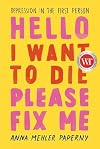
This is more than the memoir of a woman with severe clinical depression and suicidal ideation. The author is an award-winning investigative reporter with Reuters Toronto news bureau. She made a decision to to investigate the malady which afflicts her -- the history of how society has viewed mental illness, how it has been treated, the current state (or lack) of research into better treatments, and the general way that mental health issues have been handled (badly) by our society.
Her show more unflinching account of her struggles, combined with her journalist's view of the issues, makes for a compelling read. I listened to the audio, which was very well done.
I must admit, I Googled the author when I finished the book. What she wrote made me care about how she was doing. I wanted to make sure she was still battling on. She is alive and currently covering the sad story of the unmarked graves found at the former locations of Canadian indigenous children's schools for Reuters. show less
Her show more unflinching account of her struggles, combined with her journalist's view of the issues, makes for a compelling read. I listened to the audio, which was very well done.
I must admit, I Googled the author when I finished the book. What she wrote made me care about how she was doing. I wanted to make sure she was still battling on. She is alive and currently covering the sad story of the unmarked graves found at the former locations of Canadian indigenous children's schools for Reuters. show less
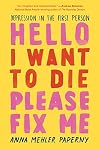
Hello I Want to Die Please Fix Me: Depression in the First Person is written by journalist Anna Mehler Paperny, and is both a story of her own personal experiences of suicidality and an in-depth journalistic exploration of depression and suicide.
The author has done her research well. The book contains information gleaned from interviews with quite a number of experts in fields relating to the topic.
The first section of the book is focused on the author’s personal experiences. She provided show more detailed descriptions of multiple suicides. My personal preference is for a less is more approach to details about suicide methods, but I can accept that she was trying to be totally open.
Regarding her experience on an inpatient ward after a suicide attempt, she writes:
“Surely, few groups of patients are as unpleasant by definition as those whose disease targets their brains. If it’s weird waking to find yourself in a different stranger’s care each morning, it can’t be much more pleasant to be charged with caring for a cycle of erratic nutbars with sub-optimal hygiene practices.”
She explains that she found herself wishing she had succeeded because everything that caused her to hate herself before the attempt hadn’t gone away. I’ve written about this before, and I think it’s really important to accept the reality that some people feel regret about not dying rather than regret about the attempt itself.
There were some lines that I quite liked, such as: “No one wants this crap illness that masquerades as personal failing.” Some quirky analogies made an appearance, such as likening being unable to act out suicidal thoughts to “blue balls, but for death.”
There were also some lines that just didn’t sit with me that well. Regarding drinking paint thinner as a suicide method: “I tried paint thinner. Don’t try paint thinner.” I can see the benefit of bringing a lighthearted tone to serious subjects, but for me this started to cross over into cavalier territory.
The author also observed that: “The DSM’s authors boil down diagnosis of mental illness to something resembling an online quiz: Which Disney Princess Mental Disorder Are You?” I’m not really sure how that’s useful for anything.
Paperny outlines her own experiences of treatment before moving into the more journalistic part of the book, in which she examines what science has to tells us about depression and suicide. There are descriptions of medications, psychotherapy, transcranial magnetic stimulation (TMS), electroconvulsive therapy (ECT), deep brain stimulation, etamine, psilocybin, and more.
The last section of the book examines a number of different social issues that come into play, including lack of coverage for therapy, the influence of race and culture, the role of police, and involuntary committal. The author also writes about bad experiences in hospital being a major deterrent to seeking out help for suicidal ideation; this is something I see as a huge issue.
She had a bit of a different take on stigma:
“I am so tired of the word ‘stigma.’ Perhaps it once had resonance. Maybe its utterance once conjured a concrete, clearly delineated concept. But repetition has rendered it meaningless, the way a surfeit of swearing robs cuss words of their sting.” But stigma is “gross and profoundly damaging.”
What I found most challenging about this book was the length. The paperback is around 350 pages, and I would have liked to see it trimmed down a bit. The length was also an issue with the paragraphs, the sections, and some of the chapters. It’s not necessarily a major flaw in the book overall, but depression has not been kind to my concentration, and for me this was a tough read. It wasn’t that the content was hard to read; it just wasn’t chunked well enough for me.
Overall, though, I think this book offers an interesting perspective, and we certainly need to get more people talking about suicide and what we can do about it. show less
The author has done her research well. The book contains information gleaned from interviews with quite a number of experts in fields relating to the topic.
The first section of the book is focused on the author’s personal experiences. She provided show more detailed descriptions of multiple suicides. My personal preference is for a less is more approach to details about suicide methods, but I can accept that she was trying to be totally open.
Regarding her experience on an inpatient ward after a suicide attempt, she writes:
“Surely, few groups of patients are as unpleasant by definition as those whose disease targets their brains. If it’s weird waking to find yourself in a different stranger’s care each morning, it can’t be much more pleasant to be charged with caring for a cycle of erratic nutbars with sub-optimal hygiene practices.”
She explains that she found herself wishing she had succeeded because everything that caused her to hate herself before the attempt hadn’t gone away. I’ve written about this before, and I think it’s really important to accept the reality that some people feel regret about not dying rather than regret about the attempt itself.
There were some lines that I quite liked, such as: “No one wants this crap illness that masquerades as personal failing.” Some quirky analogies made an appearance, such as likening being unable to act out suicidal thoughts to “blue balls, but for death.”
There were also some lines that just didn’t sit with me that well. Regarding drinking paint thinner as a suicide method: “I tried paint thinner. Don’t try paint thinner.” I can see the benefit of bringing a lighthearted tone to serious subjects, but for me this started to cross over into cavalier territory.
The author also observed that: “The DSM’s authors boil down diagnosis of mental illness to something resembling an online quiz: Which Disney Princess Mental Disorder Are You?” I’m not really sure how that’s useful for anything.
Paperny outlines her own experiences of treatment before moving into the more journalistic part of the book, in which she examines what science has to tells us about depression and suicide. There are descriptions of medications, psychotherapy, transcranial magnetic stimulation (TMS), electroconvulsive therapy (ECT), deep brain stimulation, etamine, psilocybin, and more.
The last section of the book examines a number of different social issues that come into play, including lack of coverage for therapy, the influence of race and culture, the role of police, and involuntary committal. The author also writes about bad experiences in hospital being a major deterrent to seeking out help for suicidal ideation; this is something I see as a huge issue.
She had a bit of a different take on stigma:
“I am so tired of the word ‘stigma.’ Perhaps it once had resonance. Maybe its utterance once conjured a concrete, clearly delineated concept. But repetition has rendered it meaningless, the way a surfeit of swearing robs cuss words of their sting.” But stigma is “gross and profoundly damaging.”
What I found most challenging about this book was the length. The paperback is around 350 pages, and I would have liked to see it trimmed down a bit. The length was also an issue with the paragraphs, the sections, and some of the chapters. It’s not necessarily a major flaw in the book overall, but depression has not been kind to my concentration, and for me this was a tough read. It wasn’t that the content was hard to read; it just wasn’t chunked well enough for me.
Overall, though, I think this book offers an interesting perspective, and we certainly need to get more people talking about suicide and what we can do about it. show less
after reading other reviews i'm glad i'm not the only one with mixed reactions to this book. i did think this book was very honest, informative and insightful. at the same though, it was a very dry read. and i'm glad i listened to it on audio, otherwise i think i would've stopped halfway through.
this book is half memoir half investigation/research and i found that to be super interesting. i enjoyed how honest and candid Anna Mehler Paperny was with her own story and ongoing struggle with show more depression. and her research/in-depth look into the mental health care industry was *insert two thumbs up*. especially the part where she talked about all the money that goes into cancer research, but the same is not for mental health/depression research.
overall, i found Hello I Want to Die Please Fix Me to be moving and educative show less
this book is half memoir half investigation/research and i found that to be super interesting. i enjoyed how honest and candid Anna Mehler Paperny was with her own story and ongoing struggle with show more depression. and her research/in-depth look into the mental health care industry was *insert two thumbs up*. especially the part where she talked about all the money that goes into cancer research, but the same is not for mental health/depression research.
overall, i found Hello I Want to Die Please Fix Me to be moving and educative show less
Probably self-explanatory, but the opening of this book is an explicit story about Paperny’s suicide attempts. May not be a good idea to engage with for all readers. However, the rest of the book is less autobiographical and more informative reporting of the facts of depression and recovery. A great resource for understanding treatment resistant depression, and the variety of obstacles that prevent people from getting treatment.
I found the section on the drug trial research illuminating. show more It helped me understand why drugs so often fail and why research into new treatments has stalled out in America. Also the section on how being upfront about your condition can harm your career prospects. It’s an issue I had never even considered and definitely made me think about who I tell about my mental health. show less
I found the section on the drug trial research illuminating. show more It helped me understand why drugs so often fail and why research into new treatments has stalled out in America. Also the section on how being upfront about your condition can harm your career prospects. It’s an issue I had never even considered and definitely made me think about who I tell about my mental health. show less
Lists
Awards


Statistics
- Works
- 1
- Members
- 196
- Popularity
- #111,884
- Rating
- 4.0
- Reviews
- 8
- ISBNs
- 9