
Katya Balen
Author of October, October
About the Author
Image credit: via Bloomsbury Publishing
Works by Katya Balen
Tagged
Common Knowledge
- Birthdate
- 1989
- Gender
- female
- Nationality
- UK
- Birthplace
- London, England, UK
- Map Location
- England, UK
Members
Reviews
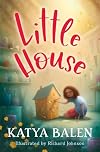
In a Nutshell: A bittersweet middle-grade novella about a little girl who understands the importance of home and family and how it is sometimes accompanied by sacrifice. Beautiful writing and great emotions, but slower pace. Might work better as a discussion read than as an individual experience.
~~~~~~~~~~~~~~~~~~~~~~~~~~~~
Plot Preview:
This is my fourth book by Katya Balen, and while it is not going to be my favourite of her works, it is still impressive.
Juno and her grandfather are the two main characters in the book. While Juno was a sweet child, a lot of her initial arc is spent missing her mother and being annoyed at having to spend summer away from the city. And as we hear the story from her first person perspective, the proceedings, especially at the start, are somewhat slow and melancholy. The final quarter salvages the mood and the impact.
Juno’s grandfather was the star of the story in my eyes. I love how the book chose to have a grandfather, instead of the more common grandmother, playing the role of the understanding adult. Fictional grandfathers rarely break the mould. But Juno’s grandpa is not just an expert woodworker but also a great chef, experimenting with cuisines from around the world. He encourages his granddaughter in both the activities – woodworking as well as cooking – without once bringing gender roles into play. He is patient and loving, a good listener and a wise counsel-provider. We need more grandfathers like him, in fiction as well as in real life.
Balen is excellent at writing descriptions and emotions, and this book is no exception. The little doll house is detailed wonderfully, as is Grandpa’s woodworking. Juno’s feelings, torn between her love for her parents and her resentment at being ‘abandoned’, are nicely written. The metaphor between her situation and that of the abandoned doll family comes out well.
That said, I am not sure if kids will get the point of the book correctly. If read at a superficial level, the book might lead them to assume that their happiness is worth less in comparison with the greater good or humanitarian purposes. Charity always begins at home, so it is important for kids to realise that Juno’s mother left her in the safe hands of her grandfather before leaving for her volunteer work. This is why I feel like the book will work better as a discussion read, so just in case any child misinterprets the message, an adult will hopefully be able to guide them back to the right track.
There are grayscale illustrations throughout the book, in the same style as that on the cover – somewhat hazy and without defined edges. While the art style wasn’t my cup of tea, it works for the story.
Basically, this is a sweet tale but not typical of its genre. It covers a wider spectrum of emotions than a usual MG work does, including some complex feelings. But the message it puts forward is a subtle but thought-provoking one.
As with all Barrington Stoke publications, this book is written in HiLo style, which means that the target age of the story is 9 years but the reading level is age 8. So the content is accessible to a greater group of little readers.
Recommended for sure, as this is a great combo of plot plus moral plus discussion points. We can all do with a little help and a little hope, and this book provides both amply.
4 stars.
My thanks to Barrington Stoke and NetGalley for the DRC of “Little House”. This review is voluntary and contains my honest opinion about the book.
~~~~~~~~~~~~~~~~~~~~~~~~~~~~
Connect with me through:
My Blog || The StoryGraph || Instagram || X/Twitter || Facebook || show less
~~~~~~~~~~~~~~~~~~~~~~~~~~~~
Plot Preview:
Ten-year-old Juno is very upset after her mother leaves her with her grandfather for the entire summer while her parents are off doing volunteer work in someshow more
other country. Juno thinks it is very unfair that her parents care more for other kids than for their own daughter.
When Juno discovers an abandoned doll house in her grandpa’s attic, she sees how beautiful it might once have been, and how lonely its little doll family looks. So she decides to make a new home for them, and in the process, learns some important lessons.
The story comes to us in Juno’s first person perspective.
This is my fourth book by Katya Balen, and while it is not going to be my favourite of her works, it is still impressive.
Juno and her grandfather are the two main characters in the book. While Juno was a sweet child, a lot of her initial arc is spent missing her mother and being annoyed at having to spend summer away from the city. And as we hear the story from her first person perspective, the proceedings, especially at the start, are somewhat slow and melancholy. The final quarter salvages the mood and the impact.
Juno’s grandfather was the star of the story in my eyes. I love how the book chose to have a grandfather, instead of the more common grandmother, playing the role of the understanding adult. Fictional grandfathers rarely break the mould. But Juno’s grandpa is not just an expert woodworker but also a great chef, experimenting with cuisines from around the world. He encourages his granddaughter in both the activities – woodworking as well as cooking – without once bringing gender roles into play. He is patient and loving, a good listener and a wise counsel-provider. We need more grandfathers like him, in fiction as well as in real life.
Balen is excellent at writing descriptions and emotions, and this book is no exception. The little doll house is detailed wonderfully, as is Grandpa’s woodworking. Juno’s feelings, torn between her love for her parents and her resentment at being ‘abandoned’, are nicely written. The metaphor between her situation and that of the abandoned doll family comes out well.
That said, I am not sure if kids will get the point of the book correctly. If read at a superficial level, the book might lead them to assume that their happiness is worth less in comparison with the greater good or humanitarian purposes. Charity always begins at home, so it is important for kids to realise that Juno’s mother left her in the safe hands of her grandfather before leaving for her volunteer work. This is why I feel like the book will work better as a discussion read, so just in case any child misinterprets the message, an adult will hopefully be able to guide them back to the right track.
There are grayscale illustrations throughout the book, in the same style as that on the cover – somewhat hazy and without defined edges. While the art style wasn’t my cup of tea, it works for the story.
Basically, this is a sweet tale but not typical of its genre. It covers a wider spectrum of emotions than a usual MG work does, including some complex feelings. But the message it puts forward is a subtle but thought-provoking one.
As with all Barrington Stoke publications, this book is written in HiLo style, which means that the target age of the story is 9 years but the reading level is age 8. So the content is accessible to a greater group of little readers.
Recommended for sure, as this is a great combo of plot plus moral plus discussion points. We can all do with a little help and a little hope, and this book provides both amply.
4 stars.
My thanks to Barrington Stoke and NetGalley for the DRC of “Little House”. This review is voluntary and contains my honest opinion about the book.
~~~~~~~~~~~~~~~~~~~~~~~~~~~~
Connect with me through:
My Blog || The StoryGraph || Instagram || X/Twitter || Facebook || show less
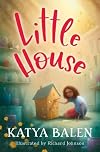
In a Nutshell: A bittersweet middle-grade novella about a little girl who understands the importance of home and family and how it is sometimes accompanied by sacrifice. Beautiful writing and great emotions, but slower pace. Might work better as a discussion read than as an individual experience.
~~~~~~~~~~~~~~~~~~~~~~~~~~~~
Plot Preview:
This is my fourth book by Katya Balen, and while it is not going to be my favourite of her works, it is still impressive.
Juno and her grandfather are the two main characters in the book. While Juno was a sweet child, a lot of her initial arc is spent missing her mother and being annoyed at having to spend summer away from the city. And as we hear the story from her first person perspective, the proceedings, especially at the start, are somewhat slow and melancholy. The final quarter salvages the mood and the impact.
Juno’s grandfather was the star of the story in my eyes. I love how the book chose to have a grandfather, instead of the more common grandmother, playing the role of the understanding adult. Fictional grandfathers rarely break the mould. But Juno’s grandpa is not just an expert woodworker but also a great chef, experimenting with cuisines from around the world. He encourages his granddaughter in both the activities – woodworking as well as cooking – without once bringing gender roles into play. He is patient and loving, a good listener and a wise counsel-provider. We need more grandfathers like him, in fiction as well as in real life.
Balen is excellent at writing descriptions and emotions, and this book is no exception. The little doll house is detailed wonderfully, as is Grandpa’s woodworking. Juno’s feelings, torn between her love for her parents and her resentment at being ‘abandoned’, are nicely written. The metaphor between her situation and that of the abandoned doll family comes out well.
That said, I am not sure if kids will get the point of the book correctly. If read at a superficial level, the book might lead them to assume that their happiness is worth less in comparison with the greater good or humanitarian purposes. Charity always begins at home, so it is important for kids to realise that Juno’s mother left her in the safe hands of her grandfather before leaving for her volunteer work. This is why I feel like the book will work better as a discussion read, so just in case any child misinterprets the message, an adult will hopefully be able to guide them back to the right track.
There are grayscale illustrations throughout the book, in the same style as that on the cover – somewhat hazy and without defined edges. While the art style wasn’t my cup of tea, it works for the story.
Basically, this is a sweet tale but not typical of its genre. It covers a wider spectrum of emotions than a usual MG work does, including some complex feelings. But the message it puts forward is a subtle but thought-provoking one.
As with all Barrington Stoke publications, this book is written in HiLo style, which means that the target age of the story is 9+ years but the reading level is age 8. So the content is accessible to a greater group of little readers.
Recommended for sure, as this is a great combo of plot plus moral plus discussion points. We can all do with a little help and a little hope, and this book provides both amply.
4 stars.
My thanks to Barrington Stoke and NetGalley for the DRC of “Little House”. This review is voluntary and contains my honest opinion about the book.
~~~~~~~~~~~~~~~~~~~~~~~~~~~~
Connect with me through:
My Blog || The StoryGraph || Instagram || X/Twitter || Facebook || show less
~~~~~~~~~~~~~~~~~~~~~~~~~~~~
Plot Preview:
Ten-year-old Juno is very upset after her mother leaves her with her grandfather for the entire summer while her parents are off doing volunteer work in someshow more
other country. Juno thinks it is very unfair that her parents care more for other kids than for their own daughter.
When Juno discovers an abandoned doll house in her grandpa’s attic, she sees how beautiful it might once have been, and how lonely its little doll family looks. So she decides to make a new home for them, and in the process, learns some important lessons.
The story comes to us in Juno’s first person perspective.
This is my fourth book by Katya Balen, and while it is not going to be my favourite of her works, it is still impressive.
Juno and her grandfather are the two main characters in the book. While Juno was a sweet child, a lot of her initial arc is spent missing her mother and being annoyed at having to spend summer away from the city. And as we hear the story from her first person perspective, the proceedings, especially at the start, are somewhat slow and melancholy. The final quarter salvages the mood and the impact.
Juno’s grandfather was the star of the story in my eyes. I love how the book chose to have a grandfather, instead of the more common grandmother, playing the role of the understanding adult. Fictional grandfathers rarely break the mould. But Juno’s grandpa is not just an expert woodworker but also a great chef, experimenting with cuisines from around the world. He encourages his granddaughter in both the activities – woodworking as well as cooking – without once bringing gender roles into play. He is patient and loving, a good listener and a wise counsel-provider. We need more grandfathers like him, in fiction as well as in real life.
Balen is excellent at writing descriptions and emotions, and this book is no exception. The little doll house is detailed wonderfully, as is Grandpa’s woodworking. Juno’s feelings, torn between her love for her parents and her resentment at being ‘abandoned’, are nicely written. The metaphor between her situation and that of the abandoned doll family comes out well.
That said, I am not sure if kids will get the point of the book correctly. If read at a superficial level, the book might lead them to assume that their happiness is worth less in comparison with the greater good or humanitarian purposes. Charity always begins at home, so it is important for kids to realise that Juno’s mother left her in the safe hands of her grandfather before leaving for her volunteer work. This is why I feel like the book will work better as a discussion read, so just in case any child misinterprets the message, an adult will hopefully be able to guide them back to the right track.
There are grayscale illustrations throughout the book, in the same style as that on the cover – somewhat hazy and without defined edges. While the art style wasn’t my cup of tea, it works for the story.
Basically, this is a sweet tale but not typical of its genre. It covers a wider spectrum of emotions than a usual MG work does, including some complex feelings. But the message it puts forward is a subtle but thought-provoking one.
As with all Barrington Stoke publications, this book is written in HiLo style, which means that the target age of the story is 9+ years but the reading level is age 8. So the content is accessible to a greater group of little readers.
Recommended for sure, as this is a great combo of plot plus moral plus discussion points. We can all do with a little help and a little hope, and this book provides both amply.
4 stars.
My thanks to Barrington Stoke and NetGalley for the DRC of “Little House”. This review is voluntary and contains my honest opinion about the book.
~~~~~~~~~~~~~~~~~~~~~~~~~~~~
Connect with me through:
My Blog || The StoryGraph || Instagram || X/Twitter || Facebook || show less
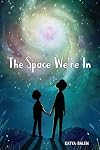
The Space We're In is told through the eyes of ten year old Frank as he talks about his Dad, who works with computers, his Mom, who was once an artist before his little brother came, and his little brother, Max, who has autism. When tragedy strikes the family, Frank realizes he's universe is better because Max is in it.
The Space We're In is so beautifully written that I felt everything with Frank. His voice is believable and authentic - something I was worried wouldn't be the case when show more picking up this novel. There is raw, unfiltered thoughts and honesty that Frank mentions that made my laugh, cry, and smile from. The way he talks about his friendship with Jamie and Ahmed made me long for my childhood again.
Even with the difficult situations that happen, the book is still uplifting and I adore all the characters so much. I can't even put my love into words for this book. show less
The Space We're In is so beautifully written that I felt everything with Frank. His voice is believable and authentic - something I was worried wouldn't be the case when show more picking up this novel. There is raw, unfiltered thoughts and honesty that Frank mentions that made my laugh, cry, and smile from. The way he talks about his friendship with Jamie and Ahmed made me long for my childhood again.
Even with the difficult situations that happen, the book is still uplifting and I adore all the characters so much. I can't even put my love into words for this book. show less
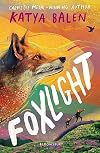
In a Nutshell: A middle-grade novel focussing on a pair of eleven-year-old twins and their quest to look for their mom in the wildlands using a fox as a guide. Outstanding in nature descriptions, but the plot itself, being somewhat abstract, left me with mixed feelings.
Story Synopsis:
Bookish Yays: show less
Story Synopsis:
Fen and Rey are just two of many children staying in a crumbling house for ‘Found Children.’ Their caregiver Lissa has told them of how they were both found as babies, curled up amid foxes at the edge ofshow more
the wildlands. Of all the kids in the home, they are the only two with no details about their birth mother.
Fen and Rey are opposite in nature but share a strong bond, Fen has an especially wild imagination, and she always senses a pull from the foxes, wishing to return to the wildlands to search for her mother. When a fox appears at their house late one night, Fen interprets it as a call, and with Rey tagging along, embarks upon an adventurous quest to locate her mother, as she firmly believes that the fox was sent by her mom. Will the two girls be able to find what they are looking for?
The story comes to us in Fen’s first person perspective.
Bookish Yays: show less
Lists
Awards


Statistics
- Works
- 18
- Members
- 329
- Popularity
- #72,115
- Rating
- 4.1
- Reviews
- 22
- ISBNs
- 78
- Languages
- 5