
David R. Stokes (1)
Author of The Shooting Salvationist: J. Frank Norris and the Murder Trial that Captivated America
For other authors named David R. Stokes, see the disambiguation page.
About the Author
Image credit: By Larry D. Moore, CC BY-SA 3.0, https://commons.wikimedia.org/w/index.php?curid=17331581
Works by David R. Stokes
The Shooting Salvationist: J. Frank Norris and the Murder Trial that Captivated America (2011) 66 copies, 3 reviews
Tagged
Common Knowledge
There is no Common Knowledge data for this author yet. You can help.
Members
Reviews
Apparent Danger: The Pastor of America's First Megachurch and the Texas Murder Trial of the Decade in the 1920s by David Stokes
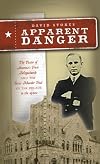
Apparent Danger is a popular account of J. Frank Norris's trial for the shooting of D. E. Chipps. The author focuses on Norris's dealings with the town of Fort Worth, Texas and with its leading citizens. Norris made enemies with almost everyone of standing through his vicious and publicity seeking sermons that ruined lives and promoted himself. His ill-tempered ways came to a head when he shot a lumberman who came to his office to confront the pastor. Both Norris and his opponents used the show more tragedy to try to achieve their ends. For Norris it was the opportunity to enlarge his already oversized stature. For his opponents, it was the opportunity to remove the headache and menace permanently. The trail itself was similar to many of the circus trails that capture the public's attention even today. Justice was the concern of very few. In the end, Norris was acquitted because of the necessarily high standard of evidence.
The book itself has some substantial issues. First, the author occasionally exaggerates in the same way that he belittles Norris for doing decades earlier. He makes outlandish statements but couches them in terms like "some writers claim" or "it has been suggested." Citing the extreme does a disservice to the larger work. The author also presumes almost supernatural understanding of many of the motivations and thoughts of the main characters. He tells us when Meacham is mournful, when Norris is nervous, when the reporter can sense a breakthrough. This is what the writers of fiction do, not history. He is not privy to such insight. I believe that he has depended to greatly upon journalistic sources which frequently devolve into such writing. Second, the author treats some of the fairly discredited witnesses and reporters with greater respect than they deserve. I am not sympathetic to Norris. In fact, I believe that the author underestimates his evil. That being said, many of Norris's opponents were not honorable people. Occasionally, Norris actually railed on them because they did immoral actions. The book is too sympathetic to some of these characters. This is not a story of good and bad. It is a story of bad and worse. The author seems to understand this, but struggles with reducing the complexities to white hat/black hat tales. Third and already mentioned, the author is too dependent upon contemporary journalists. Their accounts can be just barely better than pure fable. They were not seeking to report the facts; they were trying to spin a tale and consequently, make a dollar. Finally, the author does not really understand the fundamentalism that he presents. He confuses minor characters with major leaders and identifies organizations with little influence as representative of the whole. Admittedly, the world of fundamentalism was and is a tangled web, but more care needs to be taken upon unwinding the knot.
This book functions better as a crime thriller than an historical narrative. It is just a bit too unreliable for real understanding of the events. The story itself though is still so fascinating that there is pleasure from the yarn. show less
The book itself has some substantial issues. First, the author occasionally exaggerates in the same way that he belittles Norris for doing decades earlier. He makes outlandish statements but couches them in terms like "some writers claim" or "it has been suggested." Citing the extreme does a disservice to the larger work. The author also presumes almost supernatural understanding of many of the motivations and thoughts of the main characters. He tells us when Meacham is mournful, when Norris is nervous, when the reporter can sense a breakthrough. This is what the writers of fiction do, not history. He is not privy to such insight. I believe that he has depended to greatly upon journalistic sources which frequently devolve into such writing. Second, the author treats some of the fairly discredited witnesses and reporters with greater respect than they deserve. I am not sympathetic to Norris. In fact, I believe that the author underestimates his evil. That being said, many of Norris's opponents were not honorable people. Occasionally, Norris actually railed on them because they did immoral actions. The book is too sympathetic to some of these characters. This is not a story of good and bad. It is a story of bad and worse. The author seems to understand this, but struggles with reducing the complexities to white hat/black hat tales. Third and already mentioned, the author is too dependent upon contemporary journalists. Their accounts can be just barely better than pure fable. They were not seeking to report the facts; they were trying to spin a tale and consequently, make a dollar. Finally, the author does not really understand the fundamentalism that he presents. He confuses minor characters with major leaders and identifies organizations with little influence as representative of the whole. Admittedly, the world of fundamentalism was and is a tangled web, but more care needs to be taken upon unwinding the knot.
This book functions better as a crime thriller than an historical narrative. It is just a bit too unreliable for real understanding of the events. The story itself though is still so fascinating that there is pleasure from the yarn. show less
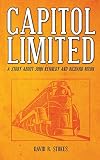
I received Capitol Limited as part of a Goodreads giveaway.
A historical novella based on a real historical event--a train ride shared by John F. Kennedy and Richard Nixon, in 1947, when both men were members of the House of Representatives. The two, having just debated the Taft-Hartley Act in Pennsylvania, were traveling back to DC. Stokes imagines the future presidents debating the great issues and figures of the day (Communism, Harry Truman, Winston Churchill, the formation of Israel) show more while sharing glimpses of their personal lives and interests. A prologue and epilogue, both generally taking place during the Kennedy administration, bookend and further contextualize the conversation.
In the world we now live in, with such anger and vitriol between politicians and members of opposing political parties, the civil--even congenial--conversation between the Democrat and Republican is refreshing to read. Admittedly, I'm not aware of Kennedy's and Nixon's personal feelings about each other, but at some points, based on what I know of their individual personalities, the narrative seems almost a little too idealized. Also, historical quotes are bolded and italicized in the text, which distracted me from the main thread of the story. Those quibbles aside, however, I found it a fascinating look at an event I knew nothing about, even as a history buff. Also, I appreciate that Stokes didn't draw out the book and attempt to drag a train ride of a few hours into a novel of several hundred pages. A novella is the perfect format for telling this story. show less
A historical novella based on a real historical event--a train ride shared by John F. Kennedy and Richard Nixon, in 1947, when both men were members of the House of Representatives. The two, having just debated the Taft-Hartley Act in Pennsylvania, were traveling back to DC. Stokes imagines the future presidents debating the great issues and figures of the day (Communism, Harry Truman, Winston Churchill, the formation of Israel) show more while sharing glimpses of their personal lives and interests. A prologue and epilogue, both generally taking place during the Kennedy administration, bookend and further contextualize the conversation.
In the world we now live in, with such anger and vitriol between politicians and members of opposing political parties, the civil--even congenial--conversation between the Democrat and Republican is refreshing to read. Admittedly, I'm not aware of Kennedy's and Nixon's personal feelings about each other, but at some points, based on what I know of their individual personalities, the narrative seems almost a little too idealized. Also, historical quotes are bolded and italicized in the text, which distracted me from the main thread of the story. Those quibbles aside, however, I found it a fascinating look at an event I knew nothing about, even as a history buff. Also, I appreciate that Stokes didn't draw out the book and attempt to drag a train ride of a few hours into a novel of several hundred pages. A novella is the perfect format for telling this story. show less
The Shooting Salvationist: J. Frank Norris and the Murder Trial that Captivated America by David R. Stokes
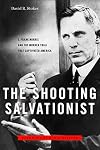
A very interesting biography of one of the first independent baptist fundamentalists life and ministry during the early 1900's. The book leads compellingly up to his murder of a man, the trial and eventual acquittal. The biography is well told and gives you a true look into the hatred and animosity and unchristlike character of fundamentalists. Worth reading, and also enjoyable as the audiobook.
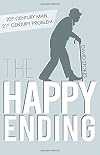
The Happy Ending by David Stokes is a fictional book taking place in the present, while tackling a very serious issue. Mr. Stokes an Emeritus Professor and published several non-fiction books previously.
Ninety seven year old Harry Pigeon is becoming a frail widower who relies on his walker (walking frame) for mobility. When a car crashes into his gates, a young Filipino girl asks for his help which the old man gladly obliged.
Mr. Pigeon is then drawn into an underworld scene of crime and show more human slavery. The people he meets are deadly and efficient and he must battle wits and call in his connections to try and overcome them.
The Happy Ending by David Stokes is a simplistic book telling a complicated story. I liked that the author did his research when it comes to human trafficking, the sad statistics about huge numbers and low conviction rates are depressingly accurate. The main protagonist, Harry Pigeon, is complex, hard headed and sad – he takes the advice of his beloved wife, six years dead. The other characters, while some with somewhat interesting backstories, are never fully developed.
I would choke that up to the author erring on the side of length.
I really enjoyed the protagonist, but I think the author went out of his way to make him naïve. He doesn’t like computers, knows nothing about GPS, and is shocked to hear what’s going on inside strip joints.
He was in the military, he would have known. Even as dim witted as the old man might be… he would have known.
There is another story in this book though, and that is of an old man aging not so gracefully. He finds himself old, all of the sudden, a man with little family and belonging to a generation which is quickly starting to become history.
The author implants some plot ideas in the begging of the book which become pivotal later on. I like those types of books and I know how much work it takes to implement them, somehow it barely worked here but not because lack of effort.
The plot is what holds this book together. The slavery aspect is and victimization of young women is a sad and shameful reality which we all live in. the author wants the reader to read the dark narrative with a twinkle in their eye, appreciating the humor in the margins of this story but that is not easy to do.
By the way, the “happy ending” in the title … is exactly what you’re thinking of.
For more reviews and bookish posts please visit: http://www.ManOfLaBook.com show less
Ninety seven year old Harry Pigeon is becoming a frail widower who relies on his walker (walking frame) for mobility. When a car crashes into his gates, a young Filipino girl asks for his help which the old man gladly obliged.
Mr. Pigeon is then drawn into an underworld scene of crime and show more human slavery. The people he meets are deadly and efficient and he must battle wits and call in his connections to try and overcome them.
The Happy Ending by David Stokes is a simplistic book telling a complicated story. I liked that the author did his research when it comes to human trafficking, the sad statistics about huge numbers and low conviction rates are depressingly accurate. The main protagonist, Harry Pigeon, is complex, hard headed and sad – he takes the advice of his beloved wife, six years dead. The other characters, while some with somewhat interesting backstories, are never fully developed.
I would choke that up to the author erring on the side of length.
I really enjoyed the protagonist, but I think the author went out of his way to make him naïve. He doesn’t like computers, knows nothing about GPS, and is shocked to hear what’s going on inside strip joints.
He was in the military, he would have known. Even as dim witted as the old man might be… he would have known.
There is another story in this book though, and that is of an old man aging not so gracefully. He finds himself old, all of the sudden, a man with little family and belonging to a generation which is quickly starting to become history.
The author implants some plot ideas in the begging of the book which become pivotal later on. I like those types of books and I know how much work it takes to implement them, somehow it barely worked here but not because lack of effort.
The plot is what holds this book together. The slavery aspect is and victimization of young women is a sad and shameful reality which we all live in. the author wants the reader to read the dark narrative with a twinkle in their eye, appreciating the humor in the margins of this story but that is not easy to do.
By the way, the “happy ending” in the title … is exactly what you’re thinking of.
For more reviews and bookish posts please visit: http://www.ManOfLaBook.com show less
Statistics
- Works
- 13
- Members
- 192
- Popularity
- #113,796
- Rating
- 3.3
- Reviews
- 10
- ISBNs
- 29
