
Meeg Pincus
Author of Winged Wonders: Solving the Monarch Migration Mystery
Works by Meeg Pincus
Cougar Crossing: How Hollywood's Celebrity Cougar Helped Build a Bridge for City Wildlife (2021) 39 copies, 1 review
Door by Door: How Sarah McBride Became America's First Openly Transgender Senator (2023) 36 copies, 1 review
Miep and the Most Famous Diary: The Woman Who Rescued Anne Frank's Diary (2019) 30 copies, 3 reviews
The Crane and the Keeper: How an Endangered Crane Chose a Human as Her Mate (2025) 8 copies, 2 reviews
Tagged
Common Knowledge
There is no Common Knowledge data for this author yet. You can help.
Members
Reviews

Helen Keller, born in 1880 in Alabama, had an unknown illness in her infancy which left her without vision or hearing.
Most people are only familiar with Helen's story as a troubled blind and deaf girl who learned to communicate with the help of her dedicated tutor, Anne Sullivan.
But Helen Keller was much more than a girl who learned to speak with her hands. As the author of this biography for kids declares in the back matter:
“Today, people with both visible and invisible disabilities know show more that every part of us makes us who we are. Helen Keller exemplified this and should be known as the accomplished, multifaceted person she was.”
Pincus combines both poetry stanzas and explanatory narration boxes on each two-page spread to highlight some of the ways in which Helen was a whole, well-rounded person. Most of the material points to kid-friendly aspects of Helen's life: she was a student, a friend, a dog lover, a jokester . . . . Only one page is devoted to Helen’s activism, which in fact became a major part of her life and which turned the public (and the government) against her.
Helen, as the author does mention in the back matter, was passionately devoted to social justice. She was an early supporter of civil rights groups and spoke out against racism. She campaigned for women’s rights and even suggested women should put their husbands in the kitchen!
Her vision of social justice was all encompassing. She campaigned for women’s right to vote and to be able to use birth control. She spoke at anti-war rallies prior to World War I. She joined the Socialist Party and helped establish the American Civil Liberties Union. After World War II, she spoke out against nuclear war. In 1955, she wrote a letter of support for a Communist activist who had been jailed, and thereafter, for the rest of her life, was the focus of FBI surveillance.
Helen struck a particularly sensitive note when she denounced capitalist predators and advocated for the poor. For example, after John D. Rockefeller sent his private army to to break up a strike in his coal mines in Colorado in 1914, leaving about two dozen people dead including miners' wives and children, she called him a “monster of capitalism.” The editor of a Brooklyn newspaper told his readers that her radical ideas came from “mistakes sprung out of the manifest limitations of her development.” (One presumes one of those “limitations” includes graduating with honors from Radcliffe.)
The author maintains a positive perspective, focusing on Helen’s active community involvement and her success as an author and speaker. But aspects of Helen's life also demonstrated the social prejudice against those with disabilities, that - combined with misogyny, conservatism, and later on, ageism - made up a toxic stew.
Kim Nielsen, Distinguished University Professor and Disability Studies Chair at the University of Toledo, tells anecdotes about Helen’s 1948 trip to Japan that illustrate the negative preconceptions that Helen regularly faced. (In 1948, Japan was still under the authority of the Allied Occupation, led by General Douglas MacArthur. Helen was one of the "citizen diplomats" selected by President Eisenhower to enhance America's image around the world.) Nielsen notes that prior to Helen’s arrival in Japan, military officials who were assigned to watch over her and her companion Polly Thomson prepared for physical grotesqueness, and bemoaned the prospect of “the arrival of two doddering females, two old hags.” They even arranged for an ambulance to meet the pair!
The staffers quickly learned the error of their ways - Helen walked off the plane herself and promptly asked for a scotch! Later the officials marveled about how much fun the two women were. But throughout Helen's life, there always was prejudice of one sort or another to be overcome.
Illustrator Caroline Bonne-Muller shows Helen grow from a little girl to an older woman, wearing fashions representative of each era against appropriately changing backgrounds.
Back matter includes more information about each aspect of Helen’s life highlighted by the book, as well as a very nice section providing small thumbnail references to famous disabled persons such as Supreme Court Justice Sonia Sotomayor (diabetes), musician Stevie Wonder (blind), Greta Thunberg (autism) and more.
Evaluation: Readers six and over will have much to marvel at when they read about Helen’s amazing accomplishments. Think of all the kids (I was one) who thought they faced insuperable barriers because their parents couldn't afford to buy them the latest expensive clothing brand. Then imagine starting out blind and deaf! This book has much to offer in terms of fostering empathy and emotional intelligence. show less
Most people are only familiar with Helen's story as a troubled blind and deaf girl who learned to communicate with the help of her dedicated tutor, Anne Sullivan.
But Helen Keller was much more than a girl who learned to speak with her hands. As the author of this biography for kids declares in the back matter:
“Today, people with both visible and invisible disabilities know show more that every part of us makes us who we are. Helen Keller exemplified this and should be known as the accomplished, multifaceted person she was.”
Pincus combines both poetry stanzas and explanatory narration boxes on each two-page spread to highlight some of the ways in which Helen was a whole, well-rounded person. Most of the material points to kid-friendly aspects of Helen's life: she was a student, a friend, a dog lover, a jokester . . . . Only one page is devoted to Helen’s activism, which in fact became a major part of her life and which turned the public (and the government) against her.
Helen, as the author does mention in the back matter, was passionately devoted to social justice. She was an early supporter of civil rights groups and spoke out against racism. She campaigned for women’s rights and even suggested women should put their husbands in the kitchen!
Her vision of social justice was all encompassing. She campaigned for women’s right to vote and to be able to use birth control. She spoke at anti-war rallies prior to World War I. She joined the Socialist Party and helped establish the American Civil Liberties Union. After World War II, she spoke out against nuclear war. In 1955, she wrote a letter of support for a Communist activist who had been jailed, and thereafter, for the rest of her life, was the focus of FBI surveillance.
Helen struck a particularly sensitive note when she denounced capitalist predators and advocated for the poor. For example, after John D. Rockefeller sent his private army to to break up a strike in his coal mines in Colorado in 1914, leaving about two dozen people dead including miners' wives and children, she called him a “monster of capitalism.” The editor of a Brooklyn newspaper told his readers that her radical ideas came from “mistakes sprung out of the manifest limitations of her development.” (One presumes one of those “limitations” includes graduating with honors from Radcliffe.)
The author maintains a positive perspective, focusing on Helen’s active community involvement and her success as an author and speaker. But aspects of Helen's life also demonstrated the social prejudice against those with disabilities, that - combined with misogyny, conservatism, and later on, ageism - made up a toxic stew.
Kim Nielsen, Distinguished University Professor and Disability Studies Chair at the University of Toledo, tells anecdotes about Helen’s 1948 trip to Japan that illustrate the negative preconceptions that Helen regularly faced. (In 1948, Japan was still under the authority of the Allied Occupation, led by General Douglas MacArthur. Helen was one of the "citizen diplomats" selected by President Eisenhower to enhance America's image around the world.) Nielsen notes that prior to Helen’s arrival in Japan, military officials who were assigned to watch over her and her companion Polly Thomson prepared for physical grotesqueness, and bemoaned the prospect of “the arrival of two doddering females, two old hags.” They even arranged for an ambulance to meet the pair!
The staffers quickly learned the error of their ways - Helen walked off the plane herself and promptly asked for a scotch! Later the officials marveled about how much fun the two women were. But throughout Helen's life, there always was prejudice of one sort or another to be overcome.
Illustrator Caroline Bonne-Muller shows Helen grow from a little girl to an older woman, wearing fashions representative of each era against appropriately changing backgrounds.
Back matter includes more information about each aspect of Helen’s life highlighted by the book, as well as a very nice section providing small thumbnail references to famous disabled persons such as Supreme Court Justice Sonia Sotomayor (diabetes), musician Stevie Wonder (blind), Greta Thunberg (autism) and more.
Evaluation: Readers six and over will have much to marvel at when they read about Helen’s amazing accomplishments. Think of all the kids (I was one) who thought they faced insuperable barriers because their parents couldn't afford to buy them the latest expensive clothing brand. Then imagine starting out blind and deaf! This book has much to offer in terms of fostering empathy and emotional intelligence. show less
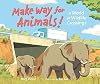
I WANT THIS BOOK for family, friends, and libraries! Even though I am not aware of any in Wisconsin, Minnesota, or Newfoundland (for the moose, deer, and caribou), I have been aware of some in Montana, and New Zealand (little blue fairy Penguins) for a number of years, but: 600 wildlife crossings in The Netherlands alone! and 44 in Canada's Banff National Park! and even an underpass in Kenya for ELRPHANTS! In this book we see not just land bridges, but aerial bridges, friendly tunnels, and show more even a passageway for pollinators (bees) in NORWAY! There's lots more to know, like activism, architects, awareness campaigns, construction, fundraising, and more! And some of this has been going on since the 1950s!
I almost forgot the importance and delight in the illustrations by illustrator Bao Luu! They are simple but convey as much as the storyline!
I requested and received a free temporary ebook from Lerner Publishing Group/Millbrook Press ™ via NetGalley. Thank you! show less
I almost forgot the importance and delight in the illustrations by illustrator Bao Luu! They are simple but convey as much as the storyline!
I requested and received a free temporary ebook from Lerner Publishing Group/Millbrook Press ™ via NetGalley. Thank you! show less

I love that the 'primary' text can be enjoyed by younger children, but each spread also says more, in smaller font, for older readers. And then there's good back matter. The one thing missing is a curated 'further reading' because I'm sure there are lots of books about Keller but which are the best? Is her own writing still readable, almost a century on? But that's a minor flaw - I'm sure we can all find things to get more info., esp. if we consult our librarians.
Best of all, there's a show more 'poster' sort of illustration of a number of other famous people who are challenged and differently abled. I did not know that Greta Thunberg is autistic. I cannot imagine what it's like to play football with asthma, like Jerome Bettis. Very inspiring!
I do recommend this to all, not just the picture-book audiences. show less
Best of all, there's a show more 'poster' sort of illustration of a number of other famous people who are challenged and differently abled. I did not know that Greta Thunberg is autistic. I cannot imagine what it's like to play football with asthma, like Jerome Bettis. Very inspiring!
I do recommend this to all, not just the picture-book audiences. show less
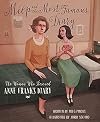
This picture book tells the story of the brave woman, Miep Gies, who rescued Anne Frank’s diary after Anne was taken by the Nazis.
The narrative is based on Miep’s own autobiography and how she remembered what happened. Miep Gies, as readers of The Diary of Anne Frank will know, helped eight people - the Frank family of four, the Van Pels family of three, and their acquaintance Fritz Pfeffer - survive during their two-year period of hiding from the Nazis in the secret annex above Otto show more Frank’s business. Most of the story in this book takes place after the hiders’ arrest on August 4, 1944. Otto Frank survived, but he was the only one. Anne’s mother died in the Auschwitz-Birkenau concentration camp 21 days before it was liberated. Anne and her sister Margot had been transferred to the Bergen-Belsen camp. Both died of typhus just two months before the Nazi surrendered. The Van Pels and Pfeffer all died in various concentration camps.
Miep lived to be 100, but never overcame the shock of the ordeal.
The author writes in notes at the end of the book that while most people know Miep retrieved the diary from the annex after the capture, they may not know what Miep did next:
“After the hiders were captured, Miep marched into the dangerous Nazi police headquarters twice and offered the officer from Vienna money to free them. Though he refused, Miep had the courage to try everything she could.”
The author observes:
“Miep did not want to be viewed as a hero. ‘Imagine young people would grow up with the feeling that you have to be a hero to do your human duty,’ she said. “I am afraid nobody would ever help other people, because who is a hero? I was not.’”
Illustrator Jordi Solano sticks to solemn tones dominated by brown and sepia.
Back matter includes “Author’s Notes,” “More About Miep’s Courage,” and a “Timeline of Miep’s Life.” The endpapers show the cover design of Anne’s diary along with actual photos.
Evaluation: The message of this book, highlighted by its emphasis on Miep’s role in Anne Frank’s story, is that in the face of injustice, the moral choice is the only choice. Children in the intended reading group of age eight and above will have much to reflect on: What did the Holocaust mean for those who lived under Nazi control? How do you know if something is wrong even if it is passed as law - especially in the present time when disinformation is so prevalent? If you did believe something was immoral and unjust, what would you do about it? show less
The narrative is based on Miep’s own autobiography and how she remembered what happened. Miep Gies, as readers of The Diary of Anne Frank will know, helped eight people - the Frank family of four, the Van Pels family of three, and their acquaintance Fritz Pfeffer - survive during their two-year period of hiding from the Nazis in the secret annex above Otto show more Frank’s business. Most of the story in this book takes place after the hiders’ arrest on August 4, 1944. Otto Frank survived, but he was the only one. Anne’s mother died in the Auschwitz-Birkenau concentration camp 21 days before it was liberated. Anne and her sister Margot had been transferred to the Bergen-Belsen camp. Both died of typhus just two months before the Nazi surrendered. The Van Pels and Pfeffer all died in various concentration camps.
Miep lived to be 100, but never overcame the shock of the ordeal.
The author writes in notes at the end of the book that while most people know Miep retrieved the diary from the annex after the capture, they may not know what Miep did next:
“After the hiders were captured, Miep marched into the dangerous Nazi police headquarters twice and offered the officer from Vienna money to free them. Though he refused, Miep had the courage to try everything she could.”
The author observes:
“Miep did not want to be viewed as a hero. ‘Imagine young people would grow up with the feeling that you have to be a hero to do your human duty,’ she said. “I am afraid nobody would ever help other people, because who is a hero? I was not.’”
Illustrator Jordi Solano sticks to solemn tones dominated by brown and sepia.
Back matter includes “Author’s Notes,” “More About Miep’s Courage,” and a “Timeline of Miep’s Life.” The endpapers show the cover design of Anne’s diary along with actual photos.
Evaluation: The message of this book, highlighted by its emphasis on Miep’s role in Anne Frank’s story, is that in the face of injustice, the moral choice is the only choice. Children in the intended reading group of age eight and above will have much to reflect on: What did the Holocaust mean for those who lived under Nazi control? How do you know if something is wrong even if it is passed as law - especially in the present time when disinformation is so prevalent? If you did believe something was immoral and unjust, what would you do about it? show less
Awards


You May Also Like
Associated Authors
Statistics
- Works
- 18
- Members
- 256
- Popularity
- #89,546
- Rating
- 4.3
- Reviews
- 17
- ISBNs
- 70