
Maria Russo (1)
Author of How to Raise a Reader
For other authors named Maria Russo, see the disambiguation page.
About the Author
Image credit: Maria Russo
Works by Maria Russo
Tagged
Common Knowledge
- Occupations
- editor
- Organizations
- New York Times
Members
Reviews
Parenting, Inc.: How the Billion-Dollar Baby Business Has Changed the Way We Raise Our Children by Pamela Paul
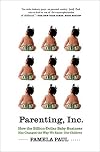
As suggested by the title, subtitle, and alternate subtitle ("How We Are Sold on $800 Strollers, Fetal Education, Baby Sign Language, Sleeping Coaches, Toddler Couture, and Diaper Wipe Warmers -- And What It Means for Our Children"), this book lambastes the parenting-industrial complex and the consumerist idea that love for your child implies spending thousands (or hundreds of thousands) of dollars on items providing no benefit to the child.
Chapters 1 ("Gearing Up") and 6 ("Pampering") show more discuss the tremendous inventory new parents are expected to acquire -- much of which our parents did without -- and how much parents are willing to spend on them in the desire to provide their children with "the best", even though babies are just as happy in generic, rather than designer, onesies. Parents, apparently, do not believe this. "A remarkable 66 percent of American parents believe their kids equate self-worth with what they own." Paul worries that excessive luxury is not only needlessly expensive but "saps children of the resourcefulness and independence most parents want to cultivate in their kids."
In Chapter 2, "Target: Parents", Paul details how marketers target parents, from the longstanding pushing of baby formula to the new targeting of "yoga mamas" and other older, wealthier parents. As one marketer explains, "We feel that we are suppliers to the parenting market, not the baby market."
Chapters 3 and 4, "Trouble in Toyland" and "Let Us Edutain You" examine the unfounded claims that fetuses and babies learn from or enjoy educational media and toys. To the contrary, "[w]hen babies are overstimulated, they get frustrated or upset, or they simply tune out," and "[o]nce a baby becomes accustomed to overprocessed toys, spontaneously lighting up and emitting noises, toys that 'do nothing' seem boring by comparison. The child never learns that he's the one who's supposed to provide the action."
Chapter 5 discusses expensive classes for infants and toddlers, which appeal more to mothers desperate to leave the house than to the children. Parents are also driven by fear for their children's futures, including whether they will get into a top preschool or fall behind better prepared children. One ad for Gymboree says to think of its toddler classes "as an under under undergrad degree," and another asks parents what they are doing to ensure their child's brain development. This is one of many examples of how marketers lead parents to question their own instincts and abilities.
The author takes a surprising turn in Chapter 7, "Outsourcing Parenthood", when she describes not only inappropriate outsourcing, such as birthday party planners, but touts the miraculous sleep training and potty training wrought by expensive consultants.
In the concluding chapter, the author sorts out some of what was best about the good old days in which today's older parents grew up, and what is better now, such as the benefits of the Internet and greater choice in products, including eco-parenting. The book ends with pages of citations and a useful index. show less
Chapters 1 ("Gearing Up") and 6 ("Pampering") show more discuss the tremendous inventory new parents are expected to acquire -- much of which our parents did without -- and how much parents are willing to spend on them in the desire to provide their children with "the best", even though babies are just as happy in generic, rather than designer, onesies. Parents, apparently, do not believe this. "A remarkable 66 percent of American parents believe their kids equate self-worth with what they own." Paul worries that excessive luxury is not only needlessly expensive but "saps children of the resourcefulness and independence most parents want to cultivate in their kids."
In Chapter 2, "Target: Parents", Paul details how marketers target parents, from the longstanding pushing of baby formula to the new targeting of "yoga mamas" and other older, wealthier parents. As one marketer explains, "We feel that we are suppliers to the parenting market, not the baby market."
Chapters 3 and 4, "Trouble in Toyland" and "Let Us Edutain You" examine the unfounded claims that fetuses and babies learn from or enjoy educational media and toys. To the contrary, "[w]hen babies are overstimulated, they get frustrated or upset, or they simply tune out," and "[o]nce a baby becomes accustomed to overprocessed toys, spontaneously lighting up and emitting noises, toys that 'do nothing' seem boring by comparison. The child never learns that he's the one who's supposed to provide the action."
Chapter 5 discusses expensive classes for infants and toddlers, which appeal more to mothers desperate to leave the house than to the children. Parents are also driven by fear for their children's futures, including whether they will get into a top preschool or fall behind better prepared children. One ad for Gymboree says to think of its toddler classes "as an under under undergrad degree," and another asks parents what they are doing to ensure their child's brain development. This is one of many examples of how marketers lead parents to question their own instincts and abilities.
The author takes a surprising turn in Chapter 7, "Outsourcing Parenthood", when she describes not only inappropriate outsourcing, such as birthday party planners, but touts the miraculous sleep training and potty training wrought by expensive consultants.
In the concluding chapter, the author sorts out some of what was best about the good old days in which today's older parents grew up, and what is better now, such as the benefits of the Internet and greater choice in products, including eco-parenting. The book ends with pages of citations and a useful index. show less
Parenting, Inc. : how we are sold on $800 strollers, fetal education, baby sign language, sleeping coaches, toddler couture, and diaper wipe warmers--and what it means for our children by Pamela Paul

This should be strongly recommended to any expecting moms out there. While there is plenty to spend one's money on when it comes to kids, Ms. Paul's contention is that we shouldn't be taken in by the claims of advertisers that their products are essential to our children's welfare. Some of the issues she raises, such as educational videos and toys, will certainly be enlightening. If nothing else, the message she sends at the end of the book, that parents should trust themselves more and show more consider what they might give their kids by NOT giving them stuff is a great one. show less
Wow, what a treasure! How to Raise A Reader stood out to me as the parent of a middle-grade reader and a new reader in Kindergarten. This book is divided into sections from babies to teenagers. The advice is approachable and relatable and I loved that it was coupled with specific book suggestions and also some types you might want to avoid.
How to Raise A Reader would be a great refresher for someone who has been a lifelong reader or really helpful advice for someone who is hoping to show more incorporate regular reading into their families lives for the first time.
The directory at the end of the book gave wonderful suggestions by not only genre and age groups but also by important messages such as kindness and empathy. Sometimes the number of books that are available to us as parents can feel overwhelming so having a list of suggestions about different topics was a wonderful addition to this book.
Thank you to NetGalley and Workman Publishing Company for a copy of this book in exchange for an honest review. show less
How to Raise A Reader would be a great refresher for someone who has been a lifelong reader or really helpful advice for someone who is hoping to show more incorporate regular reading into their families lives for the first time.
The directory at the end of the book gave wonderful suggestions by not only genre and age groups but also by important messages such as kindness and empathy. Sometimes the number of books that are available to us as parents can feel overwhelming so having a list of suggestions about different topics was a wonderful addition to this book.
Thank you to NetGalley and Workman Publishing Company for a copy of this book in exchange for an honest review. show less
This handy guide combines two of my passions (reading and parenting) in a fun to read compendium. I am a sucker for anything with book lists and the final section did not disappoint.
Awards

Statistics
- Works
- 2
- Members
- 300
- Popularity
- #78,267
- Rating
- 3.7
- Reviews
- 13
- ISBNs
- 7
- Languages
- 1