
Jane Devine (1) (1947–)
Author of Going Beyond Google: The Invisible Web in Learning and Teaching
For other authors named Jane Devine, see the disambiguation page.
About the Author
Jane Devine is an arts and crafts teacher. (Bowker Author Biography)
Works by Jane Devine
Going Beyond Google Again: Strategies for Using and Teaching the Invisible Web (2013) 44 copies, 2 reviews
Tagged
Common Knowledge
- Birthdate
- 1947
- Occupations
- librarian
- Organizations
- LaGuardia Community College
Members
Reviews
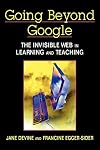
Have you ever met a fabulous reference librarian who seemed to be able to find the answer to any question not matter how difficult? Kids and teens and perhaps most adults say they have met this librarian named Google. Of course Google provides the right answer, the right information, and the best information to every query whether I am a fourth grader or a college professor. NOT! Well, what’s missing? I already get too much information when I do a search, what more should I want or need? show more Our expert authors answer this question in a depth that makes the difference between a novice and an information professional. They teach us and teach us how to teach what is beyond the scope of what Google and other search engines might provide access to. It is called the invisible web or the deep web and if you have not had a major professional development experience in this type of searching and use with kids and teens, then this book is for you. Yes, the examples are a bit above the K-12 level but the search techniques are not and the examples are easily adapted. Kids and teens will never go beyond Google…well, neither will teachers…unless we guide them there. If I as a professional information specialist don’t have twenty techniques at my finger tips for searching the invisible web or really don’t know what that is, then take a course or read this book. Put on that magical hat that makes your expert ices sought out and valued. show less
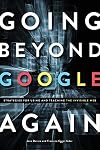
In the short five years since the author’s first book was published, searching the invisible web for the hard-to-find, has become even more complex. For young people, especially high schoolers, who are doing advanced research, the teacher librarian needs to have advanced skills in information searching. In these essays, the authors provide not just an introduction to the topic but plenty of examples and tips for using a variety of search engines to uncover items not usually floating to the show more top of a Google search. So, take a serious look at your own skill level and decide if you have the kinds of skills that make you the magician of finding and locating. This book may just be the ticket to the magical powers you need to stay on top of that mysterious behavior of the information world. Recommended. show less
DEVINE, Jane and Francine EGGER-SIDER. Going Beyond Google: The Invisible Web in Learning and Teaching. 156 pp. contents. list of figures and tables. appendixes. index. Neal-Schuman Publishers, Inc. Jan. 2009. tr. $65.00. ISBN-13: 978-1555706333. LC ZA4237 .D4 2009.
Information professionals Devin and Egger-Sider, begin by distinguishing between the visible web and the invisible web. The visible, or surface web, contains information found by general-purpose search engines like Google. The show more invisible web is composed of more information, with some studies indicating it is 500 times larger than the visible web. Because the information in the invisible web is not accessible to general-purpose search engines, it is important to learn how to access this information and to teach it to other researchers. The authors examine studies compiled about research regarding use of the visible web and then map teaching the use of the invisible web to the standards of ACRL (Association of College and Research Libraries, American Library Association). Discussions of instruction include concepts of web searching, sample assignments, suggested venues for teaching, and activities. A chapter on Internet research strategies incorporates case studies. The section on tools for searching the invisible web contains a selection of general subject directories, databases, specialized search engines and niche search engines. The final chapter examines the shifting boundaries of the visible and invisible web and includes descriptions of initiatives to bring both types of web content more easily to searchers through common search mechanisms. Throughout the text are tables, graphics and screen shots of detailed web searches. Suggested audio and video materials available on the web are listed in Appendix B. This creditable text is a stimulating exploration of ways to teach invisible web research and is highly recommended for all information professionals.
Rebecca Sheridan show less
Information professionals Devin and Egger-Sider, begin by distinguishing between the visible web and the invisible web. The visible, or surface web, contains information found by general-purpose search engines like Google. The show more invisible web is composed of more information, with some studies indicating it is 500 times larger than the visible web. Because the information in the invisible web is not accessible to general-purpose search engines, it is important to learn how to access this information and to teach it to other researchers. The authors examine studies compiled about research regarding use of the visible web and then map teaching the use of the invisible web to the standards of ACRL (Association of College and Research Libraries, American Library Association). Discussions of instruction include concepts of web searching, sample assignments, suggested venues for teaching, and activities. A chapter on Internet research strategies incorporates case studies. The section on tools for searching the invisible web contains a selection of general subject directories, databases, specialized search engines and niche search engines. The final chapter examines the shifting boundaries of the visible and invisible web and includes descriptions of initiatives to bring both types of web content more easily to searchers through common search mechanisms. Throughout the text are tables, graphics and screen shots of detailed web searches. Suggested audio and video materials available on the web are listed in Appendix B. This creditable text is a stimulating exploration of ways to teach invisible web research and is highly recommended for all information professionals.
Rebecca Sheridan show less
A fascinating introduction to the concept of the Visible and Invisible Web. Well structured and interesting read.
You May Also Like
Associated Authors
Statistics
- Works
- 2
- Members
- 111
- Popularity
- #175,483
- Rating
- 4.0
- Reviews
- 7
- ISBNs
- 7