
Becky Manawatu
Author of Auē
Works by Becky Manawatu
Tagged
Common Knowledge
- Birthdate
- 1982
- Gender
- female
- Occupations
- reporter
- Nationality
- Maori (Ngāi Tahu)
- Birthplace
- Nelson, New Zealand
- Places of residence
- Westport, New Zealand
Waimangaroa, New Zealand - Map Location
- New Zealand
Members
Reviews

The author Merritt Tierce has said, “[A] book ought to make a wound and then stitch it up.” Auē succeeds at this, though I feel like my heart has yet to heal from this heart-wrenching story. This is a horribly difficult book to read: There is so much tragedy, so much horrific violence, so much senseless cruelty, but also moments of redeeming tenderness.
Maori language is used throughout, liberally and organically (a glossary of Maori terms is provided). It is beautifully written, in show more language that is deceptively simple and direct.
“They’d fallen in love and they’d made a system so they could live together without breaking things, without breaking each other.”
“‘Ever cut glass, boy? Makes you feel magic. Smashing glass makes you feel like an animal, cutting it makes you feel magic. There was so much glass broken that night, I been making broken glass into beautiful things ever since.’”
“All those years ago, it is still beautiful to see two creatures under the spell of lovely things. Lovely thoughts, lovely wishes. Their own loveliness. But they’re fools in love. Tangata whenua, we have myth and legend, not fairy tales. Have they forgotten who they are?”
One of the best books I’ve read this year. show less
Maori language is used throughout, liberally and organically (a glossary of Maori terms is provided). It is beautifully written, in show more language that is deceptively simple and direct.
“They’d fallen in love and they’d made a system so they could live together without breaking things, without breaking each other.”
“‘Ever cut glass, boy? Makes you feel magic. Smashing glass makes you feel like an animal, cutting it makes you feel magic. There was so much glass broken that night, I been making broken glass into beautiful things ever since.’”
“All those years ago, it is still beautiful to see two creatures under the spell of lovely things. Lovely thoughts, lovely wishes. Their own loveliness. But they’re fools in love. Tangata whenua, we have myth and legend, not fairy tales. Have they forgotten who they are?”
One of the best books I’ve read this year. show less
Auē is an outstanding debut novel. In it, Becky Manawatu gives us a devastating portrayal of Māori culture in today's New Zealand. So many people seem lost, without resources, victims of violence and addition.This makes the novel hard to read in places, but Manawatu's characters are so engaging that we want to see how their stories end.
We know there's been a tragedy in the family from the first pages when Taukiri (Tauk) drops his brother Ārama (Ari) off to live with their aunt Katy. As show more the novel progresses, we start to learn about the tragedies that have affected the family. Told from several viewpoints, I found the brothers' stories especially moving. Ari's voice is poignant as Manawatu does an excellent job of creating the voice of a child who is trying to be brave in the face of terrible loss that he doesn't completely understand.
And the prose is breathtaking. One description of Tauk surfing is like a poem: "Drop down the face of the first wave, and turn quick, cut back, up, down. Forgive her. I forgive so much my heart swells full up. Like she is, swelling up. swelling up over us being back together again. Licked better, like an old bruise and she wants to make it all better now. And the blood in the bruise of me uncrystallises, and decides to swim about again, beneath my kissed-better skin." The novel is full of such descriptive, poetic language.
Yet, despite the tragedy, we see hope, if only families can forgive. show less
We know there's been a tragedy in the family from the first pages when Taukiri (Tauk) drops his brother Ārama (Ari) off to live with their aunt Katy. As show more the novel progresses, we start to learn about the tragedies that have affected the family. Told from several viewpoints, I found the brothers' stories especially moving. Ari's voice is poignant as Manawatu does an excellent job of creating the voice of a child who is trying to be brave in the face of terrible loss that he doesn't completely understand.
And the prose is breathtaking. One description of Tauk surfing is like a poem: "Drop down the face of the first wave, and turn quick, cut back, up, down. Forgive her. I forgive so much my heart swells full up. Like she is, swelling up. swelling up over us being back together again. Licked better, like an old bruise and she wants to make it all better now. And the blood in the bruise of me uncrystallises, and decides to swim about again, beneath my kissed-better skin." The novel is full of such descriptive, poetic language.
Yet, despite the tragedy, we see hope, if only families can forgive. show less
 This review was written for LibraryThing Early Reviewers.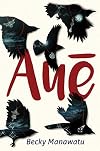
As this novel opens, 20 year old Taukiri is dropping his younger brother Arama (or Ari) at their Aunt Kat's. Their parents, who had adopted Taukiri, when he was an infant, have just died in a car accident. Years before, Taukiri's biological father had been killed in gang violence and his biological mother had abandoned him. Ari's mother was the sister of Taukiri's father, and she took him in and raised him. Now after the death of his adoptive parents, he feels unable to care for Ari. Ari show more feels abandoned at Aunt Kat's and misses Taukiri. While Aunt Kat is kind and loving, her husband Uncle Stuart is abusive and violent towards both Kat and Ari. The one bright spot for Ari is his new friendship with Beth, who lives next door with her father Tom.
The story alternates between various timelines and various points of view. There's the story of Toko and Jade, Taukirii's mother and father, and their involvement with gang life as well as their love story, shattered by Toko's death. There's the story of Taukiri trying to find himself in the city after dropping Ari off at Aunt Kat's. And there's the story of Ari, as his friendship with Beth grows, and he begins to love and feel loved by Aunt Kat, but also suffers the horrible abuse by Stu.
This was a heart-wrenching story, extremely well-written and with well-developed and very real characters. While a great deal of the plot is dark and distressing, the friendship between Ari and Beth is a delight. The contrasts between the warm relationships and the violence and senseless cruelty make this a compelling read.
Recommended
3 1/2 stars show less
The story alternates between various timelines and various points of view. There's the story of Toko and Jade, Taukirii's mother and father, and their involvement with gang life as well as their love story, shattered by Toko's death. There's the story of Taukiri trying to find himself in the city after dropping Ari off at Aunt Kat's. And there's the story of Ari, as his friendship with Beth grows, and he begins to love and feel loved by Aunt Kat, but also suffers the horrible abuse by Stu.
This was a heart-wrenching story, extremely well-written and with well-developed and very real characters. While a great deal of the plot is dark and distressing, the friendship between Ari and Beth is a delight. The contrasts between the warm relationships and the violence and senseless cruelty make this a compelling read.
Recommended
3 1/2 stars show less
Auē: 1. (verb) (-tia) to cry, howl, groan, wail, bawl.
Nō tō mātau mōhiotanga kua mate, kāore i ārikarika te auē o ō mātau waha (HP 1991:19). / When we knew that she had died we howled our eyes out.
https://maoridictionary.co.nz/word/524
Understanding the meaning of the verb auē doesn't quite cover the visceral, gut-wrenching capacity of it in the way that the novel AUĒ depicts it. The characters in this novel experience it in all sorts of ways, including love, lamentation, show more surprise, annoyance, and sorrow.
AUĒ is on one level, a brutal novel. The subject matter is challenging, confronting and profoundly sorrowful. On another level it's hopeful, the voices that tell their stories are glorious, deeply human and cautiously optimistic. There's amazing writing here, telling difficult tales of human failure in a delicate, almost lyrical style, never downplaying the awfulness but somehow adding hope and light to some pretty dark subject matter.
To be clear, it's the darkest of dark subjects at points, with gun violence, animal cruelty, domestic violence, gang culture and drug addiction. Interwoven into those darker aspects there are insights into local belief systems and glimpses of love and the support and care of family. It also carefully explores the legacy of inter-generational trauma and learned behaviours.
The story is told from three different perspectives, Ārama (eight year old boy), Taukiri (his older brother) and a couple, Jade and Toko. The story is told in alternating viewpoints with the two boys in the present and the couple in the past. Alongside the telling of these three different perspectives are moments of description of place that are breathtakingly beautiful, but it's the internal monologues, pictures and views of the main characters that are the most descriptive, illuminating and sobering. There are also touches from another world, a view from the wind or a spirit, giving perspective and providing deeper understanding.
It's this aspect that makes AUĒ comparable to Alan Duff's ONCE WERE WARRIORS, but a completely different undertaking. They both touch on the same subject matter, the same violence, drug culture, domestic abuse and inter-generational trauma, but AUĒ, on reflection (and you'll be doing a lot of that after reading it), seemed to this reader to be like, but not the same as the other. Perhaps it's the sheer beauty of the voices of the characters here, perhaps it was the little touches of humanity - the coping mechanisms, the bandaids Ārama uses to cover up emotional and physical hurts.
Whatever it was AUĒ was gut-wrenching, uplifting, horrifying, saddening to the point of tears, horrifying to the point of having to put it down, and hopeful to the point of more tears.
https://www.austcrimefiction.org/review/aue-becky-manawatu show less
Nō tō mātau mōhiotanga kua mate, kāore i ārikarika te auē o ō mātau waha (HP 1991:19). / When we knew that she had died we howled our eyes out.
https://maoridictionary.co.nz/word/524
Understanding the meaning of the verb auē doesn't quite cover the visceral, gut-wrenching capacity of it in the way that the novel AUĒ depicts it. The characters in this novel experience it in all sorts of ways, including love, lamentation, show more surprise, annoyance, and sorrow.
AUĒ is on one level, a brutal novel. The subject matter is challenging, confronting and profoundly sorrowful. On another level it's hopeful, the voices that tell their stories are glorious, deeply human and cautiously optimistic. There's amazing writing here, telling difficult tales of human failure in a delicate, almost lyrical style, never downplaying the awfulness but somehow adding hope and light to some pretty dark subject matter.
To be clear, it's the darkest of dark subjects at points, with gun violence, animal cruelty, domestic violence, gang culture and drug addiction. Interwoven into those darker aspects there are insights into local belief systems and glimpses of love and the support and care of family. It also carefully explores the legacy of inter-generational trauma and learned behaviours.
The story is told from three different perspectives, Ārama (eight year old boy), Taukiri (his older brother) and a couple, Jade and Toko. The story is told in alternating viewpoints with the two boys in the present and the couple in the past. Alongside the telling of these three different perspectives are moments of description of place that are breathtakingly beautiful, but it's the internal monologues, pictures and views of the main characters that are the most descriptive, illuminating and sobering. There are also touches from another world, a view from the wind or a spirit, giving perspective and providing deeper understanding.
It's this aspect that makes AUĒ comparable to Alan Duff's ONCE WERE WARRIORS, but a completely different undertaking. They both touch on the same subject matter, the same violence, drug culture, domestic abuse and inter-generational trauma, but AUĒ, on reflection (and you'll be doing a lot of that after reading it), seemed to this reader to be like, but not the same as the other. Perhaps it's the sheer beauty of the voices of the characters here, perhaps it was the little touches of humanity - the coping mechanisms, the bandaids Ārama uses to cover up emotional and physical hurts.
Whatever it was AUĒ was gut-wrenching, uplifting, horrifying, saddening to the point of tears, horrifying to the point of having to put it down, and hopeful to the point of more tears.
https://www.austcrimefiction.org/review/aue-becky-manawatu show less
Lists
Awards


You May Also Like
Associated Authors
Statistics
- Works
- 2
- Members
- 228
- Popularity
- #98,696
- Rating
- 4.1
- Reviews
- 23
- ISBNs
- 18
- Languages
- 2
