

Sam Mills (1)
Author of The Watermark
For other authors named Sam Mills, see the disambiguation page.
About the Author
Image credit: The Observer
Works by Sam Mills
Associated Works
Tagged
Common Knowledge
- Gender
- female
- Nationality
- United Kingdom
- Places of residence
- London, England, UK
Members
Reviews
(Note to anyone stumbling across this: I am not an unbiased reviewer, because the author, Sam Mills, was one of the judges on a panel that awarded me a writing prize.)
As usual I am a little late in recording my thoughts on this one, so the memories are already starting to fade.
What I liked: the story of teenage boys trying to find their way - to discover a religion that makes sense to them, and to make sense of society. It was done in a very convincing way, especially with the main show more character, Jon, the son of a vicar who has become disillusioned with Christianity largely due to resentment of his father's abandonment of him, but also just not feeling the presence of God: "People kept telling me about God; I'd drawn sticky crayon pictures of Noah and Jesus at Sunday School; I'd heard my father expound a thousand sermons, but their words were just words: none of them ignited a spark and I was worried there was something deeply wrong with me."
The resentment of society, too, is well drawn. The boys' attempt to save the world by kidnapping a suspected "terrorist" has obvious parallels to recent government actions, and much of their rhetoric to justify their actions has echoes of speeches by the likes of Donald Rumsfeld. I like the implicit connection between the actions of a government and the effect on young people, something I've been thinking about quite a bit. We worry about the violence of 'youth culture these days', but it doesn't occur to us to wonder whether they are learning their barbarism from us.
When I reviewed JG Ballard's 'Rushing to Paradise', I complained about the 'Lord of the Flies' assumption that people outside of the rules of society inevitably become murderous totem-worshipping lunatics. In this book I felt that assumption was subverted. The boys end up doing pretty terrible things, but there are plenty of moments of doubt, and the motivation seems to be more about fear of standing up to the leader and the others, fear of being excluded from the group. They stay silent despite their doubts, and I think that's a more realistic depiction of how a lot of 'evil' acts take place.
What I didn't like: the plot sometimes veers on the edge of credulity. I suppose given the shooting sprees, etc., that happen in schools, a group of boys kidnapping a classmate and threatening to kill her is not so incredible. But still some of it felt a little extreme to me, and especially towards the end there were a few too many twists and turns than I felt was necessary. They did heighten the tension, but it felt a bit dragged out. Also, while I got a really vivid sense of the main character and also of the leader and the kidnapped 'terrorist', the other boys in the group didn't feel so real to me. show less
As usual I am a little late in recording my thoughts on this one, so the memories are already starting to fade.
What I liked: the story of teenage boys trying to find their way - to discover a religion that makes sense to them, and to make sense of society. It was done in a very convincing way, especially with the main show more character, Jon, the son of a vicar who has become disillusioned with Christianity largely due to resentment of his father's abandonment of him, but also just not feeling the presence of God: "People kept telling me about God; I'd drawn sticky crayon pictures of Noah and Jesus at Sunday School; I'd heard my father expound a thousand sermons, but their words were just words: none of them ignited a spark and I was worried there was something deeply wrong with me."
The resentment of society, too, is well drawn. The boys' attempt to save the world by kidnapping a suspected "terrorist" has obvious parallels to recent government actions, and much of their rhetoric to justify their actions has echoes of speeches by the likes of Donald Rumsfeld. I like the implicit connection between the actions of a government and the effect on young people, something I've been thinking about quite a bit. We worry about the violence of 'youth culture these days', but it doesn't occur to us to wonder whether they are learning their barbarism from us.
When I reviewed JG Ballard's 'Rushing to Paradise', I complained about the 'Lord of the Flies' assumption that people outside of the rules of society inevitably become murderous totem-worshipping lunatics. In this book I felt that assumption was subverted. The boys end up doing pretty terrible things, but there are plenty of moments of doubt, and the motivation seems to be more about fear of standing up to the leader and the others, fear of being excluded from the group. They stay silent despite their doubts, and I think that's a more realistic depiction of how a lot of 'evil' acts take place.
What I didn't like: the plot sometimes veers on the edge of credulity. I suppose given the shooting sprees, etc., that happen in schools, a group of boys kidnapping a classmate and threatening to kill her is not so incredible. But still some of it felt a little extreme to me, and especially towards the end there were a few too many twists and turns than I felt was necessary. They did heighten the tension, but it felt a bit dragged out. Also, while I got a really vivid sense of the main character and also of the leader and the kidnapped 'terrorist', the other boys in the group didn't feel so real to me. show less
This book was extremely compelling and disturbing. Jon was a likeable character, caught up in something that quickly spirals out of control. He is very conflicted and heavily influenced by the cult leader, leading him to change his mind about what he believes. It was good getting some background on the boys and finding out about their lives and seeing what might have pushed them to do something this awful.
The themes of religion are very strong and I liked that religion was not dismissed show more entirely because of a few extremists. It was handled sensitively and seemed quite realistic. show less
The themes of religion are very strong and I liked that religion was not dismissed show more entirely because of a few extremists. It was handled sensitively and seemed quite realistic. show less
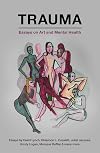
Trauma is an anthology of thirty-two essays by contemporary writers, sharing with remarkable frankness their experience of mental illness caused by, and sometimes causing trauma. Some of the writers have experienced physical, sexual and emotional abuse; others have lived with drug and/or alcohol addiction. Their illnesses have been diagnosed (and sometimes misdiagnosed) as depression; schizophrenia, bipolar disorder, gender dysphoria and insomnia. All of them are survivors, and art of one show more kind or another has been intrinsic to their sense of having a future.
The book is not one that can be read in a sustained way. I've read it over successive afternoons, just one or sometimes two essays at a time. It takes time to reflect on, and absorb the story that the contributors have to tell. Some stand out more than others: I mentioned 'We Awful, Awful' by Ian Boutlon in my review of The Morbids because it had such an impact on me. It made me admire the self-mastery of people who suffer this debilitating condition by developing powerful coping strategies.
Momina Masood in 'We Still Went to the Movies' writes about the importance of going to the cinema as a distraction and healing—and how this became a covert activity when religious extremists took over in Pakistan. Going to the movies became something more than seeking entertainment because it was considered un-Islamic and cinemas were often summarily shut down or burnt and destroyed.
Rowena Macdonald's essay is a brilliant piece using format to make a powerful point. In the left hand column the reader sees the anxiety and panic; in the right hand column we see the facade of 'reality.'
To read the rest of my review please visit https://anzlitlovers.com/2021/03/14/trauma-essays-on-art-and-mental-health-edite... show less
The book is not one that can be read in a sustained way. I've read it over successive afternoons, just one or sometimes two essays at a time. It takes time to reflect on, and absorb the story that the contributors have to tell. Some stand out more than others: I mentioned 'We Awful, Awful' by Ian Boutlon in my review of The Morbids because it had such an impact on me. It made me admire the self-mastery of people who suffer this debilitating condition by developing powerful coping strategies.
Avoid the words, he said. And repetition. No Philip Glass. No Terry Riley. Earworms lie in wait under all harmony. Oddly, the more mad-sounding the music, the harder it is for it to attack you when you break. So embrace discord. Stockhausen. Soft Machine. There's nothing your head can do to make them sound worse. (p.153)
Momina Masood in 'We Still Went to the Movies' writes about the importance of going to the cinema as a distraction and healing—and how this became a covert activity when religious extremists took over in Pakistan. Going to the movies became something more than seeking entertainment because it was considered un-Islamic and cinemas were often summarily shut down or burnt and destroyed.
[General] Zia had banned all types of collectivisation. Cinema was the only space where you could be part of a public, without it being a jalsa (protest rally) or a janaza (funeral.) (p.236)
Rowena Macdonald's essay is a brilliant piece using format to make a powerful point. In the left hand column the reader sees the anxiety and panic; in the right hand column we see the facade of 'reality.'
To read the rest of my review please visit https://anzlitlovers.com/2021/03/14/trauma-essays-on-art-and-mental-health-edite... show less

2025 book #30. 2025. When visiting reclusive author Augustus Fate in rural England, Jaime and Rachel find themselves trapped in Fate's unfinished novel. The only way out seems to be through other novels set in different times and genres. A bit of an odd story but a good read.
Lists
Awards


You May Also Like
Associated Authors
Statistics
- Works
- 8
- Also by
- 1
- Members
- 164
- Popularity
- #129,116
- Rating
- 3.5
- Reviews
- 9
- ISBNs
- 35
- Languages
- 5