
Ben Smith (11)
Author of Doggerland
For other authors named Ben Smith, see the disambiguation page.
Works by Ben Smith
Tagged
Common Knowledge
Members
Reviews

This is excellently done.
It is set in a future where there is a forest of wind turbines on Doggerland, rather than the ancient forest that was once there. The turbines are maintained by Jem (the boy) and Griel (the old man) to the best of their ability. The supply boat, with the pilot, never comes with enough parts and will bring anything if traded for enough parts, generators, gearboxes and so on taken from the turbines themselves. These are the only 3 people we hear from, although the show more boy's father is as much a character as these, even though he is entirely absent. The whole is overlaid with the company, they own everything, the clothes are all company issue, the food is tinned or packets and is reconstituted, designed to look like something, rather than actually food. There is significant hint of sea level rises, with the coastline having been changed from old maps to the present. The boy tries fishing and catches nothing the old man has nets that collect bottles and bags and, ultimately, microplastics. It is a sorry state for a plant to be in, and yet it doesn't feel all that far fetched.
The boy is young and idealistic, flinching at the old man's trading of parts stripped from the turbines, wanting to repair them, to keep the field running. Gradually, he hears more of his father and wants, like his father, to leave the field and the company and motor away into the open sea. He finds evidence of his father's demise, which is why he's on the rig, he had to take his father's place and fulfil the contract. The small activities of two men isolated on the rig take centre stage. They eat, the old man makes hooch, they play pool on the listing pool table with broken balls and a ripped baize, they make repairs, they experience the weather and they try to get along as best they can in their different ways.
It is told in a very understated way and reminded me of the sea itself At times, very bleak and flat, at others violent but the author is always in control of the language. It is beautifully done. The passages where Doggerland of the past is examined are lyrical and lush in comparison to the sea of their current state. There is use of rhythm and repetition of words to reinforce a point or emphasise a passage. There is one crisis point and that forces a fracture that seems to be a turning point in the story, and yet the boy does something that seems out of character, but shows real character. They are so finely crafted it is like the machines of the outer field, all working so seamlessly that you are only just aware of the mechanics that underpin it. The real power is the descriptive writing. The boy's first taste of a mystery tin that sounds a lot like tinned strawberries made my mouth water. His first experience of coffee is exquisite, the shakes and headaches and all. The weather is so real it could be raining right now. it's really well put together.
Dystopia isn't usually my go to, but this was exceptional and I am very glad I picked it up on a whim. It's not all that long, less than 10 hours on audio, but I could have listened for a lot longer. show less
It is set in a future where there is a forest of wind turbines on Doggerland, rather than the ancient forest that was once there. The turbines are maintained by Jem (the boy) and Griel (the old man) to the best of their ability. The supply boat, with the pilot, never comes with enough parts and will bring anything if traded for enough parts, generators, gearboxes and so on taken from the turbines themselves. These are the only 3 people we hear from, although the show more boy's father is as much a character as these, even though he is entirely absent. The whole is overlaid with the company, they own everything, the clothes are all company issue, the food is tinned or packets and is reconstituted, designed to look like something, rather than actually food. There is significant hint of sea level rises, with the coastline having been changed from old maps to the present. The boy tries fishing and catches nothing the old man has nets that collect bottles and bags and, ultimately, microplastics. It is a sorry state for a plant to be in, and yet it doesn't feel all that far fetched.
The boy is young and idealistic, flinching at the old man's trading of parts stripped from the turbines, wanting to repair them, to keep the field running. Gradually, he hears more of his father and wants, like his father, to leave the field and the company and motor away into the open sea. He finds evidence of his father's demise, which is why he's on the rig, he had to take his father's place and fulfil the contract. The small activities of two men isolated on the rig take centre stage. They eat, the old man makes hooch, they play pool on the listing pool table with broken balls and a ripped baize, they make repairs, they experience the weather and they try to get along as best they can in their different ways.
It is told in a very understated way and reminded me of the sea itself At times, very bleak and flat, at others violent but the author is always in control of the language. It is beautifully done. The passages where Doggerland of the past is examined are lyrical and lush in comparison to the sea of their current state. There is use of rhythm and repetition of words to reinforce a point or emphasise a passage. There is one crisis point and that forces a fracture that seems to be a turning point in the story, and yet the boy does something that seems out of character, but shows real character. They are so finely crafted it is like the machines of the outer field, all working so seamlessly that you are only just aware of the mechanics that underpin it. The real power is the descriptive writing. The boy's first taste of a mystery tin that sounds a lot like tinned strawberries made my mouth water. His first experience of coffee is exquisite, the shakes and headaches and all. The weather is so real it could be raining right now. it's really well put together.
Dystopia isn't usually my go to, but this was exceptional and I am very glad I picked it up on a whim. It's not all that long, less than 10 hours on audio, but I could have listened for a lot longer. show less
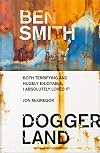
Doggerland is the name given in the 1990s to an area of land, now submerged beneath the North Sea, which connected Great Britain to Continental Europe. Doggerland once extended to modern-day Denmark and far north to the Faroe Islands. It was a grassland roamed by mammoth, lion, red deer – and their human hunters – but melting ice turned it into an area of marshes and wetlands before it was finally and definitively claimed by the waves around 8,000 years ago. (Incidentally, Doggerland was show more recently in the news following exciting archaeological discoveries).
The idea of a submerged world resonates with mythical and poetic associations and, as a result, “Doggerland” lends itself well as the title of Ben Smith’s debut novel. The work, in fact, portrays an unspecified but seemingly not-so-distant future, where global warming and rising sea levels (possibly exacerbated by some other cataclysm) have eroded the coastline and brought to an end civilisation as we know it.
This strange, new world is made stranger still by the purposely constrained stage against which the narrative plays out. Smith focuses on two main characters, maintenance men on an enormous wind farm out in the North Sea, who lead a solitary existence on a decrepit rig amongst the rusting turbines. Although we are given their names, they are generally referred to in the novel as “the Boy” and “the Old Man”. Early on in the book, we are told that of course, the boy was not really a boy, any more than the old man was all that old; but the names are relative, and out of the grey, some kind of distinction was necessary. It’s a significant observation, because much of the novel’s undeniable power derives from a skilful use of a deliberately limited palette. The men’s life is marked by a sense of claustrophobia, the burden of an inescapable fate. The monotony of the routine is only broken by occasional visits of the Supply Boat and its talkative “Pilot”, who is the only link with what remains of the ‘mainland’. The struggle to keep the turbines working with limited resources becomes an image of the losing battle against the rising oceans, at once awesome and terrible in their vastness. The Romantic notion of the Sublime is given an environmentalist twist. One can smell the rust and smell the sea-salt.
Whilst the reader is made to share the ennui of the Boy and his mentor, Smith turns his story into a gripping one by making the most of the scant plot elements. For instance, we are told that the Boy was sent on the rig to replace his father, after the latter’s unsuccessful escape attempt. What exactly happened remains unclear but, together with the Boy, we glean some disturbing details along the way – in this regard, Smith takes a page out of dystopian post-apocalyptic fiction, and suggests that society has been taken over by some sort of totalitarian regime of whom the Boy’s father was, presumably, a victim. Part of the pleasure in reading this novel comes from trying to piece together an understanding of what exactly is happening on the mainland, considering that the perspective given to us is that of two people stranded in the middle of nowhere.
At times, Doggerland reminded me of Megan Hunter’s The End We Start From, which also describes a future marked by rising water levels. However, whereas Hunter’s vision, with its images of creation, birth and maternity, is ultimately a hopeful one, Smith’s is devoid of any feminine figure, suggesting a sterility in the human condition which can only lead to its annihilation. Doggerland is haunting in its bleakness:
The wind blows, the branches creak and turn. Somewhere in the metal forest, a tree slumps, groans but does not quite fall. The landscape holds fast, for a moment. For how long? It may be centuries. Barely worth mentioning in the lifetime of water...
More about this novel, with music to listen to at: https://endsoftheword.blogspot.com/2018/11/become-ocean-ben-smiths-doggerland.ht... show less
The idea of a submerged world resonates with mythical and poetic associations and, as a result, “Doggerland” lends itself well as the title of Ben Smith’s debut novel. The work, in fact, portrays an unspecified but seemingly not-so-distant future, where global warming and rising sea levels (possibly exacerbated by some other cataclysm) have eroded the coastline and brought to an end civilisation as we know it.
This strange, new world is made stranger still by the purposely constrained stage against which the narrative plays out. Smith focuses on two main characters, maintenance men on an enormous wind farm out in the North Sea, who lead a solitary existence on a decrepit rig amongst the rusting turbines. Although we are given their names, they are generally referred to in the novel as “the Boy” and “the Old Man”. Early on in the book, we are told that of course, the boy was not really a boy, any more than the old man was all that old; but the names are relative, and out of the grey, some kind of distinction was necessary. It’s a significant observation, because much of the novel’s undeniable power derives from a skilful use of a deliberately limited palette. The men’s life is marked by a sense of claustrophobia, the burden of an inescapable fate. The monotony of the routine is only broken by occasional visits of the Supply Boat and its talkative “Pilot”, who is the only link with what remains of the ‘mainland’. The struggle to keep the turbines working with limited resources becomes an image of the losing battle against the rising oceans, at once awesome and terrible in their vastness. The Romantic notion of the Sublime is given an environmentalist twist. One can smell the rust and smell the sea-salt.
Whilst the reader is made to share the ennui of the Boy and his mentor, Smith turns his story into a gripping one by making the most of the scant plot elements. For instance, we are told that the Boy was sent on the rig to replace his father, after the latter’s unsuccessful escape attempt. What exactly happened remains unclear but, together with the Boy, we glean some disturbing details along the way – in this regard, Smith takes a page out of dystopian post-apocalyptic fiction, and suggests that society has been taken over by some sort of totalitarian regime of whom the Boy’s father was, presumably, a victim. Part of the pleasure in reading this novel comes from trying to piece together an understanding of what exactly is happening on the mainland, considering that the perspective given to us is that of two people stranded in the middle of nowhere.
At times, Doggerland reminded me of Megan Hunter’s The End We Start From, which also describes a future marked by rising water levels. However, whereas Hunter’s vision, with its images of creation, birth and maternity, is ultimately a hopeful one, Smith’s is devoid of any feminine figure, suggesting a sterility in the human condition which can only lead to its annihilation. Doggerland is haunting in its bleakness:
The wind blows, the branches creak and turn. Somewhere in the metal forest, a tree slumps, groans but does not quite fall. The landscape holds fast, for a moment. For how long? It may be centuries. Barely worth mentioning in the lifetime of water...
More about this novel, with music to listen to at: https://endsoftheword.blogspot.com/2018/11/become-ocean-ben-smiths-doggerland.ht... show less
Doggerland is the name given in the 1990s to an area of land, now submerged beneath the North Sea, which connected Great Britain to Continental Europe. Doggerland once extended to modern-day Denmark and far north to the Faroe Islands. It was a grassland roamed by mammoth, lion, red deer – and their human hunters – but melting ice turned it into an area of marshes and wetlands before it was finally and definitively claimed by the waves around 8,000 years ago. (Incidentally, Doggerland was show more recently in the news following exciting archaeological discoveries).
The idea of a submerged world resonates with mythical and poetic associations and, as a result, “Doggerland” lends itself well as the title of Ben Smith’s debut novel. The work, in fact, portrays an unspecified but seemingly not-so-distant future, where global warming and rising sea levels (possibly exacerbated by some other cataclysm) have eroded the coastline and brought to an end civilisation as we know it.
This strange, new world is made stranger still by the purposely constrained stage against which the narrative plays out. Smith focuses on two main characters, maintenance men on an enormous wind farm out in the North Sea, who lead a solitary existence on a decrepit rig amongst the rusting turbines. Although we are given their names, they are generally referred to in the novel as “the Boy” and “the Old Man”. Early on in the book, we are told that of course, the boy was not really a boy, any more than the old man was all that old; but the names are relative, and out of the grey, some kind of distinction was necessary. It’s a significant observation, because much of the novel’s undeniable power derives from a skilful use of a deliberately limited palette. The men’s life is marked by a sense of claustrophobia, the burden of an inescapable fate. The monotony of the routine is only broken by occasional visits of the Supply Boat and its talkative “Pilot”, who is the only link with what remains of the ‘mainland’. The struggle to keep the turbines working with limited resources becomes an image of the losing battle against the rising oceans, at once awesome and terrible in their vastness. The Romantic notion of the Sublime is given an environmentalist twist. One can smell the rust and smell the sea-salt.
Whilst the reader is made to share the ennui of the Boy and his mentor, Smith turns his story into a gripping one by making the most of the scant plot elements. For instance, we are told that the Boy was sent on the rig to replace his father, after the latter’s unsuccessful escape attempt. What exactly happened remains unclear but, together with the Boy, we glean some disturbing details along the way – in this regard, Smith takes a page out of dystopian post-apocalyptic fiction, and suggests that society has been taken over by some sort of totalitarian regime of whom the Boy’s father was, presumably, a victim. Part of the pleasure in reading this novel comes from trying to piece together an understanding of what exactly is happening on the mainland, considering that the perspective given to us is that of two people stranded in the middle of nowhere.
At times, Doggerland reminded me of Megan Hunter’s The End We Start From, which also describes a future marked by rising water levels. However, whereas Hunter’s vision, with its images of creation, birth and maternity, is ultimately a hopeful one, Smith’s is devoid of any feminine figure, suggesting a sterility in the human condition which can only lead to its annihilation. Doggerland is haunting in its bleakness:
The wind blows, the branches creak and turn. Somewhere in the metal forest, a tree slumps, groans but does not quite fall. The landscape holds fast, for a moment. For how long? It may be centuries. Barely worth mentioning in the lifetime of water...
More about this novel, with music to listen to at: https://endsoftheword.blogspot.com/2018/11/become-ocean-ben-smiths-doggerland.ht... show less
The idea of a submerged world resonates with mythical and poetic associations and, as a result, “Doggerland” lends itself well as the title of Ben Smith’s debut novel. The work, in fact, portrays an unspecified but seemingly not-so-distant future, where global warming and rising sea levels (possibly exacerbated by some other cataclysm) have eroded the coastline and brought to an end civilisation as we know it.
This strange, new world is made stranger still by the purposely constrained stage against which the narrative plays out. Smith focuses on two main characters, maintenance men on an enormous wind farm out in the North Sea, who lead a solitary existence on a decrepit rig amongst the rusting turbines. Although we are given their names, they are generally referred to in the novel as “the Boy” and “the Old Man”. Early on in the book, we are told that of course, the boy was not really a boy, any more than the old man was all that old; but the names are relative, and out of the grey, some kind of distinction was necessary. It’s a significant observation, because much of the novel’s undeniable power derives from a skilful use of a deliberately limited palette. The men’s life is marked by a sense of claustrophobia, the burden of an inescapable fate. The monotony of the routine is only broken by occasional visits of the Supply Boat and its talkative “Pilot”, who is the only link with what remains of the ‘mainland’. The struggle to keep the turbines working with limited resources becomes an image of the losing battle against the rising oceans, at once awesome and terrible in their vastness. The Romantic notion of the Sublime is given an environmentalist twist. One can smell the rust and smell the sea-salt.
Whilst the reader is made to share the ennui of the Boy and his mentor, Smith turns his story into a gripping one by making the most of the scant plot elements. For instance, we are told that the Boy was sent on the rig to replace his father, after the latter’s unsuccessful escape attempt. What exactly happened remains unclear but, together with the Boy, we glean some disturbing details along the way – in this regard, Smith takes a page out of dystopian post-apocalyptic fiction, and suggests that society has been taken over by some sort of totalitarian regime of whom the Boy’s father was, presumably, a victim. Part of the pleasure in reading this novel comes from trying to piece together an understanding of what exactly is happening on the mainland, considering that the perspective given to us is that of two people stranded in the middle of nowhere.
At times, Doggerland reminded me of Megan Hunter’s The End We Start From, which also describes a future marked by rising water levels. However, whereas Hunter’s vision, with its images of creation, birth and maternity, is ultimately a hopeful one, Smith’s is devoid of any feminine figure, suggesting a sterility in the human condition which can only lead to its annihilation. Doggerland is haunting in its bleakness:
The wind blows, the branches creak and turn. Somewhere in the metal forest, a tree slumps, groans but does not quite fall. The landscape holds fast, for a moment. For how long? It may be centuries. Barely worth mentioning in the lifetime of water...
More about this novel, with music to listen to at: https://endsoftheword.blogspot.com/2018/11/become-ocean-ben-smiths-doggerland.ht... show less
‘This is water turning to solid mass, taking its liquid forms – ripple, eddy, vortex – and translating them to tendril, flower, leaf. This is water reaching skywards, arching and holding its shape.’
I loved this book. It’s one to make you think, to ponder our future as a planet, and to accept with humility the vastness of time and the inconsequence of humankind versus the forces of Nature. As two men tend a massive wind farm somewhere in the North Sea – the Boy (Jem) and the old show more man (Greil) – the exact reasons why they have ended up there remain elusive, the past is something that has simply happened, and the flooding of vast expanses of the earth is something that is a fact of life. The boy spends his time repairing broken wind turbines, a Sisyphean task that occupies his days and weeks. He is also looking for his father, or traces of his father, who has disappeared resulting in the boy being forced to take over his job.
The plot is slowly developed; here it is the characters that drive this novel. And one of the main characters is Nature herself, the force of sudden storms overwhelming the sea, dust storms from distant deserts, and the water, always the water, slowly eroding and surrounding. Ben Smith, in this his debut novel, writes with the precision of a poet; there is a rhythm to the prose that matches the movement of the sea, the details are all the more exacting because of the greyness of the novel’s colour palette. Reviews and publicity draw attention to the book’s affiliation to Cormac McCarthy or Samuel Beckett, and indeed much of the dialogue between the two main characters feels elusive, ambiguous, where meaning is superficially absurd. And I can understand why Jon McGregor writes with such praise about the book, for it is similar in tone and an understanding of Nature that so imbues McGregor’s works.
There is so much to commend here, and the book is very much a timely one with its vision of a not-too-distant future where the seas are empty of fish but full of plastic, where advanced technology is proved to be useless in the face of forces greater than we can harness. There is an infinite sense of time; we as a species are simply a tiny, insignificant blip in the immensity of the universe and its forces. It is a humbling, important lesson. The ending, when it comes, is as quiet and understated as it should be; the two men, superficially at odds with each other, find a common need for company, for selflessness. A profound book, wonderfully written and starkly beautiful. I don’t give them out willy-nilly, but 5 stars for this one. You must read this! show less
I loved this book. It’s one to make you think, to ponder our future as a planet, and to accept with humility the vastness of time and the inconsequence of humankind versus the forces of Nature. As two men tend a massive wind farm somewhere in the North Sea – the Boy (Jem) and the old show more man (Greil) – the exact reasons why they have ended up there remain elusive, the past is something that has simply happened, and the flooding of vast expanses of the earth is something that is a fact of life. The boy spends his time repairing broken wind turbines, a Sisyphean task that occupies his days and weeks. He is also looking for his father, or traces of his father, who has disappeared resulting in the boy being forced to take over his job.
The plot is slowly developed; here it is the characters that drive this novel. And one of the main characters is Nature herself, the force of sudden storms overwhelming the sea, dust storms from distant deserts, and the water, always the water, slowly eroding and surrounding. Ben Smith, in this his debut novel, writes with the precision of a poet; there is a rhythm to the prose that matches the movement of the sea, the details are all the more exacting because of the greyness of the novel’s colour palette. Reviews and publicity draw attention to the book’s affiliation to Cormac McCarthy or Samuel Beckett, and indeed much of the dialogue between the two main characters feels elusive, ambiguous, where meaning is superficially absurd. And I can understand why Jon McGregor writes with such praise about the book, for it is similar in tone and an understanding of Nature that so imbues McGregor’s works.
There is so much to commend here, and the book is very much a timely one with its vision of a not-too-distant future where the seas are empty of fish but full of plastic, where advanced technology is proved to be useless in the face of forces greater than we can harness. There is an infinite sense of time; we as a species are simply a tiny, insignificant blip in the immensity of the universe and its forces. It is a humbling, important lesson. The ending, when it comes, is as quiet and understated as it should be; the two men, superficially at odds with each other, find a common need for company, for selflessness. A profound book, wonderfully written and starkly beautiful. I don’t give them out willy-nilly, but 5 stars for this one. You must read this! show less
Awards

You May Also Like
Associated Authors
Statistics
- Works
- 1
- Members
- 120
- Popularity
- #165,355
- Rating
- 3.8
- Reviews
- 9
- ISBNs
- 149
- Languages
- 5