
Trymaine Lee
Author of A Thousand Ways to Die: The True Cost of Violence on Black Life in America
Works by Trymaine Lee
A Thousand Ways to Die: The True Cost of Violence on Black Life in America (2025) 33 copies, 3 reviews
Associated Works
The 1619 Project {The New York Times Magazine, August 18, 2019} (2019) — Contributor — 137 copies, 5 reviews
Tagged
Common Knowledge
There is no Common Knowledge data for this author yet. You can help.
Members
Reviews
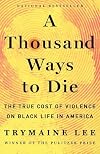
Rating: 4.5* of five
The Publisher Says: A deeply personal exploration of the generational impact of guns on the Black experience in America
A few years ago, Trymaine Lee, though fit and only 38, nearly died of a heart attack. When his then five-year-old daughter, Nola, asked her daddy why, he realized that to answer her honestly, he had to confront what almost killed him—the weight of being a Black man in America; of bearing witness, as a journalist, to relentless Black death; and of a show more family history scarred by enslavement, lynching, the Great Migration, the also insidious racism of the North, and gun violence that stole the lives of two great-uncles, a grandfather, a stepbrother, and two cousins.
In this powerful narrative, Lee weaves three the long and bloody history of African Americans and guns; his work as a chronicler of gun violence, tallying the costs and riches generated by both the legal and illegal gun industries; and his own life story—from almost being caught up in gun violence as a young man, to exploring the legacy of the Middle Passage in Ghana through his ancestors’ footsteps, and navigating the challenges of representing his people accurately in an overwhelmingly white and often hostile media world, and most importantly, to celebrating the enduring strength of his family and community.
In A Thousand Ways to Die, Lee answers Nola and all who seek a more just America. He shares the hard truths and complexities of the Black experience, but he also celebrates the beauty and resilience that is Nola’s legacy.
I RECEIVED A DRC FROM THE PUBLISHER VIA NETGALLEY. THANK YOU.
My Review: Nothing is free. All actions have reactions, consequences. A causal chain has a beginning. Identifying that beginning is a challenge when the subjects are human beings.
Author Trymaine had a near-fatal heart attack at 38. There's a dramatic effect for you...but the cause...? How does a man tease out the causes of poor health outcomes like a heart attack in very early middle age? His five-year old crystallizes the question with the clarity of a child: Why? Why did your heart attack you?
If you're a Pulitzer Prize-winning journalist like Author Trymaine, you look into the stressors of a life led in a high-intensity job, and start digging the roots now that you see the stems...and hope to grow the leaves. The heart attack made a lot more sense as the stress of life reporting on the truly terrible things people do to each other daily, without resting between awfulnesses, led him into the eternal source of human misery: Why? Why does a journalist always have an inexhaustible well of misery and cruelty and callousness to draw from? As Author Trymaine focuses on the Black community he lives in, why does that well so very often have a gun at the bottom of it?
Thinking of his own morality, he naturally thinks of those dead before him, those whose lives were cut short by gun violence. There are members of his own family dead too young because of guns. So answering why for himself means looking at the thing all of them have in common.
They live in a violent country rife with systemic racism. Watch your local news, notice the times there's a violent crime, the photos they choose to show. The criminal's a Black man? Picture of him, mugshot if possible. Perp's a white guy? Picture of the victim. Of course it's impacted all of us, but where is the hatred and the violence aimed? At minorities. The fields sown with hatred and violence are the places it grows. There's a lot of personal pain in this book, but none of it is paraded for the reader's sympathy or judgment. It tells of a system designed to oppress and Other those of a certain skin color that is "working" in that the targets have internalized the nastiness. It's no wonder Author Trymaine is a busy reporter with the amount of rage and hate there is heaped on Black people from outside bubbling and erupting.
The central problem is that systemic rage and hatred; it's the root of many, many evils, though, so if religion can't fix it neither can secular measures. What simple and effective tool is there to address the hideous societal and personal cost of this fact of human existence? What tried and tested means is there to prevent the incompetent, ill-intentioned, sociopathic from acting out their hatred?
Controlling access to the means to kill. Licenses for driving cars are harder to get than licenses to own guns.
Very simple, really.
In exploring the fact of his too-early heart attack with a journalist's training, a seeker's mind, and a father's heart, Author Trymaine lays bare the real, personal, intimate costs of failure. We've all failed. This world of 2025 was not inevitable. Author Trymaine shows us the ways we failed.
But while we are still alive, we can...and should...choose not to fail any longer. show less
The Publisher Says: A deeply personal exploration of the generational impact of guns on the Black experience in America
A few years ago, Trymaine Lee, though fit and only 38, nearly died of a heart attack. When his then five-year-old daughter, Nola, asked her daddy why, he realized that to answer her honestly, he had to confront what almost killed him—the weight of being a Black man in America; of bearing witness, as a journalist, to relentless Black death; and of a show more family history scarred by enslavement, lynching, the Great Migration, the also insidious racism of the North, and gun violence that stole the lives of two great-uncles, a grandfather, a stepbrother, and two cousins.
In this powerful narrative, Lee weaves three the long and bloody history of African Americans and guns; his work as a chronicler of gun violence, tallying the costs and riches generated by both the legal and illegal gun industries; and his own life story—from almost being caught up in gun violence as a young man, to exploring the legacy of the Middle Passage in Ghana through his ancestors’ footsteps, and navigating the challenges of representing his people accurately in an overwhelmingly white and often hostile media world, and most importantly, to celebrating the enduring strength of his family and community.
In A Thousand Ways to Die, Lee answers Nola and all who seek a more just America. He shares the hard truths and complexities of the Black experience, but he also celebrates the beauty and resilience that is Nola’s legacy.
I RECEIVED A DRC FROM THE PUBLISHER VIA NETGALLEY. THANK YOU.
My Review: Nothing is free. All actions have reactions, consequences. A causal chain has a beginning. Identifying that beginning is a challenge when the subjects are human beings.
Author Trymaine had a near-fatal heart attack at 38. There's a dramatic effect for you...but the cause...? How does a man tease out the causes of poor health outcomes like a heart attack in very early middle age? His five-year old crystallizes the question with the clarity of a child: Why? Why did your heart attack you?
If you're a Pulitzer Prize-winning journalist like Author Trymaine, you look into the stressors of a life led in a high-intensity job, and start digging the roots now that you see the stems...and hope to grow the leaves. The heart attack made a lot more sense as the stress of life reporting on the truly terrible things people do to each other daily, without resting between awfulnesses, led him into the eternal source of human misery: Why? Why does a journalist always have an inexhaustible well of misery and cruelty and callousness to draw from? As Author Trymaine focuses on the Black community he lives in, why does that well so very often have a gun at the bottom of it?
Thinking of his own morality, he naturally thinks of those dead before him, those whose lives were cut short by gun violence. There are members of his own family dead too young because of guns. So answering why for himself means looking at the thing all of them have in common.
They live in a violent country rife with systemic racism. Watch your local news, notice the times there's a violent crime, the photos they choose to show. The criminal's a Black man? Picture of him, mugshot if possible. Perp's a white guy? Picture of the victim. Of course it's impacted all of us, but where is the hatred and the violence aimed? At minorities. The fields sown with hatred and violence are the places it grows. There's a lot of personal pain in this book, but none of it is paraded for the reader's sympathy or judgment. It tells of a system designed to oppress and Other those of a certain skin color that is "working" in that the targets have internalized the nastiness. It's no wonder Author Trymaine is a busy reporter with the amount of rage and hate there is heaped on Black people from outside bubbling and erupting.
The central problem is that systemic rage and hatred; it's the root of many, many evils, though, so if religion can't fix it neither can secular measures. What simple and effective tool is there to address the hideous societal and personal cost of this fact of human existence? What tried and tested means is there to prevent the incompetent, ill-intentioned, sociopathic from acting out their hatred?
Controlling access to the means to kill. Licenses for driving cars are harder to get than licenses to own guns.
Very simple, really.
In exploring the fact of his too-early heart attack with a journalist's training, a seeker's mind, and a father's heart, Author Trymaine lays bare the real, personal, intimate costs of failure. We've all failed. This world of 2025 was not inevitable. Author Trymaine shows us the ways we failed.
But while we are still alive, we can...and should...choose not to fail any longer. show less
A Thousand ways to die, by Trymaine Lee, weaves history, recent events, and his family history into a powerful and compelling account of how violence, especially as related to guns, affects individual Black lives and Black communities as a whole.
I know some readers may have a hard time connecting his personal stories to the history and/or stories he has covered as a journalist, but if you can read and follow the connections he explicitly makes, you will appreciate how every layer of show more storytelling builds upon what came before. For instance, he tells us about visiting Africa and weaves the story of how guns were trafficked alongside slaves with the intention to increase the slave trade. No comment is casual and, if you read carefully, they all connect.
I think part of the power is from Lee's ability to help the reader feel what those involved felt. From those who had few if any opportunities to get ahead and resorted to violence to those who were victims of violence. And before anyone has any kneejerk reactions, acknowledging that how society is set up, intentionally, leaves little room for the majority to feel there is hope isn't the same thing as condoning violent action. If you aren't willing to openly look at root causes of issues, then you're not really interested in working toward solutions that benefit everyone involved. And we are all involved, these are our fellow human beings.
I would highly recommend this to readers who want both a micro and a macro look at how guns, directly and indirectly, are a root cause of much of not only the violence but the systemic issues confronting Black communities.
Reviewed from a copy made available by the publisher via NetGalley. show less
I know some readers may have a hard time connecting his personal stories to the history and/or stories he has covered as a journalist, but if you can read and follow the connections he explicitly makes, you will appreciate how every layer of show more storytelling builds upon what came before. For instance, he tells us about visiting Africa and weaves the story of how guns were trafficked alongside slaves with the intention to increase the slave trade. No comment is casual and, if you read carefully, they all connect.
I think part of the power is from Lee's ability to help the reader feel what those involved felt. From those who had few if any opportunities to get ahead and resorted to violence to those who were victims of violence. And before anyone has any kneejerk reactions, acknowledging that how society is set up, intentionally, leaves little room for the majority to feel there is hope isn't the same thing as condoning violent action. If you aren't willing to openly look at root causes of issues, then you're not really interested in working toward solutions that benefit everyone involved. And we are all involved, these are our fellow human beings.
I would highly recommend this to readers who want both a micro and a macro look at how guns, directly and indirectly, are a root cause of much of not only the violence but the systemic issues confronting Black communities.
Reviewed from a copy made available by the publisher via NetGalley. show less
WOW! Just WOW!
I don’t even know where to start. This book shares some hard truths about gun violence in America.
This is well researched and full of details that I had no clue about. AND it has a touch or two or three of personal experience by the author with gun violence.
It also touches on the tragedy of America’s past and its present. There were several places I gasped out loud at the shocking details. I was also shocked at where some of the guns are run through…one of them…my small show more home town of Ripley, MS and the neighboring towns of Holly Springs and Tupelo. Talk about research and details, it is all in here.
Y’all know I love a book narrated by the author. This just adds to the emotions. And believe me, this book..IT IS POWERFUL!
I received this novel from the publisher for a honest review. show less
I don’t even know where to start. This book shares some hard truths about gun violence in America.
This is well researched and full of details that I had no clue about. AND it has a touch or two or three of personal experience by the author with gun violence.
It also touches on the tragedy of America’s past and its present. There were several places I gasped out loud at the shocking details. I was also shocked at where some of the guns are run through…one of them…my small show more home town of Ripley, MS and the neighboring towns of Holly Springs and Tupelo. Talk about research and details, it is all in here.
Y’all know I love a book narrated by the author. This just adds to the emotions. And believe me, this book..IT IS POWERFUL!
I received this novel from the publisher for a honest review. show less
You May Also Like
Associated Authors
Statistics
- Works
- 1
- Also by
- 2
- Members
- 33
- Popularity
- #421,954
- Rating
- 4.5
- Reviews
- 3
- ISBNs
- 3