
Aída Cartagena Portalatín (1918–1994)
Author of Praises & Offenses
About the Author
Works by Aída Cartagena Portalatín
yania tierra 1 copy
Escalera para Electra 1 copy
Associated Works
Daughters of Africa: An International Anthology of Words and Writings by Women of African Descent from the Ancient Egyptian to the Present (1992) — Contributor — 186 copies
These Are Not Sweet Girls: Poetry by Latin American Women (2000) — Contributor — 45 copies, 1 review
Daughters of Latin America: An International Anthology of Writing by Latine Women (2023) — Contributor — 40 copies, 1 review
The Serpent and the Fire: Poetries of the Americas from Origins to Present (2024) — Contributor — 18 copies
Tagged
Common Knowledge
- Canonical name
- Cartagena Portalatín, Aída
- Birthdate
- 1918-06-18
- Date of death
- 1994-06-03
- Gender
- female
- Nationality
- Dominican Republic
- Associated Place (for map)
- Dominican Republic
Members
Reviews
Praises & Offenses: Three Women Poets from the Dominican Republic (Lannan Translations Selection Series) by Aída Cartagena Portalatín
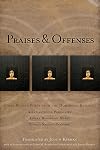
First, let me praise the project. There is comparatively little Dominican literature available in English that wasn’t written originally in English. The likes of Junot Diaz have wholly obscured the literary traditions they claim to belong to. Though to be fair, many South American literary traditions are relatively under-translated compared to the over-saturated interest in Chile, Argentina, Mexico and Cuba. But the Dominican Republic is perhaps the most overlooked. In fact, when I show more recently began translating a Dominican poet I was told by a Mexican painter “Oh, I didn’t know Dominicans had culture.” As far as I can tell, this is the only significant publication of contemporary Dominican literature in quite a long time in the United States. So bravo, Boa Editions, for taking the risk, and brava, Judith Kerman, for making the effort.
But on the whole, the anthology falls short of what I had hoped for. My first real issue is the selection of the poets. I’m troubled by the fetishization of “women’s literature” in a way that seems to prioritize gender over everything else, as though the mere fact of being a woman makes these poets worth reading. This is a problem, I think, with the abuse of the gender-theory discourse, one that assumes that since historically non-heteromale writing and voices have been elided or eliminated, claiming a position outside of that hegemony automatically lends significance and interest to a work. This cheapens the position for those who are truly concerned with the substance of these positions. And while Aída Cartagena Portalatín has a genuine position of protest on political, gender, and race issues, the introduction’s argument that “the personal is political” is clearly misused and perhaps misunderstood. Acknowledging that the personal, usually the domain of the feminine, can’t be quarantined from the public-political-masculine does not make love poems political missives in and of themselves. And the other two poets in the collection fall desperately short of occupying a position of critique, disobedience, experimentation or any other way of challenging the discourse of the heteromale.
Read my whole review: http://quarterlyconversation.com/praises-offenses-three-women-poets-from-the-dom.... show less
But on the whole, the anthology falls short of what I had hoped for. My first real issue is the selection of the poets. I’m troubled by the fetishization of “women’s literature” in a way that seems to prioritize gender over everything else, as though the mere fact of being a woman makes these poets worth reading. This is a problem, I think, with the abuse of the gender-theory discourse, one that assumes that since historically non-heteromale writing and voices have been elided or eliminated, claiming a position outside of that hegemony automatically lends significance and interest to a work. This cheapens the position for those who are truly concerned with the substance of these positions. And while Aída Cartagena Portalatín has a genuine position of protest on political, gender, and race issues, the introduction’s argument that “the personal is political” is clearly misused and perhaps misunderstood. Acknowledging that the personal, usually the domain of the feminine, can’t be quarantined from the public-political-masculine does not make love poems political missives in and of themselves. And the other two poets in the collection fall desperately short of occupying a position of critique, disobedience, experimentation or any other way of challenging the discourse of the heteromale.
Read my whole review: http://quarterlyconversation.com/praises-offenses-three-women-poets-from-the-dom.... show less
You May Also Like
Associated Authors
Statistics
- Works
- 9
- Also by
- 4
- Members
- 21
- Popularity
- #570,575
- Rating
- 3.9
- Reviews
- 1
- ISBNs
- 8
- Languages
- 1